
 By Azzam Bilal Chamdy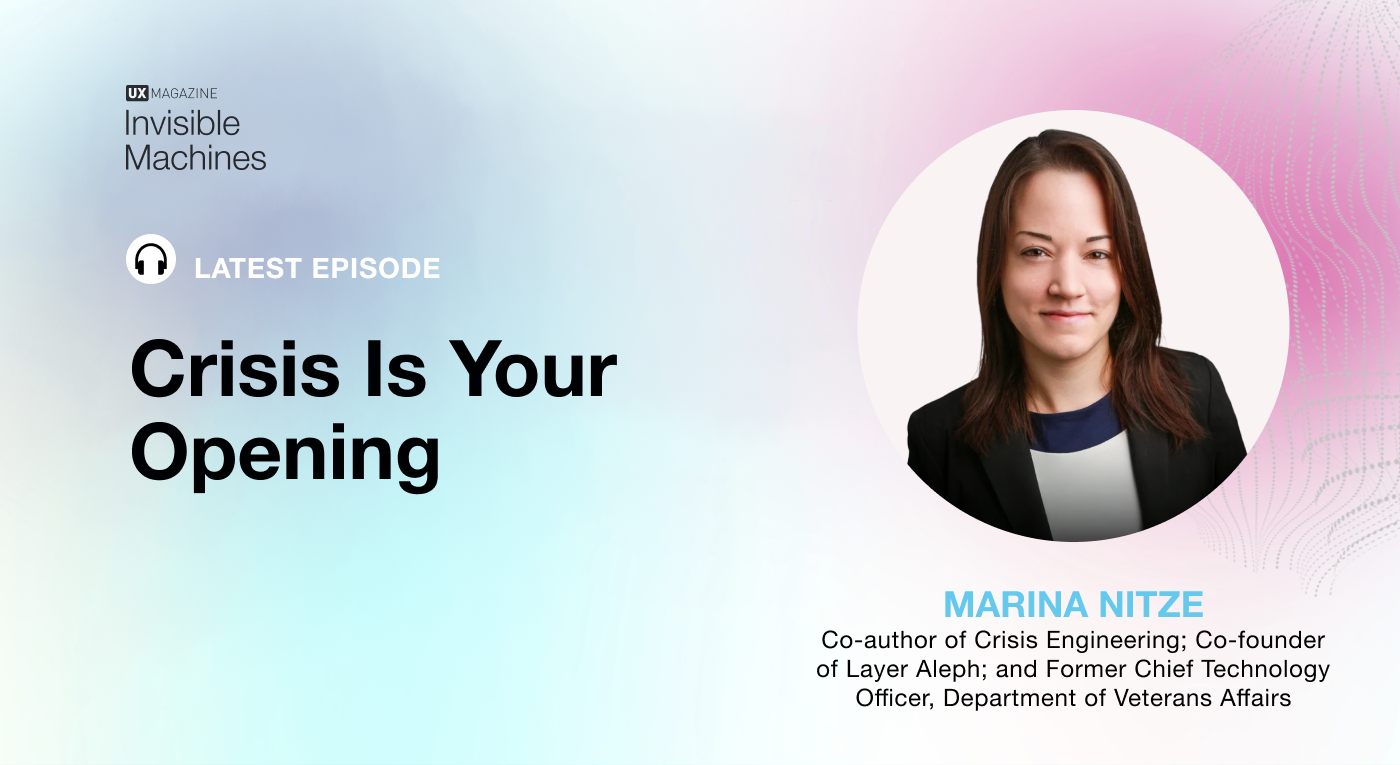
Main Facts: The Illusion of Control and the Crisis Engineering Framework
Modern organizations operate on comforting fictions. From government agencies managing public welfare to multinational corporations steering complex supply chains, institutions tell themselves stories about how they function. These narratives—built from selective memory, outdated assumptions, and isolated observations—provide a stable illusion of control. However, when real pressure hits, these internal myths routinely disintegrate against reality.
This structural vulnerability is the focal point of Crisis Engineering, a new operational framework developed by Marina Nitze, former Chief Technology Officer of the Department of Veterans Affairs and co-founder of Layer Aleph. Drawing from years of rescuing high-stakes public and private sector programs, Nitze argues that organizations rarely understand their own workflows. Instead, they rely on "sensemaking"—a psychological phenomenon first explored by organizational psychologist Karl Weick, wherein the human brain builds rigid narratives to interpret the world, actively resisting any evidence that contradicts them.
The consequences of this disconnect were laid bare during the early days of the COVID-19 pandemic. When California’s unemployment insurance system buckled under unprecedented volume, executives and managers across the state offered a uniform, reassuring response to panicked inquiries: "Don’t worry. We have the call center."
When Nitze and her team physically investigated this claim, they discovered a startling truth: there was no call center. There never had been. What leadership called a call center was merely a random phone tree routing inbound calls to individual employee desks. When those employees were sent home during lockdowns, the calls rang into an empty room. Nobody—neither the workers, the managers, nor the executives repeating the phrase like a protective talisman—had ever tested the assumption.
This structural blindness is not an isolated administrative failure; it is the default state of complex organizations. Nitze’s Crisis Engineering framework provides a systematic approach for diagnosing when and why these institutional narratives fail, and more importantly, how leaders can leverage moments of acute system breakdown to implement structural reform that would otherwise take decades.
Chronology: From Bureaucratic Blind Spots to the Frontlines of System Failure
To understand how organizations drift so far from reality, one must trace how institutional processes calcify over time. Nitze’s career has involved walking through the literal and metaphorical paper trails of broken bureaucracies, uncovering a recurring timeline of institutional drift.
Phase 1: The Birth of the Narrative
A process is established to solve a specific problem. Over time, staff turnover, policy shifts, and software updates alter how the work is actually performed. However, the official documentation and the executive understanding of the process remain static. A gap opens between the map (what leadership believes is happening) and the territory (what is actually happening).
Phase 2: The Comfort of Complacency
As the gap widens, individuals within the organization adapt using localized workarounds. Workers complain about inefficient steps—such as using carbon-copy paper forms to request motor vehicle records—while assuming other departments require them. Executives, insulated by hierarchical reporting, hear only that systems are functioning "within normal parameters."
Phase 3: The Trigger of Fundamental Surprise
An external shock occurs. A pandemic hits, traffic surges past historical peaks, or a consumer-facing AI agent begins systematically probing vulnerabilities in customer service funnels. The system fails to process the volume, and the official narrative collapses under the weight of incoming reality.
Phase 4: The Crisis Window
For a brief, volatile period—ranging from hours to a few days—the organization experiences acute cognitive dissonance. The old mental models have shattered, and a new institutional story has not yet hardened. According to Nitze, this is the only window in which true institutional change can happen. Organizations that hesitate default back to bureaucratic paralysis: commissioning studies, scheduling task forces, and producing progress reports until the window slams shut.
Supporting Data & Case Studies: Uncovering the Gaps Between Map and Territory
Nitze’s methodology is rooted in hands-on forensic investigations of public sector workflows. Two primary case studies illustrate how institutional myths mask profound systemic inefficiencies.
The California Unemployment Collapse
During the 2020 pandemic lockdowns, claims processing in California stalled, leaving millions without financial lifelines. The executive leadership’s reliance on the phantom "call center" meant that disaster recovery plans were built around a nonexistent operational asset. When actual stress hit the system, auxiliary channels—such as TTY lines designated for deaf and hard-of-hearing claimants—were quickly discovered by desperate users on forums like Reddit. Traffic surged from forty calls a day to numbers that completely crashed the infrastructure, proving that organizations often fail to see their own critical dependencies until outside forces expose them.
The Foster Grandparent Licensing Bottleneck
In a separate initiative aimed at reforming foster care administration, Nitze targeted a six-month licensing timeline that forced grandmothers caring for their grandchildren to wait half a year for financial stipends and support. Following the workflow from start to finish—an audit that no previous administrator had ever performed—she observed a caseworker bitterly filling out a carbon-copy form to request a driving record from the Department of Motor Vehicles (DMV).
The caseworker blamed the antiquated DMV for the delay. Nitze walked down to the DMV to investigate. The DMV clerk was equally baffled by the paper form, explaining that digital record requests were processed via email within an hour.
Neither worker was incompetent; each operated within a localized story that blamed the other party. The actual dysfunction existed in the neglected space between their jurisdictions. Once Nitze connected them directly, thirty days were immediately shaved off the timeline. The step was eventually eliminated entirely when leadership asked a fundamental question: what did a grandmother’s historic parking tickets have to do with her fitness to care for a child?
Official Responses and Theoretical Insights: Defining the "Useful Crisis"
Nitze’s work does not treat crises as tragedies to be merely endured, but as rare diagnostic tools. In their discussions on the Invisible Machines podcast—hosted by Robb Wilson and Josh Tyson—Nitze outlined the five precise indicators that define a "useful crisis":
- Fundamental Surprise: The event was unforeseen by institutional leadership.
- Disruption in Core Function: Critical business operations (websites, claims processing, order fulfillment) are halted.
- Rigid Timeline: External pressures dictate an unmovable deadline (e.g., a major public launch or live event).
- High Visibility: The failure is public, trending, or drawing executive scrutiny.
- Failure of Sensemaking: The reality of the situation directly contradicts the organization’s foundational beliefs.
This fifth indicator acts as the psychological engine of reform. As Milton Friedman famously observed, only a crisis produces real change, and the actions taken depend on the ideas that are "lying around" when the crisis hits. Nitze stresses that organizations cannot wait for the crisis to brainstorm solutions. The window of cognitive vulnerability lasts only hours; proposals must be pre-engineered, tested, and ready to deploy.
Robb Wilson expands on this principle when evaluating modern technology adoption. Companies frequently rush to implement automated software and AI agents without auditing their foundational knowledge management layers. "They are automating the carbon copy form," Wilson notes. By digitizing broken, misunderstood workflows, organizations create hyper-efficient engines for executing unnecessary tasks.
Implications: The Looming AI Threat and the Future of Organizational Resilience
As artificial intelligence reshapes the consumer landscape, the vulnerabilities exposed during the pandemic are about to be magnified exponentially.
In recent analyses shared alongside tech commentators, experts warn that consumer adoption of AI tools has vastly outpaced corporate adoption. Today, individual customers, patients, and citizens possess agentic AI tools capable of probing, testing, and navigating corporate interactive voice response (IVR) trees and customer service funnels at machine speed.
An automated outbound AI caller designed to navigate bureaucratic hurdles and extract concessions is no longer science fiction; it is an emerging baseline reality. When thousands of consumer-deployed AI agents simultaneously attack organizational blind spots, the "call centers" that companies think they operate will disintegrate overnight. These automated incursions will trigger the exact combination of fundamental surprise, core disruption, and sensemaking failure that defines Nitze’s useful crisis.
Preparing for the Inevitable
To survive this shift, organizations must move away from defensive bureaucracy and adopt the proactive disciplines of Crisis Engineering:
- Map the Territory, Not the Map: Leaders must physically or digitally trace their workflows from end to end, identifying hidden dependencies, informal workarounds, and cross-departmental friction points.
- Build Crisis Infrastructure in Advance: Organizations need dedicated incident-response frameworks, isolated status pages, and clear communication channels that remain functional even when primary enterprise networks fail.
- Cultivate "Known Spicy Days": Use high-stress events, product launches, and traffic surges as live-fire drills to test crisis response protocols before an unmanaged emergency occurs.
- Keep Innovations Ready in the Pocket: Have pre-vetted pilot programs, structural reforms, and modernization proposals ready to launch the moment institutional consensus shatters.
The next major systemic shock is not a matter of if, but when. When the old stories fail and the cognitive window flies open, the survival of an enterprise will depend entirely on whether its internal narrative is close enough to the truth to shape the reality that replaces it.
 Nana
Nana  Lina Irawan
  Nana Wu