
 By Ali Ikhwan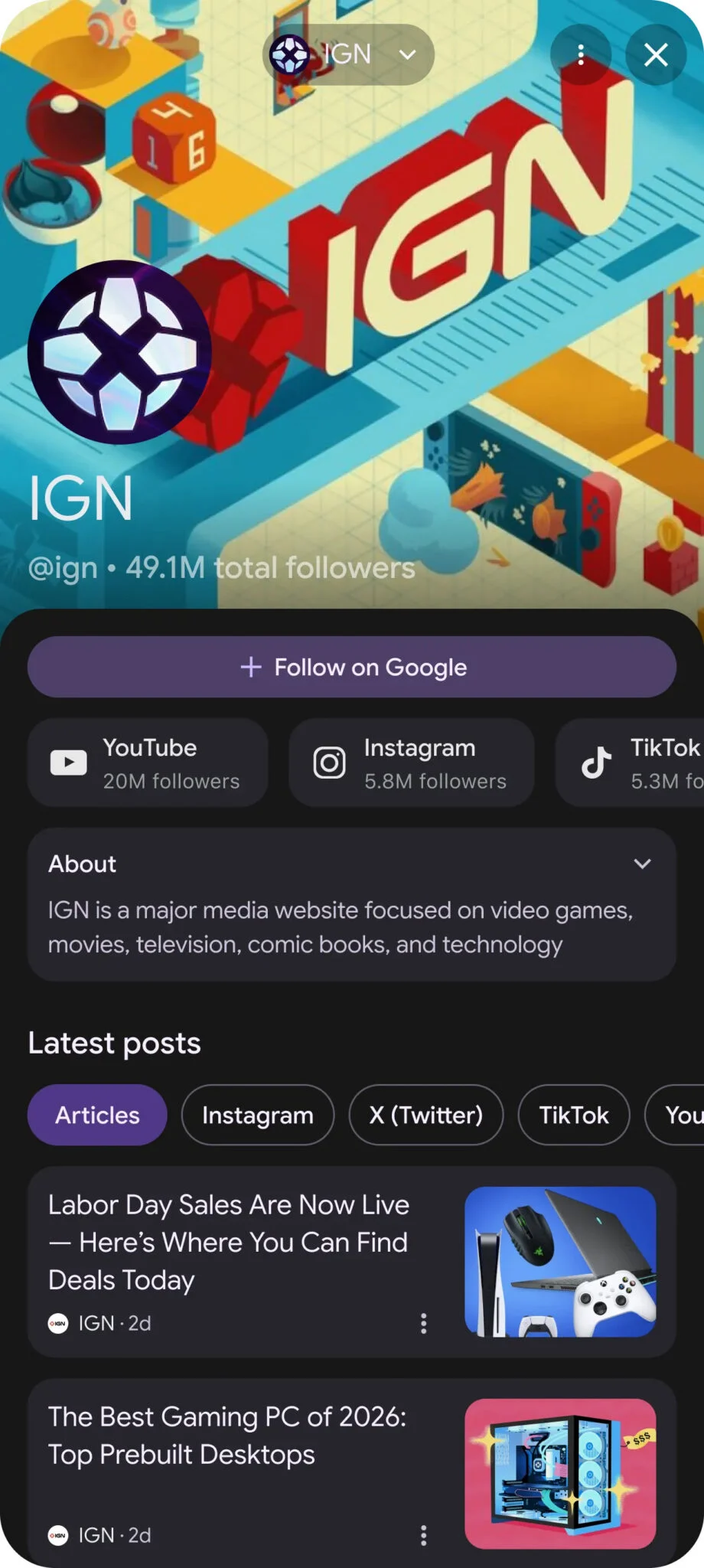
In a sweeping update designed to bridge the gap between digital publishers and the evolving search ecosystem, Google has rolled out a significant suite of enhancements to Google Search profiles. Aimed at boosting visibility, streamlining administrative overhead, and refining user experience across Search and Google Discover, the latest updates introduce multi-account management from a single login, a dramatic reduction in social media follower requirements, redesigned article layouts, and official documentation for website badges.
These changes reflect Google’s ongoing commitment to cultivating a robust environment for content creators and publishers, ensuring that both independent outlets and major media conglomerates can maximize their reach. By lowering barriers to entry and refining the aesthetic presentation of articles, Google is signaling a concerted push to make authoritative journalism and expert content more accessible to everyday searchers.
Main Facts: What’s New in Google Search Profiles?
Google’s latest round of updates to Search profiles focuses heavily on usability, accessibility, and visual presentation. The key pillars of this update include:
- Unified Multi-Account Management: Publishers can now claim, verify, and manage Search profiles for multiple sub-brands and subsidiary publications using a single Google login. This eliminates the cumbersome previous requirement of juggling disparate Google accounts for every individual brand.
- Drastically Lower Follower Threshold: The social and video follower prerequisite to qualify for a Search profile has been slashed to 10,000 followers (down from the initial 100,000 requirement). This applies across major platforms including YouTube, Instagram, X (formerly Twitter), and TikTok.
- Redesigned Article Displays: Google has revamped the visual presentation of articles within Search profiles. Updates include optimized image thumbnails designed to "look their best" and increased headline length limits to prevent truncation and provide better context.
- Official Website Badges: Google has published comprehensive developer documentation detailing how publishers can embed official Search profile badges directly onto their websites, strengthening cross-platform brand authority.
Chronology: The Evolution of Search Profiles
The journey toward these publisher-centric features has been rapid, marked by a series of iterative rollouts designed to scale Search profiles to a wider audience.
The Initial Launch
When Google first introduced Search profiles, the feature was positioned as an exclusive tool for established media giants and prominent creators. To prevent spam and ensure high baseline authority, Google instituted a strict eligibility barrier: publishers and creators were required to boast a staggering 100,000 subscribers or followers on at least one major platform—specifically YouTube, Instagram, X, or TikTok. While this successfully filtered out low-quality actors, it severely restricted mid-tier publishers, regional news outlets, and niche independent blogs from accessing the valuable visibility perks associated with Search profiles.
The Interim Adjustment (One Month Ago)
Recognizing that the initial 100,000-follower threshold was too restrictive and overlooked a vast ecosystem of valuable creators, Google quietly dialed back the requirement. Approximately one month prior to the current announcement, Google lowered the subscriber/follower threshold to 35,000 followers across supported social and video networks. This intermediate step served as a testing ground, allowing Google to monitor server load, verification processes, and system stability as a larger wave of publishers gained entry.
The Current Expansion (Today)
Building on the success of the 35,000-follower test, Google has now dropped the bar even further to just 10,000 followers. Concurrently, the search giant has solved one of the primary administrative pain points voiced by digital media companies: multi-account fatigue. By introducing single-login management for sub-brands alongside a complete visual redesign, Google has transitioned Search profiles from an exclusive beta-style offering into a fully scalable, mainstream publishing tool.
Supporting Data and Technical Specifications
To fully understand the impact of these changes, it is essential to examine the technical parameters and platform requirements governing Google Search profiles following the latest updates.

Eligibility Criteria Breakdown
| Parameter | Original Requirement | Previous Update (1 Month Ago) | Current Update |
|---|---|---|---|
| Follower/Subscriber Count | 100,000+ | 35,000+ | 10,000+ |
| Accepted Platforms | YouTube, Instagram, X, TikTok | YouTube, Instagram, X, TikTok | YouTube, Instagram, X, TikTok |
| Account Management | One login per profile | One login per profile | Unified single login for all sub-brands |
Visual and Structural Enhancements
The technical updates to the UI/UX of Search profiles are tailored specifically to mobile-first consumption habits, where users rapidly scroll through Google Discover and search result carousels.
- Thumbnail Optimization: Image containers have been re-engineered to prevent awkward cropping and low-resolution rendering. Publishers can now expect their lead images to scale cleanly across diverse device viewports.
- Expanded Headline Lengths: Previous limitations often forced editorial teams to write punchy, truncated titles that sacrificed nuance for brevity. The new design accommodates longer headlines, allowing for richer context, improved click-through rates, and clearer user intent matching.
- Badge Integration: The newly released developer documentation provides structured data and HTML/CSS guidelines for integrating verifiable badges onto publisher websites, bridging the gap between open web properties and Google’s proprietary walled gardens.
Official Responses and Perspectives
While Google’s official announcements—shared via the Google Search Central blog and official documentation—tend to focus on the technical execution of these updates, industry reactions have been overwhelmingly positive.
Google’s Stated Objective
In its official communications, Google emphasized that the redesign and accessibility updates were engineered with a singular goal in mind: making it seamless for users to discover and dive deeper into authoritative content. By streamlining the user interface and removing friction for publishers, Google aims to foster a richer content ecosystem where quality journalism stands out.
Furthermore, Google noted that the consolidation of accounts into a single login was a direct response to publisher feedback. Media organizations operating dozens of vertical-specific sub-brands previously found profile maintenance to be an administrative bottleneck. The unified dashboard drastically reduces the man-hours required to keep metadata, brand assets, and verification statuses up to date.
The Publisher Perspective
Digital marketing experts, search engine optimization (SEO) specialists, and publishing executives have lauded the reduction of the follower requirement to 10,000.
For years, smaller and mid-sized publishers have argued that social media follower counts are an imperfect proxy for journalistic integrity and website authority. Many niche trade publications, local newspapers, and investigative blogs command highly engaged audiences on the open web and through search engines, even if their social media follower counts hover in the tens of thousands rather than the hundreds of thousands.
By lowering the threshold to 10,000, Google has effectively opened the doors to thousands of legitimate regional and niche publishers who were previously locked out of the Search profile ecosystem. This democratization of search features levels the playing field, allowing specialized content to compete more effectively against legacy media giants in Google Discover and specialized search carousels.
Implications for the Future of Search and Publishing
The convergence of unified account management, lower entry barriers, and enhanced visual displays carries profound implications for the digital publishing landscape.

1. The Democratization of Search Visibility
Search profiles are no longer the exclusive playground of massive media conglomerates with massive social media departments. By welcoming publishers with 10,000 followers, Google is encouraging a more diverse, pluralistic web ecosystem. Creators and publishers who have spent years building loyal communities can now leverage the full suite of Google’s authority-building tools without needing a viral social media presence to back them up.
2. Heightened Importance of Brand Architecture
With single-login management making it effortless to oversee multiple sub-brands, large publishing houses will likely accelerate their multi-domain and niche-site strategies. Media companies can launch targeted vertical sites—covering everything from local sports to specialized tech niches—and seamlessly integrate them into their central Google Search profile architecture. This will force publishers to think carefully about brand hierarchies and how sub-brands relate to parent organizations in the eyes of Google’s algorithms.
3. Visual Optimization as a Core Editorial Skill
With Google placing heavy emphasis on optimized image thumbnails and longer headlines within Search profiles, the traditional boundaries between editorial writing, graphic asset selection, and technical SEO are blurring. Editorial teams can no longer treat images as an afterthought. To capture attention in the redesigned Search and Discover feeds, publishers must invest in high-impact visual assets and craft comprehensive, compelling headlines that survive the expanded layout without losing reader interest.
4. Convergence of Open Web and Proprietary Features
The introduction of official Search profile badges points toward an increasingly interconnected web experience. As publishers embed these badges on their sites, they create a trusted loop of verification between their own domain names and Google’s knowledge and search graphs. This reinforces the concept of E-E-A-T (Experience, Expertise, Authoritativeness, and Trustworthiness)—a cornerstone of Google’s quality raters guidelines—by giving users clear, verifiable signals of publisher authenticity wherever they encounter the brand.
Conclusion
Google’s latest updates to Search profiles represent a mature, highly responsive iteration of a feature designed to elevate quality journalism and expert content. By addressing the core pain points of publishers—eliminating login fatigue, dramatically widening eligibility through a sensible 10,000-follower cap, and making articles visually irresistible through smart design changes—Google has reinforced its position as a vital partner to the digital publishing industry.
As publishers scramble to adopt the new single-login dashboard, redesign their article assets to fit the expanded layout, and implement verification badges on their homepages, the competitive dynamics of Google Search and Discover are bound to shift. One thing is certain: those publishers who swiftly adapt to these changes will be exceptionally well-positioned to capture audience attention in an increasingly crowded digital landscape.
 Jia Lissa
  Pevita Pearce
  Suro Senen