
 By Siti Muinah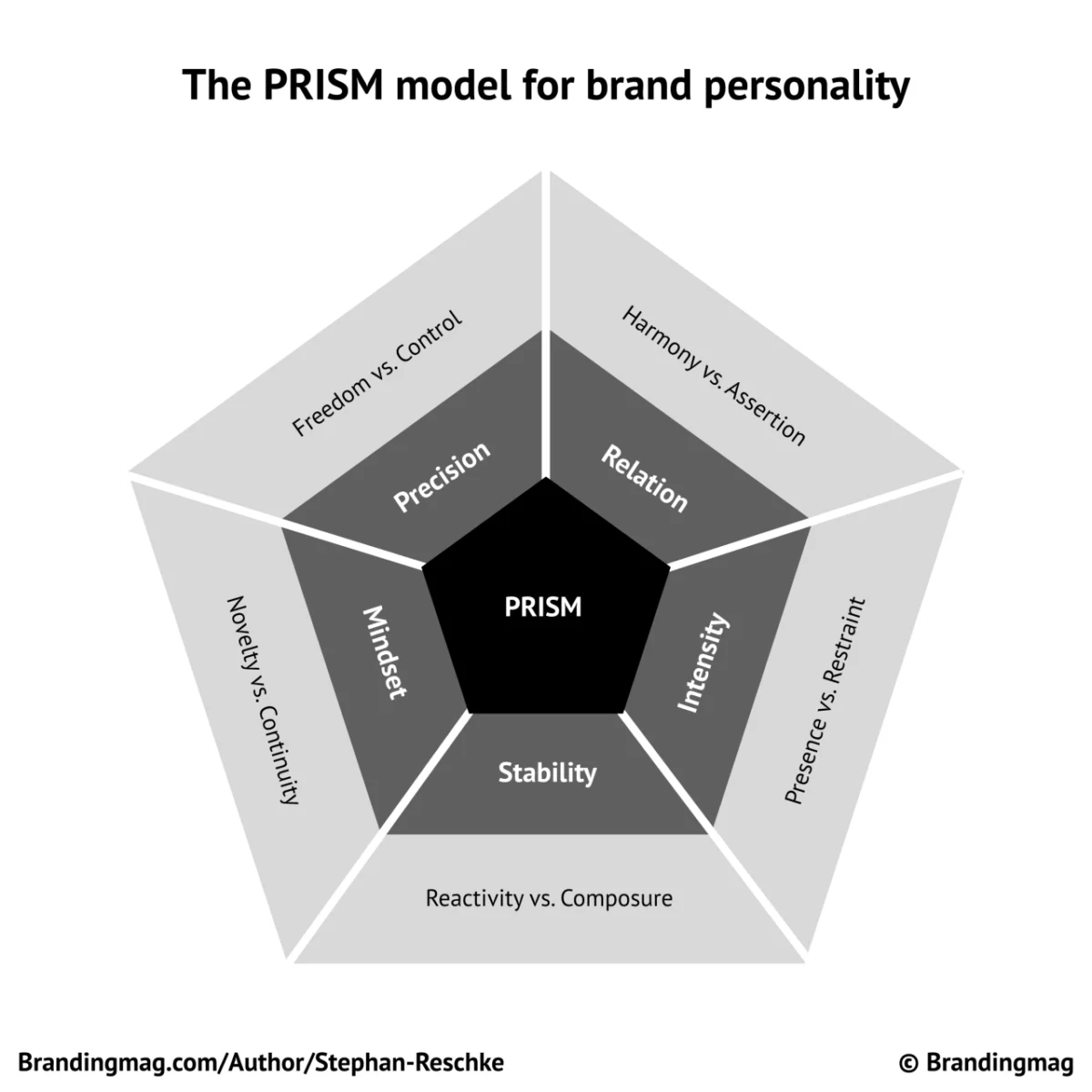
Technology has undergone a fundamental phase shift. It is no longer a peripheral tool we operate; it has become an environment in which we exist. As AI transitions from a static utility to an immersive, conversational, and autonomous force, the nature of brand interaction is being rewritten in real-time. In this new “agentic economy,” where AI agents act as the primary interface between consumers and corporations, the traditional rules of branding are facing a crisis of relevance.
To survive, brands must evolve from static entities into "Agentic Lovemarks"—a concept pioneered by Arjan Kapteijns—that can command loyalty in both human-to-human and human-to-machine dialogues. Central to this evolution is the transition from vague archetypal branding to the precise, data-driven framework of the PRISM model.
The Chronology of Brand Identity: From Archetypes to Agents
For over two decades, the industry standard for brand personality was defined by the 12-archetype model popularized by Margaret Mark and Carol Pearson in The Hero and the Outlaw. This framework provided marketers with a rational map of irrational human behavior, allowing brands to anchor their identities in universal storytelling tropes.
However, the rapid ascent of Large Language Models (LLMs) and autonomous agents has rendered these broad archetypes insufficient. While an archetype like "The Sage" or "The Rebel" provides a general aesthetic direction, it lacks the technical granularity required by an AI. When an AI agent is tasked with representing a brand in a conversational setting, a reliance on archetypes leaves too much room for algorithmic interpretation, leading to inconsistent, erratic, and ultimately unconvincing interactions.
The shift toward the agentic economy began in earnest as AI moved from "search and retrieve" functions to "create and converse" capabilities. As interactions became more human-like, the "human-to-brand-via-machine" relationship necessitated a shift in how we encode personality. We are no longer designing static logos or ad campaigns; we are designing "digital souls" that must be simultaneously legible to machines and lovable to humans.
Supporting Data: The Legible-Lovable Law
The core challenge of modern branding is encapsulated by the "Legible-Lovable Law," a concept articulated by Thomas Marzano, former brand lead at Philips and ASML. The law posits that in an era of AI-driven decision-making, a brand must be:

- Legible to AI: The brand’s values, tone, and operational logic must be encoded in a machine-readable format so that LLMs can accurately identify, recommend, and prioritize the brand.
- Lovable by Humans: Despite the technical mediation, the output must remain emotionally resonant to maintain human loyalty.
Without this structural reinforcement, AI agents risk rendering a brand as a generic, cold utility. If an AI cannot "read" the nuance of a brand’s personality, the brand’s emotional equity is lost in translation. This is not the end of emotional marketing; it is its technical evolution.
Introducing the PRISM Model: A New Taxonomy for AI Brands
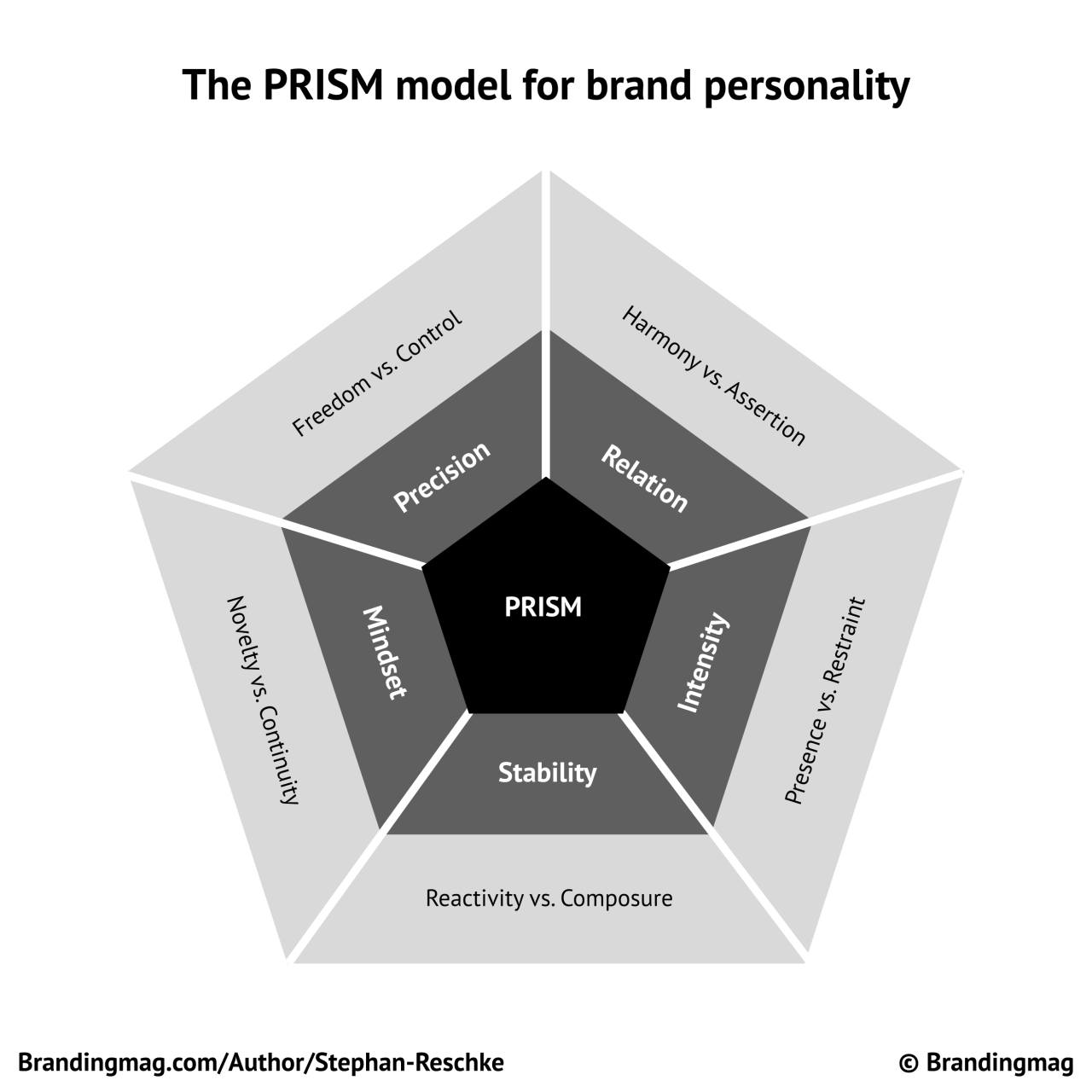
To bridge the gap between human emotional connection and machine precision, the PRISM model has emerged as a sophisticated successor to traditional frameworks. Drawing inspiration from the OCEAN model (the "Big Five" personality traits), the PRISM model decomposes brand personality into five core domains:
- P – Perception (Openness): Defines how the brand processes information and approaches new ideas.
- R – Response (Conscientiousness): Governs the brand’s reliability, attention to detail, and methodical communication.
- I – Interaction (Extraversion): Measures the brand’s energy levels and social engagement style within a conversation.
- S – Sentiment (Agreeableness): Dictates the warmth, empathy, and collaborative nature of the brand’s tone.
- M – Mindset (Stability): Determines the brand’s resilience and composure under pressure or in complex scenarios.
Unlike the rigid 12-archetype system, PRISM offers a spectrum. Each domain is composed of six defining characteristics, measured on a granular scale. This allows a brand to possess a "personality fingerprint" that is uniquely its own, providing LLMs with the specific instruction set needed to adjust verbal tone, vocabulary, and response behavior on a case-by-case basis.
The Shift from Campaigning to "Brand Language"
As voice-driven technology dominates the consumer landscape, the visual campaign—long the bedrock of marketing—is receding. We are entering an era of "Brand Language," where the primary touchpoint is the spoken or written word.
In this environment, an LLM does not "see" a billboard or a high-production video; it processes the linguistic data that underpins those assets. The PRISM model serves as the architectural foundation for this language. By embedding PRISM-defined personality parameters into system prompts, brands can ensure that every interaction—whether through a smart speaker, a chatbot, or a personalized digital assistant—feels cohesive.
Operationalizing the PRISM Model
When integrated into a brand’s web infrastructure, the PRISM model allows for:
- Dynamic Adaptation: The AI adjusts its level of "Interaction" (Extraversion) based on the user’s mood or the context of the inquiry.
- Linguistic Consistency: The vocabulary and grammar remain distinct, preventing the "hallucination" of brand tone that occurs when generic AI models are left without clear, structural guidelines.
- Real-time Experience Orchestration: The model functions as the core of an "Experience Engine," enabling the creation of on-demand, personalized brand moments that feel authentic rather than algorithmic.
Implications for the Future: Building the Digital Soul
The implications for CMOs and brand managers are profound. The future of brand equity will not be won by the loudest campaign, but by the most coherent digital presence. Brands that fail to translate their personality into a machine-readable format will find themselves marginalized by AI agents that cannot distinguish them from competitors.
The "anxiety of the unknown" that currently permeates the marketing industry is a rational response to a fundamental shift in control. For decades, brands controlled the message. Now, they must define the rules of the message and trust the AI to execute them.
The transition to an agentic economy requires a radical commitment to transparency and structural design. By adopting models like PRISM, companies are not just updating their branding strategy—they are participating in the creation of a new, hybrid existence where technology serves as the conduit for, rather than the barrier to, human connection.
A Call to Exploration
The path forward is defined by iterative learning. As we move further into this era, the brands that thrive will be those that embrace the "exchange"—the constant testing, tuning, and refining of their PRISM parameters.
We are at the beginning of a conversation between human intent and machine execution. The tools are available, the framework is established, and the stakes could not be higher. For those willing to dive into the technicalities of the agentic economy, the opportunity to define the next generation of Lovemarks is unparalleled. The question is no longer whether your brand will interact with AI, but how well your brand will live within it.
 Azzam Bilal Chamdy
  Nana Wu
  Raul Delapena Setiawan