
 By Dwi Wanna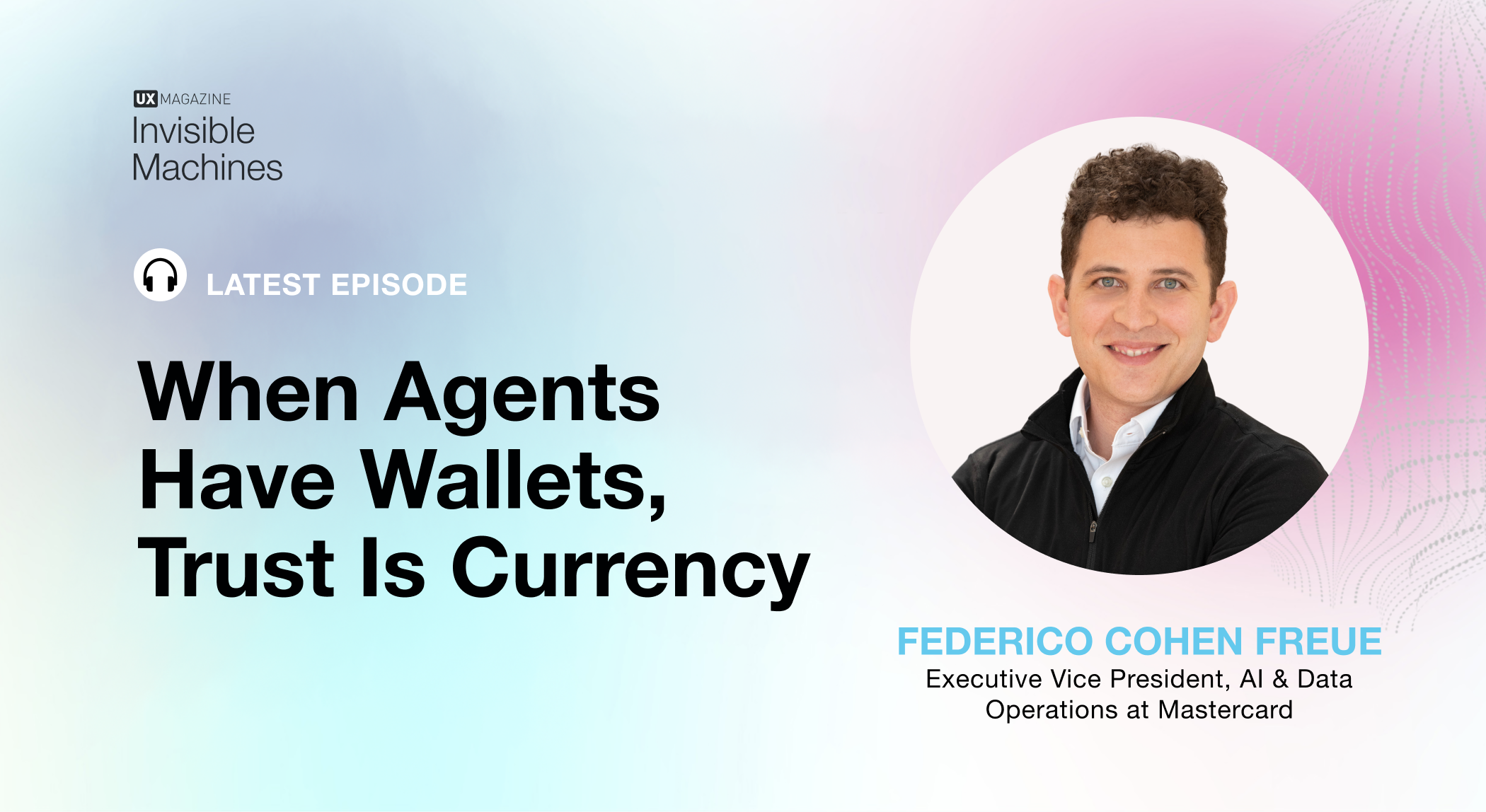
In the high-stakes world of global finance, the shift from "Generative AI" to "Agentic AI" represents a seismic change in operational philosophy. For Federico Cohen Freue, who leads AI and data strategy at Mastercard, this transition is not merely a technical upgrade—it is a fundamental restructuring of how a global enterprise interacts with automation.
Every year, Cohen Freue’s office processes roughly 1,000 internal proposals for AI integration. These requests serve as a real-time barometer for the corporate zeitgeist. A few years ago, the queue was dominated by simple chatbots—interfaces designed to answer questions. Today, the landscape has shifted: over half of all incoming requests are for "agents"—autonomous software entities designed to execute complex, multi-step workflows on behalf of a user.
While this evolution signals a maturing understanding of AI’s potential, Cohen Freue offers a sobering caveat: the desire for agency far outpaces the current state of enterprise readiness. As organizations rush to deploy these digital proxies, the difference between a successful implementation and a catastrophic failure often comes down to a nuance that few leaders are prepared to address.
The Ball Bearing Problem: Why Demos Can Be Deceitful
To understand why so many enterprise AI initiatives stall, one must look at what Cohen Freue and his collaborators call "The Ball Bearing Problem."
Imagine two ball bearings sitting on a table. To the naked eye, they are identical—perfectly spherical, polished, and metallic. However, one has been manufactured with precise tolerances and high-grade materials, while the other is a cheap imitation. You cannot tell the difference by looking at them. It is only when you place them inside a high-performance airplane engine that the truth reveals itself: the inferior bearing causes the engine to fail under pressure.
In the world of AI, agentic demos operate under the same logic. A sophisticated, polished demo of an AI agent negotiating a contract or booking a trip can look indistinguishable from a robust, production-ready system. Both offer a sleek interface and rapid responses. However, the underlying engineering—the guardrails, the data provenance, and the error-handling mechanisms—are often worlds apart.
Mastercard’s strategy to mitigate this is simple but demanding: they prioritize fluency and training before deployment. By educating staff on what constitutes a "correctly machined" AI model, the company ensures that when an agent is finally launched, it is built on a foundation of reliability rather than just aesthetic appeal.
Strategic Frameworks: Prioritization at Scale
With a thousand ideas competing for resources, the risk of "innovation scatter" is high. How does a company like Mastercard maintain focus when the capabilities of AI are expanding at an exponential rate?
The answer lies in a strategy so concise it fits in a single sentence: Use AI to make commerce more secure, smarter, more personal, and to make Mastercard stronger.
This framework acts as a strategic lens, not a compliance checklist. It provides a shared language that allows teams across the globe to self-filter their ideas. If a proposed AI application does not explicitly contribute to these four pillars, it is discarded. This shift transforms prioritization from an exhausting, endless negotiation into a simple, binary conversation. It is a vital tool for preventing "feature creep" and ensuring that the organization’s massive computational power is channeled into high-impact, high-value outcomes.
Trust: The Currency of the Transactional Future
The conversation surrounding AI agents eventually hits a critical inflection point: commerce. As AI agents gain the ability to execute payments, the role of a trusted intermediary does not vanish—it becomes the most critical node in the system.
Mastercard is currently preparing for a future where consumers delegate their purchasing power to autonomous agents. In this ecosystem, a user might instruct their AI assistant to "find the best flight, book a hotel that meets my dietary needs, and handle the payment."
Rather than racing to build these downstream consumer applications, Mastercard is focusing on the "rules infrastructure" required to make such a system viable. Their priorities include:
- Agent Identity Verification: Ensuring that the agent acting on a user’s behalf is who it claims to be.
- Delegated Authority Frameworks: Establishing legal and technical boundaries for what an agent is permitted to do.
- Acceptance Standards: Creating universal protocols that merchants can trust when interacting with automated entities.
Cohen Freue puts it bluntly: "Trust is the currency of innovation." In an era of autonomous, dynamic pricing and multi-party negotiation, the middleman is not being removed; it is being upgraded. The infrastructure that ensures every party in a transaction is verified and protected is what will allow the agentic economy to scale.
Redefining Knowledge Management: The GPS for Expertise
Perhaps the most radical departure from traditional corporate thinking is Mastercard’s approach to knowledge management. The prevailing model for enterprise AI is inherently reactive: an organization builds a massive repository of data and waits for an employee to ask a question (a chatbot). This places the entire burden of curiosity and discovery on the user.
Mastercard is experimenting with a proactive model, akin to a GPS for expertise. Instead of a static document library, they are developing "knowledge maps"—structured, canonical sources of truth where each concept is mapped to its related ideas and history.
The system goes further by creating a "learning twin" of the employee. By understanding what an individual already knows and identifying their knowledge gaps, the system acts as a navigation tool. It doesn’t provide a static curriculum; it calculates the most efficient path to expertise, rerouting the learner dynamically as the domain changes or as the employee’s understanding evolves.
This, however, introduces a profound cultural challenge. It requires employees to treat learning as an ongoing, continuous process rather than a one-time onboarding event. As Cohen Freue notes, technology is rarely the bottleneck; the culture of readiness is the true test.
Implications: The Hierarchy of Success
The central thread connecting these initiatives is a strict adherence to sequence: understand first, then act.
Most enterprise AI failures occur because organizations invert this order. They lead with the "doing"—rushing to automate a workflow or deploy a model—without first ensuring that the underlying knowledge and infrastructure are sound. When the system eventually falters, it is often misidentified as a technology failure, when in reality, it is a knowledge failure.
The lesson for leaders is clear: before asking what AI can do for your business, you must ask what your organization actually knows. If the data is messy, the knowledge is siloed, or the "ball bearings" are unverified, no amount of advanced modeling will save the project.
Key Takeaways for Enterprise Leaders:
- Stop building, start mapping: Treat knowledge as a structured infrastructure, not a document repository.
- Define the "North Star": Use a simple, shared framework to prioritize AI projects so that every initiative is tethered to a strategic outcome.
- Invest in fluency: Ensure that the people proposing AI solutions understand the technical constraints of the tools they are using.
- Prioritize the rules: In an agentic world, the infrastructure that governs how transactions occur is more valuable than the UI that initiates them.
As Mastercard demonstrates, the future of AI in the enterprise is not about replacing human decision-making with machines; it is about building a robust, trusted architecture that allows those machines to act with the same level of integrity as the institutions they represent. By treating trust as a form of currency, organizations can turn the chaotic potential of AI into a structured, scalable engine for growth.
 Ammar Sabilarrohman
  Neng Nana
  Sagoh
Sagoh 