
 By Muslim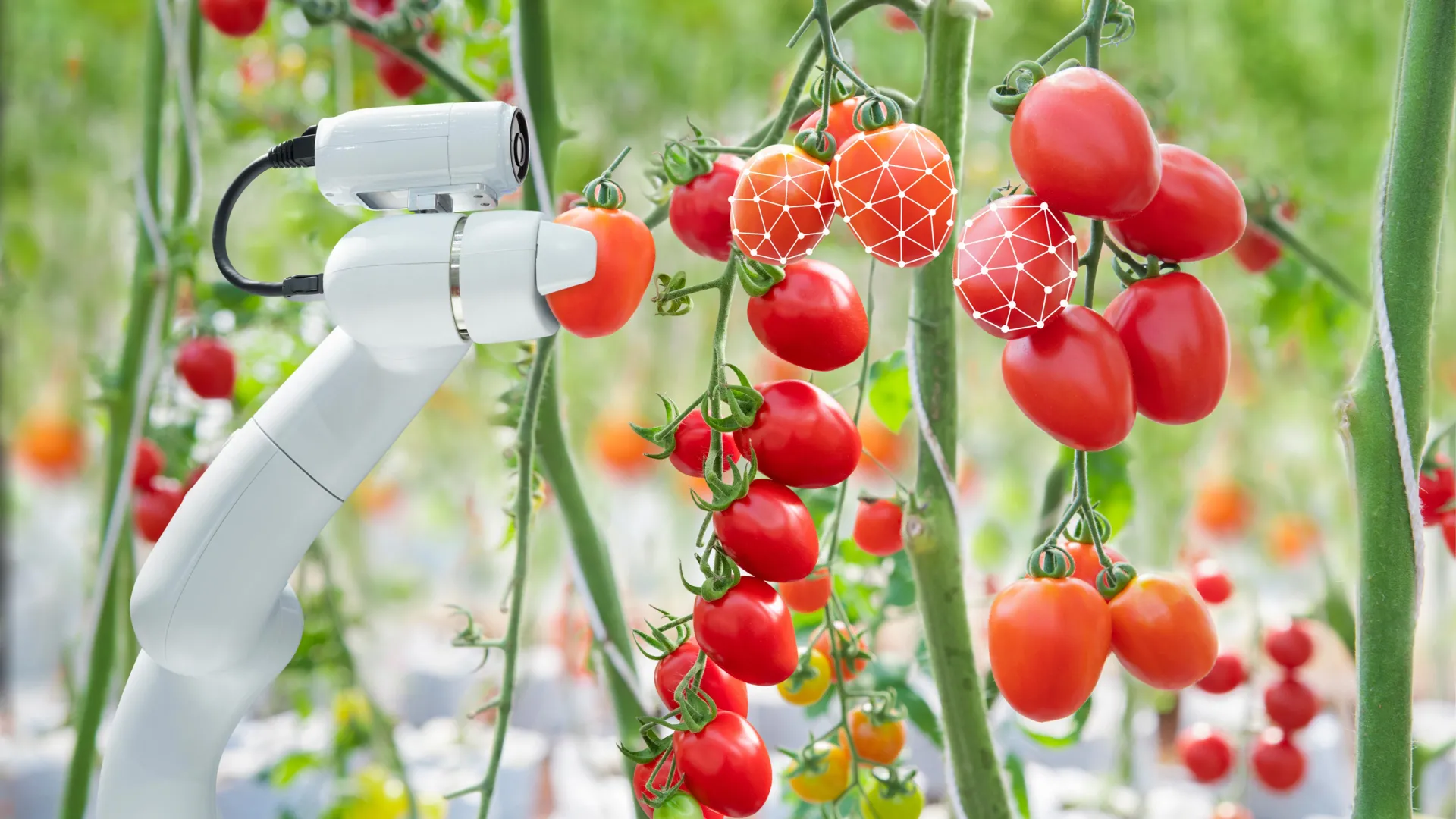
As the global agricultural sector grapples with an aging workforce and chronic labor shortages, the promise of robotic automation has long been touted as the industry’s ultimate savior. However, the transition from controlled factory floors to the chaotic, unstructured environment of a greenhouse has proven immensely difficult. While machines have mastered the repetitive tasks of sorting and packaging, the delicate art of harvesting—specifically for cluster-growing crops like tomatoes—has remained a persistent hurdle.
A breakthrough from Osaka Metropolitan University (OMU) is now changing that narrative. Assistant Professor Takuya Fujinaga of the Graduate School of Engineering has pioneered a new framework that shifts the paradigm of robotic harvesting from simple object detection to sophisticated "harvest-ease" decision-making. By teaching robots to evaluate the probability of a successful pick before they ever extend an arm, this research is bridging the gap between theoretical robotics and real-world agricultural efficiency.
The Mechanical Challenge: Why Tomatoes Are a Robotic Nightmare
To the average consumer, a tomato hanging on a vine is a simple object. To a robot, however, it is a complex visual puzzle. Tomatoes grow in clusters, often obscured by dense foliage, tangled in stems, or positioned at awkward angles that make physical access difficult.
Traditional robotic harvesters have relied on computer vision models designed solely for detection—essentially answering the question, "Is there a tomato here?" If the answer was yes, the robot would typically attempt to grab it. This binary approach frequently leads to bruised fruit, damaged vines, or mechanical failure when the robot attempts to pull a tomato that is obstructed by a stubborn leaf or a secondary stem.
The complexity of the environment requires a level of spatial reasoning that mimics human intuition. A human harvester instinctively knows whether to reach from the side, nudge a leaf aside, or wait for a better angle. Equipping a robot with this "common sense" is the holy grail of agricultural engineering.
Chronology: From Static Detection to Adaptive Intelligence
The evolution of Professor Fujinaga’s research can be traced through a methodical progression of agricultural robotics development:
- Phase I: The Detection Era (Historical Context): For years, the industry focused on improving the accuracy of deep-learning models to identify fruit. These systems achieved high success rates in identifying objects but failed to account for the physical constraints of the harvesting process itself.
- Phase II: The "Harvest-Ease" Hypothesis: Identifying that detection was not enough, Professor Fujinaga began investigating how to quantify the physical feasibility of a pick. The concept of "harvest-ease" was born, treating the harvesting action not as a binary task, but as a probabilistic one.
- Phase III: System Development (2022-2023): The OMU team integrated image recognition with statistical analysis. The system was designed to analyze the geometry of the tomato, the orientation of the stem, and the density of surrounding visual noise (leaves and vines).
- Phase IV: Validation and Field Testing (2024): The system underwent rigorous testing in controlled greenhouse environments. The goal was to see if the robot could successfully identify "easy" targets and pivot its approach strategy when faced with "difficult" targets.
- Phase V: Peer-Reviewed Publication: The findings were officially documented and published in the journal Smart Agricultural Technology, providing a roadmap for the integration of this decision-making logic into commercial robotic platforms.
Supporting Data: Quantifying Success
The performance metrics of the OMU system provide compelling evidence that shifting from detection to decision-making is the correct path for the industry. During the testing phase, the system achieved an 81% success rate—a figure that significantly outpaces many current-generation prototypes that lack this intelligent pre-processing layer.
Perhaps more revealing than the total success rate is the "adaptive recovery" data. Approximately 25% of the successful harvests were achieved only after the robot made an initial assessment, encountered an obstruction, and successfully recalculated its approach trajectory to harvest the fruit from a different angle. This demonstrates a level of cognitive flexibility that is rare in current agricultural machinery.
The metrics tracked by the system include:
- Occlusion Probability: The likelihood that leaves or other tomatoes are blocking the path of the robotic gripper.
- Stem Accessibility: The spatial clearance required for the cutting mechanism to reach the stem without damaging the fruit.
- Approach Vector: The calculation of the optimal angle to minimize physical resistance during the pluck.
These data points allow the robot to assign a "confidence score" to every potential harvest. If the score is below a certain threshold, the robot is programmed to bypass the fruit or attempt an alternative approach, drastically reducing the risk of equipment damage.
Official Perspectives: Redefining Robotic Capability
In discussing the implications of his work, Assistant Professor Takuya Fujinaga emphasizes that the goal is not to replace human judgment entirely, but to create a symbiotic relationship between machine and worker.
"This moves beyond simply asking ‘can a robot pick a tomato?’ to thinking about ‘how likely is a successful pick?’, which is more meaningful for real-world farming," Fujinaga stated. He argues that by quantifying "ease of harvesting," researchers can now treat agricultural tasks as evaluable metrics rather than abstract problems.
This, he believes, is the key to scaling robotic solutions. "This research establishes ‘ease of harvesting’ as a quantitatively evaluable metric, bringing us one step closer to the realization of agricultural robots that can make informed decisions and act intelligently," he noted. The shift represents a move toward "intelligent farming," where the machine is an active participant in the agricultural process rather than a passive, pre-programmed tool.
The Future of Human-Robot Collaboration
The vision for the future, according to Fujinaga, is a hybrid workforce. In this model, robots will be tasked with the "low-hanging fruit"—literally and figuratively—handling the tomatoes that are easily accessible and clearly ripe. This allows robots to work continuously, even in shifts that humans might find grueling or undesirable.
Conversely, the "challenging" fruits—those tucked deep within the foliage, clustered in complex, high-risk configurations—will remain the domain of human harvesters. This collaboration serves two purposes:
- Efficiency: It maximizes the output of the human worker, who no longer has to waste time on simple, repetitive picks.
- Sustainability: It reduces the wear and tear on robotic systems, which are prone to damage when attempting "high-difficulty" picks that lead to mechanical strain.
As labor costs continue to rise and the availability of manual labor becomes increasingly scarce, this human-robot partnership may become the standard operating procedure for mid-to-large-scale greenhouse operations.
Broader Implications for the Agricultural Industry
The implications of the Osaka Metropolitan University research extend far beyond the tomato patch. The logic of "harvest-ease" is highly transferable to other crops. Peppers, cucumbers, and even certain types of soft fruits grown in clusters could benefit from similar decision-making algorithms.
Furthermore, this advancement challenges the current direction of agricultural investment. For years, the industry has focused on brute-force hardware improvements—better sensors, faster motors, and stronger materials. Fujinaga’s work suggests that the real bottleneck is software: the "brain" of the machine is just as important as the physical arm.
As the industry moves toward adopting these intelligent systems, we are likely to see a shift in how greenhouses are designed. If robots are the primary harvesters, the layout of the plants themselves may be adjusted to maximize "harvest-ease," leading to a holistic redesign of the farm that treats the plant and the robot as a single, integrated system.
Ultimately, the work of Professor Fujinaga and his team represents a pivotal moment in the history of agriculture. By solving the nuanced problem of how a machine makes a choice in the field, they are not only solving a labor shortage—they are ushering in an era of intelligent, data-driven food production that is more resilient, efficient, and sustainable than ever before. As the technology matures and finds its way into commercial greenhouses globally, the image of the lone farmer in the field may soon be accompanied by the quiet, precise hum of a robot that knows exactly which tomato to pick—and when to leave it for the human hand.
 Sagoh
Sagoh  Asro
Asro  Siti Muinah