
 By Pevita Pearce
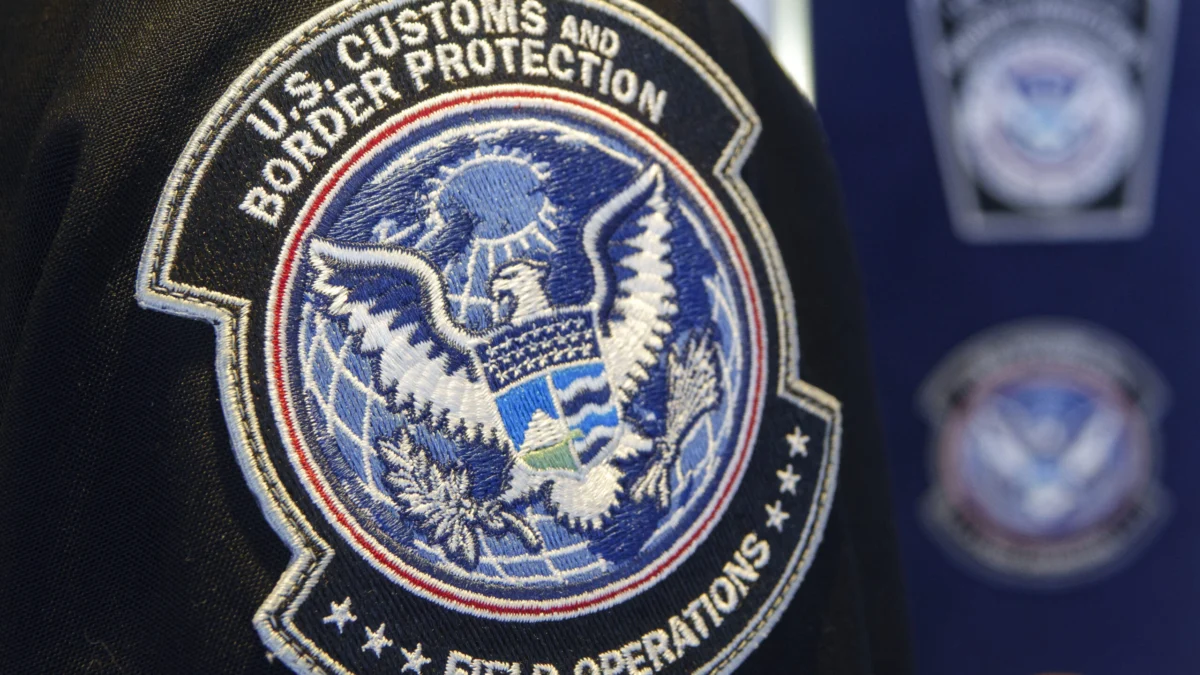
In an era where personal smartphones serve as repositories for our most intimate correspondence, financial records, and private thoughts, the boundary between national security and constitutional privacy has become increasingly blurred. A recent lawsuit filed by a Florida-based immigrant rights advocate has brought this tension into sharp focus, challenging the long-standing “border search exemption” that grants U.S. Customs and Border Protection (CBP) broad authority to search and seize electronic devices without a warrant.
The plaintiff, an outspoken activist whose work centers on immigrant rights in Florida, alleges that his constitutional rights were violated when federal agents seized his phone, effectively labeling his political dissent as a pretext for surveillance. The case, which has sent ripples through civil liberties circles, raises fundamental questions: Does the mandate of border security override the protections of the Fourth Amendment, and are political dissidents being systematically targeted under the guise of customs enforcement?
The Allegations: A Pattern of Retaliation?
At the heart of the litigation is the plaintiff’s assertion that his encounter with CBP was not a random administrative act, but a targeted effort to suppress his political expression. In his court filings, the activist draws a direct line between his advocacy work and the scrutiny he faced at the port of entry.
“I believe CBP flagged me because of my organizing and political work around immigrants’ rights in Florida,” the plaintiff wrote in his complaint. He argues that this incident is merely the latest chapter in a broader campaign of intimidation. “This isn’t the first time that law enforcement targeted and harassed me because of my political viewpoint: in 2021, after speaking out against Governor Ron DeSantis, the Miami Police were surveilling me and barring me from press conferences.”
By linking his current experience with CBP to his previous run-ins with local law enforcement, the plaintiff posits a chilling theory: that state-level political pressure and federal surveillance are increasingly intertwined, creating a hostile environment for those who challenge the status quo.
Chronology: From the Border to the Courthouse
The escalation of this conflict follows a trajectory familiar to those who track digital privacy cases. While the specific details of the seizure—the date, the specific port of entry, and the duration of the confiscation—are detailed in the legal filings first reported by the Miami New Times, the broader narrative is one of mounting frustration and the eventual resort to the judiciary.
- The 2021 Precedent: The plaintiff’s history of activism in Florida led to alleged surveillance by the Miami Police Department, including exclusion from official press conferences. This established, in the plaintiff’s view, a pattern of state-level hostility.
- The Border Encounter: The recent incident involving CBP occurred when the activist was attempting to cross the border. Agents intercepted him, and despite his protests, proceeded to seize his electronic device.
- The Seizure and Copying: Beyond mere confiscation, the activist alleges that agents went further, copying the contents of the device. This action—the digital extraction of data—is the primary point of contention in his lawsuit.
- The Filing: Frustrated by the lack of transparency and the perceived infringement on his political speech, the activist filed a lawsuit against the federal government, seeking redress for the violation of his Fourth Amendment rights and calling for a halt to the practice of warrantless digital searches.
The Border Search Exemption: A "Constitution-Free Zone"
The legal battle hinges on the "border search exemption," a doctrine that has been recognized by federal courts for decades. The logic is that the government’s interest in protecting the nation’s borders—preventing the entry of contraband, dangerous individuals, or illegal goods—is so paramount that it justifies a lower threshold for searches compared to the interior of the country.
However, critics, including the American Civil Liberties Union (ACLU), argue that this exemption has evolved into what many call a "Constitution-Free Zone." While the Fourth Amendment protects citizens against "unreasonable searches and seizures," courts have long held that the expectation of privacy is diminished at the border. In practice, this means CBP agents do not need a warrant, or even "probable cause," to inspect the contents of a traveler’s bag.
The rise of the smartphone has turned this doctrine into a modern crisis. In 2017, the Ars Technica news outlet documented a similar incident at the San Francisco International Airport, where a local artist was threatened by border agents. According to the artist, agents warned him that they would "be dicks" if he did not unlock his phone, highlighting the coercive nature of these encounters.
CBP’s Stance: Transparency vs. Security
In response to public and legal pressure, U.S. Customs and Border Protection maintains that its procedures are necessary, limited, and governed by strict protocols. On their official website, the agency outlines the conditions under which a device search is authorized:
- Probable Cause: CBP asserts that it can copy data "if there is probable cause to believe that the information contains evidence of a violation of law that CBP is authorized to enforce or administer."
- Enforcement Matters: They also claim authority if the information "relates to immigration, customs, or other enforcement matters."
To mitigate concerns regarding the frequency of these searches, CBP often points to statistical data to emphasize the rarity of the practice. According to the agency, in Fiscal Year 2025, they processed over 419 million travelers. Of that massive figure, they conducted electronic device searches on only 55,318 individuals—a rate of approximately 0.0013%.
"The overwhelming majority of international travelers cross the border without any interaction with our officers regarding their electronic devices," a spokesperson for the agency might argue. However, for those who fall within that 0.0013%, the statistics provide little comfort.
The Implications: Privacy in the Digital Age
The lawsuit filed by the Florida activist serves as a bellwether for the future of digital privacy in the United States. If the courts rule in favor of the government, it will reaffirm the broad, unchecked power of the executive branch to access the digital lives of any individual crossing a border. If the plaintiff prevails, it could force a re-evaluation of the border search exemption, potentially requiring a warrant or a higher standard of "reasonable suspicion" before federal agents can access personal data.
The Chilling Effect on Dissent
Perhaps the most significant implication is the potential "chilling effect" on political speech. If activists fear that traveling internationally could lead to the seizure of their phones—which likely contain contact lists, private communications, and research—they may choose to self-censor or avoid travel altogether. This effectively allows the government to utilize border security as a tool for political suppression.
Technological Vulnerability
Beyond politics, the case highlights a technical vulnerability. When agents copy the contents of a device, where does that data go? Who has access to it? How long is it stored? The lack of clear, publicly accessible guidelines regarding the retention and dissemination of data pulled from traveler devices creates a "black box" of surveillance that worries civil libertarians and tech experts alike.
Conclusion: A Constitutional Crossroads
As the case moves through the court system, it will undoubtedly attract the attention of privacy advocates and civil rights organizations. The plaintiff’s own words, found in his complaint, encapsulate the urgency of the moment: "CBP shouldn’t have been able to confiscate my phone, let alone copy its contents. I believe they did so to suppress my political speech."
Whether this case results in a landmark Supreme Court challenge or a quiet settlement, it has succeeded in forcing a conversation about the boundaries of state power. In a world where our lives are lived increasingly in the cloud, the border is no longer just a physical line on a map—it is a digital gatekeeper, and the keys to that gate are currently held firmly by the federal government. The question for the American judiciary is whether those keys should be used to protect the nation, or to unlock the private lives of its citizens.
 Sagoh
 Layla Zulfa
