
 By Muslim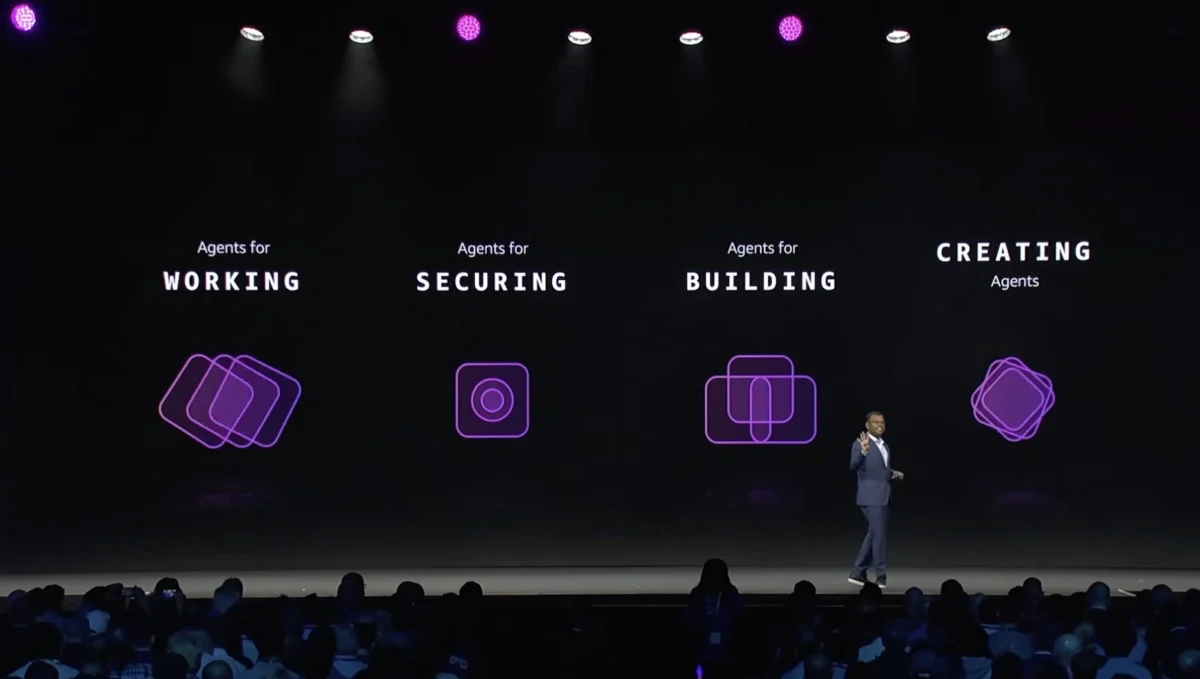
Last week, the global cloud computing landscape shifted its center of gravity to the Jacob K. Javits Convention Center in New York City, where Amazon Web Services (AWS) hosted its annual AWS Summit. The event, which drew thousands of engineers, enterprise architects, startup founders, and industry analysts, served as a high-visibility stage for the company to unveil its latest strategy in the increasingly competitive artificial intelligence market.
While the Summit featured a diverse array of technical sessions and networking opportunities, the core narrative was defined by a singular, ambitious vision: the evolution of "Agentic AI."
The Core Thesis: Compounding Value Through Agentic AI
The centerpiece of the event was the keynote delivered by Dr. Swami Sivasubramanian, AWS’s Vice President of Agentic AI. Dr. Sivasubramanian challenged the existing paradigm of Generative AI, which has largely focused on chat-based interactions and static content generation. Instead, he proposed a future defined by autonomous agents—AI systems capable of reasoning, planning, and executing complex workflows across multiple applications without constant human intervention.
"The goal is not merely to build better chatbots," Dr. Sivasubramanian stated during his presentation. "The goal is to build agents that compound value over time."
This "compounding" thesis rests on the belief that AI systems should not operate in silos. Instead, they should act as connective tissue within an enterprise, learning from previous interactions, integrating with existing APIs, and iteratively improving their decision-making capabilities. For AWS, this represents a pivot toward an ecosystem where the cloud infrastructure itself becomes an active participant in business operations, rather than a passive repository for data.
Chronology of the Summit and Strategic Rollouts
The AWS Summit in New York acted as a launchpad for a series of new service integrations designed to support this agentic vision. The event schedule followed a deliberate progression:
- Morning Keynote: The unveiling of the "Agentic Framework," a suite of tools designed to help developers bridge the gap between Large Language Models (LLMs) and real-world business execution.
- Technical Deep-Dives: Throughout the afternoon, breakout sessions detailed how these new tools integrate with existing services like Amazon Bedrock and AWS Lambda, effectively turning serverless functions into the "hands and feet" of intelligent agents.
- The Ecosystem Showcase: Partners and independent software vendors (ISVs) demonstrated real-world implementations of these agents, ranging from automated supply chain management to complex financial compliance auditing.
This strategic rollout signals that AWS is moving aggressively to address the "last mile" problem of AI—the difficulty of moving from a model that can write code or prose to a system that can reliably perform business tasks in production environments.
Supporting Data: Why "Agentic" is the New Enterprise Standard
Industry analysts have noted that the shift toward agentic systems is a necessary evolution for enterprise adoption of AI. According to recent market reports, while 80% of organizations have experimented with Generative AI, fewer than 20% have successfully integrated these models into core, high-stakes business processes.
The data suggests three primary blockers that AWS is attempting to dismantle:
- Reliability and Hallucinations: By providing agentic frameworks that allow for "human-in-the-loop" verification and deterministic logic paths, AWS is aiming to mitigate the unpredictability of LLMs.
- Latency and Integration: The new tools introduced at the Summit focus on reducing the latency involved in agentic decision-making, ensuring that agents can react to real-time data streams without bottlenecking the application.
- Governance and Security: As agents gain the ability to perform actions (like sending emails, updating databases, or triggering payments), the demand for granular security controls increases. AWS has responded by baking identity and access management (IAM) directly into the agentic workflow.
Official Responses and Strategic Implications
The industry reaction to the Summit has been largely positive, with many developers praising the shift toward practical, actionable AI. AWS’s leadership emphasized that these tools are built on the "builder-first" philosophy that has defined the company since its inception.
"We aren’t just selling models; we are selling the infrastructure for intelligence," said a senior AWS spokesperson following the keynote. "By giving our customers the tools to create agents, we are effectively decentralizing innovation. We provide the foundation; the agents provide the utility."
Implications for the Cloud Market
The move toward agentic AI has significant implications for the broader cloud market:
- Commoditization of Models: By positioning itself as the platform for agents, AWS is distancing itself from the "LLM wars." Whether a customer chooses a model from Anthropic, Meta, or Amazon’s own Titan models, the value proposition remains the same: AWS provides the environment where those models become productive.
- Shift in Developer Skill Sets: The rise of agentic AI requires a new kind of developer—one who is as much an orchestrator of intelligent systems as they are a coder. This is likely to drive demand for new AWS certifications and training programs focused on AI orchestration.
- Cost Efficiency as a Driver: A core part of the Summit announcements included price reductions on high-performance compute instances. This is a critical strategic move; as AI agents run continuously, the cost-per-inference becomes the most important metric for CFOs. By lowering costs, AWS is encouraging companies to scale their agentic workloads without fear of budget blowouts.
Looking Ahead: The Role of the AWS Builder Center
While the announcements from the Summit were substantial, AWS made it clear that the work is just beginning. The company is doubling down on its "Builder Center" initiative, a community-focused platform designed to help developers navigate the complexities of these new tools.
For those unable to attend the New York Summit, AWS has curated a wealth of resources, including the "Top Announcements" blog post and a dedicated Amazon News portal. These repositories serve as a roadmap for the coming months, outlining how developers can begin prototyping their own agents today.

The company is also maintaining an active calendar of in-person and virtual events, including AWS Community Days and specialized startup summits. These gatherings are intended to foster a feedback loop between the engineers building the tools and the practitioners using them in the field.
Conclusion: The Path to Autonomous Enterprise
The 2026 AWS Summit in New York underscored a pivotal moment in the lifecycle of artificial intelligence. We are moving beyond the novelty of conversational interfaces into an era of functional, autonomous utility.
As AWS continues to lower prices and increase the sophistication of its orchestration tools, the barrier to entry for building intelligent agents will continue to drop. For businesses, the competitive advantage will no longer lie in who has the most powerful model, but in who can best deploy agents to compound value across their operations.
As we look toward the remainder of the year, all eyes will be on the adoption rates of these new agentic frameworks. If the enthusiasm at the Summit is any indicator, the next twelve months will see a rapid proliferation of "intelligent agents" across every sector of the digital economy.
For further updates on the evolving AWS ecosystem, keep a close watch on the "What’s New with AWS" portal and follow the weekly roundups provided by the AWS developer advocacy team.
 Neng Nana
  Suro Senen
  Lina Hope