
 By Ali Ikhwan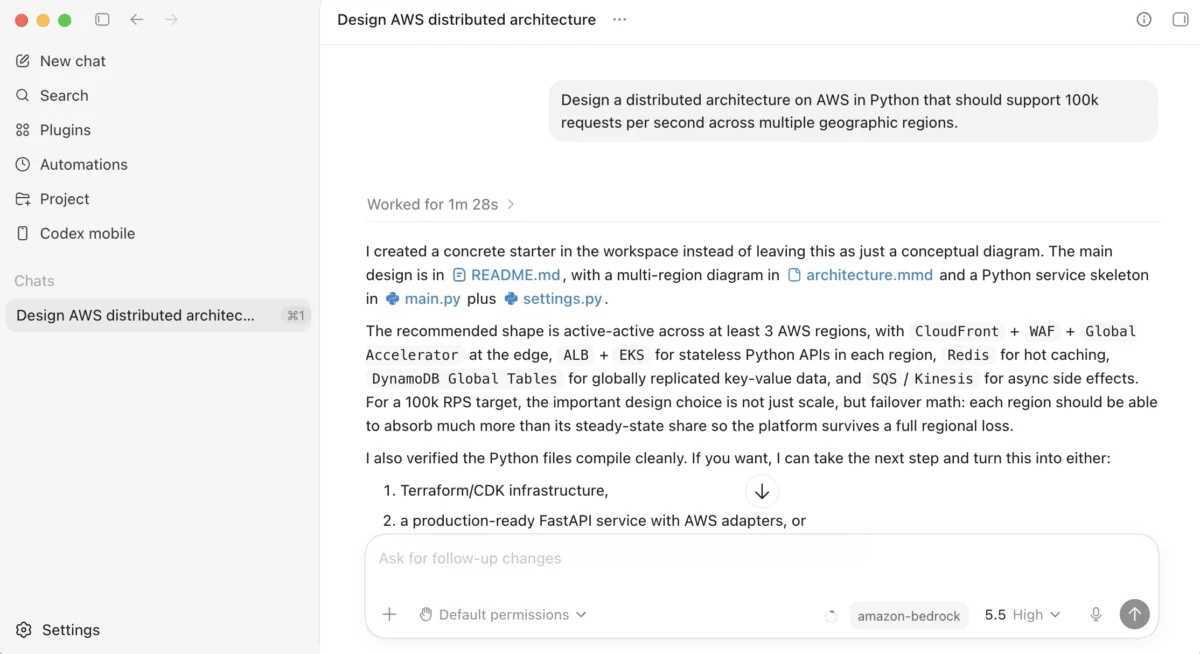
The landscape of generative artificial intelligence took a monumental leap forward this June as Amazon Web Services (AWS) officially integrated OpenAI’s latest flagship models—GPT-5.5 and GPT-5.4—alongside the powerful Codex coding agent into the Amazon Bedrock ecosystem. This strategic deployment marks a significant convergence of OpenAI’s frontier research and AWS’s enterprise-grade cloud infrastructure, promising to redefine how organizations approach complex reasoning, agentic workflows, and large-scale software engineering.
Main Facts: A New Tier of Intelligence
For developers and enterprise architects, the arrival of these models on Amazon Bedrock represents more than just a new API endpoint; it signifies a robust shift in the deployment of high-performance AI.
GPT-5.5 stands as the current pinnacle of OpenAI’s offerings, specifically engineered to handle the most demanding customer workloads. Whether it is complex logical reasoning, sophisticated data analysis, or the orchestration of multi-step agentic workflows, GPT-5.5 is designed to operate at the edge of current AI capabilities. Complementing this is the GPT-5.4 model, which provides a strategic balance, offering superior price-performance ratios for businesses that require high-tier intelligence without the overhead of the flagship model.
These models are accessed via the new Responses API, an inference engine purpose-built by AWS to ensure the high performance, reliability, and security that enterprise users demand. Furthermore, the integration of Codex provides a dedicated coding agent that streamlines the full software development lifecycle—from writing and refactoring to debugging and testing—across massive, multi-million-line codebases.
Chronology of the Deployment
The rollout of these capabilities was marked by a rapid, iterative release cycle, reflecting the fast-paced evolution of the generative AI market in 2026.
- May 24, 2026: AWS provides the first public glimpse of the upcoming OpenAI integration during the "What’s Next with AWS" event, signaling the imminent arrival of GPT-5.5 and Codex.
- June 1, 2026: Official launch of GPT-5.5 and GPT-5.4 on Amazon Bedrock. AWS clarified that these models were initially available via the
ResponsesAPI, with a commitment to bring them to the standard Bedrock console in short order. - June 3, 2026: Expansion of the ecosystem; AWS announced that GPT-5.4 was now available within the highly regulated AWS GovCloud (US-West) Region, broadening the scope for public sector adoption.
- June 7, 2026: Finalizing the user experience, AWS updated the Amazon Bedrock console, offering a new, optimized interface designed specifically to handle the unique parameters of OpenAI-compatible APIs.
Supporting Data and Technical Infrastructure
The technical architecture behind this integration is designed to maintain the data sovereignty and operational efficiency that define the Bedrock platform.
Performance and Data Residency
A core concern for enterprise clients is data residency. AWS has ensured that for any workload processed via the Bedrock-hosted OpenAI models, data remains strictly within the selected Bedrock region. This "in-region" processing is critical for companies subject to GDPR, CCPA, or internal corporate data governance mandates.
The billing model has also been simplified to reflect a cloud-native approach. By moving away from traditional seat-based licensing or long-term developer commitments, AWS has adopted a transparent, "pay-per-token" structure. This reduces the barrier to entry for startups and large enterprises alike, allowing them to scale their AI usage in direct proportion to their actual demand.
The Power of the Responses API
The Responses API is the backbone of this deployment. It allows developers to utilize model-managed multi-turn states, which is essential for long-running workflows where the AI must maintain context over a significant duration. Additionally, it supports hosted tools and function calling, enabling the AI to interface with external databases, APIs, or internal business logic—a necessity for modern "agentic" software.
Integration with Codex
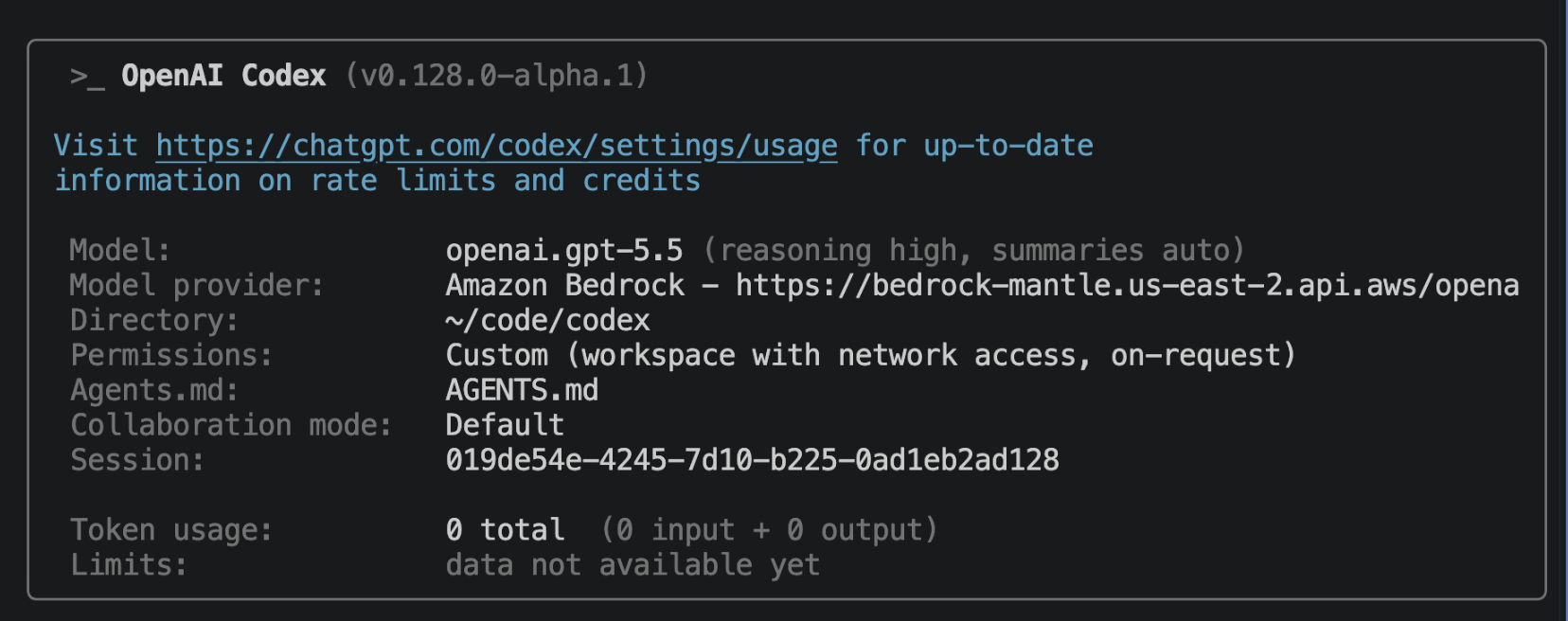
Codex acts as the developer’s force multiplier. By configuring the ~/.codex/config.toml file, developers can point their local IDEs (including Visual Studio Code, JetBrains, and Xcode) toward the Amazon Bedrock inference engine. The dual-path authentication—using either the Amazon Bedrock API key or the standard AWS SDK credential chain—ensures that security teams can manage access using existing AWS Identity and Access Management (IAM) policies.

Official Responses and Strategic Positioning
The partnership between AWS and OpenAI represents a collaborative effort to solve the "last mile" problem of AI adoption: how to get powerful models into the hands of enterprise developers without compromising security or architectural integrity.
Industry analysts note that this move effectively turns Amazon Bedrock into a "model-agnostic" powerhouse. By offering not only their native Amazon Titan models but now the elite tier of OpenAI’s models, AWS is positioning itself as the primary operating system for AI-driven business.
"We are providing developers with the best of both worlds," noted Channy Yun, a principal developer advocate at AWS, during the launch. "The intelligence of the world’s most advanced models, coupled with the security, scale, and compliance framework of the AWS Cloud."
OpenAI’s documentation emphasizes that this collaboration is about optimizing the "long-horizon" developer workflow. By offloading complex architectural design or boilerplate code generation to GPT-5.5 and Codex, human developers can focus on high-level system design and business-specific logic.
Implications for the Future of Software Development
The integration of these models into the AWS ecosystem has profound implications for the industry.
The Rise of the Agentic Enterprise
We are moving beyond the era of simple "chatbots" into the age of autonomous agents. With GPT-5.5 capable of handling sophisticated reasoning tasks, companies can now automate entire segments of their backend operations. For instance, an agent could theoretically monitor system health logs across geographic regions, detect a potential bottleneck, suggest an architectural refactor in Python, and validate the code through a CI/CD pipeline—all within a single, secure Bedrock session.
Democratizing High-End Engineering
The accessibility of Codex via standard IDEs means that the barrier to entry for building complex, distributed systems is lowering. Developers can now utilize the collective knowledge encoded within GPT-5.5 to design architectures capable of supporting 100,000+ requests per second. This shift essentially "democratizes" the capabilities of senior-level cloud architects, allowing smaller teams to build at a scale previously reserved for tech giants.
Compliance-First AI
The availability of GPT-5.4 in GovCloud is a signal that the most sensitive sectors—defense, healthcare, and finance—are now ready to embrace generative AI. By keeping the model inference within the AWS regulatory perimeter, the "black box" nature of AI becomes more manageable, auditable, and secure.
Conclusion: The Path Ahead
The launch of GPT-5.5, GPT-5.4, and Codex on Amazon Bedrock is a clear indicator that the market for AI is maturing. The focus is shifting from "wow-factor" demonstrations to practical, production-ready workflows. As organizations continue to adopt these tools, the focus will likely turn toward fine-tuning, retrieval-augmented generation (RAG), and the long-term cost optimization of these high-performance models.
For now, the message from AWS and OpenAI is clear: the frontier of AI is no longer a walled garden. It is a cloud-native service, ready to be integrated, scaled, and secured within the existing enterprise stack. Whether you are a solo developer working on a side project or a lead architect overseeing a global infrastructure, the tools for the next generation of software development are officially live.
 Neng Nana
  Suro Senen
  Lina Hope