
 By Raul Delapena Setiawan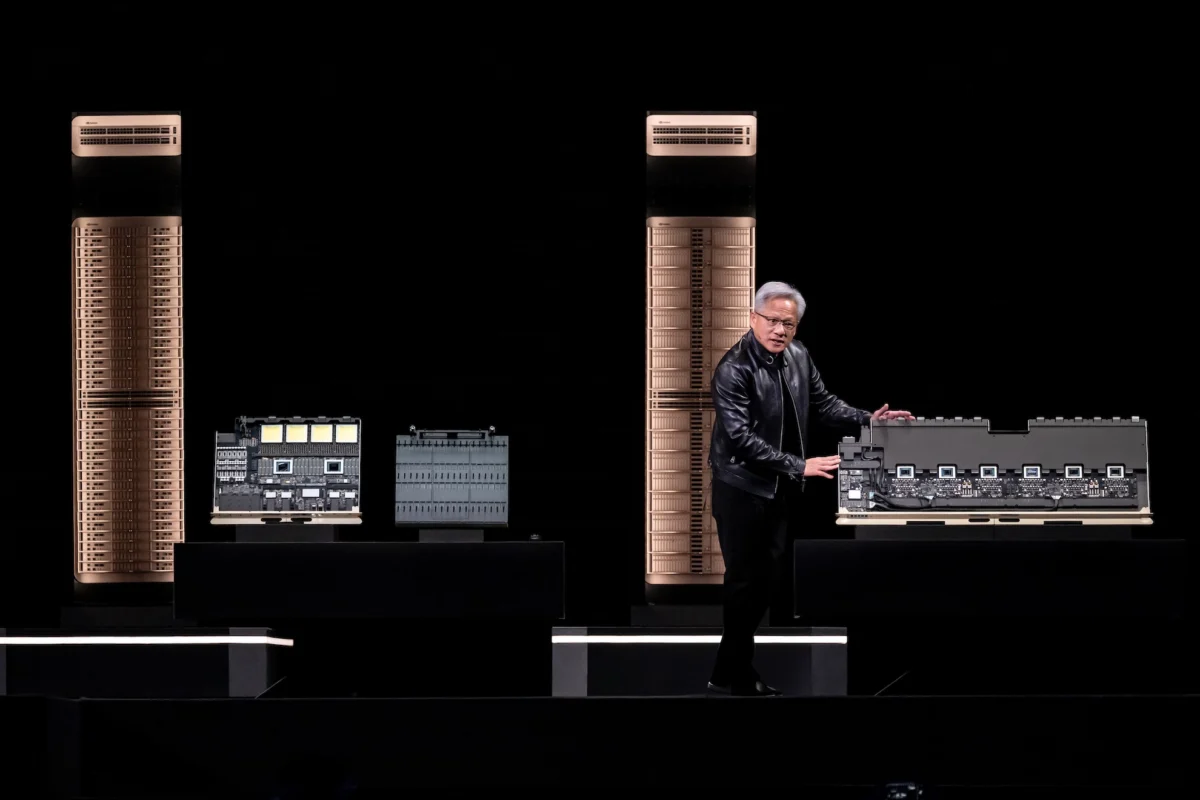
In a move that underscores the insatiable global hunger for generative AI compute, Amazon and Nvidia have announced a dramatic expansion of their strategic partnership. The agreement, revealed during Nvidia’s latest quarterly earnings call, confirms that Amazon Web Services (AWS) will integrate an additional 2 million high-performance Nvidia GPU chips into its global data center infrastructure.
This deal—worth tens of billions of dollars—represents one of the most significant infrastructure commitments in the history of cloud computing. It secures Amazon’s position as the primary host for the world’s most advanced AI models while further cementing Nvidia’s dominance as the "engine room" of the artificial intelligence revolution.
The Scope of the Deal: Powering the Future of Compute
The expanded partnership goes far beyond simple procurement. While the headline figure is the addition of 2 million GPU units, the deployment schedule—set for 2027 and 2028—indicates a long-term strategic alignment. These units will feature Nvidia’s cutting-edge Blackwell Ultra, Rubin, and Rubin Ultra architectures, chips designed specifically to handle the massive training and inferencing demands of next-generation large language models (LLMs).
Beyond the GPUs themselves, Nvidia is embedding its entire ecosystem into the AWS fabric. This includes:
- Networking Hardware: Advanced systems to connect thousands of GPUs into unified, high-speed clusters.
- Vera CPUs: Nvidia’s new central processing units, intended to be integrated with Rubin GPUs or deployed as standalone server units.
- Software Stack: Integration of Nvidia’s Omniverse (simulation), Cosmos (world models), Isaac (robotics), and Jetson (edge AI) platforms across Amazon’s vast enterprise and robotic operations.
A Chronology of Escalating Demand
The pace at which this partnership has accelerated is unprecedented. Just five months ago, Amazon and Nvidia announced a deal to deploy over 1 million GPUs across AWS. At the time, that figure was considered a monumental benchmark. However, according to Nvidia’s leadership, the demand from startups, government entities, and large-scale enterprise labs has far exceeded even those aggressive projections.
The trajectory of this relationship is clear:
- Q1 2026: Initial discussions regarding large-scale deployments of Trainium and Graviton chips alongside existing Nvidia hardware.
- Mid-2026: Reports surface of Amazon’s custom chip business hitting a $25 billion annualized revenue run rate, backed by $225 billion in total commitments from AI giants like Anthropic and OpenAI.
- Late 2026: Nvidia reports record quarterly sales of $96.2 billion, with data center revenue climbing 117% year-over-year.
- Current: The formalization of the "2 million unit" deal, signaling a massive scale-up for 2027–2028.
The Dual-Track Strategy: Competition and Collaboration
Perhaps the most intriguing element of this partnership is the tension—and synergy—between Amazon’s internal hardware efforts and its reliance on Nvidia.
Amazon is not merely a customer; it is an aspiring competitor. The company is aggressively scaling its internal silicon division, developing its own Trainium chips to challenge Nvidia’s H100 and Blackwell series. Furthermore, Amazon’s Graviton CPUs, built on Arm architecture, have begun to displace traditional x86 server chips from Intel and AMD.
Despite these efforts, Nvidia remains the undisputed leader in the AI silicon space. By adopting Nvidia’s full stack while simultaneously building its own, Amazon is adopting a "hedged" strategy. It ensures that AWS remains the most versatile cloud provider, capable of offering clients the absolute best-in-class performance (Nvidia) while providing cost-effective, proprietary alternatives (Trainium) for specialized workloads.
Supporting Data: The Economics of the AI Gold Rush
The financial scale of this partnership reflects a broader industry shift toward "profitable tokens." Nvidia’s CFO, Colette Kress, noted that the company has committed $279 billion to secure supply and manufacturing capacity for current and future projects—a staggering increase from the $119 billion reported just one quarter prior.
Financial Highlights:
- Revenue Growth: Nvidia’s total quarterly revenue reached $96.2 billion, with $89 billion coming specifically from data center operations.
- Forward Projections: Nvidia anticipates $108 billion in revenue for the third quarter, fueled by the initial production and shipment of the Rubin GPU series.
- Strategic Spending: Nvidia’s capital allocation includes $92 billion earmarked for the remainder of this fiscal year and $87 billion for fiscal year 2028, ensuring they can meet the hardware requirements of their partners.
Official Responses and Strategic Vision
During the earnings call, Nvidia CEO Jensen Huang emphasized the shift from "AI experimentation" to "AI production."
"The thing that matters for the industry is that AI is now doing productive and useful work," Huang stated. "AI is generating profitable tokens. If we had more compute, we could generate more profitable tokens, which results in more profit for all of the services. This is the exact phase where we’re at."
For Amazon, the partnership provides a defensive moat. By securing early access to the Rubin and Rubin Ultra lines, AWS ensures that its customers—ranging from small-scale startups to massive AI labs—do not migrate to competitors like Microsoft Azure or Google Cloud due to supply constraints.
Broader Implications: A New Era for Robotics and Enterprise
While cloud-based model training grabs the headlines, the integration of Nvidia’s physical AI stack into Amazon’s operations is equally significant. By deploying Nvidia’s Isaac and Jetson platforms, Amazon is effectively upgrading the "brains" of its massive warehouse robotics fleet.
The "Vera" Factor
Nvidia’s Vera CPUs represent a new frontier for the company. Jensen Huang has previously identified a $200 billion Total Addressable Market (TAM) for these processors. By securing their deployment alongside AWS, Nvidia is ensuring that its chips are present not just in AI training clusters, but in the foundational server hardware that powers the modern internet.
The Road Ahead: Will the Investment Pay Off?
The fundamental question facing investors and industry analysts is whether the hundreds of billions of dollars currently being poured into physical infrastructure will yield a proportionate return on investment.
Critics argue that we are currently in an "infrastructure bubble," where companies are spending heavily on capacity in hopes that demand for AI-generated revenue will eventually catch up. Proponents, however, point to the $225 billion in total commitments already pledged by AI labs as proof that the demand is real, sustainable, and growing.
For Amazon and Nvidia, the gamble is clear: they are betting that the "AI age" is only in its infancy. As Amazon integrates Nvidia’s robotics, software, and silicon into its own sprawling ecosystem, the two companies are effectively building the nervous system of the future economy. Whether this massive expenditure leads to a new era of productivity or an oversupply of compute remains the defining debate of the decade. For now, however, the race for compute continues unabated, and both Amazon and Nvidia are running faster than anyone else in the field.
 Sagoh
Sagoh  Iffa Jayyana
  Lina Hope