
 By Lina Hope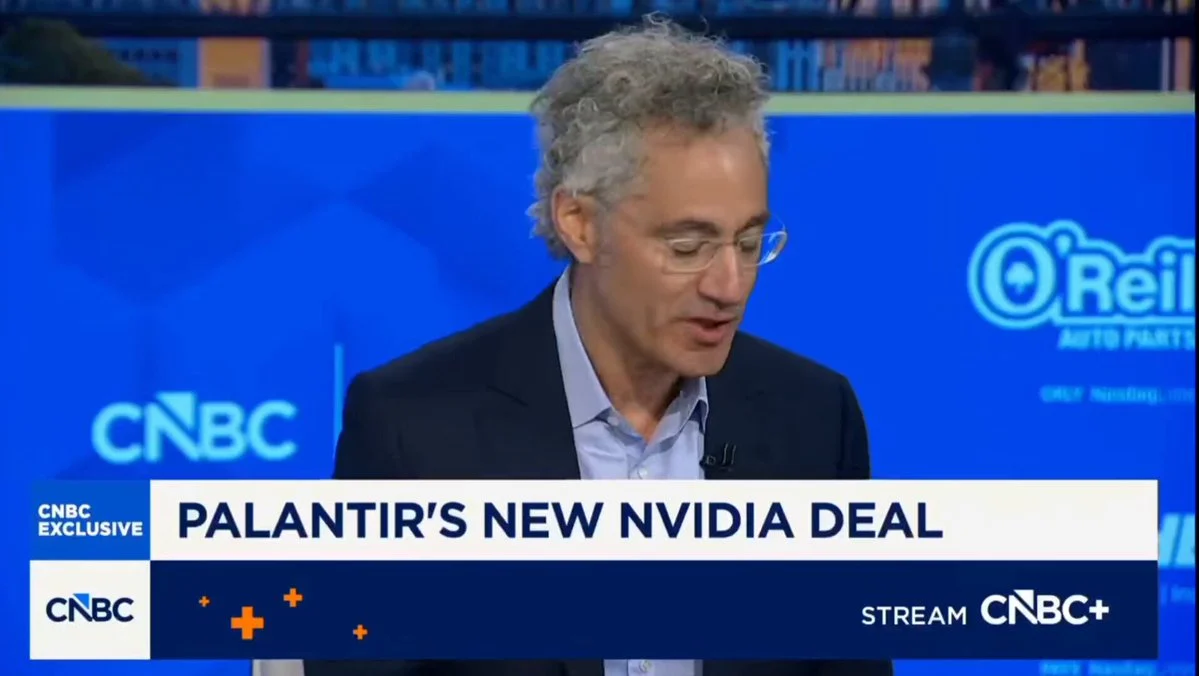
In a blistering critique that has sent shockwaves through the corridors of Silicon Valley and Wall Street, Palantir CEO Alex Karp has leveled a series of grave accusations against the leaders of the generative AI revolution, specifically targeting OpenAI’s Sam Altman and Anthropic’s Dario Amodei. During a recent national television appearance, Karp dismantled the prevailing business models of the frontier AI industry, characterizing them not as revolutionary productivity tools, but as sophisticated, large-scale mechanisms for "intellectual property extraction."
Karp’s intervention strikes at the heart of the "AI hype cycle," questioning the durability and value of the token-based pricing models that have underpinned the astronomical valuations of the current AI leaders. As enterprises globally race to integrate Large Language Models (LLMs) into their workflows, Karp suggests that these corporations are being systematically drained of their proprietary "alpha"—their competitive edge—under the guise of innovation.
The Core Accusation: A Wealth Tax on Enterprise
Karp’s central thesis is that the relationship between frontier AI labs and their enterprise customers is fundamentally predatory. According to Karp, executives across the Fortune 500 are increasingly "livid" in private, even as they maintain a veneer of public compliance with the AI trend.
"Every single enterprise in this country, these people are LIVID. They are paying for tokens that create no value. These people are stealing the weights and alpha of my business," Karp asserted.
By "stealing the weights and alpha," Karp refers to the process by which customer-specific data—strategy memos, proprietary workflows, internal financial models, and customer interaction logs—is ingested by frontier models. When these models are retrained or fine-tuned, the unique operational intelligence of the customer is essentially codified into the base model, which is then sold back to the customer’s competitors. In this view, the "intelligence" of the model is not merely a product of the lab’s own research, but a harvest of the collective institutional knowledge of the American business sector.
Karp went further, labeling this arrangement a "wealth tax that does not help the poor. It just punishes." The punishment, he argues, is the systematic erosion of competitive advantage, a tax levied not by the state, but by private labs that act as both service providers and silent, involuntary partners in the enterprise’s strategic operations.
Chronology of the Conflict: From Hype to Hostility
The tension between Palantir—a company that has long focused on data integration and secure, proprietary AI applications—and the "frontier labs" has been building for months.

- The Adoption Phase: Throughout 2023 and early 2024, enterprises rushed to subscribe to OpenAI and Anthropic APIs, viewing them as a "must-have" to remain relevant.
- The Realization Gap: As these tools moved from sandbox experimentation to production environments, early ROI assessments began to show stagnation. Companies found that while they were spending heavily on compute and tokens, the tangible bottom-line impact remained elusive.
- The Public Pivot: Alex Karp, long known for his contrarian views on Silicon Valley’s "groupthink," began escalating his criticism. His recent televised comments represent the culmination of this growing frustration, signaling a definitive break from the industry-wide consensus that "scaling compute is the path to AGI."
- The Silent Backlash: Karp’s assertion that CEOs are furious in private but silent in public suggests a growing "fear-of-missing-out" (FOMO) dynamic. Executives are caught between the risk of being left behind by AI and the risk of handing over their company’s secrets to their competitors via the labs’ training pipelines.
The Pricing Paradigm: A "Confession" of Low Value?
Perhaps the most damaging part of Karp’s critique is his dismantling of the token-based pricing model. He poses a simple, rhetorical question that has yet to be answered by the leadership of OpenAI or Anthropic:
"If it was so valuable, let’s say I can make you $1 billion tomorrow. Wouldn’t I say I’ll make you $1 billion and I want 30 percent? Why are they charging for tokens if it’s so valuable?"
Karp argues that the industry’s reliance on "token pricing" is an implicit confession of failure. If these models truly produced durable, defensible, and high-margin value, the providers would naturally shift to value-based pricing—taking equity or a percentage of the efficiency gains they claim to create.
Instead, by charging by the million tokens, these labs are selling compute, not business value. This allows them to offload the risk of performance onto the customer while ensuring a steady revenue stream regardless of whether the AI delivers actual results. It is, in Karp’s estimation, a "pay-to-play" scheme where the cost of entry is high, but the promise of ROI is largely speculative.
Implications: The Looming Valuation Shakeout
The implications of Karp’s statements are profound for both the AI industry and the broader enterprise software market.
The Trust Deficit
If enterprises begin to view AI providers as potential intellectual property thieves, we may see a massive flight to private, air-gapped, or "on-premise" AI models. The current trend of sending proprietary data to the cloud for inference could be reversed as companies prioritize data sovereignty over the convenience of frontier models.
The Valuation Stack
The entire AI valuation stack is currently "priced for perfection," based on the assumption that enterprise demand for compute will grow exponentially. If the primary enterprise buyers—the Fortune 500—decide that the cost of these services outweighs the value, the revenue projections for companies like OpenAI and Anthropic could collapse. As Karp noted, "The moment enterprises stop believing, the whole valuation stack shakes."

The "Competitor Paradox"
Karp highlights a dangerous feedback loop: when a company runs its confidential documents and financial models through a frontier model, it is effectively teaching that model how to replace them. The vendor collects a fee today and uses the resulting "compounding intelligence" to build a more capable model tomorrow. This creates a scenario where the enterprise is paying the vendor to automate its own obsolescence.
Official Responses and Industry Defense
To date, the major frontier labs have remained largely circumspect regarding Karp’s specific allegations. Industry advocates often argue that data-use policies (specifically those for Enterprise-tier customers) prevent the use of customer data for training base models. However, Karp’s argument suggests that the mere exposure of workflows and the reliance on these models for decision-making processes inherently grants the labs a level of insight that constitutes a breach of the traditional corporate "moat."
Industry analysts are divided. Some argue that Karp is playing a protectionist game, positioning Palantir’s own "AIP" (Artificial Intelligence Platform)—which emphasizes secure, customer-owned data environments—as the only safe alternative. Others, however, believe Karp has identified the "dirty secret" of the AI bubble: that the "intelligence" is far less proprietary than the labs claim, and the "service" is far more extractive than the customers realize.
Conclusion: A Turning Point for Enterprise AI
Alex Karp’s intervention is not merely a critique of pricing models; it is a fundamental challenge to the current trajectory of the AI industry. By framing the AI revolution as a "wealth tax" that punishes the productive, he has provided a rallying cry for those in the C-suite who have felt uncomfortable with the industry’s opacity.
As enterprises navigate the coming year, they face a choice: continue to pay the "token tax" to the frontier labs, or demand a new, more secure paradigm that protects their internal workflows and keeps their "alpha" in-house. Karp’s warning is clear: if the industry continues on its current path, it is not just the models that are being trained—it is the enterprises themselves, being trained to become the fuel for their own replacement.
The "frontier" may look bright from the outside, but as Karp has illuminated, the cost of admission may be far higher than the price of a token. It may be the very future of the company itself.
 rifanmuazin
  Layla Zulfa
  Evan Lee Salim