
 By Siti Muinah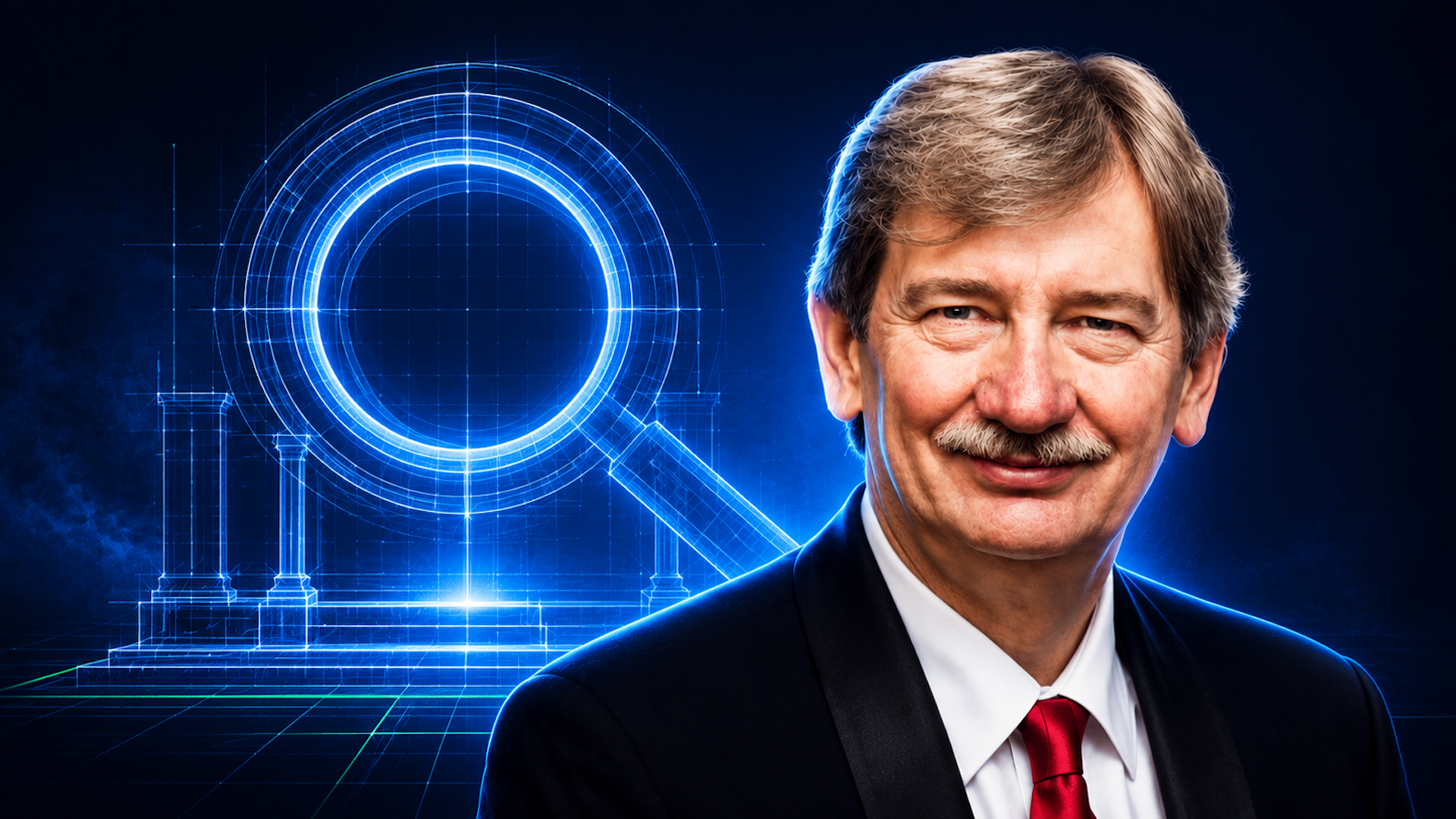
The digital marketing world is mourning the loss of Bruce Clay, a foundational pioneer widely regarded as the "father of Search Engine Optimization" (SEO). Clay, who passed away recently following a brief hospitalization, leaves behind an indelible legacy that shaped the modern internet. From coining the term "SEO" in the mid-1990s to establishing one of the industry’s first dedicated consulting agencies, Clay spent nearly three decades guiding the transition of search from a technical curiosity into a multi-billion-dollar global industry.
News of his passing has triggered a wave of tributes from search engine marketing professionals, agency leaders, and technology executives worldwide. Clay was not only an inventor of foundational search design practices, but he was also a generous educator, author, and mentor who helped formalize the ethics and standards of the digital marketing profession.
Chronology: From Mainframes to the Birth of SEO (1996–2024)
To understand Bruce Clay’s impact is to trace the history of the commercial internet itself. Before the web existed in its modern form, Clay was a Silicon Valley insider with a background in mathematics, mainframe programming, and database optimization. Armed with an MBA and deep technical expertise, Clay’s career took a historic turn in early 1996.
+-------------------------------------------------------------------------+
|                         BRUCE CLAY: KEY MILESTONES                      |
+-------------------------------------------------------------------------+
| [1996]  Launches Bruce Clay, Inc. after Al Gore's internet push.        |
|         Optimizes pages for early search engines (pre-Google).          |
|                                                                         |
| [1999]  Attends first Search Engine Strategies (SES) conference;        |
|         helps popularize the acronym "SEO" over "positioning."          |
|                                                                         |
| [2000]  Co-founds SEMPO (Search Engine Marketing Professionals Org),    |
|         establishing global standards and ethical guidelines.           |
|                                                                         |
| [2010s] Advocates for search industry interests in U.S. internet policy |
|         discussions; expands agency footprint globally.                 |
|                                                                         |
| [2024]  Launches "Pre-Writer" AI tool; champions semantic entities and  |
|         intra-page sub-siloing before his passing.                      |
+-------------------------------------------------------------------------+
The 1996 Pivot
In January 1996, inspired by federal initiatives promoting the "Information Superhighway," Clay recognized that the nascent World Wide Web would require a specialized form of engineering to help businesses connect with users. He founded Bruce Clay, Inc., operating initially as a solo consultant.
At the time, Google did not exist. The internet was a "Wild West" populated by more than 20 competing search engines—such as AltaVista, Lycos, Excite, and Yahoo!—which frequently scraped data from one another. Clay applied his mainframe optimization background to decode how these early engines indexed web pages, developing mathematical models to improve site visibility.
Coining the Acronym
As the industry began to coalesce, Clay attended the very first Search Engine Strategies (SES) conference in Dallas, organized by search journalist Danny Sullivan. At a single round table in a hotel bar, the handful of individuals who then comprised the entire search industry gathered. During this era, practitioners debated what to call their trade, with terms like "search engine positioning," "search engine ranking," and "search engine optimization" competing for dominance.
Clay championed "optimization" because of its precise, engineering-focused connotation. The acronym "SEO" quickly stuck, transforming from a niche technical descriptor into a globally recognized business discipline within a matter of months.
Global Expansion and Advocacy
By the turn of the millennium, Clay’s agency began a rapid vertical expansion. He established offices across the globe, including in Japan, Australia, India, and throughout Europe.
In 2000, Clay became a founding board member of the Search Engine Marketing Professionals Organization (SEMPO). For over 15 years, SEMPO served as the primary non-profit trade association for the search industry, promoting best practices and educating corporate brands. In the early 2010s, Clay and his fellow board members represented the industry in Washington, D.C., working directly on U.S. internet policy and lobbying for fair search practices and consumer privacy standards.
Supporting Data & Technical Insights: The Evolution of Search Architecture
Throughout his 28-year career, Clay was distinguished by his highly intellectual, engineering-led approach to search. Rather than chasing short-lived algorithms, he focused on structural architecture. In his final months, Clay spoke extensively about the transition of search from keyword-centric indexing to context-driven artificial intelligence.
The Shift from Keywords to Semantic Entities
In a final podcast interview with long-time colleague Rob Garner, Clay declared that traditional keyword optimization was fundamentally outdated.
"Keywords are so 1995," Clay remarked. "Don’t get me wrong, keywords helped build our industry. But it’s time to molt and move on."
Clay argued that modern search engines, powered by Large Language Models (LLMs), operate on a system of semantic entities and context. Rather than analyzing how many times a specific word appears on a page (keyword density—a metric Clay actually patented in the early days of SEO), modern search engines evaluate how effectively a website answers a user’s intent.
+-------------------------------------------------------------------------+
|                  THE EVOLUTION OF CONTENT OPTIMIZATION                  |
+-------------------------------------------------------------------------+
|  PAST: Keyword-Led (1995-2015)       |  PRESENT: Entity-Led (2016-Pres.)|
|  - High keyword density              |  - Context & entity mapping      |
|  - Monolithic, long-form pages       |  - Question-centric structure    |
|  - Written primarily for crawlers    |  - Modular "micro-expert" H2s    |
|  - Site-level silo architecture      |  - Intra-page sub-siloing        |
+-------------------------------------------------------------------------+
The "Star Trek Computer" Paradigm and Sub-Siloing
Clay envisioned the ultimate destination of search as the "Star Trek computer"—a highly usable, conversational interface that provides instantaneous, accurate answers to complex queries. To prepare websites for this reality, Clay designed a structural concept called intra-page sub-siloing.
According to Clay, search engines utilizing AI search features (such as Google’s AI Overviews) do not merely index a page as a single topic. Instead, they dissect pages into modular subsections. Clay’s research indicated that to rank in AI-driven search results, web content must be architected as follows:
- Standalone Expertise: Every H2 section within a page must be written as if it were a standalone page, answering a highly specific sub-question.
- Hierarchical Siloing: Websites must organize content into logical, thematic clusters (silos) both at the site architecture level and within individual pages.
- Contextual Interlinking: Pages must utilize structured schema and precise cross-linking to map out the relationships between different entities.
AI as a Research Assistant, Not a Writer
As generative AI tools like ChatGPT proliferated, Clay warned against the wholesale automation of content writing. He argued that publishing unedited AI text was a recipe for becoming "last among equals" in search rankings.
To address this, Clay’s company developed a tool called Pre-Writer. The tool was designed to automate the heavy research, data gathering, and semantic mapping phases of content creation, while intentionally leaving the style, voice, and final writing to human professionals. Clay maintained that search engines would eventually develop sophisticated filters to identify and devalue purely automated content, making the "human touch" an essential ranking factor.
Industry Tributes, Official Responses, and Personal Reflections
The digital marketing community has reacted with profound sadness to Clay’s passing, with many remembering him not only as a brilliant engineer but also as a remarkably warm and approachable leader.
Rob Garner’s NYC "Thunder Snow" Tribute
Rob Garner, an industry veteran who worked alongside Clay on the SEMPO board, shared a poignant memory that he felt captured Clay’s unique spirit. During a SEMPO board meeting in Midtown Manhattan in the early 2010s, a sudden, heavy snowstorm blanketed the city, silencing the usual traffic.
As the board members walked back to their hotel, an incredibly rare meteorological event occurred: a massive bolt of lightning struck just blocks away, illuminating the falling snow with a deafening boom. Garner recalled:
"None of us had ever seen or heard of it, and we didn’t know what to call it. I believe Bruce called it ‘thunder snow,’ and it stuck. Thus his naming streak continued. He was a rare talent who understood the trade from top to bottom, and back to the top again. But above all, he was genuinely a nice guy."
Tributes from the SEO Community
Across social media platforms and industry publications, search professionals have echoed these sentiments. Danny Sullivan, Google’s Search Liaison and co-founder of Search Engine Land, has frequently acknowledged Clay’s foundational role in bringing credibility to the industry.
Colleagues noted that even as he entered his late 70s, Clay never lost his intellectual curiosity. When AI disrupted the search landscape in 2023, Clay did not retreat; instead, he approached the technology with the same child-like excitement he had displayed in 1996, immediately building new tools to dissect LLM behavior.
Implications: The Future of Search Without Its Founding Father
Bruce Clay’s passing comes at a critical juncture for the search engine optimization industry. As Google integrates generative AI directly into search results pages and alternative conversational engines rise in popularity, many commentators have questioned whether traditional SEO is dead.
Clay’s final works and interviews offer a resounding answer: SEO is not dead; it is expanding.
                     +-------------------------+
                     |           SEO           |
                     |  (The Master Discipline)|
                     +------------+------------+
                                  |
         +------------------------+------------------------+
         |                                                 |
+--------v--------+                               +--------v--------+
|       GEO       |                               |       AIO       |
|  (Generative    |                               |    (AI Engine   |
|     Engine      |                               |  Optimization)  |
|  Optimization)  |                               +-----------------+
+-----------------+
The Fallacy of "New" Optimization Acronyms
In his final months, Clay strongly dismissed the emergence of new marketing buzzwords like GEO (Generative Engine Optimization) or AIO (AI Optimization) as distinct, separate industries. He argued that these are merely marketing terms invented by agencies to sell services.
Clay’s core thesis was that AI search engines rely entirely on traditional search indexes to verify facts, evaluate authority, and combat spam. If a business does not have a solid foundation in traditional organic SEO—including high-quality backlinks, technical site health, and authoritative content—it will never be cited by an AI engine.
A Legacy of Education
Ultimately, Bruce Clay’s greatest legacy is the democratization of search knowledge. Through his training programs, books, and public speaking engagements, he educated hundreds of thousands of digital marketers. He proved that search was not a magic trick or a system to be gamed, but a rigorous branch of digital engineering that required structure, ethics, and a deep respect for the end-user.
As the industry navigates its most turbulent transition since the late 1990s, the principles laid down by Bruce Clay—structural integrity, semantic clarity, and ethical, human-centric content—remain the guiding stars for the future of the web. He will be deeply missed, but his architecture lives on in every search query made around the world.
 Jia Lissa
  Nana Muazin
  Layla Zulfa