
 By Ammar Sabilarrohman
In the high-stakes world of international finance, few things are as potent as a single, cryptic string of characters. Recently, a tweet from Mohammad Bagher Ghalibaf, the Speaker of Iran’s parliament, sent shockwaves through global trading desks. The tweet featured a mocking comparison between the oil and bond markets, but the final line of his post—EUCRBRDT Index GP <GO>—was the true disruptor.
To the uninitiated, it looked like a string of gibberish. To the financial elite, it was a neon sign. That command is a classic Bloomberg Terminal instruction, used to pull up the spot price chart for North Sea Brent crude. The implications were immediate and explosive: A senior official from a heavily sanctioned nation appeared to be operating within the inner sanctum of Western financial infrastructure.
While the incident triggered speculation regarding potential sanctions evasion, it also inadvertently highlighted a deeper, more enduring reality: the Bloomberg Terminal is not merely a tool; it is the lingua franca of global capital. Despite being a 44-year-old, "clunky" piece of hardware, it remains the absolute backbone of the financial industry.
The Anatomy of a Command: Decoding the Terminal
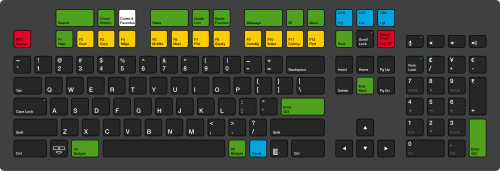
To understand why Ghalibaf’s tweet caused such a stir, one must understand the idiosyncratic language of the Terminal. The command EUCRBRDT is the ticker for the Bloomberg European Dated Brent Forties Oseberg Ekofisk (BFOE) Crude Oil Spot Price, a critical benchmark for the global oil market. The Index qualifier designates it as a market index, while GP instructs the machine to generate a "Graph Price" chart.
The final component, <GO>, is the legendary green execution key. Borrowed from the "GO" square on a Monopoly board, it serves as the universal "enter" button. For decades, the sound of that key being struck has signaled the movement of billions of dollars.
The terminal is a closed-loop system, costing approximately $32,000 annually per seat. For a high-ranking official from a country isolated by U.S. Treasury sanctions to be fluent in this specific syntax suggests that, even behind the veil of geopolitical isolation, the reach of Bloomberg’s data network remains pervasive. It is a testament to the fact that when it comes to the flow of global liquidity, the Terminal is the inescapable center of gravity.
A Brief Chronology: From Salomon Brothers to a $150 Billion Empire
The history of the Bloomberg Terminal is a study in disruption. In 1981, after being ousted from Salomon Brothers without a severance package, Michael Bloomberg founded Innovative Market Systems (IMS) with a $10 million equity stake. By December 1982, he had installed the first "Market Master" terminal at Merrill Lynch.
At the time, the bond market was a fragmented, paper-heavy nightmare. Traders relied on manual calculations and physical notebooks to track yield curves, a process that could take up to half an hour per task. Bloomberg’s machine collapsed that time into mere seconds. By 1991, the user base had grown to 10,000, and the launch of Bloomberg News transformed the terminal into an all-in-one ecosystem of data, journalism, and analysis.

Today, Bloomberg L.P. is a $150 billion colossus. Despite the evolution of the internet and the rise of cloud computing, the Terminal’s core architecture has remained stubbornly consistent. It is a product that has successfully resisted the "SaaS-ification" of the modern era by evolving into a proprietary necessity rather than just a software utility.
The Cost of the "Assistant Manager"
In the Korean financial sector, the terminal is affectionately—and ironically—called "Bl-daeri," or "Bloomberg Assistant Manager." The joke is grimly practical: the annual subscription fee for one terminal is roughly equivalent to the salary of a mid-level manager.
The financial burden is immense. With a standard single-seat cost of nearly $32,000, plus installation fees, dedicated hardware, and data add-ons, the effective first-year cost can exceed $35,000. For a mid-sized asset management firm requiring 50 seats, this represents an annual fixed cost of over $1.1 million. Yet, firms pay it without protest. In the calculus of global finance, the cost of not having the terminal—in terms of missed trades, lack of access to liquidity, and inability to communicate with counterparts—far outweighs the steep subscription price.
The Four Pillars of the Moat
Why has no competitor managed to topple Bloomberg in four decades? Analysts point to a four-layer "moat" that makes switching costs prohibitively high.
1. The Data Standard
While real-time data from global exchanges is technically replicable, Bloomberg’s proprietary benchmarks, such as the "Bloomberg Aggregate Bond Index" (The Agg), have become the industry standard. These indices are embedded in the legal language of thousands of prospectuses and investment contracts. To switch providers would require the renegotiation of trillions of dollars in assets.
2. The Network Effect (The IB Chat)
The "IB" (Instant Bloomberg) chat service is perhaps the most significant barrier. It is the most expensive and exclusive social network in the world. As of the mid-2010s, it processed 200 million messages daily across 20 million chat rooms. When a quote is exchanged on IB, it is effectively a binding order that triggers immediate back-office settlement. Being "off-terminal" is synonymous with being "off-market."
3. Professional Muscle Memory
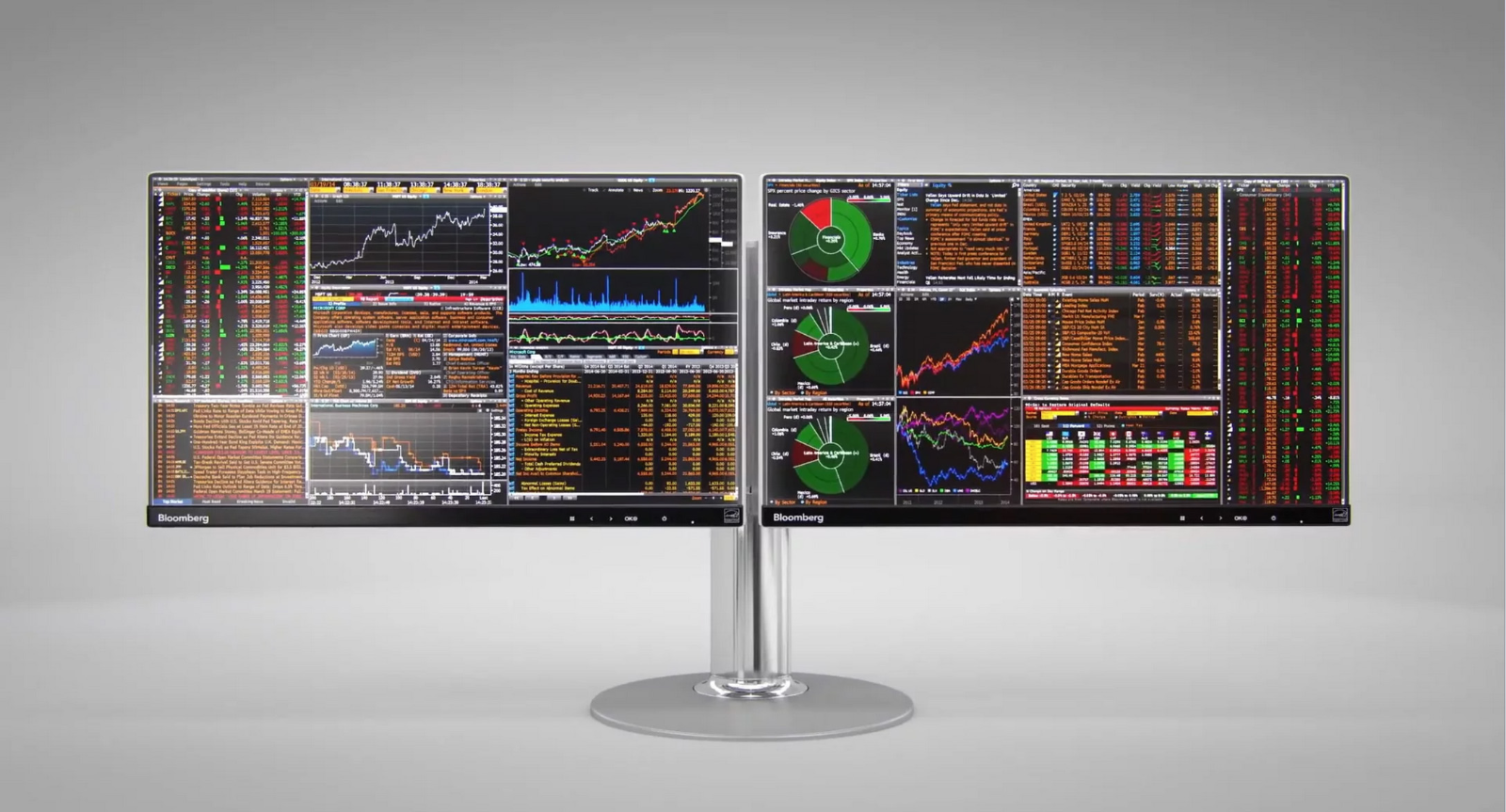
Learning the terminal is a career credential. The two-to-four-letter codes—DES, GP, MOST, PORT—are etched into the muscle memory of the world’s most successful traders. Retraining a workforce to use a different platform would result in a massive loss of institutional efficiency. The complexity of the interface, often criticized as "ugly," is actually a feature; it serves as a barrier to entry that rewards those who have invested the time to master it.
4. The "Unpleasant" Interface
There is a counter-intuitive brilliance to the terminal’s design. The orange-on-black, command-line interface creates a psychological barrier. Because it is difficult to learn, it is difficult to abandon. It signals to the user that they are part of a guild, a select group of individuals capable of navigating the complex machinery of global finance.

The AI Frontier: Evolution, Not Revolution
Recent fears that Generative AI would render the Terminal obsolete have proven premature. In April 2023, Bloomberg launched BloombergGPT, a 50-billion-parameter language model trained on four decades of proprietary financial data. Rather than launching a standalone AI product, Bloomberg has woven these capabilities directly into the Terminal.
Features like automated earnings call summaries and AI-driven comparison matrices are designed to enhance, not replace, the trader’s workflow. By integrating AI into the existing ecosystem, Bloomberg has ensured that its users have no reason to look elsewhere. As Amanda Stent, Bloomberg’s head of AI strategy, noted, the goal is "evolution, not revolution."
Implications and Closing
The incident involving Speaker Ghalibaf is a profound case study in the nature of modern infrastructure. It demonstrates that Bloomberg is not merely a tool for price discovery; it is the fundamental operating system of the global economy.
The moat surrounding the Bloomberg Terminal is not built from pixels or lines of code, but from the collective activity of the people who inhabit it. As long as the world’s liquidity, counterparties, and benchmarks reside within that black-screened interface, the terminal will remain the undisputed sovereign of Wall Street.
While challengers like FactSet and LSEG continue to offer cheaper alternatives, they are fighting against a network effect that has 44 years of momentum. In the end, the Bloomberg Terminal persists not because it is the most beautiful piece of technology, but because it is the only place where everyone else is. To leave the terminal is to leave the market—and in finance, that is a risk few are willing to take.
 rifanmuazin
  Layla Zulfa
  Evan Lee Salim