
 By Ali Ikhwan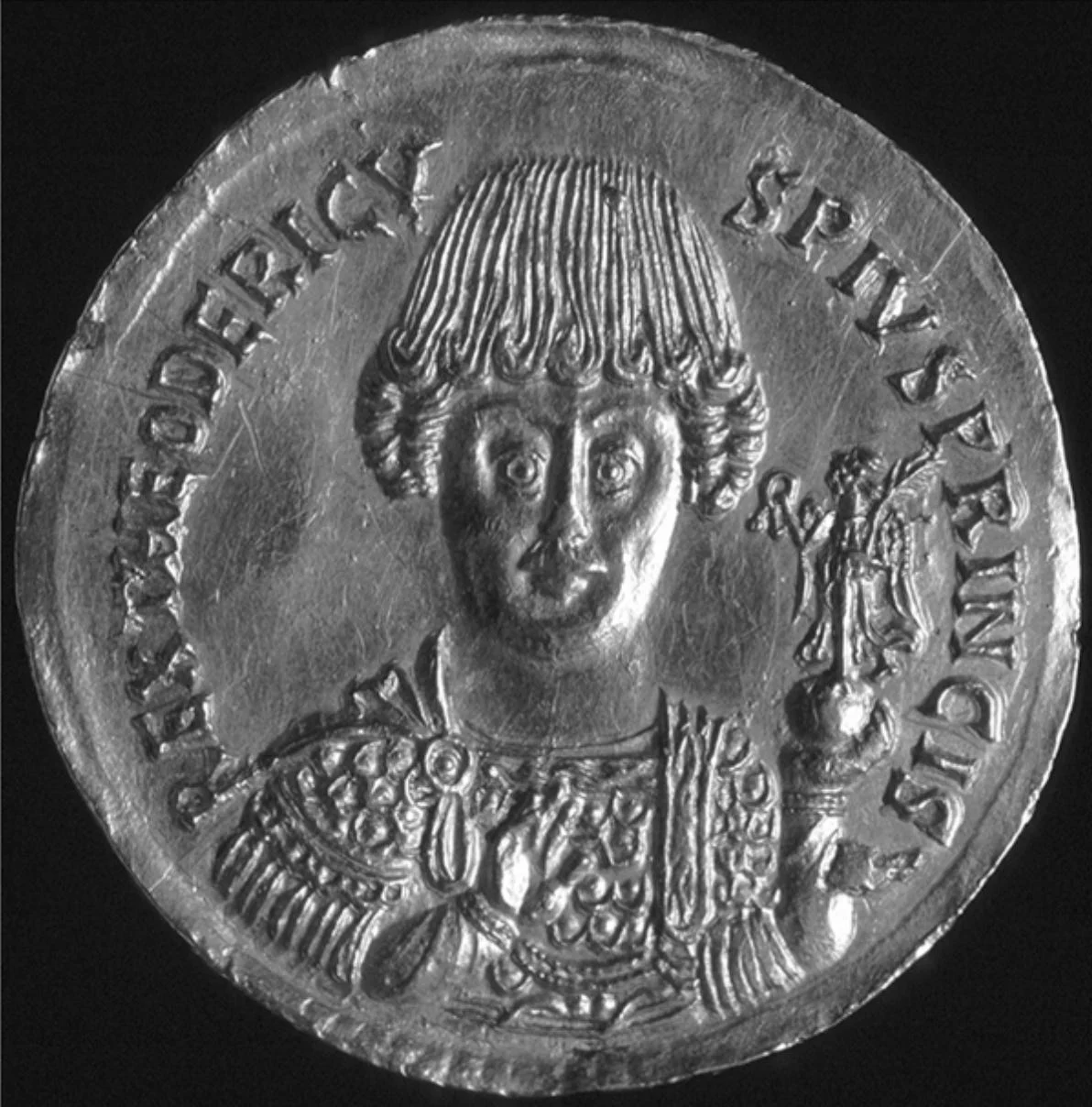
For generations, the date 476 CE has served as the definitive tombstone of the Western Roman Empire. It is the year Odoacer, a Germanic chieftain, deposed Romulus Augustulus, the last of the Western emperors, and dispatched the imperial regalia to Constantinople. Yet, for those who look beyond the dramatic narrative of "barbarian conquest," the reality of the post-476 landscape is far more nuanced. Far from an abrupt cessation of civilization, the Western Roman Empire experienced a period of remarkable, albeit fading, continuity. To understand the "fall" of Rome, one must look not at the symbolic end of a dynasty, but at the resilient, bureaucratic ghost of the empire that lingered long after the last emperor had vacated his throne.
The Myth of the "Great Collapse"
The traditional historical consensus often paints the year 476 as a cataclysm—a violent rupture where a sophisticated Mediterranean society was suddenly extinguished by illiterate invaders. However, a deeper investigation into the era immediately following this date reveals that for the average citizen of Italy, life remained largely unchanged. The fundamental institutions of the Roman state—the tax systems, the legal framework, the Senate, and the municipal administration—did not vanish overnight.
The people of the time did not perceive themselves to be living in a "post-Roman" world. They were, in their own eyes, still Romans, living under a system that continued to function through established, centuries-old precedents. The transition was not a collapse of society, but a shift in the management of its existing infrastructure.
Theoderic and the Managed Transition (493–526 CE)
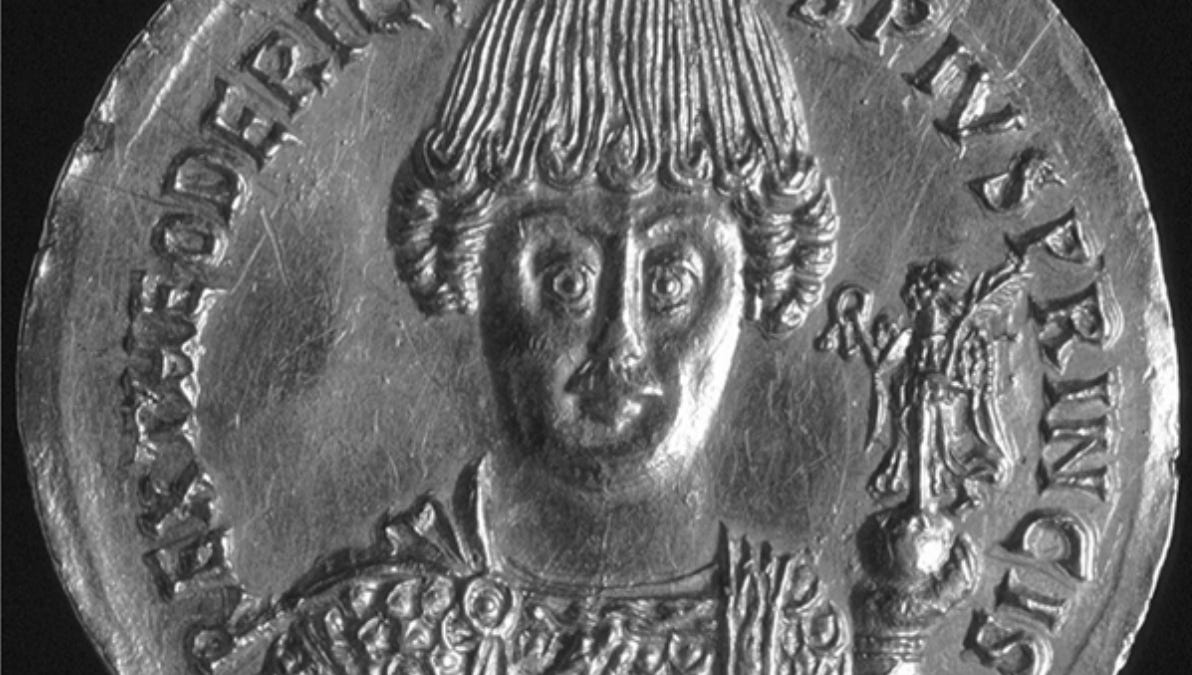
Perhaps no figure embodies this paradox more effectively than Theoderic the Great, the Ostrogothic king who ruled Italy from 493 to 526. A Goth and an Arian Christian—labels that, at the time, would have marked him as both "barbarian" and "heretic"—Theoderic nonetheless became the most successful steward of the Roman system in the late fifth century.
Raised as a hostage in the imperial court of Constantinople, Theoderic possessed a sophisticated understanding of Roman statecraft. When he arrived in Italy to oust Odoacer, he did not come to destroy the Roman state; he came to occupy it. After defeating Odoacer, Theoderic assumed the role of a custodian. Remarkably, he preserved the administrative machinery of the West for thirty-three years—a tenure longer than that of the previous nine Western emperors combined.
The Mechanism of Continuity
The ease with which Theoderic integrated his Gothic military into the Roman state was largely the result of reforms initiated by Diocletian and finalized by Constantine. By separating civilian and military command, these emperors had inadvertently created a modular state structure.
When the Gothic army replaced the defunct Roman military, it did not disturb the civilian administration. The magister militum (master of soldiers) operated on a different career track from the provincial governors. This parallel authority meant that while the "boots on the ground" were now Goths, the tax collectors, scribes, and bureaucrats—the true backbone of the Roman state—remained Roman. The government continued to function, roads were maintained, and trade flowed through existing channels, proving that the Roman state was a machine capable of running under different management.
Supporting Evidence: Bureaucracy and Symbolism
The survival of Roman identity under Theoderic was not merely a matter of habit; it was a matter of official policy. Theoderic meticulously maintained the legal fictions that legitimized his rule. He styled himself not as an emperor, but as a patricius and magister militum, holding titles that anchored his authority within the Roman hierarchy.
- The Consular System: The tradition of appointing consuls continued, with Theoderic selecting candidates and the Eastern Emperor in Constantinople providing formal confirmation. In 519, the prestige of the office reached a high point when Theoderic’s son-in-law, Eutharic, served as consul alongside the Emperor Justin.
- The Chancery Style: Diplomatic and administrative communications were drafted by professional scribes in the traditional, highly intricate "chancery style." These documents were so complex that only a highly educated Roman could interpret them, maintaining a linguistic and bureaucratic barrier that excluded the uninitiated.
- The Senate: The Roman Senate continued to meet and exercise local authority throughout Theoderic’s reign. During his state visit to Rome in 500 CE, Theoderic addressed the Senate and organized public games, projecting the image of a traditional Roman leader.
The Role of Land Redistribution
Historians have long debated the nature of land distribution during this period. When Theoderic sought to reward his Gothic soldiers, he utilized the Roman bureaucracy to handle the logistics. An official named Liberius, acting as praetorian prefect, managed the process.
Whether this involved the actual physical transfer of land or merely the redirection of tax rents (as argued by historian Walter Goffart) is secondary to the fact that the Roman state performed these operations as a matter of routine. The paperwork generated by these transfers was indistinguishable from standard imperial administration, underscoring that the "barbarian" occupation was, in practice, a highly Romanized endeavor.
The Fragile Stability and Eventual Decline
The stability of the post-476 West was, however, built on a delicate balance. In 523 CE, that balance began to shatter. When the Eastern Empire initiated a wave of persecution against Arian Christians, Theoderic’s suspicion toward the Roman elite intensified. This atmosphere of paranoia led to the trial and execution of the philosopher Boethius, signaling a rift between the Gothic rulers and the Roman aristocracy.
The true end of Roman stability did not arrive with the Goths, but with the Eastern Roman reconquest. Under Emperor Justinian, the Byzantine Empire launched a series of brutal wars to retake Italy. This conflict was not a "liberation," but a slow-motion catastrophe. The subsequent infighting and the systemic destruction of infrastructure by the Eastern armies devastated the Italian peninsula. The conditions became so dire that, during this period of chaos, refugees began settling the lagoon islands that would eventually become Venice—a testament to the fact that the Italian mainland had become uninhabitable.
Implications for Historical Understanding
The "fall" of Rome was not a singular, dramatic event, but a slow descent into a long dusk. The archaeological record reflects this transition: it shows a steady, continuous decline rather than a sharp cliff-edge.
Key Lessons:
- Institutional Inertia: Civilizations are often more resilient than the political dynasties that rule them. The Roman bureaucracy proved capable of outliving the emperors themselves.
- The Peril of Fragmentation: The "disaster" of the 6th century was not the result of the initial Gothic takeover, but the result of sustained warfare between two competing powers (the Goths and the Byzantines) that exhausted the resources of the peninsula.
- Redefining "Fall": We must distinguish between the fall of a political regime and the collapse of a culture. While the Roman state eventually succumbed to the pressures of war and economic exhaustion, the cultural and social habits of the Roman world persisted for decades, if not centuries, after the symbolic end.
In conclusion, the history of the late fifth and early sixth centuries serves as a reminder that history is rarely as neat as a textbook date. The Roman Empire did not fall in a day; it faded, repurposed by those who sought to inherit its grandeur, only to be finally extinguished by the very power that claimed to be its successor.
 rifanmuazin
  Layla Zulfa
  Evan Lee Salim