
 By Ali Ikhwan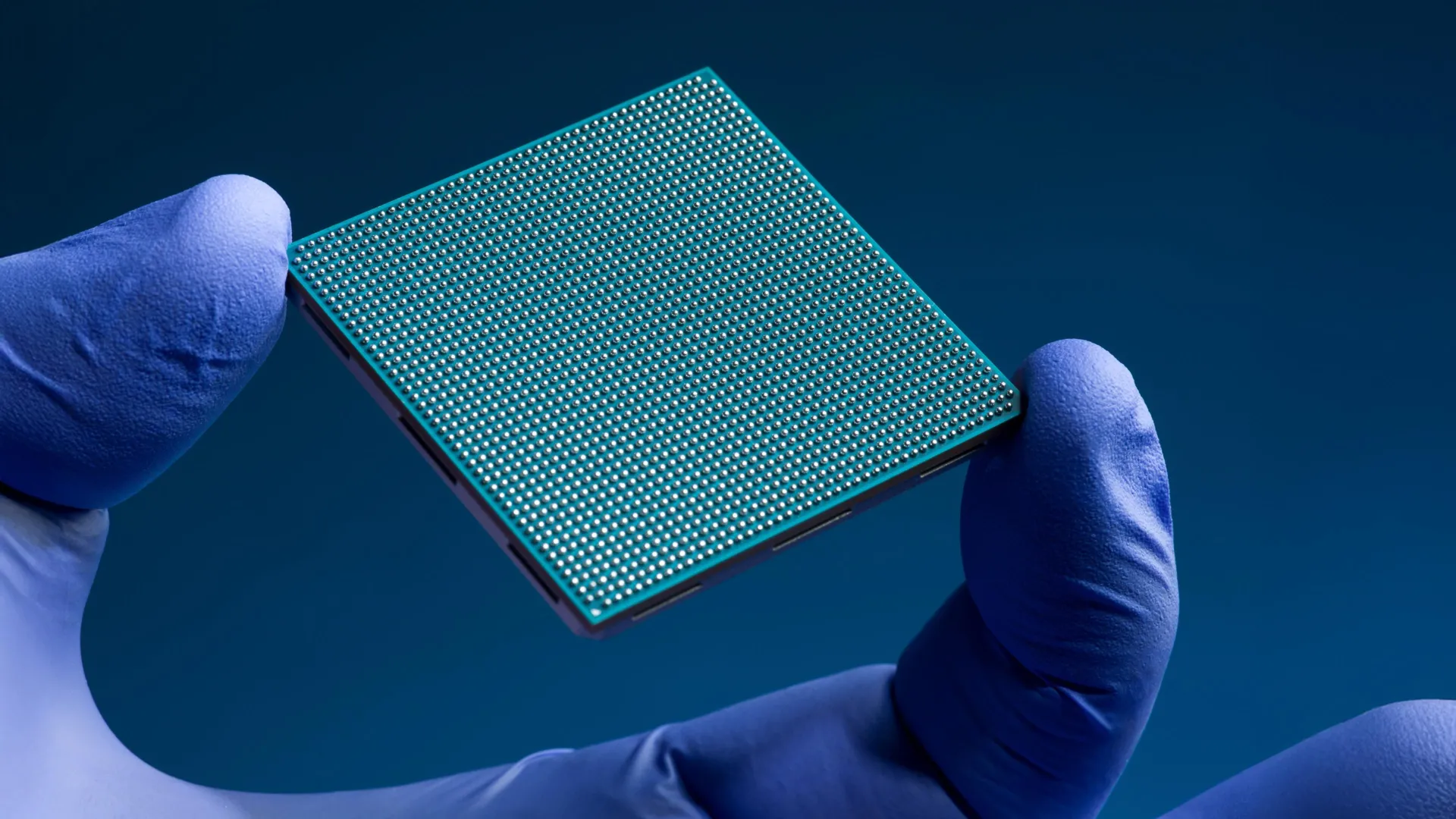
For decades, the silent heroes of space exploration have been the radiation-hardened processors powering our most iconic missions. From the Mars rovers to the probes venturing into the outer solar system, these computers have performed admirably. However, they are effectively "digital fossils"—robust, dependable, but drastically underpowered by modern standards. Because of the extreme, unforgiving nature of space, NASA has historically prioritized durability over raw computing speed.
That paradigm is now shifting. Through its High Performance Spaceflight Computing (HPSC) project, NASA is developing a revolutionary multicore processor that promises to leapfrog current capabilities by several orders of magnitude. This new system-on-a-chip (SoC) is not merely an incremental upgrade; it is the foundation upon which the future of autonomous, crewed, and deep-space exploration will be built.
The Main Facts: A Leap in Computational Evolution
At its core, the HPSC project is a collaborative effort between NASA’s Jet Propulsion Laboratory (JPL) and Arizona-based Microchip Technology Inc. The goal is to provide a standardized, high-performance computing architecture that can be used across diverse mission profiles, from orbiting satellites to habitats on the Moon and crewed vessels bound for Mars.
Unlike standard consumer-grade chips found in smartphones or laptops, which would fail almost instantly when exposed to the ionizing radiation of deep space, this new processor is "radiation-hardened." It is engineered to withstand high-energy particle strikes and wild temperature fluctuations that would otherwise force a spacecraft into a "safe mode" or cause catastrophic hardware failure.
The early testing results are staggering. According to NASA, the processor has demonstrated performance levels roughly 500 times greater than the radiation-hardened chips currently flying in space. This massive increase in computational headroom will allow spacecraft to process data in real-time, perform complex navigation maneuvers without human intervention, and manage scientific payloads that were previously impossible to support.
Chronology: From Concept to "Hello Universe"
The path to this technological breakthrough has been a multi-year effort involving rigorous engineering and strategic partnerships.
- 2022: NASA officially selected Microchip Technology Inc. as its commercial partner for the HPSC project. This partnership was unique in that Microchip funded a significant portion of its own research and development, underscoring the potential commercial viability of the technology.
- Late 2023: Initial engineering samples were finalized, setting the stage for one of the most rigorous testing campaigns in the history of space hardware.
- February 2024: Testing officially commenced at JPL. To mark the occasion, engineers sent a symbolic "Hello Universe" message through the processor, a nod to the foundational moments of early computing history.
- Mid-2024 to Present: The processor has been undergoing an intense gauntlet of environmental stress tests. Engineers are subjecting the chips to radiation, thermal cycling, and high-impact shock simulations to ensure they can survive the launch environment and the decades of exposure to the void of space.
Supporting Data: Why "More Power" Matters
The necessity for this processor is driven by the physics of deep space. When a probe is millions of miles from Earth, the time delay for a signal to travel back and forth—the "latency"—can be as much as 20 to 40 minutes. If a spacecraft encounters an unexpected hazard during a planetary landing, it cannot wait for instructions from a human operator in Houston or Pasadena.
The Power of Autonomy
With 500 times the computing power of current systems, future spacecraft will be capable of onboard artificial intelligence. This AI can analyze sensor data in real-time to adjust flight paths, identify scientifically interesting geological features, or manage power consumption to preserve the life of the spacecraft during solar eclipses or dust storms.
Handling "Big Data"
Modern scientific instruments—such as high-resolution multispectral cameras and complex spectrometers—generate massive volumes of data. Currently, much of this data must be compressed or partially processed on Earth. An HPSC-equipped probe could conduct this analysis in situ, transmitting only the most relevant findings back to Earth, thus optimizing the use of limited bandwidth from deep space.
The System-on-a-Chip (SoC) Architecture
The HPSC design consolidates several vital components into a single, compact unit:
- Central Processing Units (CPUs): The primary brain for general operations.
- Computational Offloads: Specialized cores that handle repetitive, math-heavy tasks, freeing up the CPU for complex decision-making.
- Advanced Networking: Integrated systems to manage the internal communication between sensors, memory, and storage.
- Energy Efficiency: Despite the massive power jump, the chip is designed for extreme energy efficiency, which is critical for spacecraft powered by solar arrays or radioisotope thermoelectric generators (RTGs).
Official Responses: Architects of the Future
The team behind this development views the project as a defining moment for modern aerospace.
Eugene Schwanbeck, program element manager in NASA’s Game Changing Development (GCD) program at the Langley Research Center, emphasizes the resilience of the design. "Building on the legacy of previous space processors, this new multicore system is fault-tolerant, flexible, and extremely high-performing," Schwanbeck noted. "NASA’s commitment to advancing spaceflight computing is a triumph of technical achievement and collaboration."
The testing process, which is being led by JPL, is designed to be intentionally destructive. Jim Butler, the High Performance Space Computing project manager at JPL, describes the testing process as "putting these new chips through the wringer."
"To simulate real-world performance," Butler explained, "we are using high-fidelity landing scenarios from real NASA missions that would typically require power-intensive hardware to process huge volumes of landing-sensor data. This is an exciting time for us to be working on hardware that will enable NASA’s next giant leaps."
Implications: The Broad Reach of HPSC
The implications of this technology extend far beyond the immediate goals of lunar and Martian exploration.
Commercial and Defense Applications
Because the chip was developed through a commercial partnership, the technology is already being shared with defense and commercial aerospace partners. This ensures that the benefits of NASA’s research are diffused throughout the American aerospace sector, potentially lowering costs for future private-sector space missions.
Benefits on Earth
The impact of this research may also come full circle back to Earth. Microchip Technology Inc. plans to adapt the architecture of these radiation-hardened, ultra-reliable processors for industries where system failure is not an option. This includes the aviation industry, which requires high-reliability computing for flight control systems, and the automotive industry, which is rapidly moving toward fully autonomous vehicle systems that require the same kind of low-latency, high-reliability processing found in spacecraft.
A Foundation for Human Exploration
For crewed missions, the HPSC represents a shift toward more reliable life-support and habitat management. When humans return to the Moon under the Artemis program and eventually head toward Mars, they will rely on autonomous systems to monitor oxygen, radiation levels, and structural integrity. A robust, high-performance computer that can survive for years without human maintenance is not just a convenience—it is a safety necessity.
Conclusion: A New Era of Intelligence
As the testing phase continues, the "Hello Universe" signal remains a potent reminder of what is to come. NASA is effectively moving from the era of "dumb" robots that follow rigid, pre-programmed scripts to an era of "intelligent" spacecraft capable of acting with agency and sophistication.
By balancing the need for extreme durability with the requirement for modern performance, the HPSC project is ensuring that when humanity finally steps onto the red soil of Mars, it will be supported by a digital infrastructure that is as capable as the explorers themselves. The future of deep space is not just about going further; it is about thinking faster and acting smarter, and with this new chip, NASA is ensuring that we have the computing power to do exactly that.
 Sagoh
Sagoh  Asro
Asro  Siti Muinah