
 By Laily UPN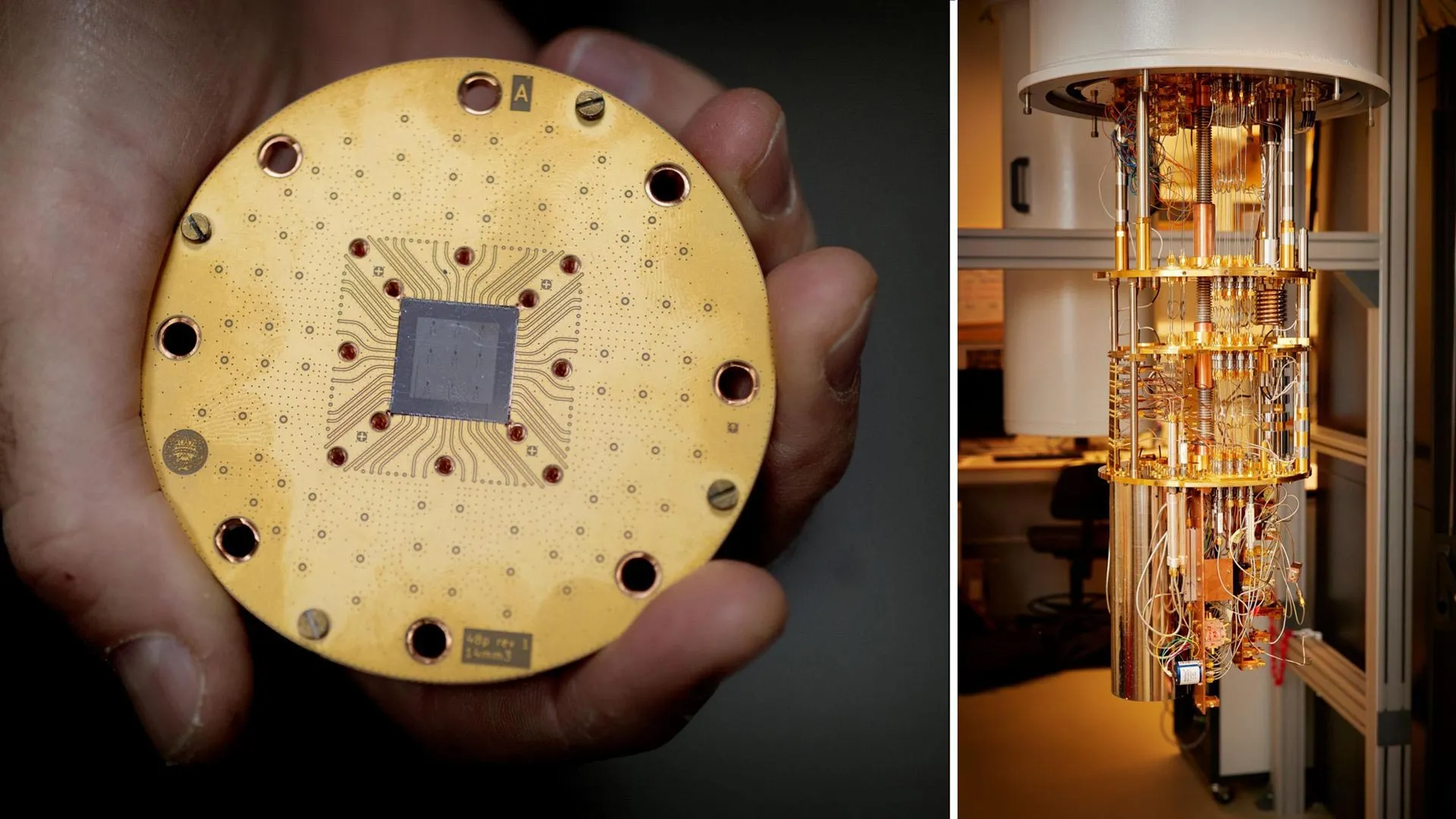
The quest to build a functional, large-scale quantum computer is often compared to the development of the early vacuum-tube computers of the 1940s—a monumental technological hurdle that requires overcoming the fragility of the underlying physics. Now, a breakthrough from the Chalmers University of Technology in Sweden may have provided the "shortcut" necessary to move from experimental prototypes to reliable, fault-tolerant machines. Researchers have developed a new method to perform complex quantum operations more than 1,000 times faster than previous standards, fundamentally altering the calculus of error correction.
The Fragility Problem: Why Quantum Computers Struggle
At the heart of the quantum computing revolution lies the qubit—the quantum equivalent of a classical bit. Unlike a classical bit, which exists strictly as a 0 or a 1, a qubit exists in a state of superposition, allowing it to represent both states simultaneously. This property grants quantum computers their theoretical ability to solve problems in seconds that would take classical supercomputers millennia.
However, this same property is the source of the technology’s greatest weakness: extreme sensitivity. Quantum information is notoriously "delicate." Environmental factors—the hum of electrical noise, the warmth of room-temperature air, or even stray cosmic radiation—can disrupt a qubit’s quantum state, a phenomenon known as decoherence.
In classical computing, error correction is routine. If a bit flips due to a minor hardware fluctuation, parity bits and redundancy algorithms detect and repair the error in nanoseconds. In quantum computing, however, measuring a qubit to check for errors typically destroys the information it holds. As Lei Du, a researcher in Applied Quantum Physics at Chalmers, explains, "The fundamental building blocks of quantum computers are so sensitive that even the smallest disturbance can cause the quantum state to deviate from the target, resulting in the loss of information. If too many errors accumulate before they can be corrected, the computation fails."
Chronology of a Breakthrough
The path to this discovery was paved by the shift toward bosonic quantum codes. For years, the industry focused on improving the physical qubits themselves—making them colder, more isolated, and more stable. Yet, the physical limitations of material science suggest there is a hard limit to how stable a single qubit can be.
The Chalmers team pivoted away from individual qubits toward bosonic codes, which store information within the microwave fields of superconducting circuits. This method provides an inherent layer of protection, but it introduced a new mechanical challenge: the operations required to control these fields were traditionally sluggish.
- The Conventional Approach: Historically, manipulating bosonic states required thousands of repeated "driving cycles." Each cycle was an opportunity for environmental noise to corrupt the data.
- The Theoretical Pivot: Lei Du, Tangyou Huang, and Lingzhen Guo began investigating whether they could bypass the multi-cycle requirement by utilizing "Quantum lattice gates."
- The Discovery: The researchers realized that by optimizing the control pulses, they could achieve the same quantum state transformation in a single driving cycle.
- The Validation: The team codified these findings in their paper, "Single-Period Floquet Control of Bosonic Codes with Quantum Lattice Gates," published in Physical Review Letters, demonstrating that the "shortcut" did not compromise accuracy, but rather significantly enhanced it by minimizing exposure time.
Supporting Data: The Power of Single-Period Control
The significance of this advancement lies in the relationship between time and error. If a quantum processor is subject to a constant background noise rate, the probability of an error occurring is directly proportional to the time the processor spends performing a gate operation.
By reducing the operation time from several thousand cycles to a single cycle, the researchers have effectively reduced the "window of vulnerability" by a factor of 1,000.
Comparative Efficiency
- Previous Method: Thousands of pulses (high latency, high error accumulation).
- New Method: Single-period Floquet control (low latency, high coherence preservation).
This leap is comparable to transitioning from a manual, step-by-step assembly line to a pre-fabricated modular construction system. As Tangyou Huang, a researcher in Quantum Technology at Chalmers, illustrates: "You can think of it like building a large Lego castle. Instead of assembling it brick by brick and risking mistakes along the way, quantum lattice gates act like pre-built Lego modules that can be connected quickly and efficiently."
Official Perspectives: The Experts Weigh In
The research team is not merely proposing a theoretical construct; they are actively working to integrate this into the superconducting quantum hardware being developed at Chalmers.
"Our results address one of the major bottlenecks in the field: how to quickly and reliably create and control the error-correcting quantum states that could play an important role in future quantum computers," says Lei Du.
The team emphasizes that the beauty of their solution is its compatibility. Unlike some theoretical advancements that require entirely new materials or exotic physics, the quantum lattice gate approach is designed for existing superconducting quantum circuit platforms.
"A key advantage of our approach is that it can be implemented using existing superconducting quantum circuit platforms," adds Tangyou Huang. "We are already discussing possible experimental realizations with colleagues at Chalmers, and we hope to see a demonstration of the method in the near future."
The implications for the broader scientific community are profound. As labs worldwide race toward the "100-qubit" milestone—a scale where quantum machines begin to reliably outperform classical computers—the ability to maintain coherence across those qubits will determine which research groups succeed and which remain stuck in the experimental phase.
Implications for the Future
The potential applications of a fault-tolerant quantum computer are transformative. With the stability provided by faster error-correction cycles, researchers look toward several high-impact fields:
1. Drug Discovery and Chemistry
Current classical computers struggle to simulate the quantum mechanical interactions of complex molecules. A reliable quantum computer could simulate the folding of proteins or the chemical reactions of new drug compounds, potentially shaving years off the development of life-saving medicines.
2. Cryptography
Modern encryption relies on the difficulty of factoring large numbers. While this poses a threat to current security standards, the development of quantum-resistant cryptography—and the quantum-based secure communication networks—is a critical area of research that relies on the very fault-tolerance this breakthrough aims to provide.
3. Artificial Intelligence and Logistics
Quantum algorithms, such as Grover’s search or specialized optimization algorithms, could drastically reduce the time needed to train massive AI models or solve "traveling salesman" problems in global logistics, where billions of variables must be optimized in real-time.
4. Energy Technology
Designing new battery materials and catalysts for carbon capture requires deep insights into quantum-level chemistry. Fault-tolerant quantum computing could provide the "digital laboratory" necessary to design the next generation of energy-dense, sustainable materials.
Conclusion: A Turning Point
The research conducted at Chalmers University of Technology serves as a critical bridge between the theoretical potential of quantum mechanics and the practical reality of engineering. By proving that quantum operations can be executed in a single cycle through the clever application of Quantum lattice gates and Floquet control, the team has turned a glaring liability—time—into a manageable variable.
As the industry looks toward the next decade, the focus will inevitably shift from "how many qubits can we build?" to "how well can we control the ones we have?" With this 1,000-fold increase in speed, the Chalmers team has provided a definitive answer to that question. The Lego bricks of the quantum world are finally locking into place, and for the first time, the castle of fault-tolerant computing looks well within reach.
 Evan Lee Salim
  Asro
Asro  Sagoh
Sagoh 