
 By Sagoh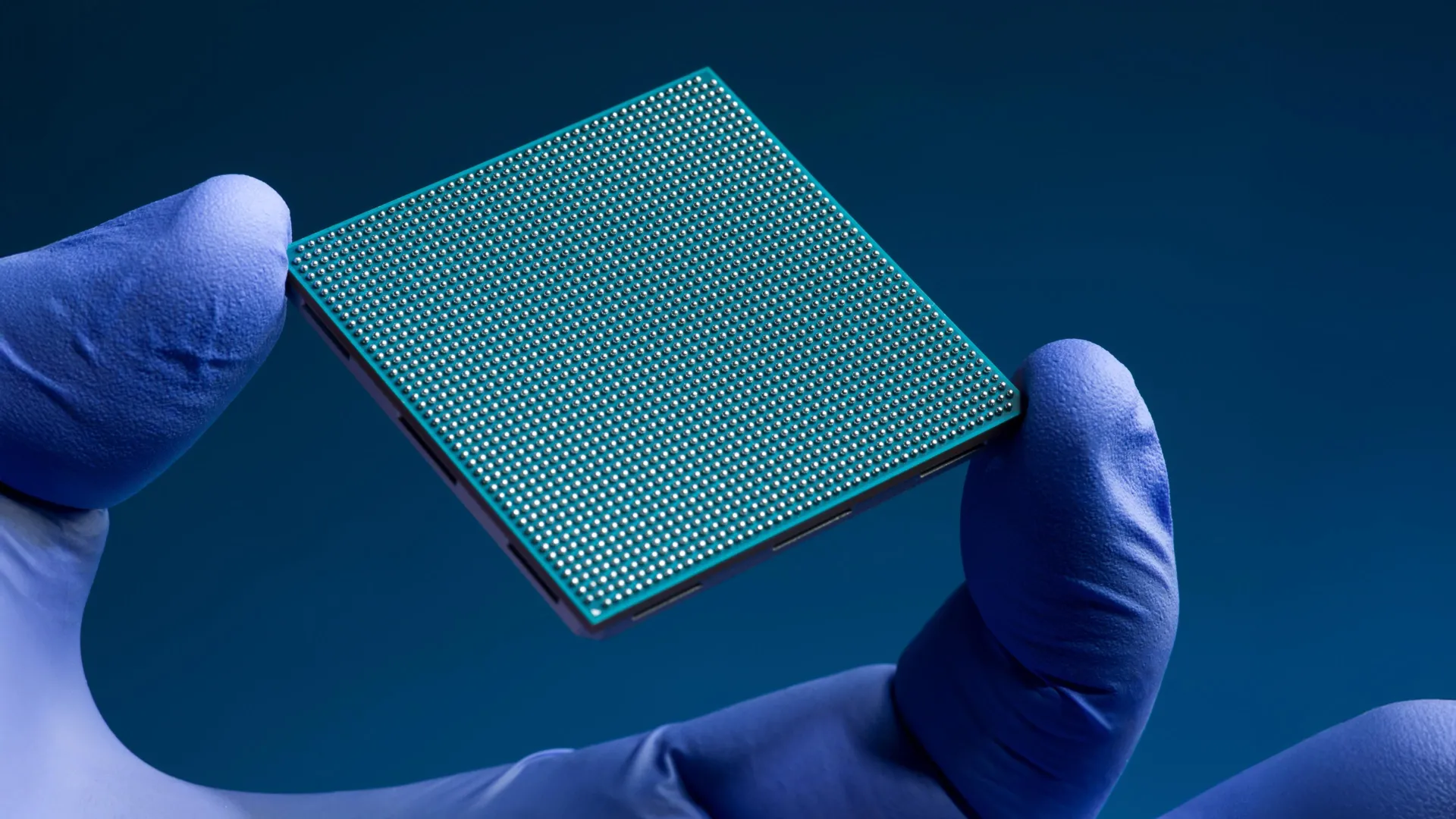
For decades, the backbone of human space exploration has been built upon a paradox: while NASA pushes the boundaries of rocket science and interplanetary physics, the "brains" inside these spacecraft have remained anchored in the past. To survive the lethal radiation of deep space, spacecraft computers have historically relied on older, proven, yet fundamentally slow architecture. Now, a groundbreaking initiative is set to shatter this technological ceiling.
NASA’s High Performance Spaceflight Computing (HPSC) project is currently putting a revolutionary new multicore processor through a gauntlet of extreme environmental tests. This silicon breakthrough promises to provide up to 100 times the computing power of current space-grade systems, potentially unlocking an era of true robotic autonomy and unprecedented scientific capability for missions to the Moon, Mars, and beyond.
Main Facts: A Leap in Computational Evolution
The HPSC processor represents a paradigm shift in how NASA approaches onboard computing. Developed through a strategic commercial partnership between NASA’s Jet Propulsion Laboratory (JPL) and Microchip Technology Inc., this "system-on-a-chip" (SoC) integrates central processing units, advanced networking, and memory into a single, compact, and energy-efficient architecture.
Unlike the specialized, single-tasking chips of the past, this HPSC unit is designed to be a versatile workhorse. Its primary distinction is its "radiation-hardened" architecture. In the vacuum of space, high-energy particles from the Sun and galactic cosmic rays frequently strike electronic components, causing "bit flips"—errors that can force a spacecraft into a protective, unresponsive "safe mode." The new chip is engineered to withstand these hostile conditions while maintaining the high-speed throughput required to process data-heavy tasks, such as autonomous hazard avoidance during planetary landings or real-time artificial intelligence (AI) decision-making.
Chronology: From Concept to "Hello Universe"
The path to this processor has been a multi-year effort to balance cutting-edge performance with the unforgiving realities of spaceflight.
- 2022: The Partnership Formalized. NASA’s Jet Propulsion Laboratory (JPL) officially selected Microchip Technology Inc. as its industrial partner. This collaboration was structured to leverage private-sector innovation, with Microchip funding a significant portion of the research and development to ensure the final product would be viable for both government and commercial aerospace markets.
- Late 2023 – Early 2024: Prototyping and Initial Verification. Engineers refined the SoC design, ensuring the multicore system could handle parallel processing tasks without succumbing to the thermal and electromagnetic stresses of the space environment.
- February 2024: Testing Begins. NASA officially kicked off the rigorous testing campaign at JPL. To mark the milestone, the engineering team sent a symbolic "Hello Universe" email to the processor, a nod to the foundational moments of early computer science.
- Mid-2024 to Present: The "wringer" phase. The chips are undergoing comprehensive thermal, radiation, and shock testing. According to initial performance benchmarks, the processor is exceeding expectations, demonstrating computing power roughly 500 times greater than current radiation-hardened hardware.
Supporting Data: The Power of the SoC
To understand why this development is being called a "game-changer," one must look at the limitations of current hardware. Most current space-hardened processors are single-core or low-speed dual-core systems designed for reliability at the cost of performance.
The new HPSC chip changes the math. By utilizing a system-on-a-chip configuration—a design philosophy common in modern consumer smartphones—NASA is shrinking an entire computing ecosystem into one unit. Key technical features include:
- Multicore Architecture: This allows the spacecraft to run multiple applications simultaneously. For instance, one core could manage life support systems, while another handles scientific data processing, and a third runs AI-driven navigation.
- Energy Efficiency: Despite the massive increase in processing speed, the chip is designed for low power consumption, a critical factor for probes that rely on limited solar or radioisotope power sources.
- Scalability: The architecture is designed to be "fault-tolerant and flexible," meaning it can be scaled or adjusted depending on the specific mission profile, whether it be a small CubeSat in Earth orbit or a large-scale habitation module on the Martian surface.
The performance metrics are staggering. With tests showing 500 times the capability of current flight hardware, tasks that previously took hours of data processing can now be completed in seconds. This speed is vital for "high-fidelity" landing scenarios, where a rover must process visual data from sensors in real-time to avoid craters or boulders during descent.
Official Responses: The Philosophy of Technical Achievement
The leadership behind the HPSC project views this not just as a hardware upgrade, but as a prerequisite for the next fifty years of exploration.
"Building on the legacy of previous space processors, this new multicore system is fault-tolerant, flexible, and extremely high-performing," said Eugene Schwanbeck, program element manager in NASA’s Game Changing Development program at the agency’s Langley Research Center. He emphasized that the project is a "triumph of technical achievement and collaboration," highlighting the synergy between federal research goals and private-sector agility.
Jim Butler, the HPSC project manager at JPL, underscored the intensity of the current testing phase: "We are putting these new chips through the wringer by carrying out radiation, thermal, and shock tests while also evaluating their performance through a rigorous functional test campaign."
Butler’s perspective on the mission-critical nature of the chip is clear: "To simulate real-world performance, we are using high-fidelity landing scenarios from real NASA missions that would typically require power-intensive hardware to process huge volumes of landing-sensor data. This is an exciting time for us to be working on hardware that will enable NASA’s next giant leaps."
Implications: A New Era for Autonomy and Industry
The implications of the HPSC processor extend far beyond the immediate goal of building better spacecraft.
Autonomy and AI
The most immediate impact will be on autonomous navigation. Communication delays between Earth and deep space—which can span anywhere from minutes to hours—make real-time teleoperation impossible for complex maneuvers. With the HPSC’s AI-processing capabilities, spacecraft will finally possess the "intelligence" to analyze their surroundings, identify scientific targets of interest, and adjust mission parameters on the fly without waiting for a ground-based command loop.
Efficiency and Data Management
Deep space missions generate massive amounts of data. Currently, much of this data is stored in raw form or transmitted slowly due to limited onboard processing. The HPSC will enable sophisticated, real-time data compression and analysis, allowing probes to transmit only the most critical, high-value scientific discoveries back to Earth, maximizing the bandwidth efficiency of the Deep Space Network.
Commercial and Terrestrial Spinoffs
The impact will also be felt on Earth. Microchip Technology Inc. intends to adapt the radiation-hardened technology for sectors that require extreme reliability and fault tolerance, such as the automotive industry (for self-driving vehicle safety) and commercial aviation. Because the chip is designed to function for years without maintenance—a requirement for probes traveling millions of miles—it represents the gold standard in durability for any industry operating in critical environments.
Future Missions
Once the processor is fully certified, NASA plans to integrate it into a broad range of future missions. It is expected to become the standard for the next generation of lunar surface rovers, planetary orbiters, and potentially the computer clusters that will govern human-crewed habitats on Mars.
As the HPSC project nears the completion of its testing cycle, it serves as a powerful reminder that while the future of space exploration is measured in rocket fuel and trajectory, the true frontier is increasingly defined by the capacity of our computers to think for themselves. NASA’s investment in this silicon breakthrough is, in effect, an investment in the autonomy of the human presence in the solar system.
 Dwi Wanna
  rifanmuazin
  Ammar Sabilarrohman