
 By Reynand Wu
In the hyper-competitive landscape of digital commerce, the adage "what worked yesterday won’t necessarily work tomorrow" has transitioned from a cautionary observation to a hard business reality. As consumer attention spans fragment and digital inboxes become increasingly saturated, the margin for error has vanished. For entrepreneurs and marketing leaders, relying on intuition or "gut feelings" is no longer a viable strategy—it is a liability.
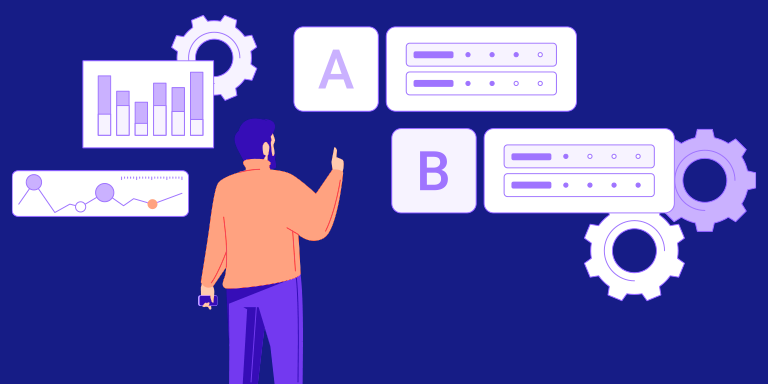
Enter A/B testing: the systematic process of comparing two versions of a digital asset to determine which performs better. Far from being a "nice-to-have" tactical experiment, A/B testing has evolved into a foundational pillar of successful business scaling. It is the bridge between guesswork and data-driven revenue, allowing brands to squeeze more value from their existing audiences without increasing their acquisition spend.
The Strategic Imperative: Why Testing Isn’t Optional
For many founders, the obsession with growth centers exclusively on customer acquisition. While bringing new eyes to a brand is critical, it is often the most expensive way to scale. The real, high-margin opportunity lies in Conversion Rate Optimization (CRO).
If a company has already invested the capital to build an email list or drive traffic to a landing page, failing to optimize those touchpoints is effectively leaving money on the table. A/B testing allows businesses to unlock latent potential within their current funnel. By identifying the specific friction points that prevent a user from clicking, signing up, or purchasing, companies can drive compounding gains. A 5% increase in open rates coupled with a 10% boost in click-through rates (CTR) can, when applied across an entire year of campaigns, result in a double-digit percentage increase in total revenue—all without spending an additional dollar on advertising.
Chronology of Optimization: From Intuition to Algorithm
The evolution of email marketing optimization has been rapid.
- The Early Days (Pre-2015): Marketing was largely a game of "batch and blast." Segmentation was basic, and testing was reserved for enterprise-level firms with massive data science teams.
- The Rise of Automation (2015–2020): Tools became more accessible. Triggered emails (welcome series, abandoned carts) became standard, and marketers began experimenting with basic A/B testing on subject lines.
- The Modern Era (2021–Present): With the integration of AI and machine learning, testing has become hyper-granular. Platforms like Omnisend have democratized access to behavioral data, allowing even lean startups to conduct multivariate tests that were previously impossible.
Supporting Data: The Quantitative Case for Rigor
The numbers validate the necessity of this approach. According to recent analysis by Omnisend, the shift toward data-driven testing has produced tangible industry-wide improvements. Between 2022 and 2023, average open rates among merchants climbed from 22.9% to 25.1%, while click rates saw a parallel rise from 1.2% to 1.5%.
However, the most striking delta exists in automated flows. When brands move beyond manual campaigns and employ optimized, automated triggers, the performance gap is staggering:
- Open Rates: 52% higher than standard campaigns.
- Click-Through Rates: 332% higher.
- Conversion Rates: A massive 2,361% increase.
These statistics illustrate that the "low-hanging fruit" for most brands is not in finding new customers, but in refining the automated communication they already have in place. For instance, Omnisend users who systematically tested their abandoned cart flows reported average monthly sales gains of approximately $5,000—a result driven entirely by marginal, iterative improvements in copy, timing, and CTA placement.
Key Elements for High-Impact Experimentation
A/B testing is not about finding "better" buttons or flashier graphics; it is about understanding the psychological triggers of your audience. To maximize impact, focus your testing efforts on these five high-leverage areas:
1. Subject Lines
- The Goal: Maximizing Open Rates.
- The Variables: Test curiosity-driven vs. benefit-driven language. Experiment with personalization (e.g., using a customer’s name) versus broad, intriguing questions.
- The Reality: 43% of users decide to open an email based solely on the subject line. Furthermore, 69% of users mark emails as spam based on the subject line alone, making this your most critical gatekeeper for deliverability.
2. Call-to-Action (CTA)
- The Goal: Driving Conversions.
- The Variables: Test button copy ("Shop Now" vs. "Claim My Discount"), color contrast, and placement.
- The Reality: Even a shift from passive language to action-oriented, first-person phrasing (e.g., "Get my guide" vs. "Download the guide") can significantly influence user psychology.
3. Timing and Frequency
- The Goal: Maximizing Visibility.
- The Variables: Test sending at different times of the day or days of the week.
- The Reality: Audience behavior is seasonal and context-dependent. A time slot that converts well for a B2B SaaS newsletter may be completely ineffective for an ecommerce brand.
4. Sender Name and Preheader
- The Goal: Trust and Curiosity.
- The Variables: Test the brand name vs. a specific person’s name (e.g., "Foundr" vs. "Nathan from Foundr").
- The Reality: The preheader text acts as a secondary subject line, providing the context that often bridges the gap between "ignore" and "click."
5. Audience Segmentation
- The Goal: Personalization.
- The Variables: Test messaging tailored to new subscribers vs. repeat customers.
- The Reality: Blanket emails are rapidly losing their efficacy. Micro-targeting ensures that the content feels relevant to the specific lifecycle stage of the user.
Implications: Building a Culture of Testing
To truly benefit from A/B testing, it must be viewed as a process, not a project. The most successful brands have a "test-always" mindset.
The Hypothesis Framework
A common failure point is "random testing"—changing colors or copy without a reason. A rigorous framework should follow these steps:
- Hypothesis: State the expectation (e.g., "I believe that mentioning a 10% discount in the subject line will increase open rates by 5% compared to a non-discount subject line").
- Isolation: Only test one variable at a time. If you change the subject line, the CTA, and the image simultaneously, you will never know which factor drove the change in performance.
- Measurement: Select the right metric. Use open rates for subject lines and CTR for content or CTA experiments.
- Statistical Significance: Ensure the sample size is sufficient. As a rule of thumb, aim for at least 1,000 recipients per version to minimize the risk of false positives.
- Documentation: Keep a "Testing Ledger." If a certain style of copy works, apply that learning to your landing pages, your Facebook ads, and your social media content.
Official Perspective: The Role of Specialized Tools
Modern marketers are rarely experts in statistical analysis, which is why the platform you choose is as important as the tests you run. Tools like Omnisend are built specifically to bridge the gap between complex data and actionable insights. By automating the delivery of A/B tests—including the ability to send a winning variant to the majority of a list after a preliminary test—these platforms remove the administrative burden from the founder.
The Bottom Line
In an era where "growth at all costs" is being replaced by "efficient, sustainable growth," A/B testing is the most powerful tool in the founder’s arsenal. It provides a feedback loop that informs every other part of the business. By understanding what your audience truly wants, you stop shouting into the void and start building a relationship based on resonance and relevance.
For entrepreneurs looking to implement these strategies today, the path is clear: pick one variable, form a hypothesis, and launch your first test. The data you gain today will pay dividends in your revenue tomorrow.
For those looking to accelerate their journey, Foundr readers can access an exclusive 50% discount on their first three months of Omnisend using code FOUNDR50. It is time to stop guessing and start converting.
 Dwi Wanna
  rifanmuazin
  Asep Darmawan