
 By Siti Muinah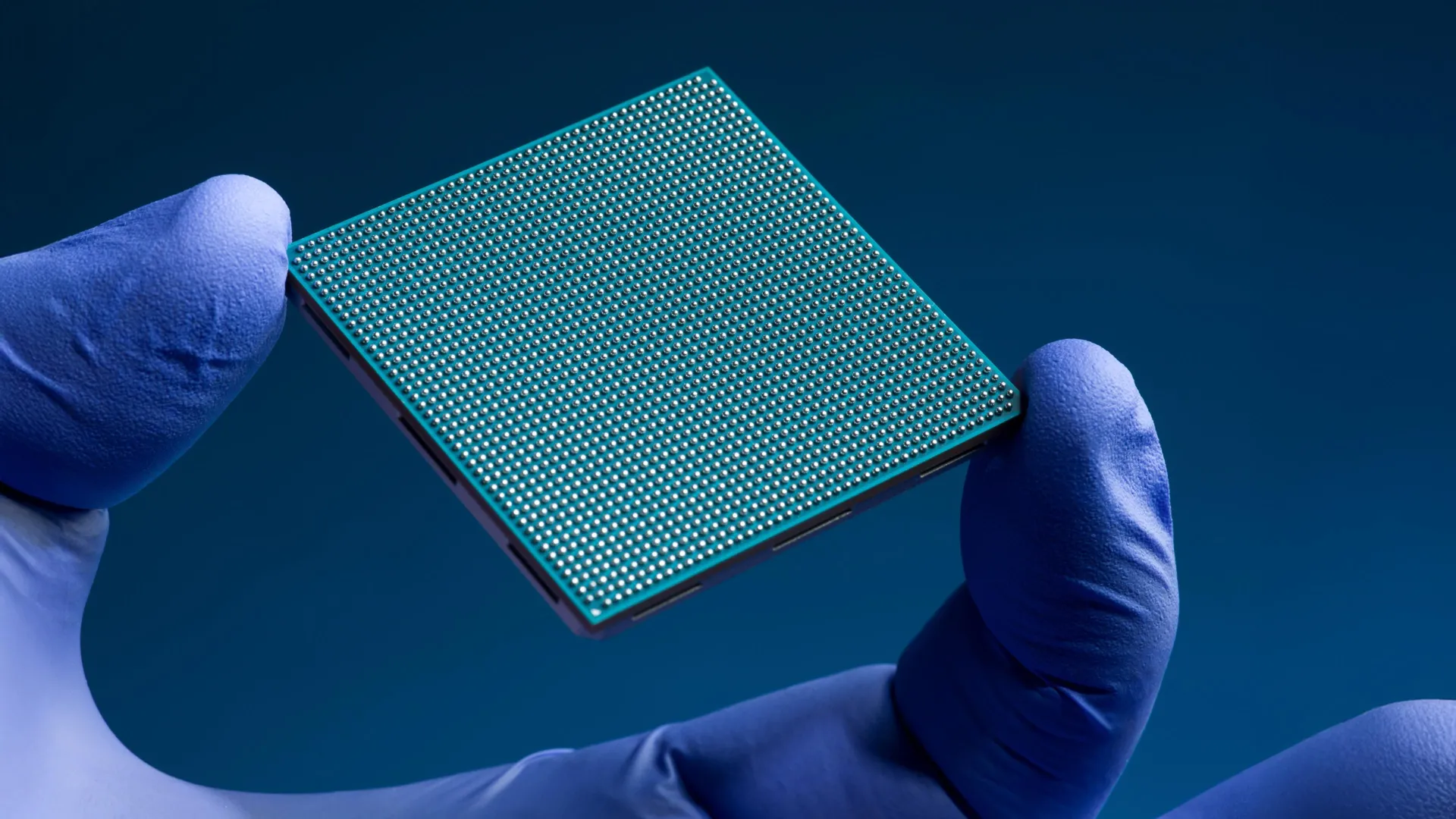
For decades, the backbone of space exploration has been built upon a paradoxical foundation: the world’s most ambitious missions are governed by processors that, by modern Earth standards, are relics of a bygone era. While a consumer smartphone today possesses computing power that dwarfs the hardware used to land rovers on Mars, space-grade electronics have historically prioritized extreme durability over raw speed.
That paradigm is now shifting. NASA’s High Performance Spaceflight Computing (HPSC) project, in partnership with Microchip Technology Inc., has unveiled a new radiation-hardened "system-on-a-chip" (SoC) that promises to bridge the gap between terrestrial technological prowess and the unforgiving vacuum of deep space. With performance metrics currently testing at 500 times the capacity of existing space-hardened hardware, this innovation is not merely an incremental upgrade—it is the engine that will power the next generation of autonomous exploration.
The Core Mandate: Why Spaceflight Computing Needs an Evolution
The current fleet of NASA spacecraft relies on hardened processors designed for longevity and error prevention. These chips are built to withstand the relentless bombardment of high-energy solar particles and cosmic radiation, which can flip bits in memory and force a spacecraft into a "safe mode" hibernation. While these processors are undeniably dependable, their low clock speeds and limited architecture act as a bottleneck for the data-intensive requirements of modern science.
As NASA sets its sights on sustained lunar presence via the Artemis program and eventual crewed missions to Mars, the demand for onboard intelligence has spiked. Future missions require real-time hazard avoidance for autonomous landings, high-speed scientific data processing, and life-support monitoring—tasks that legacy processors simply cannot handle in real-time. By developing a multicore, fault-tolerant system, NASA is effectively moving from the "abacus era" of space computing into the age of high-performance artificial intelligence.
A Chronology of Innovation
The journey to this silicon breakthrough has been a multi-year effort rooted in strategic commercial collaboration:
- 2022: NASA’s Jet Propulsion Laboratory (JPL) formally selected Microchip Technology Inc. as its industrial partner to develop a new, scalable processor architecture. This partnership model allowed NASA to leverage private sector R&D funding while providing the agency with the expertise needed to navigate the challenges of space-grade manufacturing.
- February 2024: The testing phase officially commenced at JPL. To mark the occasion, engineers sent a symbolic "Hello Universe" message through the chip, echoing the historical traditions of early computer programming.
- Spring/Summer 2024: Throughout these months, the chip has undergone rigorous "stress testing," simulating everything from the intense electromagnetic interference of a solar flare to the extreme thermal cycling of planetary entry.
- Current Status: Early results have exceeded expectations. The processor is not only functioning as intended but is demonstrating performance levels roughly 500 times greater than current flight-ready technology.
Engineering the Impossible: Radiation-Hardened Architecture
Creating a processor that can operate in the deep reaches of the solar system requires solving an engineering riddle: how do you build a chip that is powerful enough for advanced AI, yet resilient enough to survive an environment that kills standard silicon?
The "System-on-a-Chip" Advantage
The HPSC is a system-on-a-chip, integrating central processing units, computational offloads, networking hardware, memory, and I/O interfaces into a single, compact, energy-efficient unit. In the power-starved environment of a spacecraft, energy efficiency is as critical as performance. By consolidating these functions, NASA reduces the weight and power footprint of the spacecraft’s "brain," allowing for more scientific instruments to be carried on board.
Surviving the "Wringer"
The testing campaign at JPL is, in the words of Jim Butler, project manager for HPSC, "putting the chips through the wringer." The testing parameters include:
- Radiation Tolerance: Ensuring the logic gates do not succumb to Single Event Effects (SEE) caused by cosmic rays.
- Thermal Cycling: Testing the structural integrity of the chip as it shifts from the freezing shadows of space to the intense heat of solar exposure.
- High-Fidelity Simulation: Using data from previous planetary landings, engineers are feeding the chip the same sensor data that would be encountered during a descent to Mars. The chip must process this "huge volume of landing-sensor data" instantaneously to guide the spacecraft to a safe touchdown.
Official Perspectives: The Vision for the Future
The implications of this project are viewed by NASA leadership as a "triumph of technical achievement."
Eugene Schwanbeck, program element manager in NASA’s Game Changing Development (GCD) program, emphasizes the duality of the chip’s design: "Building on the legacy of previous space processors, this new multicore system is fault-tolerant, flexible, and extremely high-performing."
The flexibility of the chip is a key selling point. Because it is a multicore, scalable architecture, it can be configured for a wide variety of mission profiles. A deep-space probe might use a low-power configuration to preserve energy over a decade-long journey, while a crewed habitat on the Moon might utilize the full potential of the chip’s AI capabilities to manage life support and environmental monitoring.
Implications: The Dawn of Autonomous Spacecraft
The integration of this processor marks a turning point in the autonomy of space travel.
Real-Time Decision Making
Currently, if a spacecraft encounters an unexpected obstacle or system glitch, it must often stop and wait for instructions from Earth. Due to the vast distances of space, communication delays—ranging from seconds near the Moon to over 20 minutes from Mars—can be catastrophic. With the HPSC, spacecraft will possess the onboard computational power to run AI models that can analyze environments and make split-second decisions without human intervention.
Data Efficiency
Deep space missions generate terabytes of scientific data. The HPSC allows for sophisticated "onboard edge processing." Instead of sending raw, noisy data back to Earth, the spacecraft can process, summarize, and prioritize scientific findings, ensuring that the most critical information is transmitted first. This optimizes bandwidth usage for antennas that are millions of miles from the nearest receiver.
Beyond the Stars: Terrestrial Applications
While the primary objective of the HPSC is to enable the next "giant leaps" for humanity in space, the technology holds significant promise for industries on Earth.
Microchip Technology Inc. has noted that the architecture is adaptable for critical terrestrial sectors. Industries that require extreme reliability and fault-tolerance—such as commercial aviation, autonomous automotive navigation, and industrial robotics—stand to benefit from the hardening techniques developed for this project. The ability to operate without maintenance for years in a harsh environment is a capability that translates directly to the needs of self-driving cars navigating complex traffic or aircraft systems operating under rigorous safety standards.
Conclusion: A New Era of Exploration
As NASA moves from the testing phase toward mission integration, the High Performance Spaceflight Computing project stands as a testament to the power of commercial-agency partnerships. By combining the rigorous standards of space exploration with the rapid innovation cycle of the private sector, NASA is ensuring that its next generation of probes, rovers, and crewed vessels will be equipped with the processing power required to unlock the mysteries of the cosmos.
The "Hello Universe" message sent by the team in February was more than just a nod to computing history; it was a declaration that the constraints of the past no longer apply. Whether it is managing the life-support systems of a lunar base or navigating the treacherous terrain of an icy moon, the HPSC will be the silent, powerful engine driving humanity’s expansion into the solar system. The era of the "smarter" spacecraft has arrived.
 Sagoh
Sagoh  Asro
Asro 