
 By Evan Lee Salim
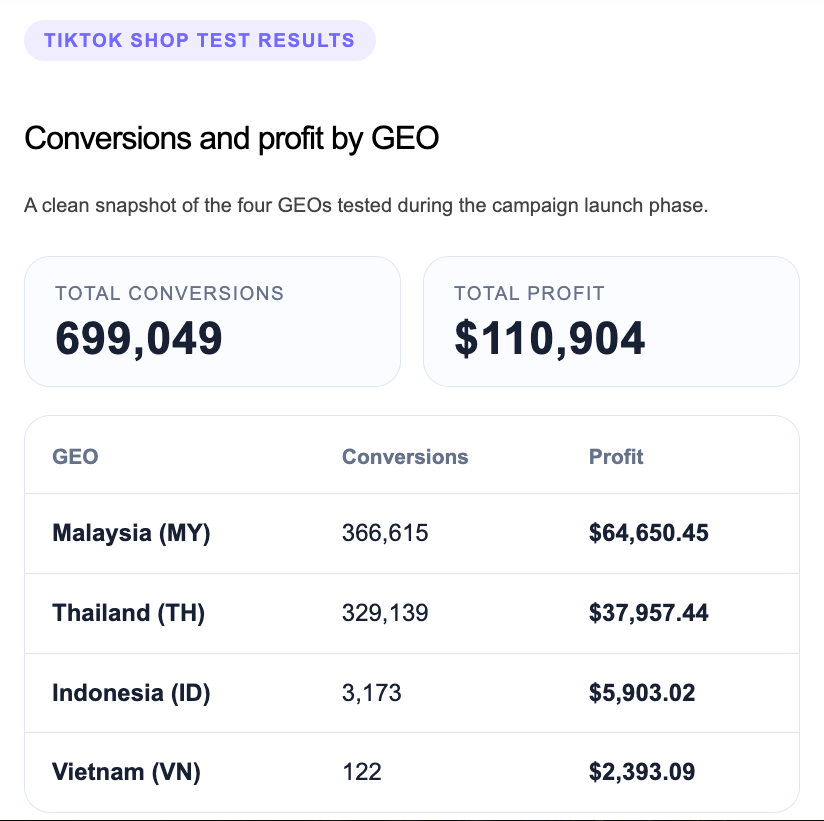
The landscape of global ecommerce is undergoing a seismic shift, driven by the rapid maturation of social commerce platforms. As traditional search-based advertising faces increasing saturation and rising costs, performance marketers and ecommerce affiliates are turning their gaze toward TikTok Shop—an ecosystem where entertainment and transaction are seamlessly integrated. A recent, comprehensive case study published by PropellerAds has shed new light on this transition, revealing how a single advertiser successfully generated over 699,000 conversions and secured $110,000 in profit during the first quarter of 2026 by leveraging unconventional traffic sources in the Asian market.
This success story serves as a masterclass in modern affiliate marketing, demonstrating that when social-first shopping experiences meet high-intent traffic, the barriers to conversion significantly diminish.
The Core Mechanics of the Campaign
The campaign, which targeted a diverse set of Asian markets, was not a product of blind luck but rather a calculated experiment in traffic diversification. While many marketers limit themselves to the native advertising tools provided by social platforms, this advertiser opted for a more sophisticated approach, utilizing the Popunder traffic infrastructure provided by PropellerAds.
Strategic Geographic Focus
The campaign focused on high-growth digital economies:
- Malaysia: Chosen for its high mobile penetration and adoption of social-native shopping habits.
- Thailand: A market known for its massive influencer economy and rapid response to viral product trends.
- Indonesia: The largest digital economy in Southeast Asia, offering vast scale for impulse-led purchases.
- Vietnam: A rapidly evolving market with a tech-savvy demographic increasingly comfortable with in-app purchasing.
Traffic and Bidding Logic
The advertiser employed a multifaceted bidding strategy. By utilizing CPA (Cost Per Action) Goal bidding, they ensured that the system prioritized users most likely to complete a purchase, effectively automating the bidding process to maintain profitability. Additionally, the use of SmartCPM and High Intent CPM allowed the advertiser to bid strategically for ad inventory that traditionally commands higher conversion rates, balancing cost-efficiency with volume.
A Chronological Breakdown of the Strategy
The success of this campaign can be traced back to a disciplined, multi-phase execution strategy that prioritized data collection over immediate, high-volume scaling.
Phase 1: The Discovery Period (Broad Testing)
Rather than launching with restrictive targeting, the advertiser began with a Run-On-Network (RON) approach. By casting a wide net, they were able to gather statistically significant data on which devices, creative angles, and specific demographics yielded the strongest conversion signals. This period was essential for identifying the "hidden gems" in the traffic network that standard campaigns often overlook.

Phase 2: Data Synthesis and Refinement
Once the campaign had gathered sufficient data, the advertiser shifted from broad testing to laser-focused optimization. They filtered out underperforming traffic sources and prioritized zones that showed a high correlation between ad clicks and completed in-app purchases. This phase is where the "profitability inflection point" occurred, as the cost-per-acquisition (CPA) stabilized while conversion rates began to climb.
Phase 3: Scaling and Sustained Performance
With a proven model, the advertiser scaled their budget across the top-performing GEOs. Throughout Q1 2026, the campaign maintained a consistent CPA range of $0.04 to $0.20. By focusing on products that thrive in an impulse-driven environment—such as fashion, beauty, and lifestyle gadgets—the advertiser hit conversion rates as high as 10% in peak markets.
Supporting Data: Why the Model Works
The data provided by the PropellerAds study offers a glimpse into the unit economics of modern social commerce. The ability to achieve such high conversion rates at a relatively low CPA suggests that the "TikTok Shop effect" is genuine.
The friction-less purchase flow is the primary catalyst here. By removing the need for a user to navigate away from the content they are currently enjoying to an external website, the drop-off rate is significantly reduced. When a user clicks a product tag inside a video, the intent is captured in the moment. The subsequent integration with PropellerAds’ traffic allowed for an influx of users who were already primed for this type of shopping experience, creating a synergistic effect that traditional banner ads simply cannot replicate.
The Strategic Implications for Affiliates
For those operating in the affiliate space, this case study provides a blueprint for adapting to the changing winds of digital marketing.
1. The Death of the "One-Size-Fits-All" Funnel
Affiliates can no longer rely solely on search and standard display ads. The "TikTok Shop" model proves that the future of commerce is native. Campaigns that are designed to look and feel like content—or are situated within high-engagement environments—consistently outperform traditional landing pages.
2. The Power of Alternative Traffic
There is a prevailing myth that only "native" traffic (the traffic generated within the TikTok app itself) works for TikTok Shop. This study busts that myth. By utilizing Popunder traffic and other high-intent formats, affiliates can reach audiences who are active shoppers but may not be searching for the product in the traditional sense. It effectively turns "passive" traffic into "active" buyers.
3. Data-Driven Bidding is Non-Negotiable
The use of CPA Goal and SmartCPM tools indicates that manual bidding is becoming a relic of the past. Success in the current climate requires an reliance on algorithmic bidding that adjusts in real-time to the performance of the campaign.
Looking Forward: The Role of TikTok Shop in Global Retail
As TikTok Shop continues to expand its global footprint, its influence on the affiliate ecosystem is expected to grow. The platform is not merely a social media destination; it is evolving into a full-funnel ecommerce powerhouse. For creators and affiliates, this represents a unique opportunity to monetize content in a way that provides value to the consumer while generating significant revenue for the marketer.
The implications for the broader retail industry are equally profound. Traditional retailers who have been slow to adopt social commerce are finding themselves at a disadvantage against agile, influencer-led brands that utilize platforms like TikTok Shop to bypass the traditional retail chain.
Expert Perspective: Adapting to the Shift
According to industry experts, the key to success in the coming years will be the ability to balance "content-first" marketing with "performance-first" technical execution. As demonstrated by the PropellerAds case study, the winners will be those who can merge the creative allure of social media with the technical precision of high-performance advertising tools.
Conclusion: Lessons from the Q1 Success
The $110,000 profit milestone achieved in Q1 2026 is a testament to the fact that social commerce is not just a trend—it is a sustainable, scalable revenue channel. By moving away from aggressive, short-term tactics and focusing on a cycle of broad testing followed by data-driven optimization, affiliates can unlock consistent returns.
For those looking to replicate these results, the path is clear:
- Invest in testing: Do not assume you know what will convert. Let the data tell the story.
- Embrace high-intent traffic: Explore beyond the walled gardens of social media.
- Optimize for the flow: Understand that the user journey is now shorter than ever.
As the digital landscape continues to evolve, those who remain agile, data-literate, and willing to experiment with new formats will continue to find opportunities in the growing social commerce ecosystem. The TikTok Shop case study is not the end of the conversation, but rather the beginning of a new chapter in affiliate marketing—one where the integration of content and commerce is the ultimate competitive advantage.
 Dwi Wanna
  Lina Irawan
  Basiran