
 By Nana Muazin

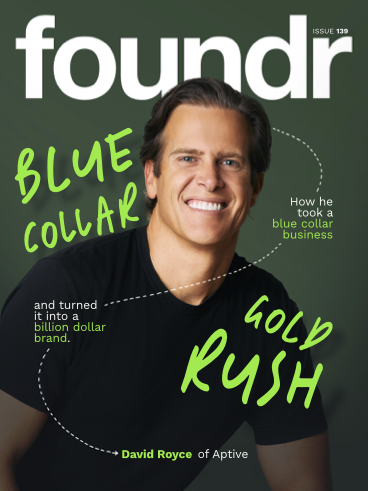
In the polished, glass-walled boardrooms of venture capital firms, the conversation rarely drifts toward the technicalities of pest control. Yet, David Royce, the founder and chairman of Aptive Environmental, has spent two decades proving that the most lucrative opportunities are often hiding in plain sight—buried beneath the floorboards and behind the walls of American homes.
Royce’s journey is not a tale of Silicon Valley disruption or high-tech breakthroughs. It is a masterclass in the power of "unsexy" business models. By applying rigorous financial discipline, a radical approach to sales culture, and an unwavering commitment to operational excellence, Royce has built the third-largest residential pest control service in North America. His success challenges the modern obsession with prestige, proving that a finance degree and a hunger for the "thing nobody else wants to do" is a more reliable path to wealth than chasing the latest tech trend.
The Foundation: From "Not Smart" to Top 1%
David Royce’s trajectory began in a place of profound self-doubt. As a child, he struggled academically, viewing his inability to focus as a lack of intelligence. It wasn’t until he was an adult that he understood his brain’s wiring—undiagnosed ADHD—was not a deficiency but a double-edged sword.
"In boring environments, it’s brutal," Royce explains. "In environments I care about, it’s a superpower."

This realization became the cornerstone of his career. His academic turning point arrived in the sixth grade, thanks to a teacher named Mrs. Luft who saw potential in him before he saw it in himself. This validation ignited a work ethic that would eventually define his professional life. However, his real-world education in persistence began in the sweltering heat of Sacramento, California, where he spent his first college summer knocking on doors for a pest control firm.
He failed for the first five days straight. While his peers were closing deals, Royce was performing "free cardio." Instead of packing his bags and heading home, he retreated to a bookstore, purchased half a dozen sales manuals, and committed to 90 minutes of daily study. By the end of the summer, he was the top rookie among 200 sales representatives. It was a lesson he would repeat throughout his career: persistence is often just genius in disguise.
A Chronology of Growth: The Strategic Pivot
Royce’s rise was not linear; it was a series of calculated, high-stakes maneuvers.
- The Apprenticeship: After his four-year stint in door-to-door sales, Royce was poised to enter the world of investment banking. His mentor, a man who had sold his own pest control company for $10 million, posed a life-altering question: "Why would you work 80-hour weeks for someone else when you could start your own firm?"
- The First Venture: Armed with $300,000 in savings intended for an MBA, Royce chose to swallow his ego. He ignored the lack of "prestige" in the industry and focused on the recurring revenue potential of pest control.
- The Scaling Crisis: During his first year in Los Angeles, Royce experienced the paradox of rapid growth. He signed 7,500 new customers—far exceeding his target of 5,000—but the company nearly folded due to a cash-flow mismatch. Because he paid sales commissions in advance of collecting long-term service fees, he was effectively "dying while killing it." This near-miss taught him a permanent lesson: "Revenues are vanity, profits are sanity, but cash flow is reality."
- The Exit Strategy: Royce mastered a unique asset-deal structure. He sold the customer bases and technician networks to strategic buyers while retaining his core leadership and sales teams. This allowed him to start anew, with the same "family" of experts, but with more capital and better infrastructure.
Supporting Data: Why "Boring" is Profitable
The numbers behind Royce’s success underscore a broader economic reality: blue-collar, essential service industries are the quiet engine of American wealth.

According to data cited by Royce, roughly 43% of the top 0.1% of income earners in the U.S.—those netting $2.3 million annually—operate in what the general public would categorize as "boring" industries. These businesses offer three specific advantages that tech startups often lack:
- Recession Resistance: As Royce famously notes, "Bugs don’t read the Wall Street Journal." When the economy contracts, essential services remain intact.
- High Margins: By leveraging software to gamify sales and optimize routes, Royce was able to operate with efficiency that traditional local pest control companies could not match. His sales reps, when moved to his system, typically saw a 70% increase in productivity.
- The Retirement Cliff: A massive wave of baby boomer business owners are currently looking to exit. With few successors lined up, the consolidation of these essential service businesses represents a trillion-dollar opportunity for those with the operational maturity to acquire and scale them.
Official Lessons: The "Architect" Philosophy
Royce’s transition from CEO to "Architect" of his companies provides a blueprint for leadership. He emphasizes that the sign of a true leader is not the number of followers they command, but the number of leaders they create.
When he stepped aside as CEO of Aptive, he replaced himself with a protégé he had mentored for a decade. This move was not without its challenges. He learned that the hardest part of letting go is resisting the urge to jump back in when things are "slightly off."
His biggest professional setback occurred when he attempted to scale by hiring a "big company" executive. The CFO, coming from a billion-dollar tech firm, lacked the nuance required for a growing service business. When the company attempted to sell, the CFO’s failure to hit forecasts caused potential buyers to drop out. Royce turned this into a hard-earned lesson: "Resumes don’t run companies. People do."

The Implications: What Success Actually Means
The broader implications of Royce’s career suggest that the modern entrepreneur needs to recalibrate their definition of success.
"If you don’t enjoy the climb, the summit is going to disappoint you," Royce advises. His focus has shifted from the valuation of the exit to the legacy of the people he developed. By distributing 25% of his company to employees, he ensured that his success was shared. Seeing team members pay off mortgages and student loans validated his decision to prioritize culture over simple profit margins.
Furthermore, his career highlights a fundamental truth about the future of work: AI and automation are transformative, but they have distinct limits. While AI can analyze data and write code, it cannot solve the physical, localized problems that define the service economy. The "blue-collar" sector is not disappearing; it is simply waiting for a new generation of leaders to digitize its operations and institutionalize its culture.
Conclusion
David Royce’s story is a powerful reminder that prestige is a distraction. In a world obsessed with unicorn status and high-tech disruption, Royce chose the path of the "stealthy wealthy." He built his empire by looking for the pain points others ignored, embracing the unglamorous, and, most importantly, betting on people rather than just numbers.
His advice to the next generation of founders is simple: find the thing that everyone else avoids, study it until you are the best at it, and be stubborn enough to outlast the competition. In the end, the most significant "innovation" may not be a new piece of technology, but the disciplined application of character and persistence to a world that desperately needs essential services.
 Azzam Bilal Chamdy
 Asep Darmawan
 Reynand Wu
