
 By Ammar Sabilarrohman
In the contemporary digital economy, the quality of customer support is no longer a secondary consideration; it is the primary differentiator for brand loyalty. As ecommerce businesses scale, the "support stack" evolves from simple email inboxes to sophisticated omnichannel platforms. Among the heavyweights in this arena, HubSpot Service Hub and Zendesk stand out as the two most formidable contenders.
While both platforms promise to streamline operations, they are built on fundamentally different philosophies. HubSpot is the architect of the unified customer experience, treating support as a pillar of a holistic CRM. Zendesk, conversely, is the specialized engine of the contact center, designed to master the chaos of high-volume ticketing. Choosing between them is not merely a software decision; it is a strategic choice about how a company views its relationship with its customers.
The Evolution of Support: Context vs. Volume
The history of these platforms reveals their distinct DNA. Zendesk emerged in 2007 as a dedicated ticketing system, focusing on the "service-first" approach. Its goal was simple: provide a clean, fast, and organized interface for agents to manage thousands of interactions. It succeeded by becoming the gold standard for pure-play support teams.
HubSpot, however, began as an inbound marketing pioneer. Its expansion into Service Hub was not a pivot away from its roots but an extension of its core belief: that marketing, sales, and service must share the same data. By integrating support into the HubSpot CRM, the company effectively dismantled the silos that historically separated a customer’s marketing engagement from their support needs.
Supporting Data: Why Consolidation Matters
The impact of this architectural difference is measurable. For instance, Liquidity Services reported a 50% reduction in support costs after migrating to HubSpot. The efficiency gain was not driven by faster typing or better macros alone, but by the consolidation of data. When a support agent can see a customer’s entire purchase history, recent marketing email clicks, and past sales interactions within a single interface, the "context-switching" tax is eliminated.
Deep Feature Comparison: The Operational Divide
To understand how these platforms perform in the wild, one must look at how they handle the day-to-day realities of an ecommerce support agent.
Ease of Use and Onboarding
Zendesk offers an environment that feels like a professional-grade command center. It is intuitive for high-volume environments where efficiency is measured in seconds per ticket. Its mobile app is arguably the best in the industry, allowing agents to manage complex voice queues and omnichannel messages with surprising ease.
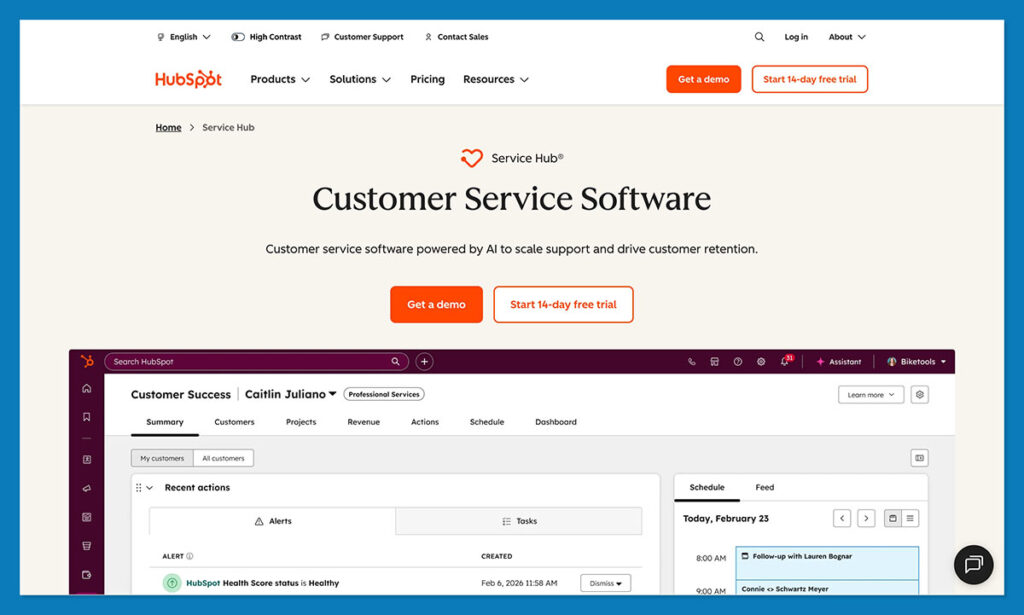
HubSpot’s interface is built on the philosophy of the "shared timeline." While it has a slightly steeper learning curve due to the sheer breadth of its CRM capabilities, the payoff is immense. Once an agent learns the HubSpot ecosystem, they are not just managing tickets; they are managing relationships. The platform’s reliance on the CRM as a single source of truth ensures that data remains consistent across the entire organization.
AI and Automation: The New Frontier
Both platforms have aggressively integrated AI into their suites. HubSpot’s Breeze AI is perhaps the most cohesive AI implementation in the market today. Because it draws directly from the HubSpot CRM, the AI agents are context-aware. They do not just provide generic responses; they understand the customer’s specific status, recent interactions, and brand voice.
Zendesk’s AI is similarly robust but focuses on the mechanics of the queue. Its strengths lie in AI-powered ticket triage, QA scoring, and workforce management. For a large contact center that needs to monitor thousands of calls and chats, Zendesk’s automated summaries and workforce planning tools are indispensable.
The CRM Disconnect: A Critical Distinction
The most significant chasm between the two lies in their CRM capabilities.
HubSpot’s CRM is the engine that drives the entire platform. Every ticket, call, and email is automatically appended to the customer’s record. This is a game-changer for ecommerce teams. When a customer writes in about a delayed shipment, the agent already knows the order value, the customer’s lifetime value, and whether they are currently being targeted by a retention marketing campaign.
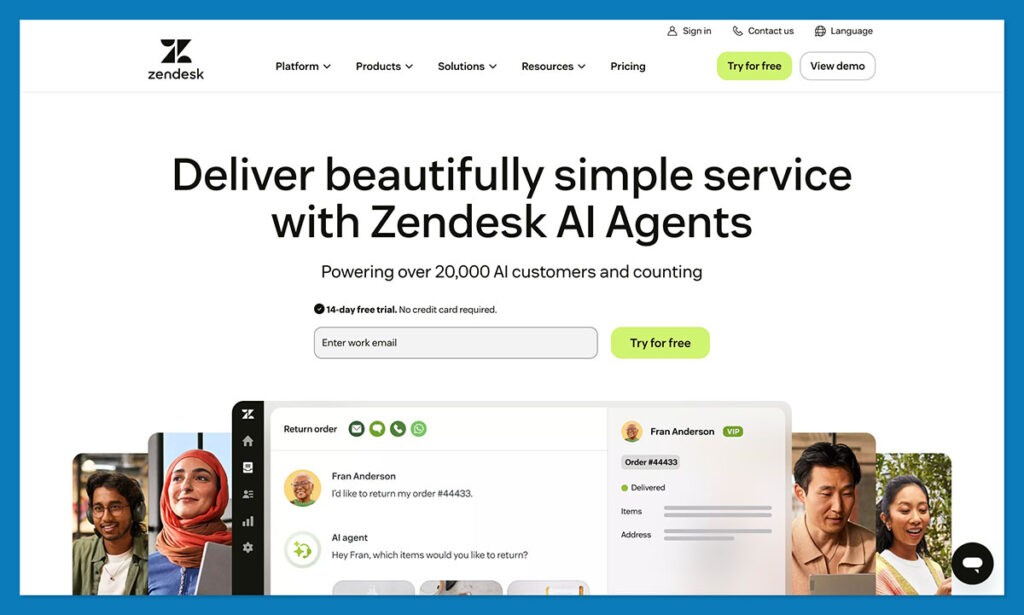
Zendesk offers a CRM solution, Zendesk Sell, but it remains a separate entity. While functional, it does not share the same fluid integration as the HubSpot ecosystem. Users often find themselves toggling between the support workspace and the CRM module. This creates a "data island" effect, where information must be manually reconciled or bridged through integrations.
Integration Ecosystems: The Glue That Holds It Together
For an ecommerce store, the support platform is only as good as its connections to the rest of the tech stack—Shopify, BigCommerce, or custom logistics platforms.
HubSpot’s Data Hub provides a high-fidelity, two-way sync that is remarkably clean. Changes made in the ecommerce store are reflected in the CRM in real-time, and vice versa. This seamless flow allows for automated workflows that span across departments.
Zendesk boasts a massive marketplace of integrations. However, the depth of these integrations varies. Because the platform is modular, you can connect it to almost anything, but "glue work" is often required. Organizations often find themselves managing a "Frankenstein" stack of Zendesk plus third-party CRM and marketing tools, which can become fragile during peak traffic periods like Black Friday or Cyber Monday.

Pricing and Scalability
Scalability is where the business model of each company becomes apparent.
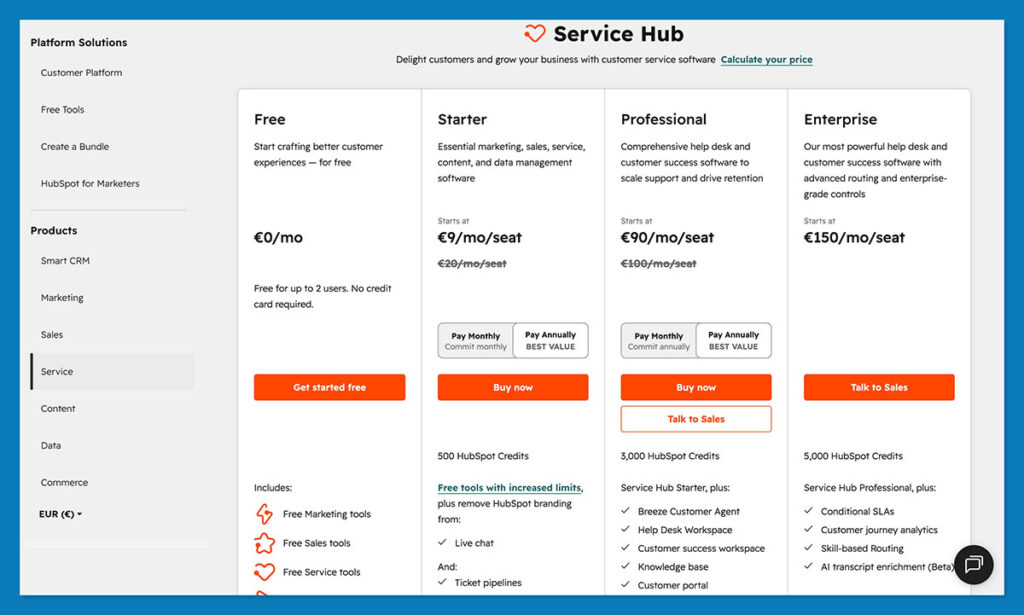
HubSpot’s pricing model is tiered, starting with a powerful, free CRM that allows small businesses to get a feel for the platform’s logic. As you scale into Professional and Enterprise tiers, the costs increase, but so does the value, as you gain access to complex automation, reporting, and advanced service tools.
Zendesk does not offer a free tier, positioning itself as a premium service from the start. While entry-level pricing is competitive, the costs can escalate quickly when adding the necessary modules for CRM, advanced reporting, and AI. For many mid-size businesses, the cost of stitching together Zendesk with other required software often reaches or exceeds the cost of a full HubSpot subscription.
Implications for the Future of Ecommerce
The trend in ecommerce is moving toward "unified commerce." Customers expect brands to know who they are, regardless of which channel they use to reach out.
If your organization is a high-volume contact center—where the primary KPI is the speed and accuracy of ticket resolution—Zendesk remains the industry leader. It is built to withstand the pressure of massive, constant queues and provides the most comprehensive tools for managing large, specialized support teams.
However, for the modern, growth-oriented ecommerce business, HubSpot offers a superior path forward. By unifying service with sales and marketing, it transforms the support desk from a cost center into a growth engine. When support agents have full visibility into the customer lifecycle, they are empowered to provide personalized, high-value service that drives retention and increases lifetime value.
Final Verdict: Which Path to Choose?
- Choose Zendesk if: Your primary requirement is handling high-volume, multi-channel support where voice, SMS, and complex ticketing workflows are the center of your universe. You have a dedicated contact center team that needs specialized workforce management and QA tools.
- Choose HubSpot Service Hub if: You are an ecommerce brand focused on the end-to-end customer journey. You want your support, marketing, and sales teams to work from a single source of truth. You value context over pure queue volume and want to leverage AI to personalize the customer experience at every touchpoint.
The most effective way to decide is not to read more brochures, but to test the systems against your own data. Create a free HubSpot account, map a few of your existing support processes, and compare the result with a Zendesk demo. The "right" choice will quickly reveal itself based on how easily your team can access the information they need to delight your customers.
 Dwi Wanna
  Lina Irawan
  Basiran