
 By Lina Hope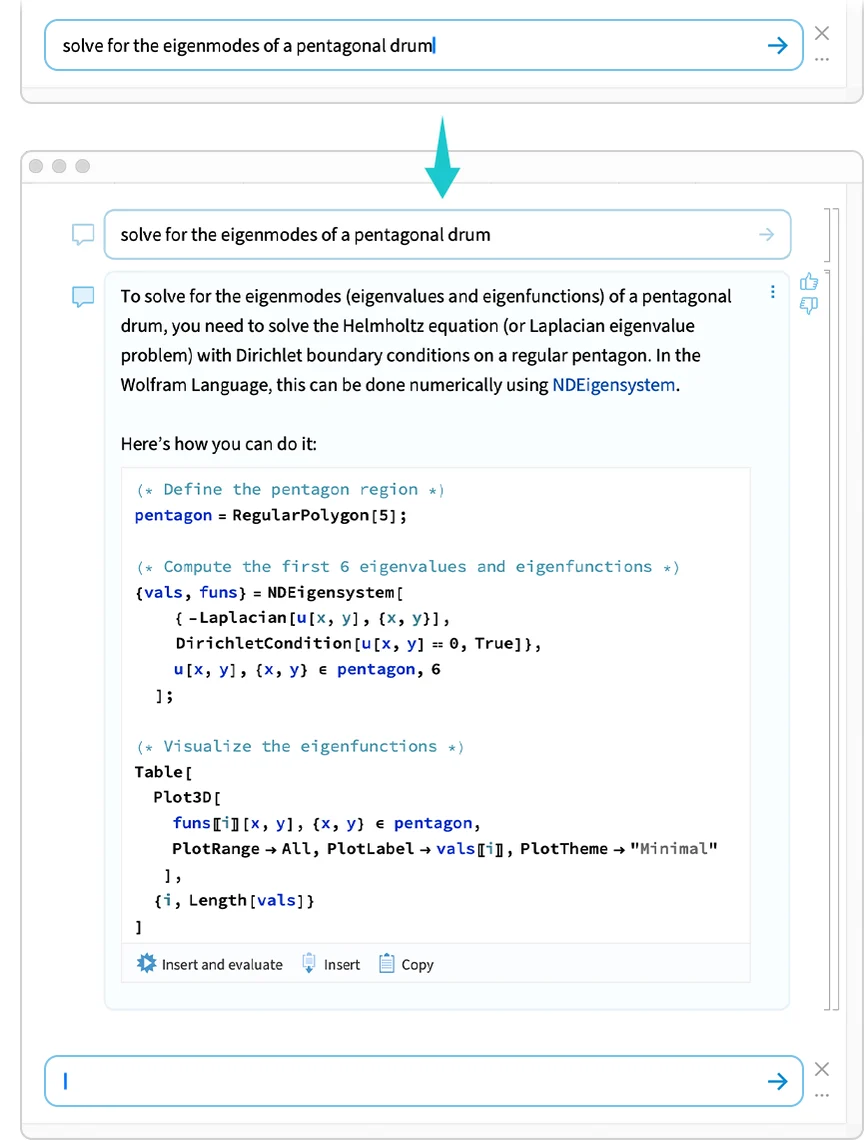
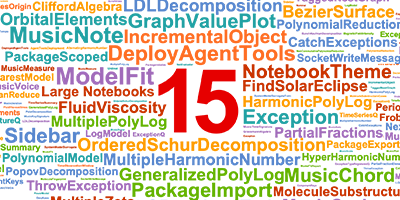
On June 23, 1988, the landscape of technical computing was forever altered by the launch of Mathematica 1.0. Nearly 38 years later, Wolfram Research has reached a new milestone with the release of Version 15 of the Wolfram Language. This release is not merely an incremental update; it represents a fundamental shift in how humans and artificial intelligence interact with the computational paradigm. By evolving from a "mathematical" tool into a full-scale computational language, the platform has solidified its role as a bridge between human intent and machine precision in an era dominated by AI.
A Legacy of Precision: From Mathematica to Wolfram Language
The journey from 1988 to today is a testament to the power of a consistent intellectual mission: applying the computational paradigm as broadly and deeply as possible. Over four decades, the company has built a "tower of ideas"—a collection of over 7,000 primitives that allow users to represent and compute about the world with remarkable succinctness.
Stephen Wolfram, the architect of the language, notes that the current version addresses the "modern AI" driver that has reshaped software development. While traditional programming languages were designed for humans to write and computers to execute, the Wolfram Language is designed to be read and understood by both, serving as a medium for formalizing thought. In the age of AI, this precision is more critical than ever, acting as an anchor for AI systems that might otherwise generate plausible but incorrect "hallucinations."
The Integration of AI: A New Workflow
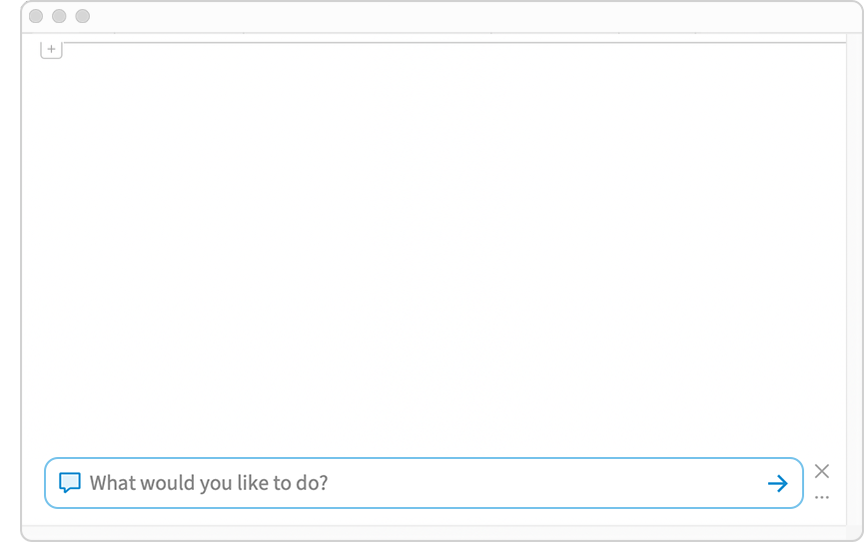
Version 15 introduces a paradigm-shifting feature: a built-in AI Assistant available in every notebook. Unlike previous integrations that required external configuration, the new AI Assistant is natively integrated, featuring a "chatbar" at the bottom of every notebook.

The AI Assistant Chatbar
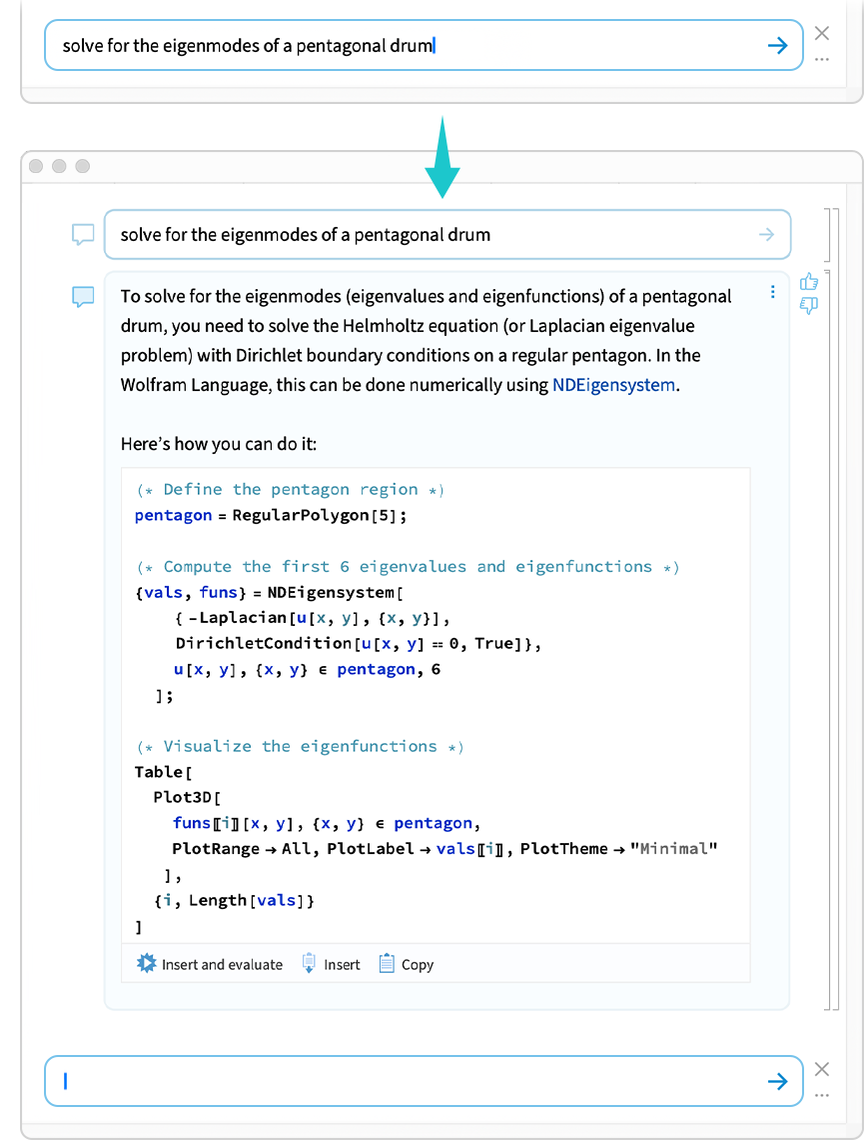
This interface allows users to input natural language requests, which the system interprets and translates into executable Wolfram Language code. This creates a powerful, iterative workflow:
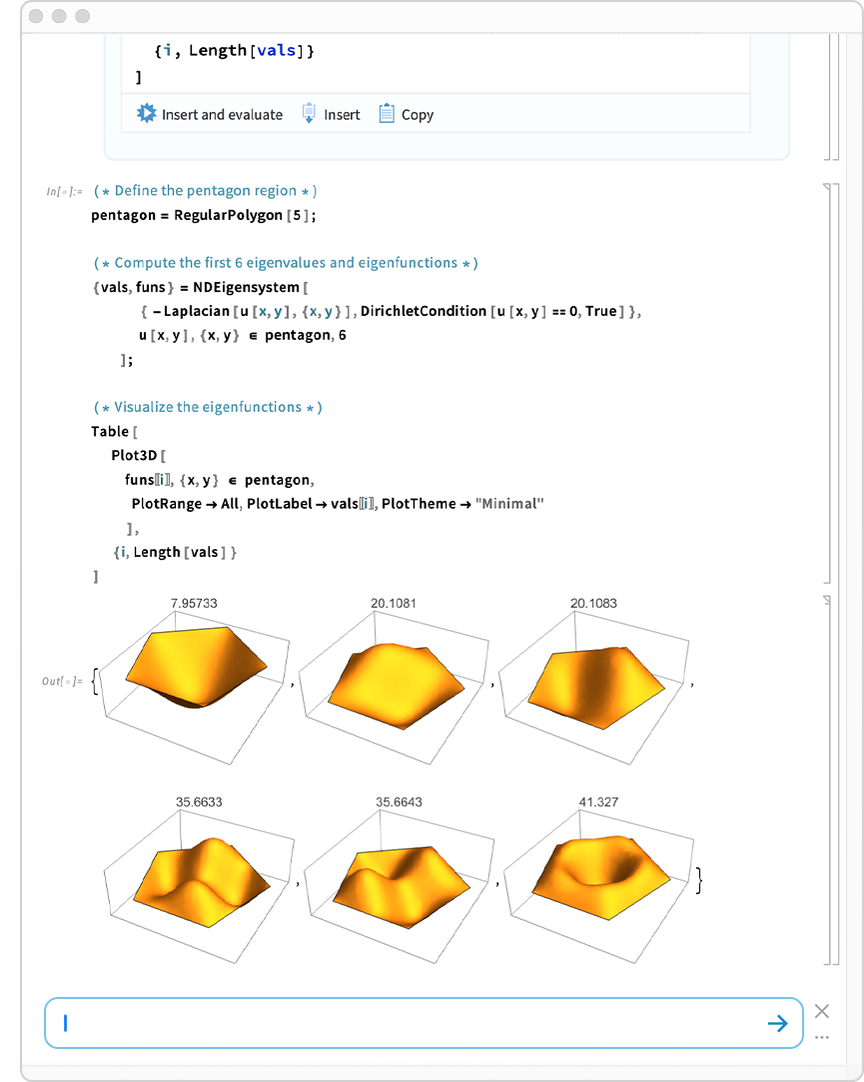
- Interpretation: The AI assistant translates vague natural language into precise code.
- Execution: The code is immediately inserted and evaluated within the notebook.
- Verification: Because the Wolfram Language is a symbolic, formal language, the user can inspect the generated code to verify exactly what the AI has understood, ensuring the output is not just "looking right," but is mathematically and computationally correct.
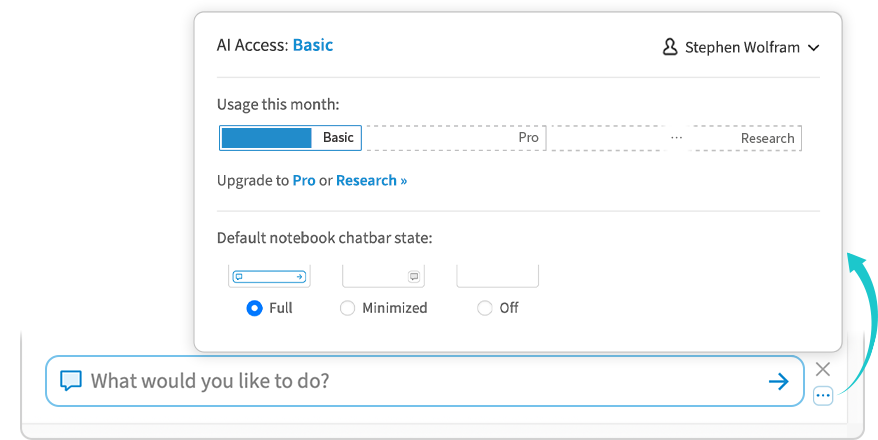
For power users, Version 15 also provides "Pro" and "Research" subscription tiers, which offer access to frontier AI capabilities, effectively turning the notebook into a workspace where human creativity is amplified by high-level machine intelligence.

Technical Milestones in Version 15
The release is packed with significant functional enhancements that span data science, symbolic algebra, and physical modeling.
Big Data and Categorical Analysis
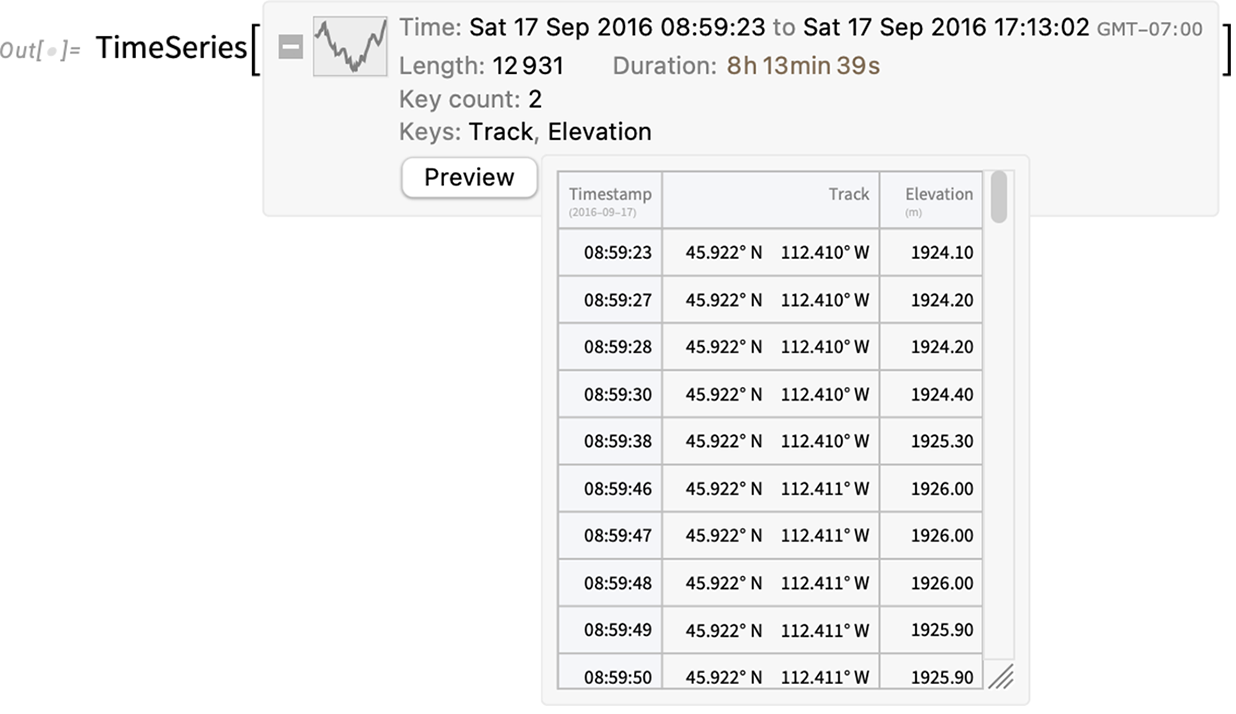
The TimeSeries and EventSeries frameworks have been significantly overhauled to handle millions of entries. By inheriting the architecture of the Tabular framework introduced in Version 14.2, these series can now handle multi-component data with unprecedented efficiency. Furthermore, Version 15 introduces a unified, symbolic representation for categorical data—both nominal and ordinal—enabling computational workflows that don’t rely solely on numerical values.

The "ModelFit" Superfunction
Data fitting is a core requirement for scientific and engineering research. Version 15 introduces ModelFit, a unified "superfunction" that accepts a symbolic outline of a model—such as ExponentialModel or PeriodicModel—and automatically fills in the parameters. It supports everything from traditional statistical models to machine learning-based approaches like NearestModel and DecisionTreeModel, offering a seamless path from raw data to a predictive model.
Symbolic Music and Mathematical Depth
In an effort to represent the world computationally, the Wolfram Language has added a robust symbolic representation for music. Users can now manipulate musical scores, conduct pitch analysis, and transform compositions using the same symbolic logic applied to physics or chemistry.

On the mathematical front, the addition of multivariate generalizations for Riemann zeta functions, polylogarithms, and harmonic numbers extends the system’s ability to provide closed-form solutions for complex integrals and differential equations. This is particularly vital for researchers in quantum field theory and analytic number theory.
Infrastructure: Scaling to Gigabytes
One of the most impressive feats of Version 15 is the complete overhaul of the notebook infrastructure. Moving away from the memory limitations of the past, the new multicore, multithreaded infrastructure allows for the routine handling of gigabyte-sized notebooks. This includes:

- Real-Time Find/Replace: A new, highly efficient search system that works instantly even in massive documents.
- Visual Themes: Users can now switch between aesthetic themes (such as Monokai, Dracula, or Wolfram Saturated), which are handled via a sophisticated "named color" system, ensuring consistency across light and dark modes.
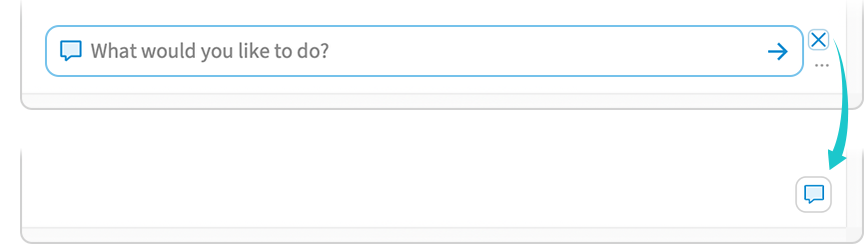
- Sidebars: The desktop interface now supports sidebars for AI chats and notebook properties, moving away from the "single-pane" document model that has defined the notebook interface for decades.
Implications for Modern Software Development
The introduction of the "Structured Package Format" is perhaps the most significant update for professional software engineers. This format allows for "born-private" symbols, where code defined in different files is localized by default. This solves the long-standing issue of symbol collision in large-scale projects, allowing for a cleaner, modular approach to software architecture.

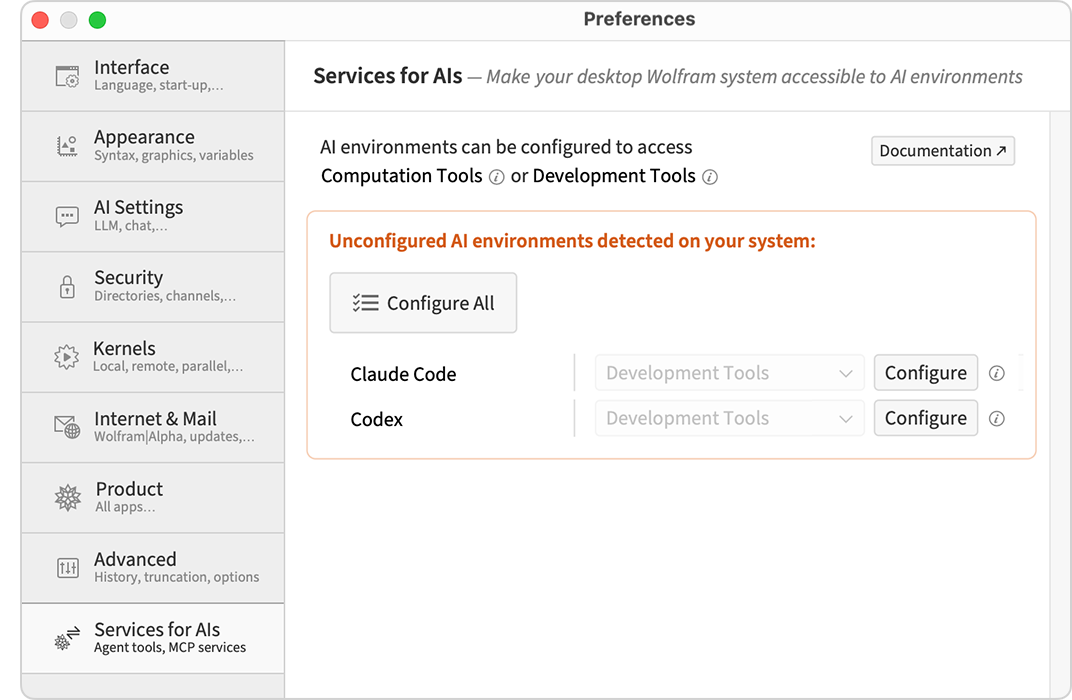
Additionally, the integration of GPU-based computation—including the ability to write custom CUDA kernels within the Wolfram Language—positions the platform as a high-performance environment for modern engineering. The new SystemModelSurrogateTrain function is particularly noteworthy, as it allows engineers to create neural-net-based "surrogate models" of complex systems, which can be simulated in real-time for digital twins.
Official Stance and Future Outlook
Wolfram Research emphasizes that the goal is not to replace human programmers with AI, but to automate the drudgery of specification. By providing 7,000+ primitives, the language already automates much of the "doing" of computation. The AI integration in Version 15 is the next logical step: automating the translation of intent into formal, precise code.

The company is also looking toward the future of institutional infrastructure. The upcoming "High-Performance Computing Kit" promises to bridge the gap between cloud-based compute services and private, on-premise clusters, ensuring that the computational power of the Wolfram Language remains accessible to research institutions and enterprises alike.
Conclusion: A New Standard for Computation
Version 15 of the Wolfram Language is a massive, cohesive effort to synthesize four decades of work with the chaotic, rapid-fire advancements of current AI. By refusing to sacrifice precision for the convenience of "approximate" AI outputs, the platform remains the gold standard for high-assurance computing. Whether it is solving differential equations using neural-net-aided heuristics, or managing massive data structures in a multi-gigabyte notebook, the platform continues to push the boundaries of what is possible in the computational age. As users begin to adopt these new tools, the distinction between "writing code" and "directing a computational engine" will likely continue to blur, ushering in a new era of intellectual productivity.
 Ammar Sabilarrohman
  rifanmuazin
  Layla Zulfa