
 By Laily UPN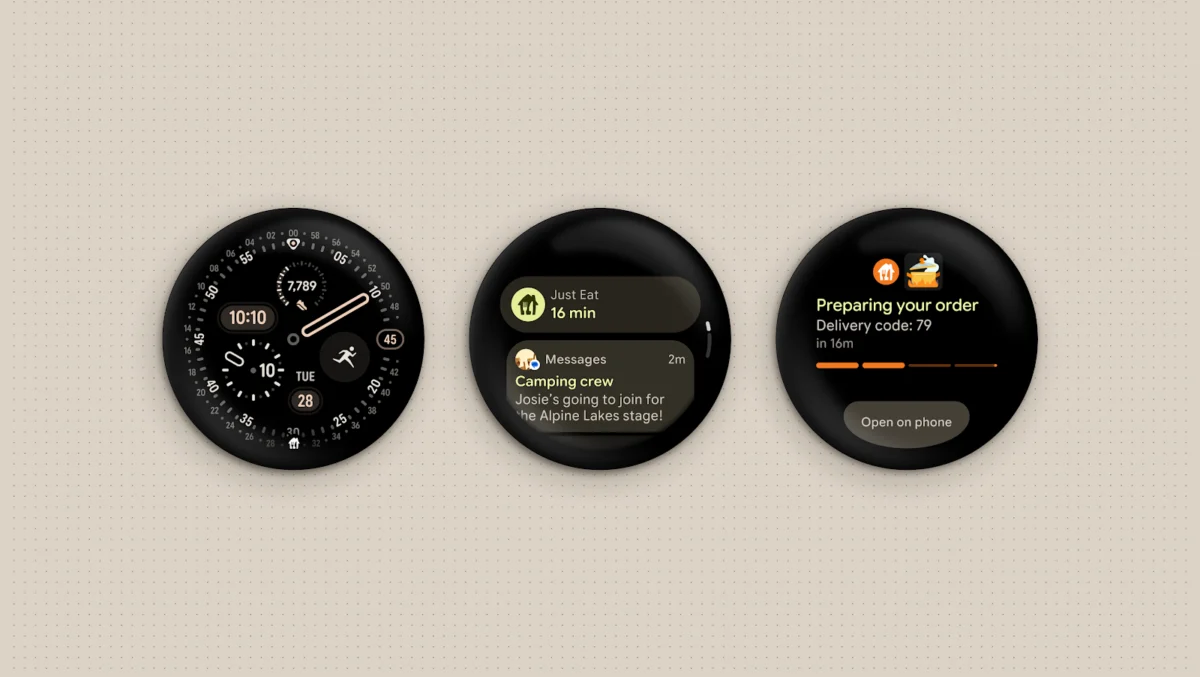
Google has officially begun the rollout of Wear OS 7, the latest iteration of its wearable operating system, marking a significant milestone in the evolution of the Pixel Watch ecosystem. Designed to bridge the gap between smartphones and wrist-worn devices more seamlessly than ever, the update brings a suite of features focused on proactive intelligence, improved power management, and tighter integration with the broader Google hardware portfolio.
Starting today, the update is available for the Pixel Watch 2, 3, and 4. This release represents a pivotal shift in how users interact with their watches, moving from simple notification mirroring to a more active, automated experience powered by Google’s latest Gemini advancements.
Main Facts: What’s New in Wear OS 7?
The hallmark of Wear OS 7 is the integration of Live Updates, a feature that synchronizes real-time information across Android devices. Whether it is tracking a ride-share vehicle, monitoring a meal delivery, or keeping an eye on live sports scores, users no longer need to reach for their phones. The watch now acts as a primary interface for transient, time-sensitive data.
Beyond connectivity, Google has focused on longevity. By optimizing background processes and refining system-level resource management, Wear OS 7 promises up to a 10 percent increase in battery life compared to Wear OS 6.
Additionally, the update introduces:
- Gemini Intelligence: A suite of AI-driven tools that will roll out in phases throughout the year.
- Audio Output Switching: A refined interface for managing media across devices.
- Expanded Emergency Protocols: Enhanced emergency sharing that bridges the gap between automated detection and human intervention.
- Dynamic Widgets: A replacement for the older "Tiles" system, offering developers more flexibility and richer data presentation.
Chronology: The Path to Wear OS 7
The journey to Wear OS 7 has been defined by Google’s desire to unify its fragmented wearable landscape and catch up to the deep ecosystem integration offered by competitors.
- May 2019: Google introduces "Tiles," a way for third-party developers to provide glanceable data on the watch face. This set the foundation for what would eventually evolve into the widget system.
- Mid-2025: Google begins teasing the convergence of AI and wearable hardware, emphasizing that the "Personal Intelligence" era would require faster, more efficient on-device processing.
- May 2026 (Google I/O): Google unveils the Android XR initiative and previews the "Live Updates" API, which would eventually become the backbone of the new Wear OS 7 notification architecture.
- Today: The official rollout begins, bringing the latest software to the Pixel Watch 2, 3, and 4, cementing the platform’s position as a core pillar of the Android experience.
Supporting Data: Efficiency and AI Integration
The 10 percent boost in battery life is not merely a software "tweak"; it is the result of significant underlying architectural changes. Google’s engineering team has optimized how the watch handles "wake locks"—the events that cause the processor to ramp up from low-power states. By batching background data syncs and refining the UI refresh rates during ambient mode, the system effectively squeezes more utility out of the same physical battery capacity.

The introduction of Gemini Intelligence is equally data-intensive. By utilizing "neural expressive" design, the interface is intended to feel more conversational and less mechanical. The Personal Intelligence feature pulls data from Gmail, Calendar, and Photos to provide context-aware suggestions. For example, if a user has a flight boarding pass in their Gmail, the watch can proactively surface that information at the airport, potentially even suggesting the gate number before the user asks.
Furthermore, the new Dynamic Widgets provide a more efficient data-rendering path than the 2019 Tiles. For developers, this means the ability to push complex layouts that react to the watch’s state, rather than just displaying static information. For devices that do not support the new framework, Google has ensured backward compatibility, allowing these widgets to render as full-screen tiles on Wear OS 4, 5, and 6.
Official Responses and Strategic Implications
Google’s strategy for Wear OS 7 is clear: they are positioning the smartwatch as a "hub" for the connected home and the personal AI assistant.
"Our goal with Wear OS 7 is to remove the friction between the user and their information," said a Google spokesperson during the announcement. "By bringing Gemini directly to the wrist and allowing for multi-step automation—like booking a dinner reservation via voice—we are moving the watch from a passive notification receiver to an active participant in the user’s daily life."
The inclusion of Emergency Sharing is perhaps the most critical update. While previous versions could call emergency services, the new update automatically triggers an alert to a pre-defined list of emergency contacts. This addresses a common criticism that automated crash or fall detection was too "clinical," often failing to notify family members or friends who could provide immediate assistance.
Implications: The Future of the Wrist-Worn Ecosystem
The implications of Wear OS 7 are broad, touching on everything from app development to hardware innovation.
1. The Rise of the "Assistant-First" Wearable
With the promised arrival of "Create My Widget" and multi-step automation, Google is betting on the idea that users want their watches to do the heavy lifting. The ability to use natural language to generate a widget suggests a future where the watch face is no longer static, but a dynamic dashboard that adapts to the user’s specific needs—whether that is a health-tracking dashboard in the morning or a travel dashboard during a trip.

2. Deep Integration with XR and Smart Glasses
The ability to preview photos from smart glasses directly on the watch screen signifies a growing interoperability between Android-based devices. As Google continues to explore the AR/XR space, the watch is increasingly being framed as the "control center" for a larger, multi-device ecosystem. This reduces the need to pull out a phone, keeping the user present in their physical environment.
3. Developer Ecosystem Evolution
By deprecating the reliance on Tiles and pushing for more dynamic Widgets, Google is forcing developers to update their apps to be more interactive. This transition period may be challenging for developers, but it is necessary to achieve the performance and UI standards that modern users expect. The backward compatibility offered for older OS versions shows that Google is attempting to manage this transition without alienating the existing user base.
4. Competitive Positioning
The wearable market remains fiercely competitive. With Apple’s watchOS maintaining a strong lead in health-tracking reliability and Samsung’s own Tizen-based history, Google’s aggressive push into generative AI is its primary differentiator. If Gemini can consistently and reliably handle complex, multi-step tasks, Google will have a significant lead in the "proactive assistant" category, which is where the industry is clearly headed.
Conclusion: A Step Toward the Future
Wear OS 7 is a comprehensive update that feels like a culmination of the last three years of research and development at Google. It moves beyond the "glanceable" era of wearables into a more capable, intelligent, and autonomous future.
For the end user, the update is a welcome improvement to daily quality of life—longer battery life, smarter notifications, and better control over the devices in their immediate vicinity. For the industry, it is a statement of intent: Google is no longer just trying to compete in the wearable space; it is looking to define the next generation of how we interact with technology.
As the promised Gemini features roll out later this year, the true potential of this operating system will become clear. For now, users of the Pixel Watch 2, 3, and 4 have a lot to look forward to, as their devices have effectively become much more than the sum of their parts.
 Nana Muazin
  Raul Delapena Setiawan
  Nana Wu