
 By Lina Irawan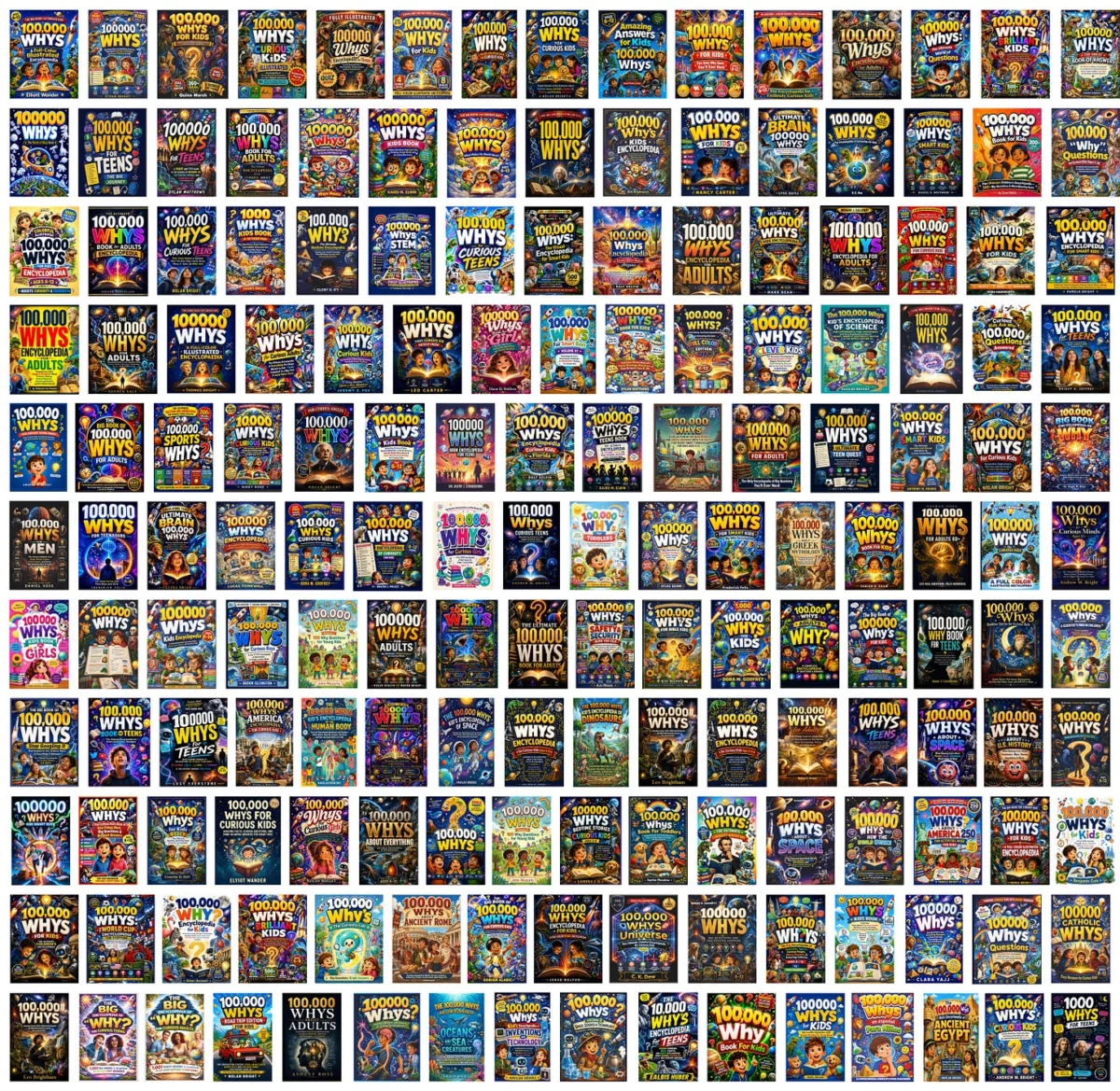
The debate regarding the authenticity of modern digital content has reached a fever pitch. Within the tech industry, a persistent and often contentious argument remains: can human-written text be reliably distinguished from content generated by Large Language Models (LLMs)?
For many proponents of AI, the answer is a firm "no." Their skepticism is rooted in the architecture of the technology itself. LLMs are, at their core, sophisticated statistical models designed to mirror human patterns of speech and reasoning. If an LLM is trained on the entirety of human knowledge and linguistic expression, its output should—by mathematical definition—be indistinguishable from human language under almost any statistical test.
However, this academic defense often masks a more cynical reality. Critics argue that the insistence on the "indistinguishability" of AI is frequently a bad-faith tactic used by those seeking to maintain plausible deniability for the mass-production of low-effort, automated content. As the internet becomes saturated with this "slop," the question is no longer just about detection; it is about the erosion of the information ecosystem itself.
The Evidence: The "100,000 Whys" Phenomenon
To understand the tangible impact of this, one need only look at the current state of the Amazon marketplace. A search for the term "100,000 Whys" reveals a staggering visual collage: nearly 150 book covers, many of which are currently ranked as category bestsellers in children’s literature.
While each individual cover might appear professional at a glance, a collective view reveals a chilling pattern. When these images are displayed together, the illusion of human authorship collapses. The covers are nearly identical in composition, color palette, and thematic choices. In the top row alone, multiple disparate books feature a roaring dinosaur in the exact same upper-left position. Similar clusters appear throughout the dataset: recurring red-and-white cartoon rockets, identical golden retriever illustrations, and lions positioned in identical poses.
This is not a conspiracy of plagiarism; it is the manifestation of the "quasi-deterministic" nature of generative AI. When hundreds of users prompt different AI tools with a similar instruction—such as "generate a reference book cover for children"—the models converge on the most statistically probable, "safe" design. In this instance, the models are producing functionally identical output in roughly 80% of cases, creating a digital monoculture that floods the market with indistinguishable commodities.
Chronology of a Content Crisis
The trajectory of this phenomenon has moved rapidly, tracking the meteoric rise of generative AI since late 2022.
- Late 2022: The public release of ChatGPT triggers a gold rush. Users discover the ease of generating long-form text and, subsequently, automated image assets.
- Early 2023: Early adopters begin testing the limits of Amazon’s Kindle Direct Publishing (KDP). By combining LLMs for text and image generators like Midjourney or DALL-E, "authors" can publish a book in a matter of hours.
- Mid-2023: The market sees a surge in "low-content" and "no-content" books. The algorithms governing bestseller lists, originally designed to reward velocity and keywords, inadvertently prioritize these automated works.
- Late 2023 – Present: We have entered the era of "slop." The market is now so saturated with AI-generated educational and reference materials that genuine human-authored content is increasingly buried beneath a layer of statistically optimized, yet intellectually hollow, noise.
Supporting Data: Why LLMs Feel "Samey"
The reason LLMs feel distinctive is not necessarily because their individual mannerisms are inherently different from ours; it is because they possess a hyper-limited range of "preferred" expressions.
When a human writer tackles a complex subject, they draw from a vast, messy, and often idiosyncratic reservoir of experience. When an LLM is prompted, it draws from the "center" of the distribution—the most common, safe, and conventional way to phrase an idea.
Data analysts observing this trend note that LLMs suffer from a "regression to the mean." Because they are trained to predict the next most likely token, they gravitate toward clichés and predictable structures. If a human writes about a rocket, they might focus on the feeling of vertigo or the history of space travel. An LLM, sensing the statistical proximity of "cartoon rocket" to "children’s book," will almost always choose the latter.

This results in a "fuzzy signal." It is difficult to quantify with a single software tool, but it is deeply perceptible to the human brain. We are evolved to detect patterns, and our "gut instinct" regarding content authenticity is becoming an essential survival mechanism in an age of automated misinformation.
Official Responses and Platform Governance
The major platforms, including Amazon and Google, find themselves in a precarious position. They rely on the volume of content to drive engagement, yet the proliferation of AI slop threatens the long-term utility of their platforms.
Amazon has recently introduced policies requiring authors to disclose AI-generated content. However, these disclosure mandates are largely self-policed. Enforcement remains a significant hurdle, as distinguishing between a human who used an AI tool for editing and an AI that generated the entire work is technically complex.
Tech industry leaders remain divided. Some, such as OpenAI and Anthropic, argue that watermarking technology (cryptographic signatures embedded in the output) will eventually solve the attribution problem. Others argue that watermarks are easily bypassed and that the focus should remain on developing better "human-in-the-loop" verification processes. To date, no standardized industry solution has been implemented to curb the influx of mass-produced, automated literature.
Implications: The Death of the Information Commons
The consequences of this shift are profound, impacting everything from education to the economy of creative labor.
The Erosion of Trust
When consumers realize that the "bestseller" they purchased for their child is an algorithmic artifact rather than a product of human creativity, the social contract between creator and reader is broken. This leads to a generalized distrust of all online content.
The "Cost of Engagement" Paradox
As the article author notes, traditional models of online interaction fall apart when it takes significantly less effort to produce content than to engage with it. If an AI can generate a thousand books in an afternoon, but it takes a human years to write one, the market will inevitably be flooded by the AI. This creates an environment where "quality" becomes an expensive, niche luxury, while "content" becomes an infinite, cheap, and ultimately meaningless commodity.
The Professional Identity Crisis
For those using LLMs to automate blogging or professional writing, the warning is clear: your publication is at risk of becoming another "100,000 Whys." If your output is indistinguishable from a generic prompt-response, you have no competitive advantage. In the long run, the most valuable commodity in the digital age will not be information, but the unique, non-statistically-predictable human perspective.
Conclusion
We are currently witnessing a shift in the nature of human communication. The ease with which we can now generate text has decoupled the act of writing from the intent of communication. While the technology behind LLMs is undoubtedly a miracle of modern engineering, its current application in the public sphere is leading to a cultural dead end.
For readers, the task is clear: cultivate a healthy skepticism. If a piece of content feels like it was generated by a machine, it likely was. For creators, the challenge is even greater: in a world where machines can perfectly mimic the "average," the only path forward is to embrace the messy, the eccentric, and the uniquely human. The "100,000 Whys" of the world may be filling up our screens, but they will never replace the necessity of a single, authentic voice.
 rifanmuazin
  Layla Zulfa
  Evan Lee Salim