
 By Evan Lee Salim
The landscape of Print-on-Demand (POD) has undergone a tectonic shift over the last eighteen months. What was once a fragmented market defined by budget Bella+Canvas tees and long, unpredictable shipping times has matured into a high-fidelity industry capable of producing retail-grade fashion. For the modern creator, the challenge is no longer finding a printer; it is finding a partner that balances high-end garment specifications with scalable logistics.
Following an exhaustive six-month analysis conducted from Q4 2025 through Q1 2026, we tested eight leading platforms against 200+ sample orders. By evaluating blank quality, the sophistication of the branding stack, and print method integrity, we have determined that Fourthwall stands as the premier choice for creators in 2026. However, the "best" platform remains a subjective determination based on your specific business model—whether you are a high-volume streetwear brand, a sustainable boutique, or a global operator.
The Methodology: How We Evaluated Excellence
To ensure our findings reflect the current market reality, our testing criteria were rigorous. We focused on three primary pillars of "premium" apparel:
- Blank Quality: We mandated that all tested blanks meet or exceed 200 GSM (grams per square meter) to ensure the structure and hand-feel expected by today’s discerning consumers.
- The Branding Stack: We evaluated the ability to implement woven labels, custom hangtags, and branded polybags—the hallmark of a professional private-label brand.
- Print Method Matching: We scrutinized the efficacy of DTG (Direct-to-Garment), DTF (Direct-to-Film), screen printing, embroidery, and sublimation across various fabric weights.
All sample orders were placed on the flagship Bella+Canvas 3001 SKU, supplemented by one heavyweight "hero" product per platform. We subjected every print to a 30-cycle wash test to determine durability, fading, and structural integrity.
The Verdict: 2026 Platform Rankings
| Platform | Best For | Verdict |
|---|---|---|
| Fourthwall | All-in-one creator brands | The gold standard for holistic operations |
| Apliiq | Private-label fashion | Unrivaled woven label integration |
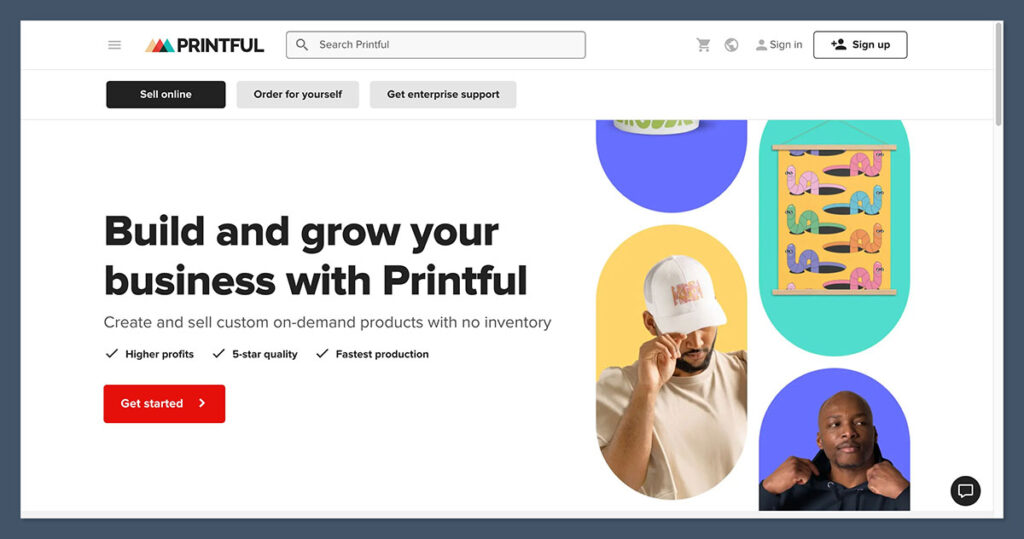
| Tapstitch | Heavyweight streetwear | Best access to 430 GSM premium blanks |
| Printful | Global fulfillment | Best infrastructure for self-managed ops |
| Gelato | International scale | Superior local-country fulfillment |
| TPOP | Eco-conscious brands | The cleanest sustainability story |
| Printify | Margin-focused founders | Best for sample-and-lock workflows |
| CustomCat | Rapid US embroidery | Fastest production turnaround |
1. Fourthwall: The Integrated Powerhouse
Fourthwall has secured the top spot because it solves the "ops trap." Most creators do not want to manage tax nexus, customer support, and storefront development. Fourthwall provides a complete ecosystem where these hurdles are handled natively.
Why it wins:
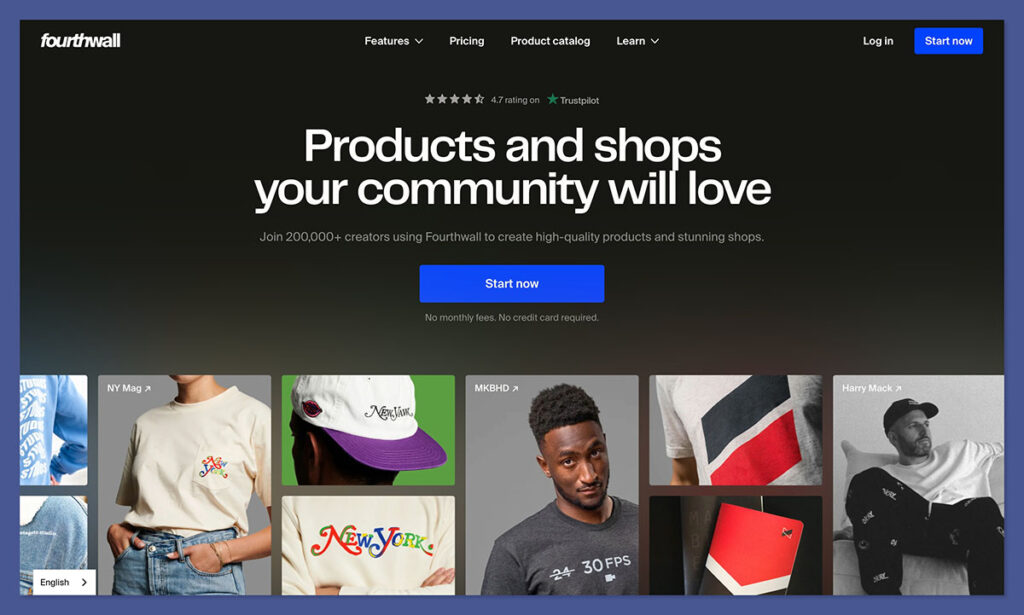
- Top-Tier Roster: Unlike platforms limited to basic wholesale catalogs, Fourthwall offers Stanley/Stella, AS Colour, and Lane Seven, providing the high-quality base required for a legitimate brand.
- Signature Ink Coverage: Their proprietary solution for dark garment printing solves the age-old DTG washout problem.
- Operational Freedom: By removing the need for Shopify plugins and third-party support services, Fourthwall allows the creator to remain a creator rather than an unpaid logistics manager.
Pricing and Structure:
With the recent update to their Pro plan ($19/mo or $180/year), creators gain access to 100GB of storage and priority support. At a base cost of ~$11.75 for a premium tee, the margins remain highly competitive when factoring in the elimination of auxiliary software costs.
2. Apliiq: The Private-Label Specialist
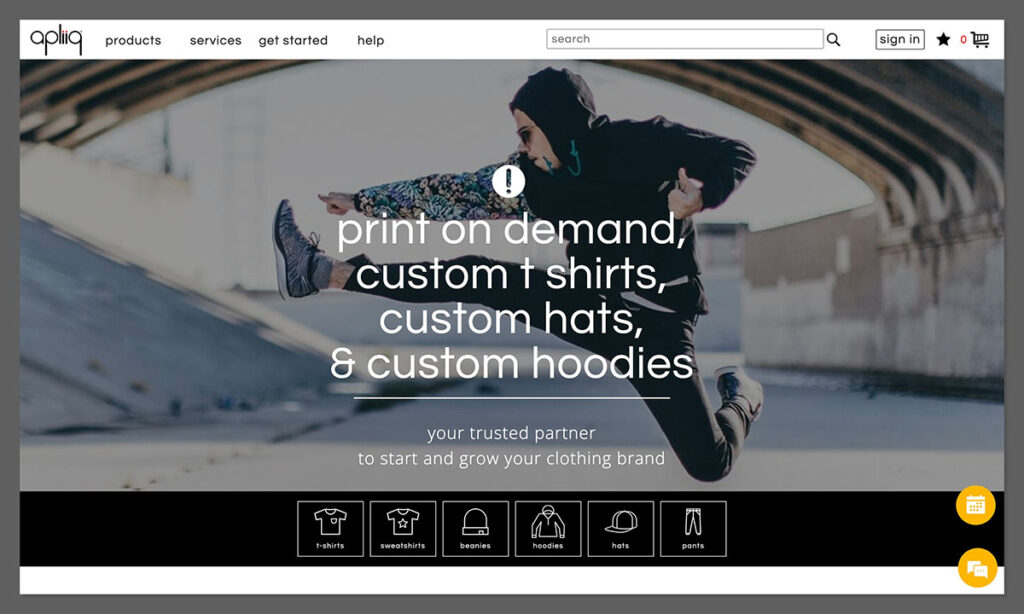
If your brand identity is anchored in a sewn-in label, Apliiq is the only serious contender. While most factories demand massive MOQs for custom labeling, Apliiq allows for custom woven tags at 100 units.
Implications for Brands:
Apliiq functions more like a contract garment factory than a standard POD shop. Because they operate out of Los Angeles and Philadelphia, they offer a level of quality control that is difficult to replicate in high-volume, automated warehouses. They are the ideal choice for designers selling at a $45+ price point who view their apparel as a fashion piece rather than "merch."
3. Tapstitch: The Heavyweight Contender
Streetwear is defined by weight and structure. While industry-standard tees hover around 140–160 GSM, Tapstitch provides access to 430 GSM blanks. This is the difference between a thin, disposable shirt and a premium, structured garment that holds its shape.
Strategic Utility:
Tapstitch’s use of DTF printing on these heavyweights provides a high-opacity finish that screen printing would usually require. While the base costs ($22.99) are higher, the resulting perceived value allows for premium retail pricing, effectively targeting the luxury streetwear demographic.
4. Printful and the "Fyul" Merger
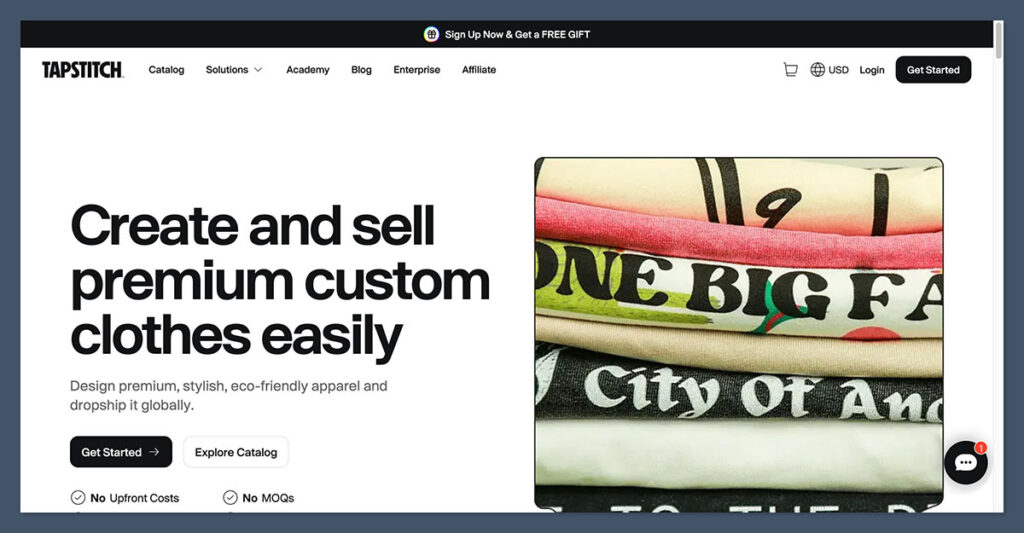
The industry landscape shifted in late 2025 with the merger of Printful and Printify under the "Fyul" entity umbrella. While the consumer-facing platforms remain distinct, the back-end infrastructure is consolidating. Printful remains the best option for global operators who require consistent fulfillment across the US, Mexico, and Europe. However, creators must note that branding on Printful is largely limited to printed transfers, which lack the tactile luxury of woven labels.
5. Gelato: The Global Logistics Leader
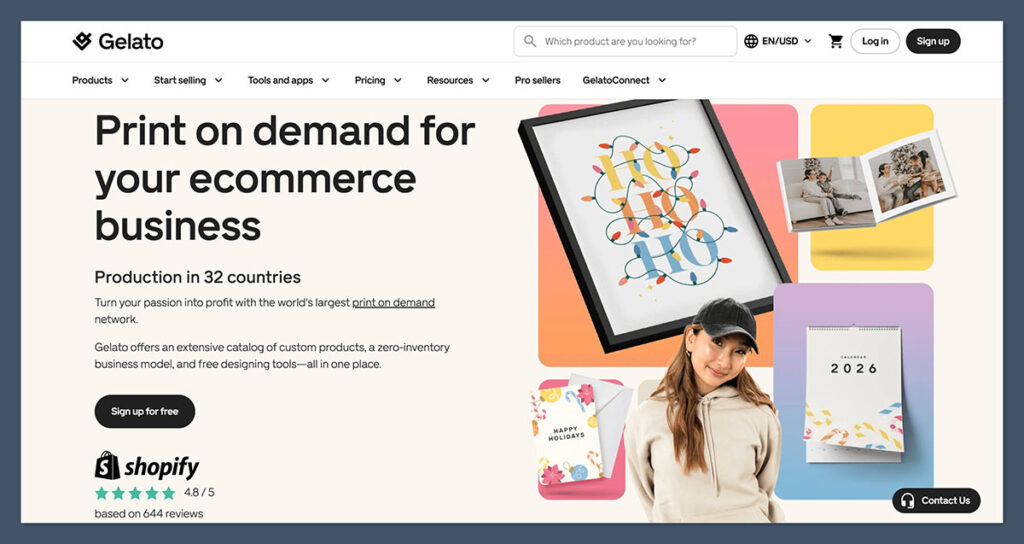
For brands with a truly international audience, Gelato is unmatched. By fulfilling 90% of orders within the destination country, they significantly reduce transit times and cross-border duties. Their "Gelato+ Gold" tier provides deep discounts that become highly lucrative once a brand reaches consistent volume.
6. TPOP: Sustainability as a Product
Based in France, TPOP has built its reputation on an eco-first philosophy. Using water-based inks and plastic-free packaging, they offer a value proposition that resonates deeply with European consumers. For brands whose narrative is rooted in environmental stewardship, TPOP is the most authentic partner on the market.
Supporting Data: The Economics of Scaling
As a brand grows, the economic reality of POD shifts. Our analysis indicates that once a specific SKU hits 100+ units per month, the per-unit cost of POD begins to compress profit margins compared to bulk manufacturing.
The Graduation Timeline
- 0–50 units/month: POD is your best friend. The lack of inventory risk is the primary driver of growth.
- 50–100 units/month: Begin testing bulk orders for your "hero" designs.
- 100+ units/month: Transition to bulk. Bulk manufacturing typically reduces costs by 40–60%, which can effectively double your net margin.
Crucial Advice: When graduating to bulk, ensure the manufacturer matches your POD recipe exactly. A change in the "hand-feel" or the branding of a familiar product is the fastest way to lose customer trust.
FAQ: Navigating the Premium POD Landscape
Q: Does print method matter as much as the blank?
Yes. Fine art graphics require the resolution of DTG, while bold, graphic-heavy streetwear designs benefit from the high-opacity nature of DTF or screen printing. Selecting a platform that offers all three, like Fourthwall, is a significant advantage.
Q: Why is sampling the "most expensive" shortcut?
Skipping a sample is the fastest way to lose your reputation. Print alignment, label placement, and garment sizing are variable. Ordering three samples and subjecting them to a "stress test" (washing them on a hot, high-agitation cycle) will tell you everything you need to know about your provider’s longevity.
Q: What is the "Sample-and-Lock" workflow?
For platforms like Printify, which operate as marketplaces, you must "lock" a provider once you find one that meets your quality standards. Failure to lock a provider means the platform may route your orders to different factories with varying equipment, leading to inconsistent product quality for your customers.
Final Implications
The "premium" label in POD is no longer a marketing buzzword; it is a technical standard defined by GSM, label customization, and print integrity. As we move through 2026, the divide between "merch" and "fashion" is widening. Creators who prioritize the tactile experience—how the product feels when unboxed and how it wears over time—are winning.
Whether you choose the all-in-one ecosystem of Fourthwall, the bespoke labeling of Apliiq, or the heavy-duty quality of Tapstitch, the goal remains the same: treat your apparel as an extension of your brand, not just a commodity to be shipped. The platforms are finally ready to support that vision; the rest is up to your design and your dedication to quality control.
 Dwi Wanna
  Lina Irawan
  Basiran