
 By Lina Hope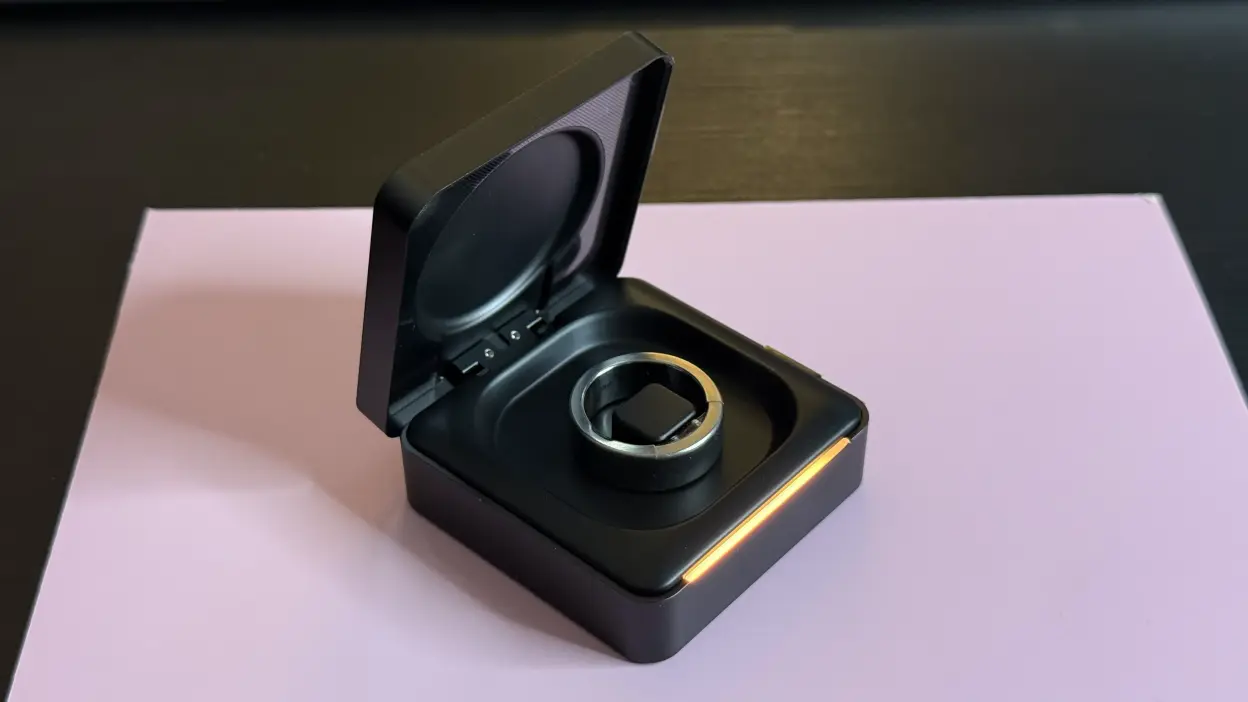
By Beth Skwarecki, Senior Health Editor
July 10, 2026
The landscape of wearable technology is undergoing a seismic shift. For years, the smart ring market has been defined by a race toward minimalism—smaller, thinner, and more "invisible" hardware. However, with the release of the new Ultrahuman Ring Pro, we are seeing a pivot toward durability, extended battery performance, and integrated ecosystems. Having spent the last few days putting the Ring Pro through its paces, it is clear that Ultrahuman is not just iterating; they are fundamentally rethinking how a smart ring fits into the daily life of a health-conscious consumer.
The Main Facts: What is the Ultrahuman Ring Pro?
The Ultrahuman Ring Pro, which officially hit the market following its February 2026 announcement, represents a significant hardware leap over the company’s previous flagship, the Ring Air. Priced at $479, the package includes the ring itself and a redesigned, feature-rich charging case.
Unlike its predecessor, the Ring Pro is built as a robust "hunk of metal." This design choice is intentional, favoring long-term structural integrity over the slim profiles favored by competitors. It is a premium device that balances high-end aesthetics with an engineering focus on "emergency safety"—specifically, the inclusion of two break points that allow the ring to be removed in an emergency, addressing a long-standing concern regarding metal rings.
The device is designed to be a "set it and forget it" companion, tracking biometrics like heart rate variability (HRV), sleep stages, and movement patterns, all while boasting a battery life that aims to eliminate the anxiety of frequent charging.
A Chronology of Development
The journey to the Ring Pro has been one of deliberate refinement.
- February 2026: Ultrahuman first unveiled the Ring Pro, signaling their intent to challenge the market leaders. The announcement focused heavily on the new "smart" charging case, which was marketed not just as a power bank, but as a diagnostic and interaction hub.
- Spring 2026: Following the announcement, the company underwent a period of rigorous beta testing and final calibration, ensuring that the firmware could handle the advanced sensor sampling rates without sacrificing the promised battery longevity.
- July 2026: The product officially reaches consumers. Initial feedback suggests that the transition from the lightweight, epoxy-layered interior of the Ring Air to the solid metal interior of the Ring Pro has been well-received by users who prefer a more substantial feel.
Supporting Data: Battery Performance and Power Management
One of the most frequent complaints regarding first-generation smart rings was the "charging tether"—the need to remove the ring every few days to keep it powered. My preliminary testing of the Ring Pro yields impressive data.
After nearly three days of continuous wear, the device remained at 78% battery. Extrapolating this usage, the ring is poised to deliver a staggering 13 days of battery life on a single charge. This performance is notable for two reasons:
- Turbo Mode usage: My test was conducted while the ring was set to "Turbo Mode," a high-frequency sampling setting that drains the battery faster than standard configurations. Even under this stress test, the longevity significantly outpaces the five-to-six-day average of the Ring Air and the approximately seven-day lifecycle of the Oura Ring 5.
- System Efficiency: The device offers a "Chill Mode" for standard users and a "Critical Battery Mode" for power conservation, allowing the user to tailor the data granularity to their specific needs.
Furthermore, the charging case serves as a portable battery bank. While I am still gathering data on the exact number of cycles, Ultrahuman estimates that the case can extend the total ecosystem runtime to 45 days, effectively turning the ring into a device that rarely sees a wall outlet.
The Smart Case: A New Paradigm in Wearable Interaction
The most distinct innovation in this release is the "Smart Case." Historically, charging cases for wearables have been passive plastic shells. Ultrahuman has transformed this into an active interface.

The case features a distinct LED indicator that spans the front lip, providing visual feedback on charging status and connectivity. Beyond visual cues, the case incorporates audio and haptic feedback. When the ring is docked, the case emits a tone reminiscent of a singing metal sound bowl, providing a tactile and auditory confirmation that is far more intuitive than a tiny, blinking light.
Furthermore, the case facilitates diagnostics and hard resets, which were previously only accessible via the mobile app. By embedding these capabilities into the hardware, Ultrahuman is reducing the user’s reliance on their smartphone for basic device maintenance. Future updates are expected to explore the possibility of integrating morning alarms directly into the case, allowing the ring to wake the user without the need for a phone alarm.
Implications for the Wearable Market
The release of the Ring Pro has significant implications for the future of health tracking:
1. The Death of the "Fragile" Smart Ring
By opting for a thicker, all-metal construction, Ultrahuman is betting that consumers value durability. The inclusion of emergency break points is a masterstroke of design, acknowledging that as these devices become more popular, their use in environments where they might get caught on machinery or during medical emergencies becomes a liability. This feature sets a new safety standard for the industry.
2. Ecosystem Integration
The move to make the charging case an "active" participant in the user experience suggests that the future of wearables lies in peripheral support. If the case can handle alerts, resets, and diagnostics, the ring itself can remain focused on its primary job: sensing. This "distributed computing" approach allows the ring to remain small while the case carries the weight of the heavier, more interactive electronics.
3. The Price-to-Value Ratio
At $479, the Ring Pro is a luxury item. However, when compared to the cost of a high-end smartwatch, the value proposition remains strong for those who dislike the aesthetic of a screen on their wrist. By offering a product that lasts for nearly two weeks on a charge, Ultrahuman is effectively positioning the Ring Pro as a "set-and-forget" health tracker, appealing to professionals who want actionable health data without the constant distraction of digital notifications.
Final Thoughts: The Path Forward
While this assessment covers the initial impressions—the impressive battery life, the innovative smart case, and the shift in hardware philosophy—the true test of the Ultrahuman Ring Pro will come in the months ahead. Accuracy of data, long-term software stability, and the eventual implementation of case-based alarms will be the metrics by which this device is ultimately judged.
However, for now, the Ring Pro stands as a bold assertion that the smart ring market is maturing. We are moving past the era of novelty and entering an era of reliable, durable, and sophisticated health monitoring. Whether you are a dedicated data tracker or someone simply looking to gain more insight into your sleep and recovery, the Ring Pro offers a compelling, high-end argument for why the ring may eventually replace the watch as the premier wearable of choice.
As I continue my testing, I look forward to exploring the deeper nuances of the app integration and how the "Turbo Mode" impacts long-term health trends. But as of mid-July 2026, the device has successfully cleared its first hurdle: it is a piece of technology that I genuinely enjoy wearing. Stay tuned for a comprehensive, long-term review.
 Layla Zulfa
  Asro
Asro  Reynand Wu