
 By rifanmuazin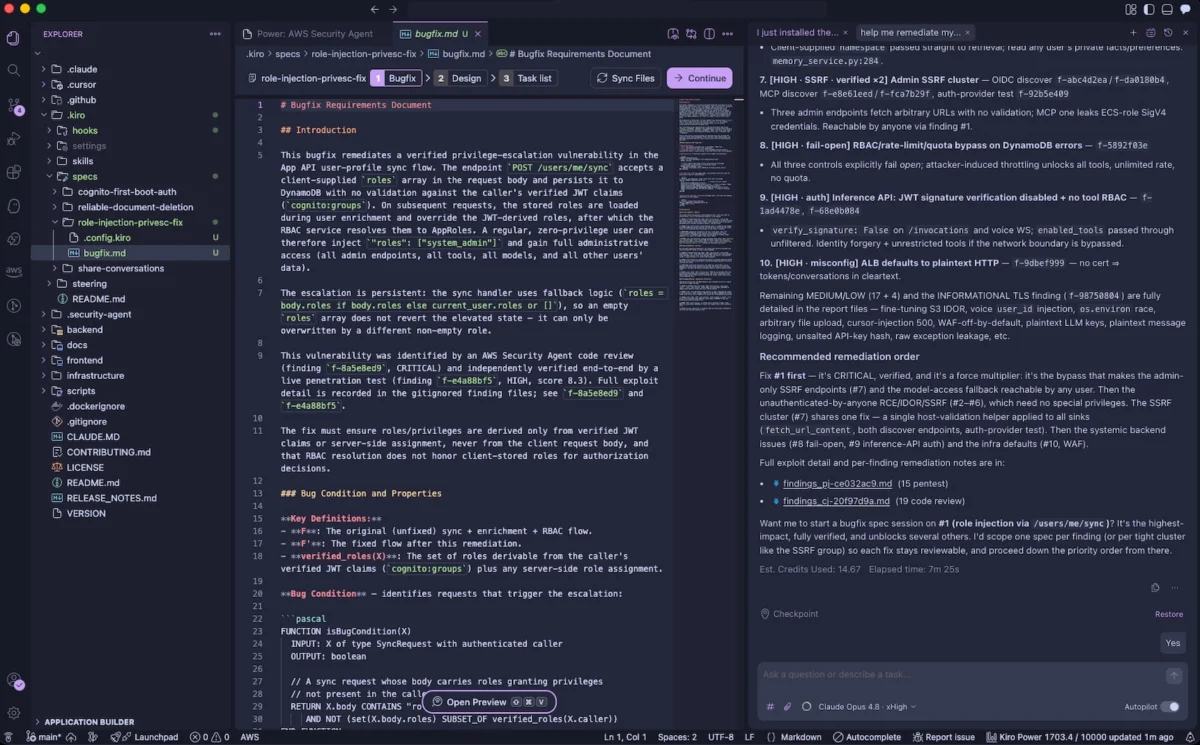
In the modern software development landscape, the friction between rapid innovation and ironclad security has long been a primary bottleneck for enterprise engineering teams. Since its preview at re:Invent 2025, the AWS Security Agent—a cornerstone of the broader AWS Continuum initiative—has sought to dissolve this barrier. Today, AWS has announced a significant expansion of the Security Agent’s capabilities, transforming it from a specialized testing tool into a comprehensive, agentic platform that secures applications from the initial design phase through to final deployment.
This update represents a fundamental shift in DevSecOps. By integrating deep, reasoning-based analysis, automated threat modeling, and seamless IDE integration via the new "Kiro power" and Claude Code plugins, AWS is moving beyond simple pattern-matching. Instead, the platform now offers a context-aware security partner that lives directly within the developer’s workflow.
The Chronology of an Evolution: From Preview to Platform
The trajectory of the AWS Security Agent underscores the company’s commitment to "shift-left" security strategies.

- re:Invent 2025: AWS unveils the Security Agent in preview, positioning it as a frontier agent capable of performing on-demand, application-specific penetration testing.
- March 2026: General Availability (GA) is reached for the core on-demand penetration testing feature, allowing teams to verify exploitability in real-world scenarios.
- May 2026: AWS introduces the preview of full repository code review, moving the agent’s focus from individual files to the broader codebase.
- June 2026 (Present): AWS launches a suite of features including expanded VCS support (GitLab/Bitbucket), documentation integration (Confluence), automated threat modeling, and deep IDE integration through Kiro power and Claude Code plugins.
This rapid-fire iteration suggests that AWS is aggressively targeting the "context gap"—the space where developers often lack the security expertise to interpret findings or the time to manually bridge the gap between architectural designs and implemented code.
Core Capabilities: A Deep Dive into the New Security Paradigm
The latest updates are designed to meet developers where they are, eliminating the context-switching that typically plagues security workflows.
1. Intelligent Code Review and VCS Expansion
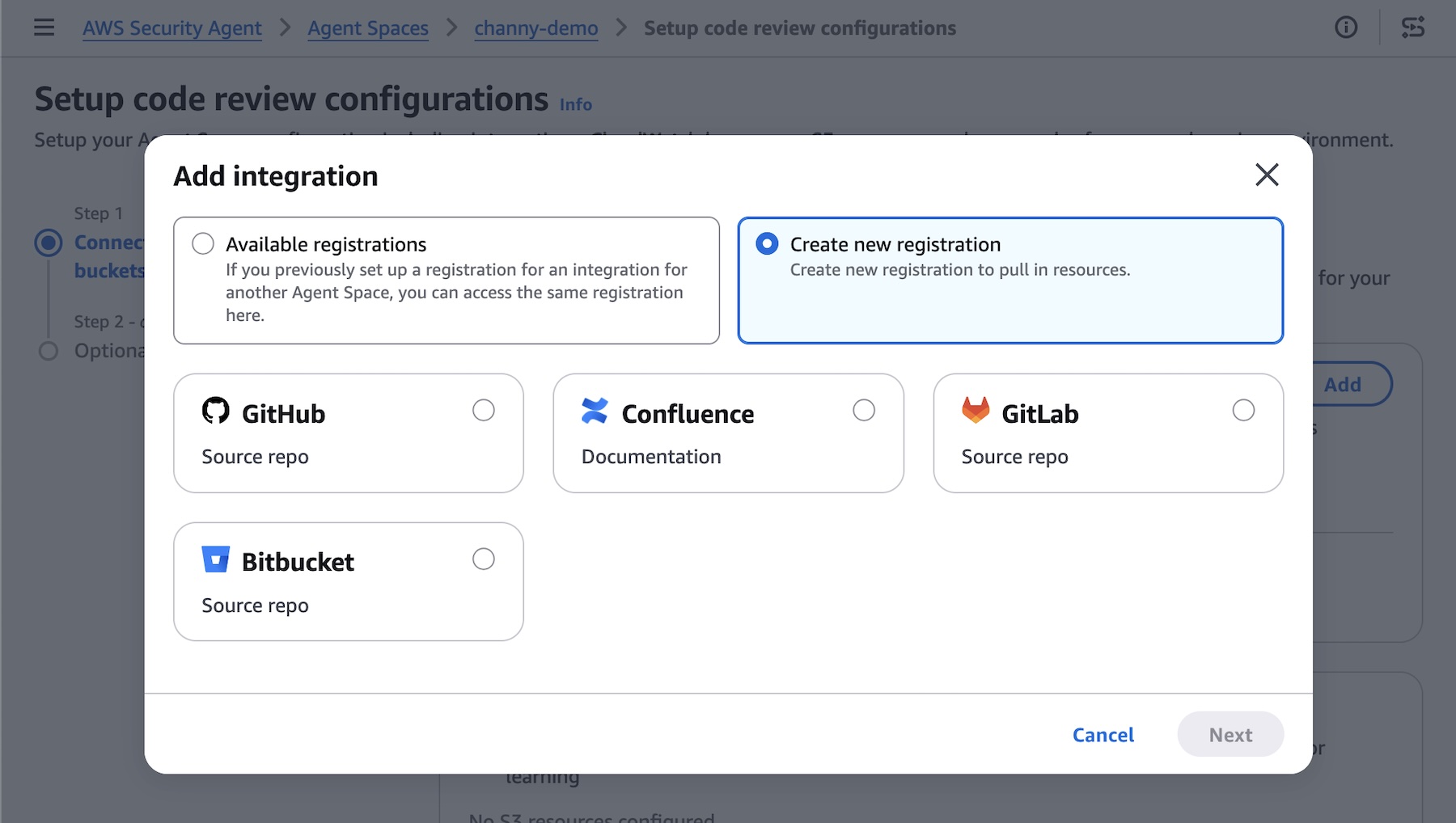
Previously limited to GitHub, the Security Agent now supports GitLab and Bitbucket, accommodating both SaaS and self-hosted environments. The standout improvement here is the shift from superficial pattern matching to "reasoning-based analysis."

By integrating with Confluence, the agent can now cross-reference your internal architectural documentation against your code. If a developer implements an API that contradicts internal data-handling policies defined in a Confluence page, the Agent flags the discrepancy. This ensures that security isn’t just about syntax—it’s about intent.
2. Automated Threat Modeling
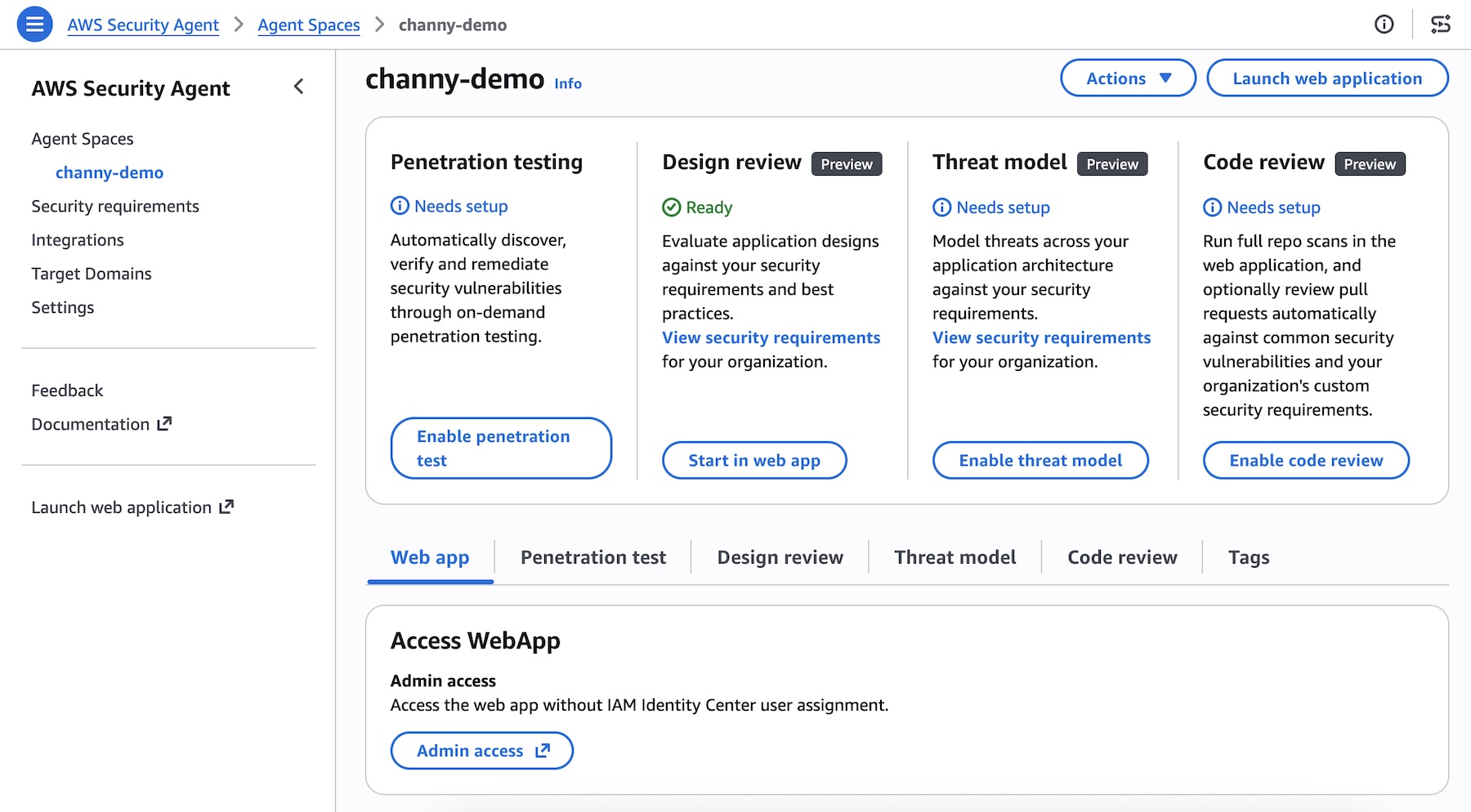
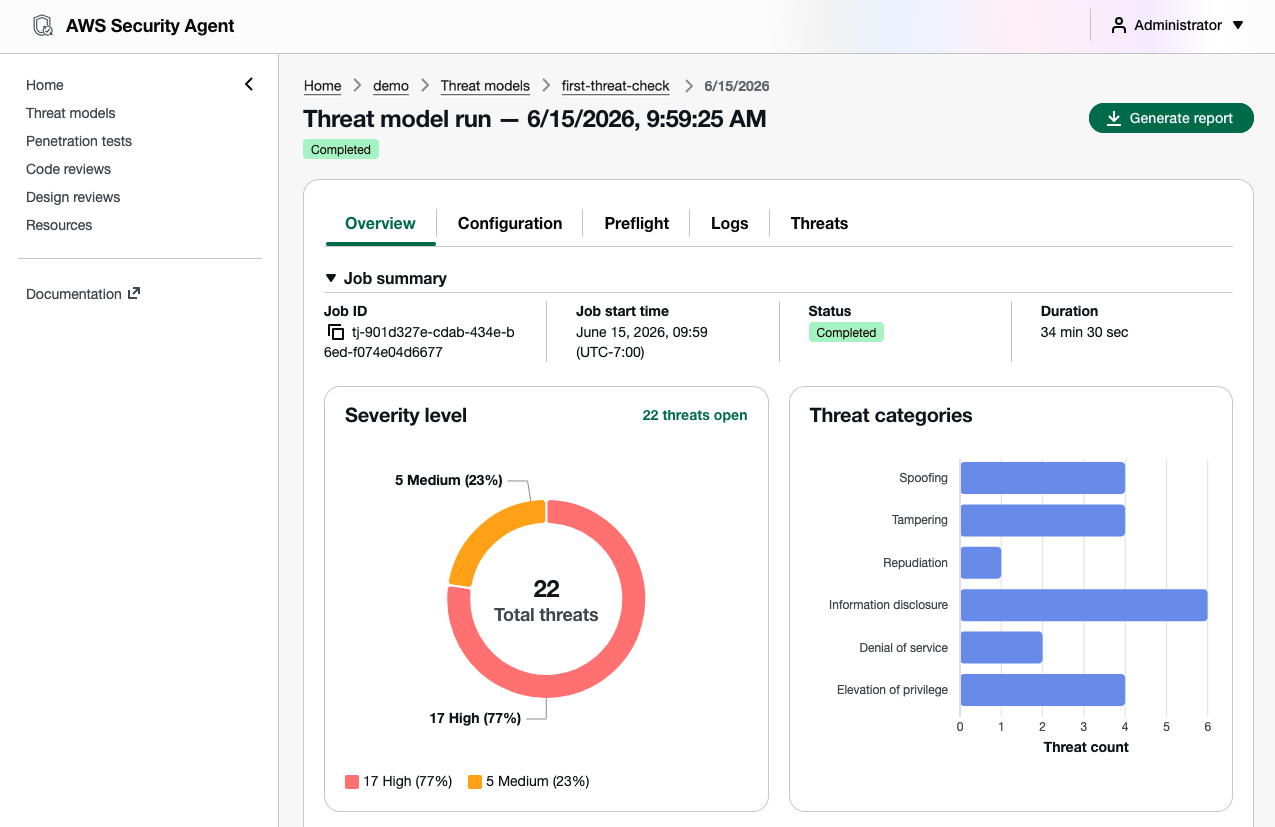
Perhaps the most significant addition is the automated threat modeling feature. Traditionally, threat modeling is a labor-intensive, manual exercise often performed only once at the start of a project. AWS Security Agent automates this by analyzing design documents and code repositories to:
- Map complex data flows and identify trust boundaries.
- Simulate potential threat actors and common attack vectors.
- Prioritize remediation based on the specific risk profile of the application architecture.
By keeping these models updated as the code evolves, the Agent ensures that the security posture of an application doesn’t become "stale" as features are added.
3. Managed Compliance Packs
To simplify the complex landscape of regulatory requirements, the Agent now features managed compliance packs. Whether a team is adhering to the AWS Well-Architected Framework, NIST CSF, or PCI DSS, the agent provides real-time validation. If a configuration or code change drifts from these standards, it is immediately flagged, keeping the organization in an "audit-ready" state throughout the development lifecycle.
4. The Kiro Power and Claude Code Integration
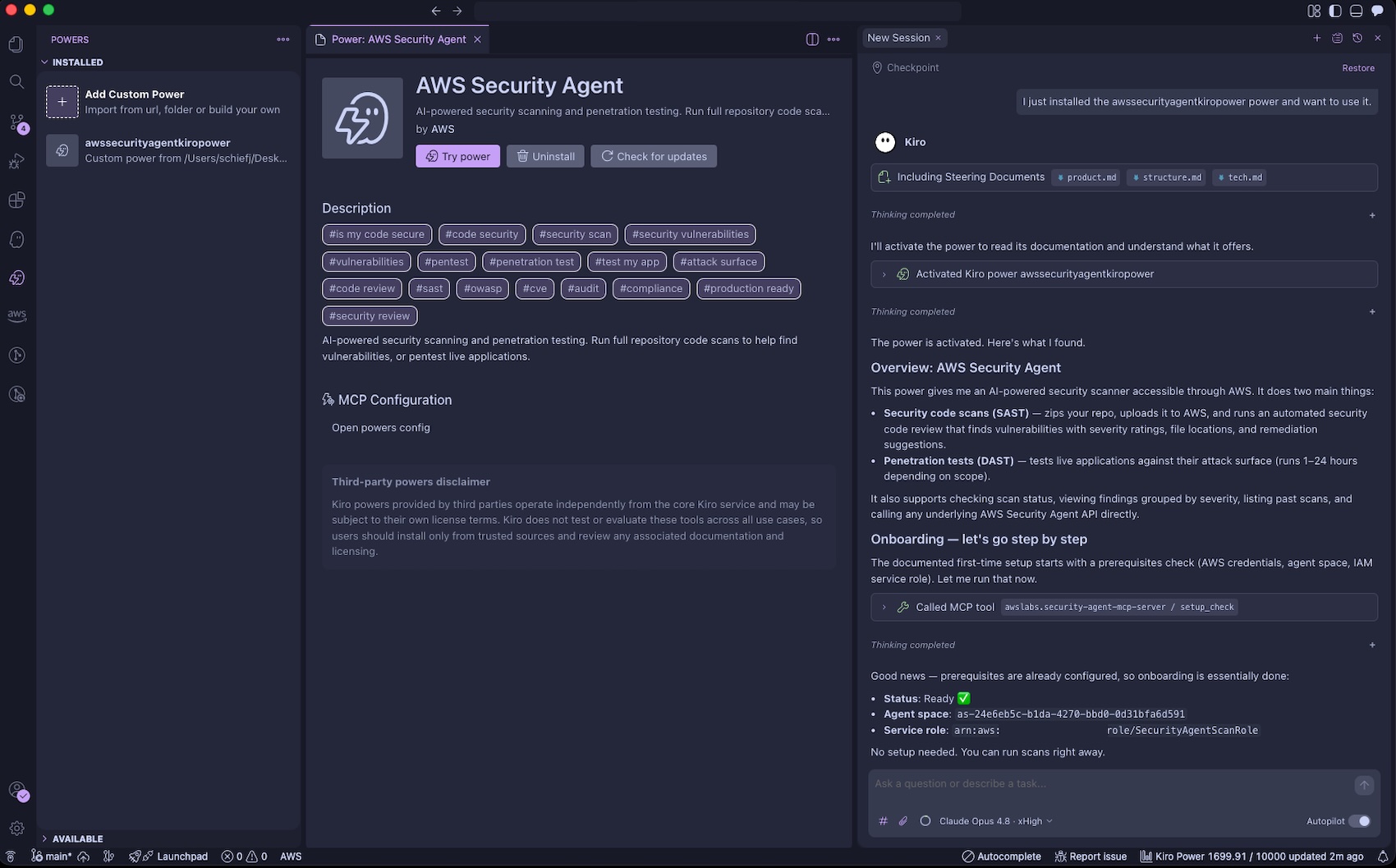
By launching the Kiro power and the Claude Code plugin, AWS has effectively moved the security console into the IDE. Through an open Management Control Protocol (MCP) integration, developers can now trigger scans, ask for remediation guidance, and build threat models without ever leaving their editor.
The "Help me remediate" command is a game-changer; it doesn’t just list vulnerabilities—it provides fix commits and allows the developer to initiate a "bugfix spec session." This turns the Security Agent into an active pair-programmer rather than a passive notification engine.
Supporting Data: Why Context-Awareness Matters
The industry-wide move toward agentic security is driven by the sheer volume of "noise" generated by traditional Static Application Security Testing (SAST) tools. According to recent industry benchmarks, developers often ignore up to 70% of security alerts due to high false-positive rates or lack of actionable remediation steps.
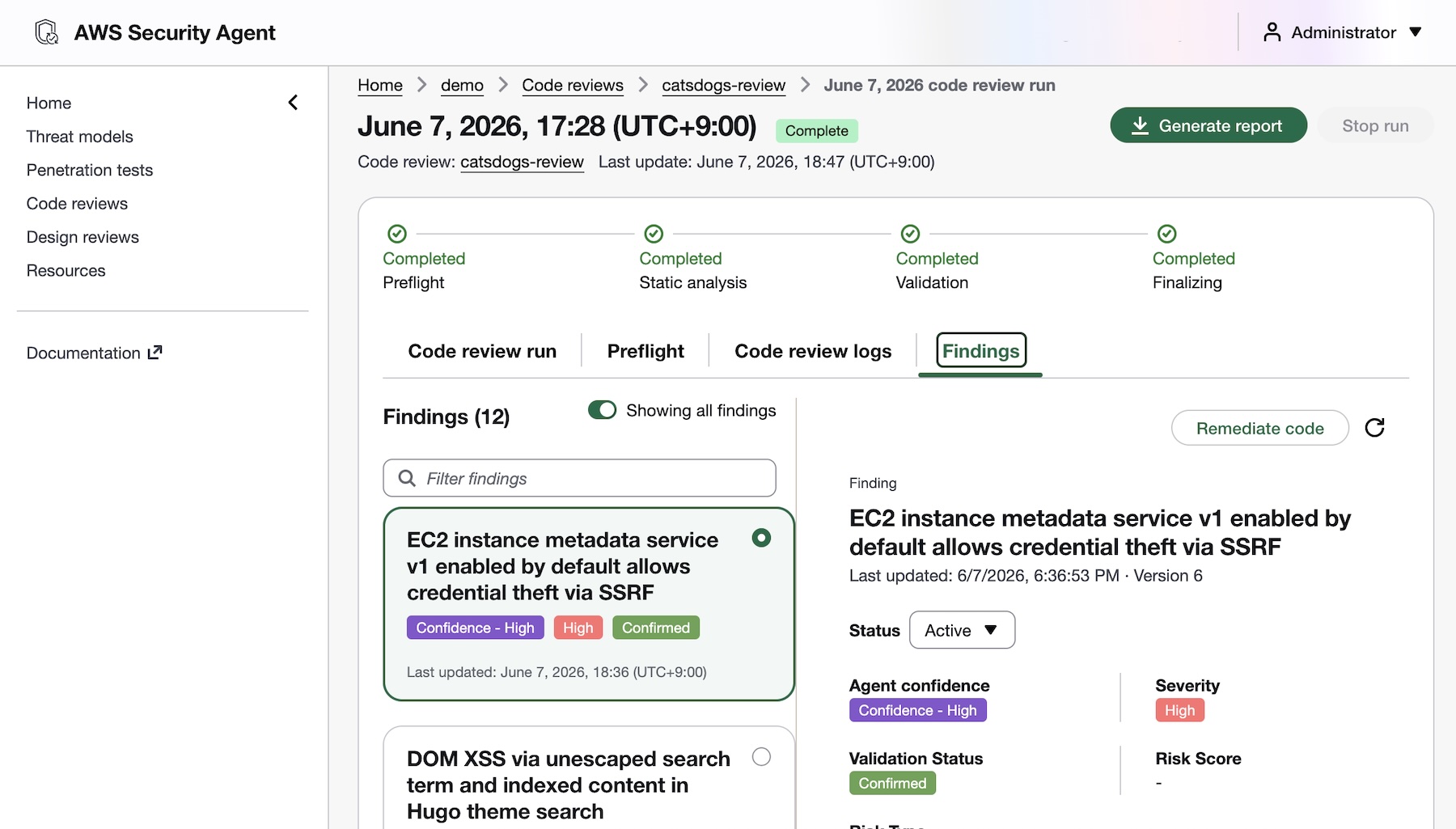
The AWS Security Agent differentiates itself by validating findings in simulated environments. By providing "proof of exploitability," the agent gives security teams the confidence to prioritize the vulnerabilities that actually pose a threat to the business, rather than chasing theoretical bugs. This reduction in "security fatigue" is expected to drastically lower the time-to-production for development teams.
Implications for Enterprise Security
The introduction of these features signals a new era for enterprise security architecture.
The Death of the "Security Gate"
Historically, security was a checkpoint—a toll booth where code was inspected before moving to production. The AWS Security Agent turns this into a continuous stream. By embedding the agent into the development process, companies can foster a culture of "Security by Design." When a developer is prompted with a fix during the coding process, they learn as they go, effectively upskilling the entire engineering organization over time.
The Role of the "Human-in-the-Loop"
Despite the high level of automation, AWS emphasizes that human oversight remains central. The platform provides a clear division of labor:
- Developers use the IDE integration to fix issues in real-time.
- Security Teams act as architects and auditors, configuring the monitor repositories and stepping in only when critical, complex issues arise that require human policy judgment.
This creates a "force multiplier" effect. A small security team can oversee hundreds of repositories because the Agent handles the bulk of the identification and remediation work.
Looking Ahead: The Future of AWS Continuum
The integration of the Security Agent into the AWS Continuum suggests that AWS is building an end-to-end ecosystem where security is not an "add-on" but a foundational property of the infrastructure itself.
The roadmap for the coming year is expected to include even deeper integration with third-party tools and expanded support for non-standard languages and frameworks. For organizations currently struggling with the "security tax" of rapid development, the AWS Security Agent offers a compelling alternative: an automated, context-aware guardian that learns, evolves, and remediates alongside the team.
For those ready to integrate these capabilities, the AWS Security Agent console is the primary point of entry. With a two-month free trial currently available, the barrier to entry is low, providing a risk-free opportunity to test whether your security pipeline is ready for the agentic future.
As Channy, the AWS spokesperson for this launch, noted in the updated release, the convergence of tools like Claude Code and the AWS Security Agent represents a massive leap in how we think about DevSecOps. It is no longer about catching bugs; it is about building systems that are, by their very nature, secure from the first line of code to the final deployment.
 Neng Nana
  Suro Senen
  Lina Hope