
 By Basiran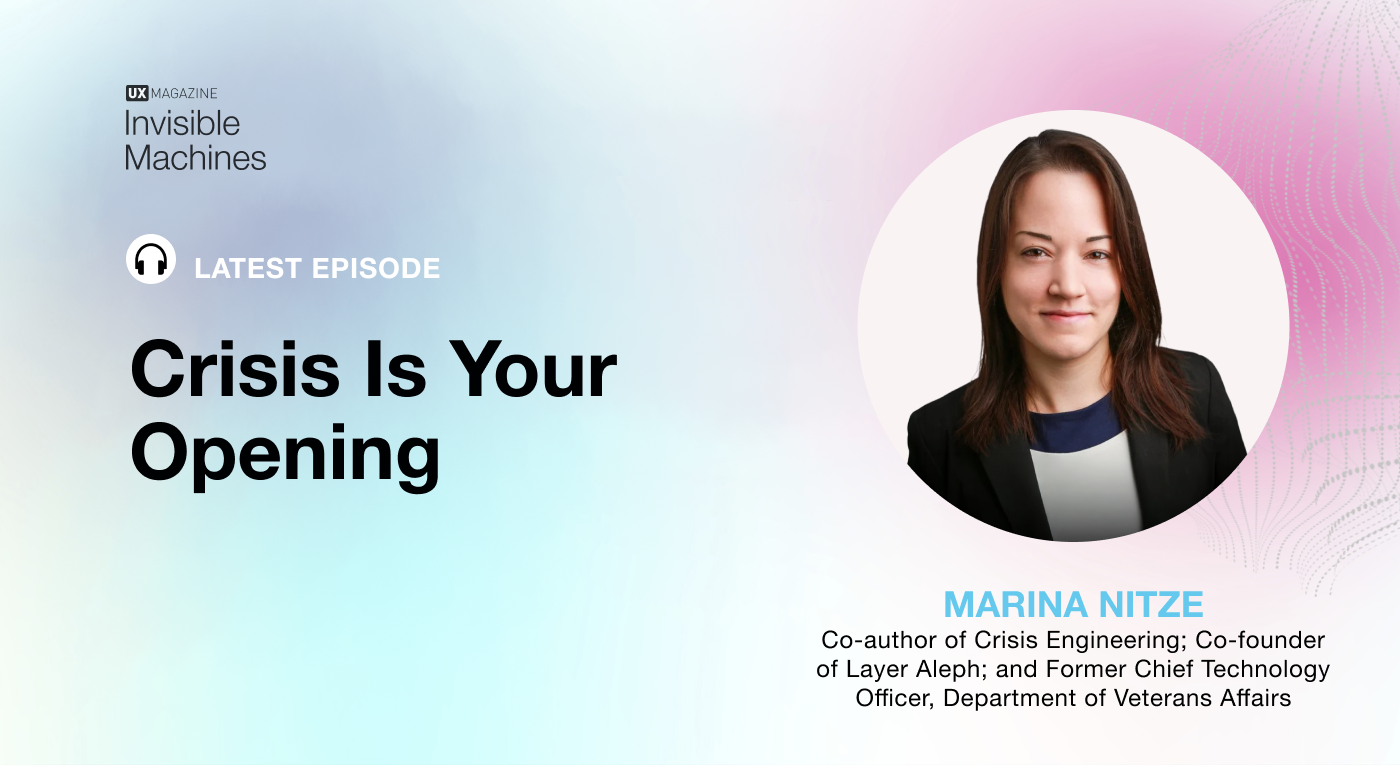
In the sterile, fluorescent-lit corridors of modern bureaucracy, there exists a dangerous phenomenon: the gap between the story an organization tells about itself and the reality of its daily operations. This disconnect, often invisible during times of stability, becomes a gaping chasm during periods of systemic stress.
Marina Nitze, former Chief Technology Officer of the Department of Veterans Affairs and co-founder of the consultancy Layer Aleph, has spent her career mapping these chasms. Her work, codified in the concept of "Crisis Engineering," suggests that the most critical moments for institutional change are not found in boardrooms or strategic planning sessions, but in the brief, chaotic windows when an organization’s internal narrative—its "sensemaking"—collapses under the weight of reality.
The Phantom Call Center: A Case Study in Institutional Mythology
The most striking illustration of this breakdown occurred during the COVID-19 pandemic. As California’s unemployment system buckled under unprecedented claim volumes, the state government found itself paralyzed. Millions were losing their livelihoods, and the governor’s office was desperate for a lifeline.
At every tier of the California Employment Development Department, the response to the crisis was uniform and reassuring: "Don’t worry; we have the call center."
When Nitze and her team were brought in to investigate, they followed the thread of this narrative to its source. They were directed to a specific room in a state building. Upon arrival, they found a vast, empty expanse of cubicles. A lone worker sat in the corner—a friendly specialist processing claims. When asked where the call center was, he expressed confusion. He did not run a call center; he managed a small team of specialists who had phones, but whose primary function was the manual processing of claims.
The "call center" was, in truth, nothing more than a phone number that routed calls to the desks of various employees. When the pandemic forced staff to work from home, the calls simply rang at empty desks. There was no facility, no surge capacity, and no actual call center. Yet, from the front-line workers to the executive leadership, everyone had repeated the phrase until it became a talisman—a comforting, albeit entirely fictional, explanation for how the organization handled public demand.
Sensemaking: The Cognitive Trap
This failure is not necessarily a result of malice or negligence. It is a fundamental feature of human cognition and organizational psychology, known as "sensemaking."
As defined by organizational psychologist Karl Weick, sensemaking is the process by which individuals and groups construct stories to explain how the world works. These stories are not neutral, objective summaries of evidence. They are curated subsets of facts, assembled to create internal consistency. Once these narratives are established, they are remarkably resistant to revision.
Nitze highlights research into jury deliberations to underscore this point. Despite the American legal system’s assumption that jurors objectively weigh evidence, studies show that jurors frequently enter the deliberation room with a pre-existing narrative. They then organize the evidence to fit that narrative, discarding whatever does not align. When leaders do the same, they aren’t "lying" in the traditional sense; they are operating within a mental model that has never been stress-tested.
The Anatomy of a "Useful Crisis"
Nitze defines a "useful crisis" not by the emotional turmoil it generates, but by five objective indicators. These markers signify a moment where the "map" of the organization has been shattered, leaving a window open for fundamental, rapid, and necessary change:
- Fundamental Surprise: An event that was not predicted or modeled.
- Disruption in Core Function: A critical process (e.g., website traffic, payment processing) ceases to operate.
- Rigid Timeline: External pressures—such as a live event or a legal deadline—that do not allow for bureaucratic delay.
- High Visibility: The crisis has reached a level of public or executive scrutiny where it cannot be ignored.
- Failure of Sensemaking: The reality of the event contradicts the organization’s existing internal narrative.
The fifth indicator is the engine of change. Humans experience cognitive dissonance as a physical discomfort. When a crisis forces an organization to confront the fact that its "story" is false, leadership is often desperate for a new explanation. If an agent of change can offer a coherent, reality-aligned narrative during this window, years of stagnant institutional inertia can be overturned in a matter of hours.
Navigating the Bureaucratic Labyrinth
The danger for most organizations is how they respond to these windows. The standard response—convening task forces, commissioning studies, and holding status meetings—is designed to fill the time until the "window of crisis" closes.
Nitze advocates for "novel action" instead. This involves testing a theory, observing the results, and learning the truth about the system. In her work with foster care licensing, she identified a six-month delay caused by a carbon-copy form required by the DMV. The caseworker blamed the DMV’s "19th-century" policies; the DMV worker blamed the child welfare agency. Both were acting on incomplete stories. By ignoring jurisdictional boundaries and connecting the two parties, Nitze cut 30 days from the process instantly. The step was eventually eliminated, as it served no functional purpose.
The AI Frontier: Why the Stakes are Rising
The framework of Crisis Engineering is becoming increasingly urgent due to the rise of AI. Nitze, alongside experts like Josh Tyson and Robb Wilson of the Invisible Machines podcast, warns that the gap between organizational adoption and consumer adoption is creating a massive surface area for systemic failure.
Modern consumers—armed with AI agents—are now capable of probing organizational systems in ways that were previously impossible at scale. An AI-powered bot can navigate complex IVR (Interactive Voice Response) phone trees, identify human agents, and extract information or concessions with relentless efficiency.
If an organization believes it has a "call center" that is actually a fiction, AI will expose that lie with surgical precision. During the pandemic, the simple act of a Reddit forum discovering a TTY line for deaf claimants caused a surge in volume that overwhelmed a system designed for a different reality. AI will automate this discovery process, finding every gap in an organization’s "map" and forcing a crisis of sensemaking far faster than human behavior ever could.
Implications: Building the Crisis Infrastructure
For organizations looking to survive this new reality, preparation is the only defense. Nitze suggests three concrete steps:
- Build the Infrastructure: Establish a crisis engineering center, maintain redundant communication channels, and define clear leadership roles before the crisis hits.
- Keep "Something in Your Pocket": Do not wait for a crisis to propose a solution. Have your pilots, your data, and your alternative models ready to deploy the moment the old system shatters.
- Walk the Territory: Before automating a process or implementing a new AI tool, leadership must physically (or digitally) trace the entire workflow from start to finish. Automating a broken process only creates a more efficient way to fail.
The ultimate lesson of Crisis Engineering is that the truth exists in the gap between what we say and what we do. As the complexity of our systems increases through AI, the ability to close that gap—to align our internal stories with the objective reality of our operations—will determine which institutions evolve and which are left behind.
When the next crisis inevitably arrives, the window for change will open. The question that organizations must answer today is not whether they are prepared for the event, but whether they have a version of the truth ready to replace the fiction that failed.
 Ammar Sabilarrohman
  Neng Nana
  Sagoh
Sagoh 