
 By Muslim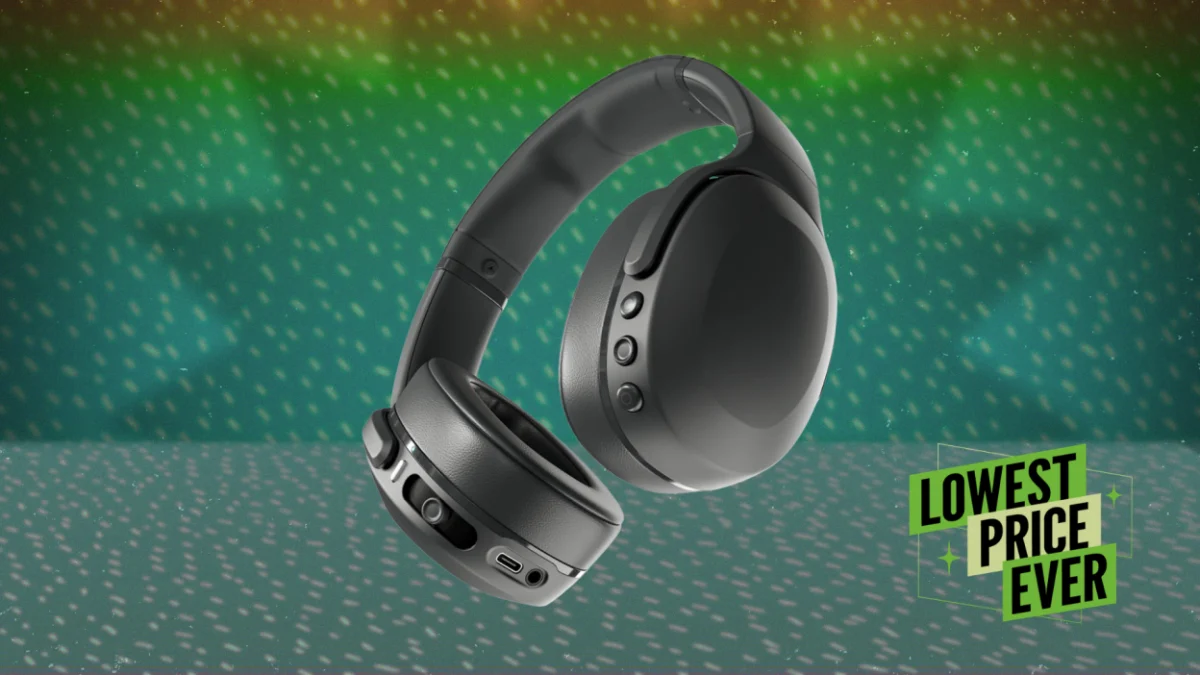
For years, the audiophile community has debated the merits of "coloration" in sound reproduction. While purists often chase a flat, clinical frequency response, a significant segment of the market prefers an visceral, immersive experience that prioritizes impact and low-end depth. Catering directly to that demographic, the Skullcandy Crusher Evo Wireless headphones have long stood as the gold standard for bass-forward hardware. Now, thanks to a massive 52% discount, these headphones have reached a historic low price of $99.99—down from their original MSRP of $209.99—making them a compelling entry point for casual listeners, gamers, and movie buffs alike.
The Main Event: Unprecedented Value for Bass Enthusiasts
The current market for wireless over-ear headphones is saturated with options promising "studio-grade" audio. However, few dare to lean as heavily into the low-end spectrum as Skullcandy. The Crusher Evo is built around a dual-driver system: standard 40mm drivers handle the mid and high frequencies, while a dedicated set of "Sensory Bass" drivers provides the haptic feedback that has become the brand’s hallmark.
At the $99.99 price point, the value proposition shifts dramatically. While the headphones lack the active noise cancellation (ANC) found in premium competitors like the Sony WH-1000XM5 or the Bose QuietComfort series, they offer something those devices cannot: a physical, adjustable bass slider that allows the user to modulate the intensity of the "rumble." Whether you are looking to add punch to an action movie sequence or craving the sub-bass saturation of modern EDM and hip-hop, the Crusher Evo provides a level of customization that is arguably unrivaled in this price bracket.
Chronology of the "Crusher" Legacy
To understand why this sale is significant, one must look at the evolution of the Crusher line.
- The Early Years (2014): The original Skullcandy Crusher introduced the world to the idea of "haptic bass" in a consumer-friendly form factor. It was raw, unrefined, and became an instant cult classic among bass-heads.
- Refinement (2017): The release of the Crusher Wireless refined the battery life and build quality, moving the brand away from its "skater-tech" roots toward a more sophisticated, though still aggressive, aesthetic.
- The Evo Era (2020): The Crusher Evo launched with significant upgrades, including USB-C charging, improved ear cushion ergonomics, and the integration of the "Personal Sound" feature via the Skullcandy app, which uses a hearing test to tune the audio output to the listener’s specific auditory profile.
- Market Stabilization (2021–2025): Throughout these years, the Crusher Evo maintained a relatively high price floor, rarely dipping significantly below $150.
- The Present (July 2026): The current flash sale represents the most aggressive pricing strategy for the model to date, signaling a potential shift in the product lifecycle or a move to clear inventory for future iterations.
Supporting Data: Specifications and Performance Metrics
When evaluating the Crusher Evo against contemporary competitors, the specifications reveal a device that prioritizes endurance and comfort over high-fidelity codec support.
Technical Specifications
- Battery Life: 40 hours of continuous wireless playback on a single charge.
- Rapid Charging: A 10-minute charge provides 4 hours of playback—a vital feature for users on the go.
- Connectivity: Bluetooth 5.0 with multipoint pairing capabilities (notably absent in some older budget units).
- Customization: Integrated app support for EQ presets (Music, Movie, Podcast) and the "Personal Sound" profiling.
- Build: Lightweight, foldable design with plush memory foam earcups designed for extended wear.
While the absence of advanced high-bitrate codecs (such as LDAC or aptX Adaptive) may deter the most stringent audiophiles, the data suggests that for the average consumer, the benefit of the haptic bass system outweighs the loss of ultra-high-resolution streaming capability.
The "Audiophile" Paradox: Why Some Shun, Others Crave
The reception of the Crusher Evo within the professional audio community has been polarized. On one hand, reviewers emphasize that the "warmth" of the sound signature borders on muddying the mid-range. When the bass slider is pushed to its maximum, the vibration can occasionally bleed into the lower mids, potentially obscuring vocal clarity.
However, industry experts note that "accuracy" is not always the goal of consumer electronics. In the context of gaming or cinematic immersion, the "vibration" effect mimics the physical sensation of a subwoofer, providing a physiological response that clinical, flat-response headphones simply cannot replicate.
Official Brand Perspective
Skullcandy has consistently maintained that their target audience is the "active listener"—the user who is gaming, commuting, or working out, rather than sitting in a silent room analyzing the soundstage of a classical symphony. Their inclusion of the "Personal Sound" feature demonstrates a commitment to bridging the gap between "fun" bass-heavy audio and individual auditory requirements. By allowing users to tailor the output to their specific hearing ranges, Skullcandy has effectively mitigated some of the criticism regarding the lack of detail in their default sound profiles.

Implications of the Current Price Drop
The drop to $99.99 has several implications for both the consumer and the broader audio market:
1. Barrier to Entry
At $99.99, the Crusher Evo effectively eliminates the price barrier for those who have been curious about haptic bass but were unwilling to pay the $200+ premium. This allows a wider demographic to experience a technology that was previously considered a "luxury" or "niche" feature.
2. Competitive Pressure
Budget-friendly competitors—often brands that offer "good enough" sound with generic ANC—are now facing a major challenge. When a brand-name, feature-rich product like the Crusher Evo hits a triple-digit price point, the "value" tier of the headphone market becomes significantly more competitive. Manufacturers of budget noise-canceling headphones will likely need to re-evaluate their pricing or feature sets to remain relevant.
3. The Future of Haptic Audio
The success of this sale may dictate how much further Skullcandy (and their competitors) invest in haptic technology. If the sell-through rate at $99.99 is high, it provides market validation that consumers prioritize unique physical experiences over industry-standard features like ANC.
Final Verdict: Is It Right for You?
The decision to purchase the Skullcandy Crusher Evo Wireless at this record-low price comes down to your personal use case.
If you are a professional producer or an audiophile who values neutral, transparent, and clinical sound, these are not the headphones for you. You would likely find the bass-forward nature of the drivers distracting and the lack of high-end codec support frustrating.
However, if you are looking for a pair of "fun" headphones—if you enjoy action movies, modern electronic music, or immersive gaming—this is a deal that is difficult to ignore. The 40-hour battery life ensures they will last through a full work week on a single charge, and the build quality is more than sufficient for daily commuting.
Ultimately, the Crusher Evo is not trying to be the "best" sounding headphone on the market; it is trying to be the most engaging. At $99.99, it succeeds at that mission with flying colors. As price trackers indicate this is a record-low, potential buyers should be aware that such aggressive pricing often precedes inventory depletion. For those who have been waiting to experience the "Crusher" effect, now is the most opportune moment to enter the ecosystem.
 Layla Zulfa
  Asro
Asro  Reynand Wu