
 By Neng Nana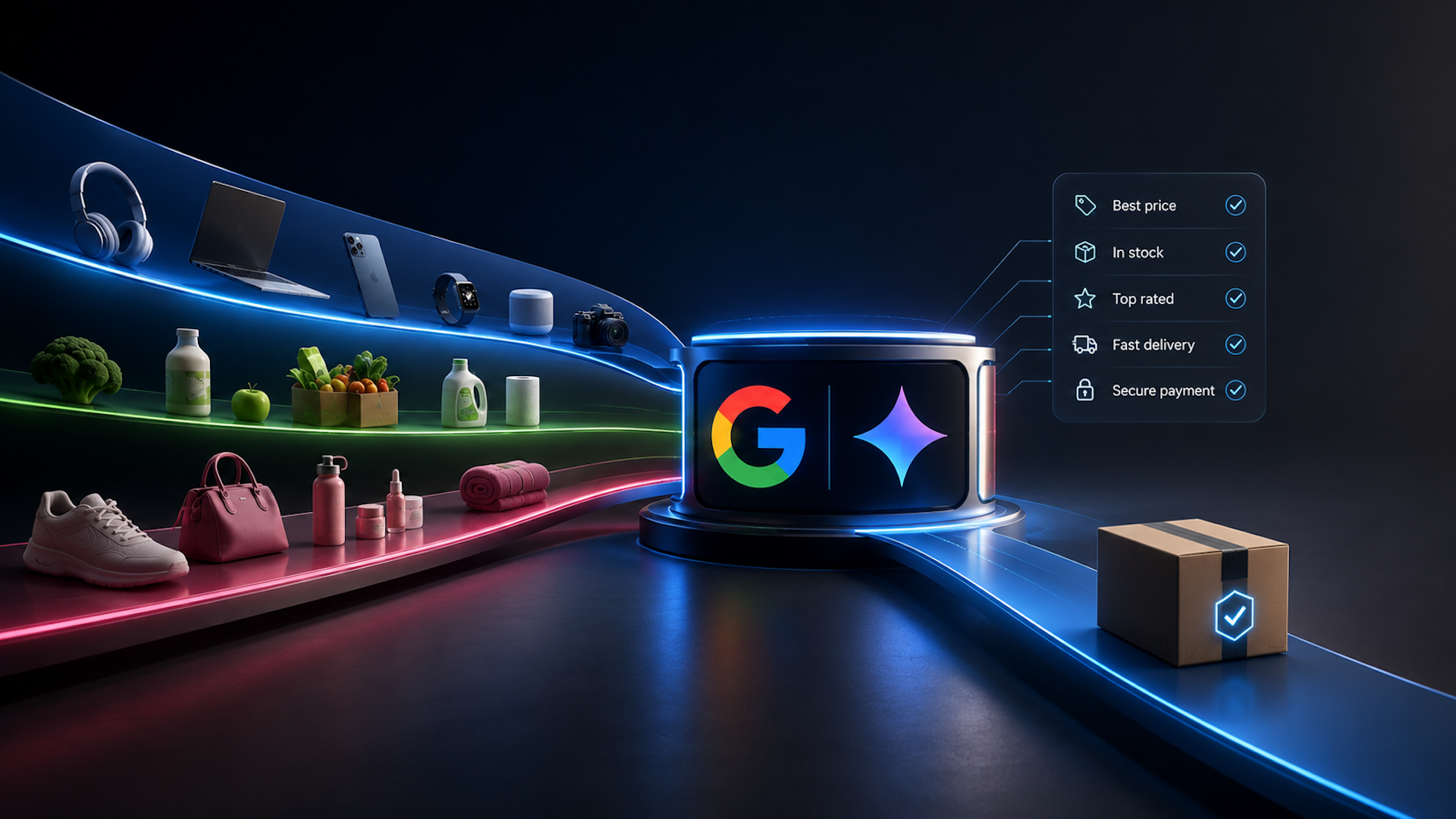
For decades, the foundation of search engine marketing has remained remarkably consistent. It was a predictable, linear path: a user entered a search query, scanned the results, clicked on a link, and was redirected to a merchant’s website to complete a purchase. Search Engine Optimization (SEO) was built entirely around this model. Success was measured in organic traffic, impressions, and click-through rates (CTR).
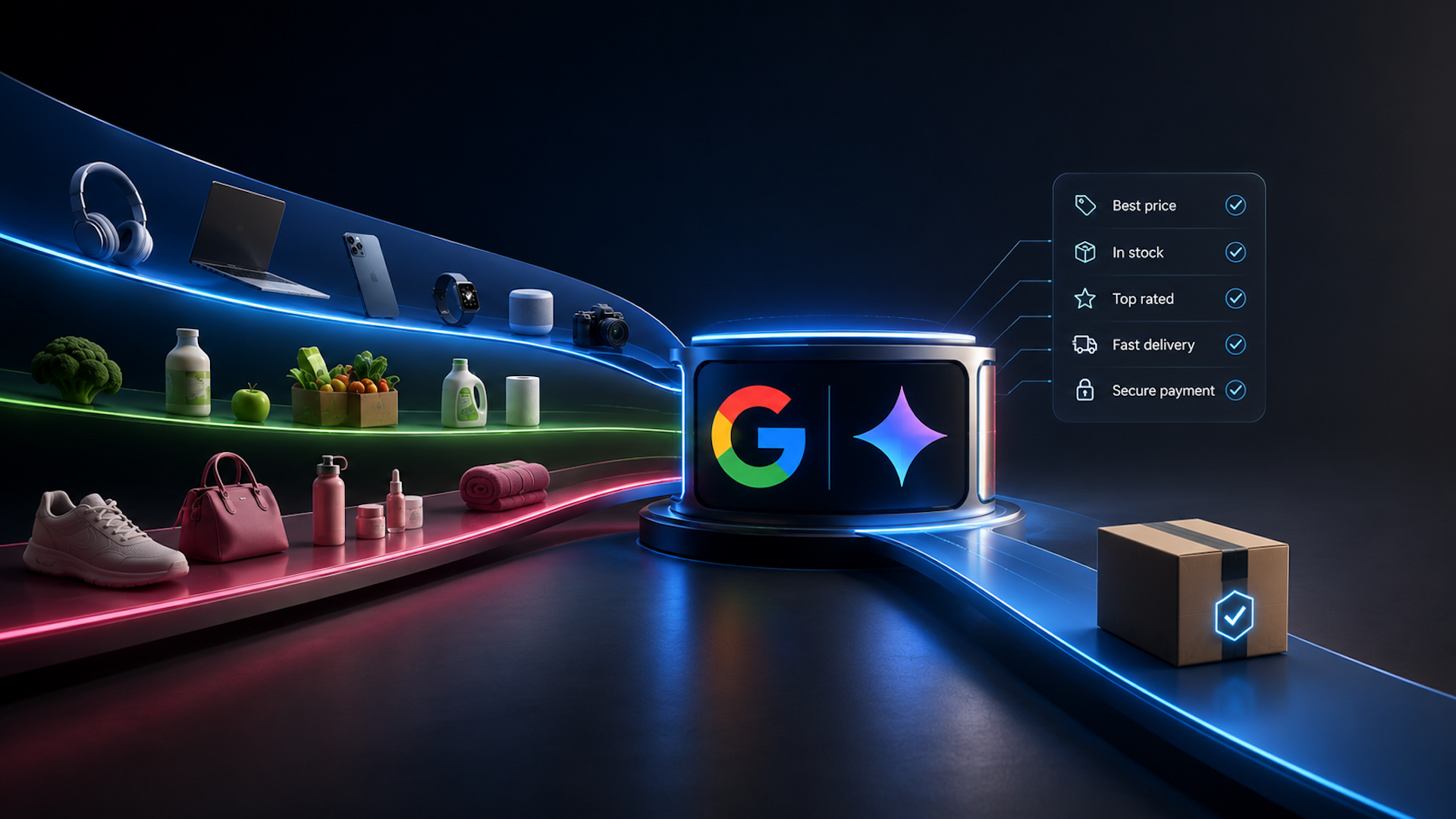
However, the rapid maturation of generative AI and autonomous agents is dismantling this traditional funnel. Google’s introduction of the Universal Commerce Protocol (UCP) marks a paradigm shift in how consumers interact with the web. Search is transforming from a discovery engine into a transactional layer.
Driven by the rise of "agentic commerce," AI systems can now autonomously discover, evaluate, compare, and complete purchases entirely within AI-powered ecosystems—including Gemini, Google’s AI Mode, YouTube, and Gmail. For brands, this means the objective of SEO is shifting from optimizing for clicks to optimizing for seamless, machine-to-machine transactions.
Main Facts: Demystifying the Universal Commerce Protocol (UCP)
At its core, the Universal Commerce Protocol (UCP) is an open-source, vendor-agnostic technical standard designed to facilitate the entire commerce lifecycle within AI interfaces. This standard supports everything from initial product discovery and shopping cart assembly to secure checkout and post-purchase order tracking.
Rather than being a proprietary Google tool, UCP was co-developed alongside industry giants including Shopify, Walmart, Target, Wayfair, and Etsy. It serves as a universal translator, allowing AI shopping agents to communicate directly and securely with a merchant’s back-end e-commerce infrastructure without requiring custom, one-to-one API integrations for every online storefront.
+-----------------------------------------------------------------+
|                    Universal Commerce Protocol                  |
|  An open-source standard acting as a universal translator      |
|  between AI Shopping Agents and Merchant Backends.              |
+-----------------------------------------------------------------+
                               |
       +-----------------------+-----------------------+
       |                                               |
       v                                               v
+-----------------------------+                 +-----------------------------+
|      AI Shopping Agents     |                 |      Merchant Backends      |
|  (Gemini, AI Mode, YouTube) |                 |  (Shopify, Walmart, Target) |
+-----------------------------+                 +-----------------------------+
To understand UCP’s role, it is helpful to view it as the e-commerce equivalent of HTTPS. Just as HTTPS standardized secure communication protocols between web browsers and servers, UCP standardizes how autonomous AI agents navigate inventory, verify pricing, and execute transactions across millions of disparate digital stores.
The Four-Step AI Transaction Workflow
When a consumer prompts an AI assistant with a complex request—such as, "Find and order a replacement water filter for a 2021 Samsung French-door refrigerator with the fastest shipping"—UCP manages the transaction through a highly structured, four-part technical workflow:
+------------------------+      +------------------------+      +------------------------+      +------------------------+
| 1. Capability Pub.     | ---> | 2. Handshake           | ---> | 3. Action Execution    | ---> | 4. Human Escalation    |
| Merchant shares stock, |      | AI matches capabilities|      | AI verifies inventory, |      | System pauses for user |
| pricing, & payments.   |      | and digital wallets.   |      | builds cart, pays AP2. |      | input if required.     |
+------------------------+ +------------------------+ +------------------------+ +------------------------+- Capability Publication: The merchant’s system continuously publishes its operational capabilities. This includes real-time product availability, dynamic pricing, localized fulfillment options, and accepted payment gateways.
- The Handshake: The AI shopping agent reads this published merchant profile, compares it with its own system requirements, and establishes a secure, encrypted communication path. During this phase, the system aligns on parameters such as customer loyalty program integrations or compatible digital wallets.
- Action Execution: The AI agent searches the merchant’s inventory, verifies real-time stock levels, builds the shopping cart, and uses the Agent Payments Protocol (AP2) to execute a secure, tokenized transaction.
- Human Escalation: If the transaction encounters an ambiguity—such as requiring the user to select a delivery window, confirm a shipping address change, or authorize a high-value payment—UCP temporarily pauses the workflow, prompts the human user for input, and hands control back to the AI agent to finalize the order.
Chronology: The Evolution of Search to Agentic Commerce
The emergence of UCP is the latest milestone in a multi-decade evolution of search engine capabilities:
- The Informational Era (Late 1990s – 2000s): Search engines operated primarily as digital directories. Users entered basic keywords, and search engines matched those queries with indexed web pages. E-commerce required users to manually navigate websites, add items to carts, and fill out lengthy forms.
- The Semantic Era (2010s): Google introduced the Knowledge Graph and pushed for structured schema markup. Search engines began to understand the entities and relationships behind search queries. Google Merchant Center emerged, allowing brands to feed structured product data directly into search engines to power Google Shopping ads.
- The Generative Discovery Era (2023 – 2024): With the launch of Search Generative Experience (SGE), AI Overviews, and Gemini, Google began synthesizing web information directly on the search engine results page (SERP). Users could ask conversational questions and receive tailored product recommendations, though they still had to click through to merchant sites to buy.
- The Agentic Commerce Era (Present – Future): With the introduction of UCP, search transitions from a discovery layer to an execution layer. AI agents no longer just recommend products; they act as autonomous proxies capable of executing entire transactions on behalf of the consumer, turning Google’s ecosystem into a unified transactional interface.
Supporting Data: The Economics of Friction and AI Search Trends
The push toward UCP and agentic commerce is driven by two major market realities: the persistence of e-commerce checkout friction and the rapid evolution of consumer search behavior.
The Cost of Checkout Friction
Despite billions of dollars invested in user experience optimization, shopping cart abandonment remains one of the largest hurdles in digital retail.
| Metric / Friction Point | Industry Average Value | Impact of UCP Integration |
|---|---|---|
| Average Cart Abandonment Rate | ~70.19% across all industries | Significantly reduced via automated checkout |
| Mobile Abandonment Rate | Up to 85.65% due to small screens | Eliminated via native AI-wallet handshakes |
| Primary Abandonment Driver | Complex checkout processes & account creation | Bypassed via secure, tokenized user profiles |
By standardizing transactions through secure digital wallets and passing verified user data automatically via UCP, merchants can bypass the traditional checkout funnel entirely, capturing conversions that would otherwise be lost to friction.
The Rise of Hyper-Personalized, Conversational Queries
Consumer search habits are shifting away from short, fragmented keywords toward long-tail, highly contextualized prompts.
[ Traditional Keyword Query ]
         "men's running shoes"
                  │
                  ▼
[ Modern Conversational Query ]
         "Best running shoes for flat feet under $150 that can arrive by Friday"
To accurately resolve these conversational queries, search engines can no longer rely solely on basic on-page copy. They require real-time, structured, and queryable product metadata. UCP bridges this gap, allowing AI agents to query merchant systems directly to match highly specific consumer requirements with exact inventory configurations.
Industry Perspectives: Brand Control and the Merchant of Record
One of the most critical aspects of UCP is how it balances the convenience of AI-driven checkout with the operational needs of brands. Historically, when third-party platforms attempt to simplify checkout (such as traditional online marketplaces), they often strip merchants of their branding, customer relationships, and margins.
UCP addresses this issue by ensuring that the merchant remains the Merchant of Record (MoR).
+-----------------------------------------------------------------+
|                        The UCP Transaction                      |
+-----------------------------------------------------------------+
                               |
            +------------------+------------------+
            |                                     |
            v                                     v
+-----------------------------+     +-----------------------------+
|    AI Transaction Layer     |     |   Merchant of Record (MoR)  |
|  - Managed by Google/UCP    |     |   - Controls pricing        |
|  - Streamlined UX           |     |   - Owns first-party data   |
|  - Tokenized payment flow   |     |   - Manages fulfillment     |
+-----------------------------+     +-----------------------------+
Industry leaders backing the protocol emphasize several key benefits:
- Customer Ownership: Because the transaction executes directly against the merchant’s back-end, brands retain first-party data, allowing them to log customer accounts, award loyalty points, and maintain direct lines of communication for customer service.
- Operational Autonomy: Merchants retain complete control over pricing, promotional structures, shipping policies, and return logistics.
- Reduced Platform Lock-In: As an open-source, vendor-agnostic standard, UCP prevents any single AI provider from establishing a closed, proprietary monopoly over transactional search. This ensures that independent e-commerce platforms, like Shopify, can compete on equal footing with major online marketplaces.
Implications: The SEO Playbook for the Agentic Era
The transition from "click-throughs" to "buy-throughs" requires a fundamental restructuring of search engine optimization strategies. If an AI agent completes a purchase without a user ever visiting a brand’s website, traditional web-based optimization tactics must adapt.
To remain competitive in a UCP-driven landscape, digital marketers and SEO professionals should focus on three core areas:
1. Elevating Google Merchant Center to a Primary SEO Asset
Google Merchant Center (GMC) is no longer just a tool for managing paid product listings; it is now a critical dataset for organic AI search discovery.
- Real-Time Data Accuracy: Ensure your product feeds update continuously. Discrepancies in price or stock levels between your GMC feed and your website can lead to automated validation failures, rendering your products ineligible for AI checkout.
- Deep Attribute Enrichment: Go beyond standard title and description fields. Populate every applicable attribute, including material, sizing, compatibility, shipping weight, and return window metrics.
2. Synchronizing Structured Data and On-Page Schema
AI search engines rely on consistent data signals across all touchpoints. Discrepancies between your on-page structured data and your active product feeds can flag your listings as unreliable.
- Implement Dynamic Schema: Ensure your
Product,Offer, andReviewschema are dynamically updated via your database to match your real-time inventory. - Leverage High-Resolution Merchant Return Policy Schema: Clearly define return policies, restocking fees, and shipping costs within your schema markup to help AI agents confidently evaluate the total cost of ownership for a consumer.
3. Preparing for Conversational and Semantic Attributes
As consumers use more specific, situational queries, search engines require deeper metadata to make recommendations. Merchants should prepare their systems to support and publish:
- Compatibility Mapping: Explicitly state what models, parts, or ecosystems your products are compatible with (e.g., "compatible with 2021 Samsung French-door refrigerator").
- Fulfillment Capabilities: Clearly expose real-time shipping options, local inventory availability, and precise delivery windows.
- Contextual Use Cases: Use semantic markup and natural language in product descriptions to address specific use cases, such as "ideal for wet weather" or "optimized for low-light conditions."
Conclusion: The Future of Optimization is Transactional
The launch of the Universal Commerce Protocol represents a major shift in the digital marketing landscape. For decades, SEO professionals focused on capturing attention, driving traffic, and guiding users through a multi-step conversion funnel.
In the era of agentic commerce, that funnel is compressing into a single, automated interaction. The brands that succeed will be those that provide clean, structured, and highly accessible data directly to the AI agents facilitating these transactions.
The future of search engine optimization is no longer just about ensuring your brand is found—it is about ensuring your products are instantly buyable.
 Jia Lissa
  Nana Muazin
  Layla Zulfa