
 By Nana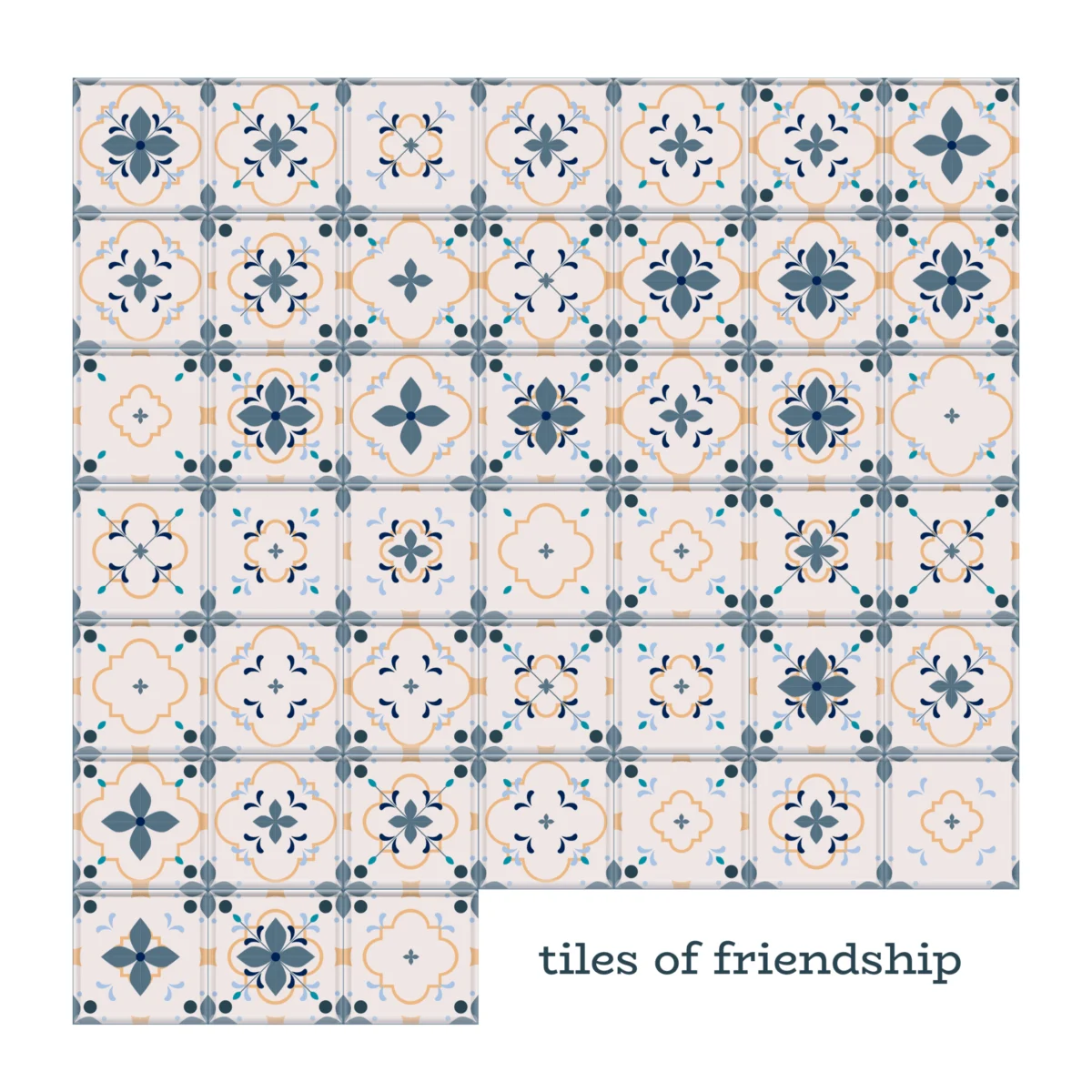
The Oxford English Dictionary defines friendship as a "voluntary, personal relationship characterized by mutual affection, trust, and support." It is a sterile, clinical definition for one of the most chaotic and profound experiences of human existence. To the human heart, however, friendship is far more tactile: it is the reflexive widening of a smile upon seeing a familiar face, the deliberate choice to nurture a bond with a niece long after the wedding cake has been eaten, or the heavy, resonant silence between two people who can no longer navigate a diverging set of life choices.
For Or Misgav, a data designer and researcher, these intangible markers of human intimacy represent a unique challenge. How do you quantify the unquantifiable? Recently, Misgav embarked on an ambitious data visualization project to map the constellation of people who have shaped her identity, transforming the messy, organic nature of social bonds into a structured taxonomy. In doing so, she stumbled upon a profound realization about the evolving relationship between human sentiment and machine-assisted creation.
The Taxonomy of Connection: Defining the Indefinable
The project began as an exercise in introspection. Misgav aimed to move beyond the traditional "balance sheet" approach to social networking, seeking instead to identify the patterns of her own life. "A relationship always evolves," Misgav notes. "This project would only ever represent a snapshot in time—a way to see the architecture of the people who have shaped me."
The methodology required an initial audit of her inner circle. She began with memory, then cross-referenced her findings with her Facebook friends list. The process immediately surfaced the philosophical ambiguities inherent in modern socializing. How, for instance, does one categorize family members who have become close friends? If a relationship is born of blood but sustained by choice—such as her long-term, ongoing dialogue with her nieces—is it categorized as family or friendship?
Even more challenging were the "legacy" friendships—those who were once pillars of support but have since drifted due to clashing life choices. Misgav faced the uncomfortable data-entry dilemma: If she excluded a former friend from her map, was she effectively declaring the end of the bond? Furthermore, she had to reconcile her own broad use of the term "friend." Is the neighbor with whom she shares a weekly cup of tea a "friend," or merely a pleasant acquaintance?
To bring order to this social chaos, Misgav distilled friendship into three core metrics, scored on a scale of one to three:

- Affection: The emotional warmth and bond shared.
- Trust: The level of reliability and vulnerability.
- Support: The presence of mutual aid during life’s volatility.
She further indexed these using two "judgment values": Duration (the length of the history) and Contact (recency of interaction). By limiting her scope to individuals with whom she had maintained contact over the last 24 months—a period coinciding with the birth of her daughter—Misgav turned the project into a mirror of her own journey through early motherhood. The resulting data provided an unexpected consolation: during a time when she often felt the profound, crushing loneliness of new parenthood, the data revealed she was, in fact, deeply loved.
Chronology: From Sketchbook to Scripting
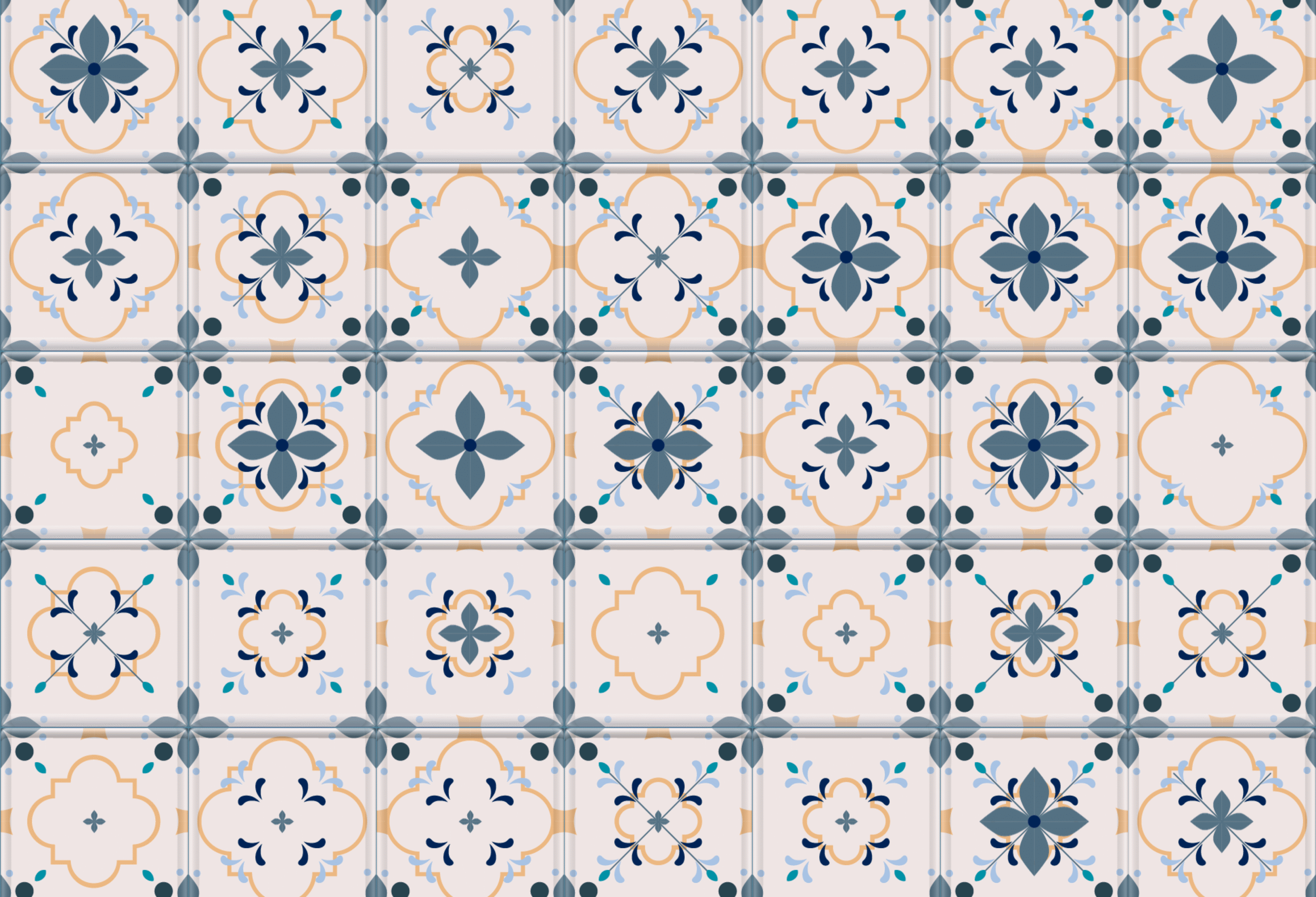
The project’s visual evolution followed a distinct path from tactile exploration to automated precision. Initially, the design manifested in her notebook as a series of "tiles." She envisioned a visual system where the scale of the friendship could be read instantly: Level one offered a simple, foundational base, while level three incorporated complex, intricate details.
The early design phases were manual, relying on traditional tools like Illustrator and Figma. However, Misgav soon encountered a roadblock: the color palette. Initially, she attempted to use background colors to denote the duration of a friendship, but the result was aesthetically overwhelming. It shifted the narrative focus from the depth of the connections to the sheer volume of her social history, turning the project into a boast about "how good I am at making friends" rather than a reflection on "how these friendships built me."

This realization prompted a technological pivot. Historically, Misgav would have spent hours manually building these visualizations—copying, pasting, and meticulously aligning layers. Seeking a more efficient workflow, she turned to large language models (LLMs) like Claude and Gemini.
The process became a hybrid of human intent and machine execution. She utilized Gemini to help refine her prompts for Claude, which then generated a Python script. This script processed her Excel data and automatically outputted the required stacked layers as PNG files. For Misgav, the experience of using a terminal to install Python and execute the script felt like a nostalgic trip to the 1990s—a stark contrast to the modern ease of the final output: "Boom. Your tiles are ready."
The Cost of Efficiency: The "Data Familiarization" Gap
While the automation saved hours of labor, it introduced a new, unforeseen psychological cost. Upon reviewing the final folder of tiles, Misgav experienced a sense of cognitive dissonance. She did not fully recognize the data.

By automating the "execution" phase, she had inadvertently bypassed the "data familiarization" stage. This meditative hour, which she usually spent manually handling each data point, was the time when she would sit with the memories of the people behind the numbers. The tiles were technically perfect, yet they felt emotionally distant.
This observation raises a critical, structural question for the field of data visualization: In an era where AI can handle the heavy lifting of design and rendering, what is the role of the human designer? If the AI constructs the layers, is the designer still a creator, or have they become merely a curator of their own life?
Implications for Future Human-Data Interaction
The implications of Misgav’s project extend beyond her personal life. We are entering an era where our personal histories can be mapped, analyzed, and visualized with startling speed. However, as Misgav’s experience suggests, the "friction" of manual work is not just a nuisance—it is an essential part of the creative and emotional process.

When we remove the labor of visualization, we risk detaching ourselves from the information we seek to understand. If we outsource the act of "mapping" our lives to algorithms, we may end up with beautiful, accurate snapshots that lack the soul and emotional context that only the human hand can impart during the crafting process.
A Token of Gratitude: The Final Result
Despite the detachment caused by automation, the finished grid remains a powerful testament to a life lived. These tiles are not just graphic assets; they are a ledger of existence. They represent the friends who persisted through the awkwardness of puberty, the confidants who signed her wedding guestbook, and the new, unexpected companions found at preschool drop-offs.
"This project is more than a visualization," Misgav concludes. "It’s a token of gratitude." It is a snapshot of her soul as it existed in 2026—a composite image shaped by the people who have walked alongside her, rendered by the machines of the future, and held together by the voluntary, personal relationships that make life worth mapping.

Or Misgav, a data visualization designer and researcher with a background in Business Intelligence, is currently pursuing a practice-based PhD. Her work continues to explore how data visualization can act as a bridge between cold, hard metrics and the balanced, subjective decision-making required for human well-being. By mapping the people who define her, she has not only created a beautiful piece of art but has also sparked a necessary conversation about what we lose—and what we gain—when we invite machines to help us define our connections.
 Lina Irawan
  Nila Kartika Wati