
 By Muslim
The dropshipping industry is at a crossroads. While market projections indicate a robust trajectory—with the global dropshipping market expected to balloon to $2 trillion by 2030—the "gold rush" era of selling low-cost, mass-produced trinkets is effectively over. The digital landscape is increasingly crowded, and the barrier to entry for high-quality, sustainable ecommerce has shifted. Today, success is no longer about finding the cheapest supplier on a marketplace; it is about curation, brand authority, and logistics reliability.
It is against this backdrop that platforms like DropXL have emerged. By positioning itself as a conduit for the vidaXL catalog—a massive, established European furniture and home goods giant—DropXL offers a distinct alternative to the "cheap and fast" drop-shipping models that have historically dominated the space.
The Core Facts: What is DropXL?
At its most fundamental level, DropXL is a B2B dropshipping supplier that functions as the digital gateway to the vidaXL product ecosystem. Unlike aggregate marketplaces that act as middlemen between countless small-scale manufacturers, DropXL provides a direct line to a massive, centralized inventory.
With over 130,000 products, the platform focuses on categories that require higher consumer trust: furniture, garden equipment, DIY hardware, pet supplies, and interior storage solutions. For the modern entrepreneur, the platform serves as a warehouse and fulfillment partner, managing the physical storage of goods, the complexities of international shipping, and the initial tiers of customer returns.
Chronology and Evolution of the Model
The dropshipping industry began with the "arbitrage" model, where sellers focused on rapid, impulsive sales of inexpensive items. However, as consumer expectations for quality and delivery speeds have risen, this model has faced significant headwinds.
- The Early Phase: The rise of platforms like AliExpress and Oberlo allowed anyone with a Shopify store to start selling within hours. This led to market saturation.
- The Pivot: By 2023–2024, the industry saw a surge in "premium dropshipping." Sellers realized that selling a $200 solid wood coffee table offers a much higher profit ceiling—and a more sustainable customer relationship—than selling $5 novelty phone cases.
- The Current State: DropXL represents the maturity of this trend. By offering a catalog that feels more like an IKEA or Wayfair alternative than a discount bazaar, it targets the "serious" entrepreneur. The platform has spent the last few years refining its API access and data feed structures to cater to developers and store owners who want to integrate these items seamlessly into sophisticated, brand-focused storefronts.
Supporting Data: The Economics of Mid-Range Goods
Why move toward furniture and home goods? The data suggests that consumers are more willing to wait 5–14 days for a premium piece of furniture than they are for a generic gadget that arrives late.
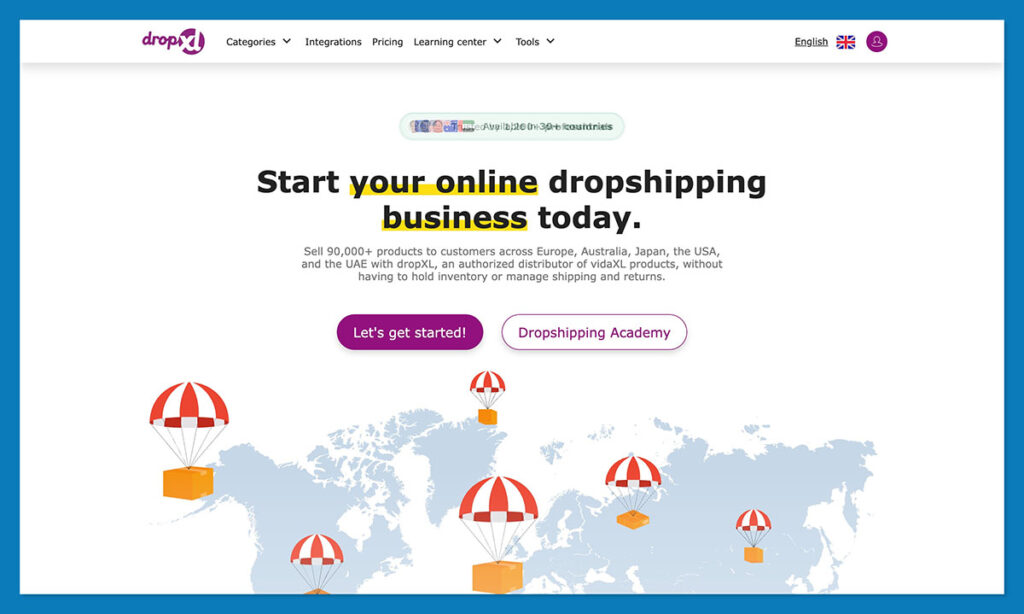
- Catalog Depth: With 90,000+ products, the platform covers niche categories including:
- Home & Garden: Reclaimed wood tables, velvet chairs, and outdoor lounge sets.
- Hardware & DIY: Professional-grade tools and storage solutions.
- Animal & Pet: Kennels, cages, and specialized accessories.
- Baby & Toddler: Furniture and nursery equipment.
- Pricing Structure: The subscription fee is a flat €30/month. Notably, the company does not take a percentage-based commission on your sales. This is a critical distinction, as it allows for higher profit margins compared to platforms that take a "cut" of every transaction.
- Margin Potential: While exact wholesale prices are gated behind the sign-up process, the model relies on volume-based wholesale pricing with built-in discounts ranging from 12% to 20%.
Operational Logistics: Shipping and Fulfillment
One of the biggest risks in dropshipping is the "last-mile" problem. When shipping bulky items like cabinets or desks, breakage and shipping delays can cripple a business.
DropXL mitigates this by leveraging an established European logistics network. Because the products are housed in regional warehouses, they can achieve a 5-to-14-day delivery window for most international markets.
Logistics Highlights:
- No Hidden Costs: For most B2B markets, the quoted price includes shipping, eliminating "sticker shock" at checkout.
- Tracking Transparency: Sellers are provided with carrier tracking details that can be automatically pushed to the end-user, maintaining the illusion of a seamless, internal fulfillment operation.
- Regional Nuance: The platform requires a separate account for different regions (e.g., a US account vs. a UK account), which, while slightly administratively heavy, ensures that tax and shipping logic is applied correctly to the specific geography.
Official Responses and Service Guidelines
The platform’s approach to returns and warranties is perhaps the most "corporate" aspect of their operation. They do not operate a "no questions asked" return policy; instead, they operate as a partner to the retailer.
The Return Protocol:
If a customer initiates a return, the seller must facilitate the communication. The seller contacts DropXL’s support team, which then provides the specific return instructions. The product must be in its original packaging, and shipping costs—as is standard in the B2B world—are generally not refunded.
Warranty Claims:
For durable goods (like furniture), DropXL provides warranty coverage in most regions, excluding the US. This is a critical point of distinction. Most "dropshippers" are left holding the bag when a customer complains about a faulty product; DropXL’s willingness to handle these claims provides a layer of legal and financial insulation for the store owner.
Implications for the Future of Dropshipping
What does this mean for the future of your business? It suggests a move toward professionalization.
If you are a beginner with zero budget, DropXL is likely not the place to start. The barriers—such as the need for a registered business, a tax strategy, and the ability to manage complex product feeds—are higher than those of typical dropshipping apps. However, for those looking to build a "real" retail-grade store, the implications are clear:
- Brand Value: Selling quality furniture allows for higher price points and better customer lifetime value (CLV).
- Scalability: By using API integrations (via partners like SyncX or GoGetters), you can automate the entire product management process, allowing you to focus on marketing and customer acquisition rather than manual data entry.
- Risk Management: The 30-day money-back guarantee on the subscription fee lowers the entry risk, but the lack of public pricing means you must commit to the vetting process before you can finalize your profit margins.
Final Verdict: Is DropXL Worthwhile?
DropXL is a sophisticated, albeit demanding, solution. It is not for the "get rich quick" crowd. If your goal is to compete in the high-stakes, high-reward world of home and lifestyle retail, the platform offers the stability of a giant like vidaXL combined with the agility of a digital feed.
Pros:
- No Commission Fees: Keep 100% of the profit margin you create.
- Exclusive Catalog: 130,000+ products that aren’t available on every "AliExpress-style" storefront.
- Robust Integration: API access and existing plugins for major platforms like Shopify, WooCommerce, and Wix.
Cons:
- Entry Hurdles: One account per country can make international expansion expensive and administratively tedious.
- Strict Return Policies: The return process requires active mediation by the seller, which requires strong customer service capabilities.
- Gated Data: The inability to view wholesale pricing without a subscription and approval can be frustrating for those conducting market research.
Ultimately, DropXL is an invitation to move away from the "commodity trap." If you are prepared to build a brand that values quality, customer service, and reliable fulfillment, it is one of the few dropshipping solutions that aligns with a long-term, professional business model.
 Dwi Wanna
  Lina Irawan
  Basiran