
 By Basiran
The landscape of the creator economy has evolved significantly over the last decade. Gone are the days when influencers were limited to third-party ad revenue or sporadic brand sponsorships. Today, creators are becoming entrepreneurs, building multi-faceted businesses that encompass physical merchandise, digital intellectual property, and community-driven membership models.
At the center of this transition are two heavyweights in the creator-commerce space: Spring (formerly Teespring) and Fourthwall. While both platforms promise to bridge the gap between audience and income, they offer fundamentally different philosophies. Choosing between them is no longer just about where to print a t-shirt; it is about choosing the infrastructure that will house your brand for the next five years.
Main Facts: The Core Differences
To understand the divergence, one must look at the structural intent of both companies.
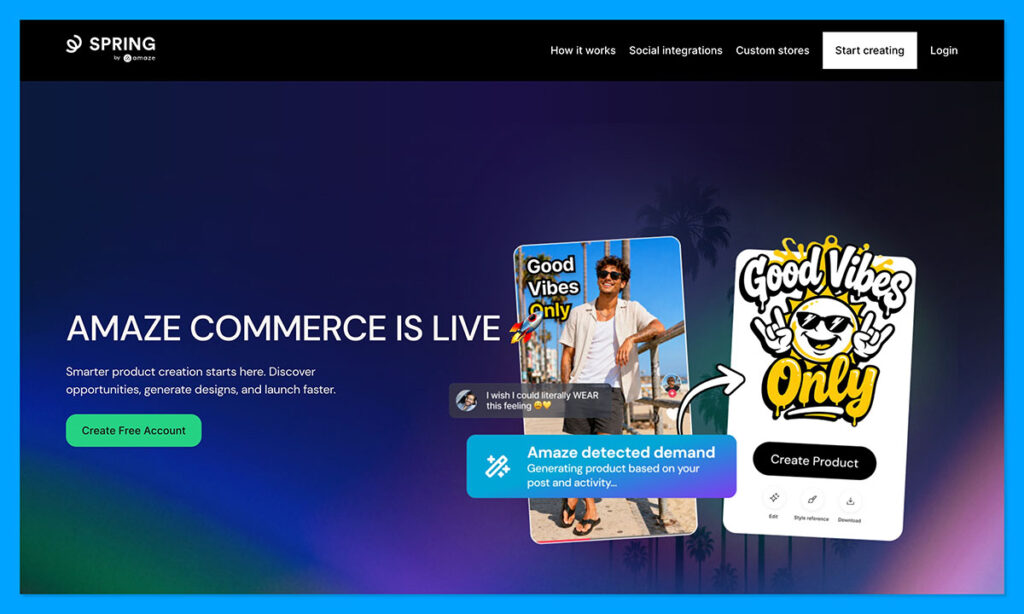
Spring is the "Social-First" specialist. It was built to minimize friction. If you have a YouTube channel or a Twitch stream, Spring allows you to go from an idea to a live product in minutes. It is a "closed-loop" system: you provide the design, and Spring handles the production, the payment processing, the shipping, and the customer service.
Fourthwall, by contrast, is a "Brand-First" ecosystem. It functions more like a headless ecommerce engine wrapped in a user-friendly interface. It offers a fully customizable website builder, deep analytics, and, most importantly, a suite of tools for selling non-merchandise assets like digital downloads, recurring memberships, and direct donations.
Chronological Evolution: From Tee-Printing to Full-Scale Commerce
The Rise of Spring (Teespring)
Founded in 2011, Teespring pioneered the "social commerce" model. It gained massive traction by simplifying the complex world of supply chains for independent creators. For years, it was the default choice for YouTubers looking to monetize their fanbase quickly. In 2021, the company rebranded to "Spring," signaling an attempt to move beyond just apparel and into the broader creator-product space.
The Emergence of Fourthwall
Fourthwall entered the market later, specifically identifying the limitations of existing POD (Print-on-Demand) platforms. They recognized that creators were "outgrowing" their platforms. When a creator wanted to offer a subscription service, they had to leave their merch provider and sign up for Patreon. When they wanted to host a blog, they had to start a WordPress site. Fourthwall was built as a "unified" solution to consolidate these fragmented revenue streams into one backend.
Supporting Data: Feature Comparison
When evaluating these platforms, the divergence in their feature sets becomes clear:
| Feature | Fourthwall | Spring |
|---|---|---|
| Storefront | Fully Customizable Website | Hosted Social Store |
| Product Variety | Curated POD + Self-Sourced | POD-Only |
| Memberships | Native Tiers & Perks | None |
| Merchant of Record | Yes | Yes |
| Email Marketing | Native Integration (Klaviyo/Mailchimp) | Limited |
| Target Audience | Creators scaling a business | Influencers launching merch |
Pricing and Fee Structures
Financial transparency is vital for creators.
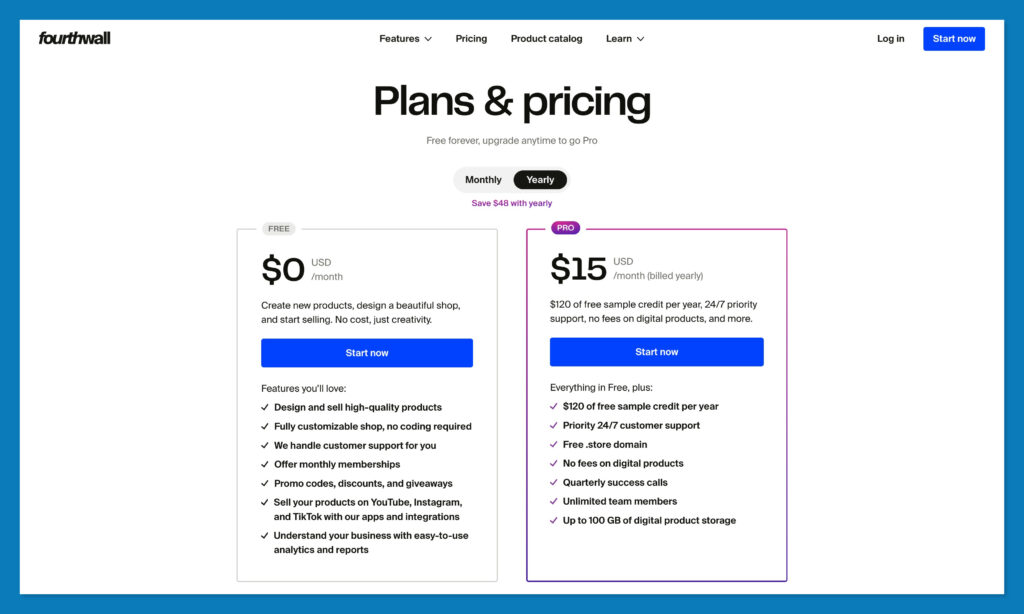
- Fourthwall: Operates on a tiered model. The free plan is robust, offering most tools, with a 5% fee on digital/membership sales. The Pro plan ($19/mo) unlocks advanced features, removes specific fees, and adds priority support.
- Spring: Employs a margin-based model. Every product has a base cost, and you set the retail price. While it is free to use, digital products face a steep 20% commission plus a $1.70 flat fee per sale, which can significantly eat into margins for high-volume creators.
Strategic Implications: Scaling Your Brand
The most critical factor in this decision is ownership.
When to choose Spring
Spring is the "low-risk, low-maintenance" option. If your primary goal is to monetize a specific viral video or a temporary trend, Spring is superior. Its integration with YouTube and Twitch is seamless. If you don’t want to spend time worrying about web design, SEO, or email marketing, Spring allows you to "set it and forget it." The implication here is that your audience is tethered to your social media platform rather than your own website.
When to choose Fourthwall
Fourthwall is built for the creator who views themselves as a CEO. If you plan to sell digital goods (eBooks, presets, private video content), launch a membership program, or eventually sell physical stock that you source yourself, Fourthwall is the only choice. It provides the "Merchant of Record" support (handling global taxes) while giving you the freedom to build a brand website that you can promote independently of social media algorithms.
Innovation and AI Integration
Recent updates highlight where these platforms are placing their bets.
Spring’s Focus: Recent updates at Spring are centered on operational efficiency. They are refining the checkout experience to support a wider array of payment methods (crypto, Apple Pay) and improving bulk-editing tools for listings. Their goal is to make the "product-launch" cycle faster.
Fourthwall’s Focus: Fourthwall is aggressively integrating AI to act as a "business partner." Their AI assistant, "Eli," helps with shop management, but the real innovation is in the ecosystem integrations. By connecting with tools like Kit and Throne, Fourthwall is positioning itself as the central hub for customer data. They want you to know who your subscribers are, what they bought, and when they are likely to buy again.
Official Stances and Support Policies
Both companies operate as the "Merchant of Record," which is a massive relief for tax-burdened creators. This means they assume the responsibility for collecting and remitting sales tax across different jurisdictions.
Customer Support: Both offer decent email and community-based support. However, Fourthwall’s "Pro" tier offers a more premium, concierge-style service.
The "Make It Right" Factor: Both platforms offer standard protections for defective items. Neither platform, however, will handle "change of mind" returns because the items are produced on-demand. This is a standard industry constraint that creators must communicate clearly to their audiences to avoid dissatisfaction.
Conclusion: Which Path Should You Take?
The divide between Spring and Fourthwall is a reflection of the divide between "Influencer" and "Creator-Entrepreneur."
Choose Spring if:
- You are a YouTuber or Twitch streamer with a transient audience.
- Your time is extremely limited and you want zero setup time.
- You only want to sell apparel and accessories without dealing with a "website."
Choose Fourthwall if:
- You are building a long-term, multi-product brand.
- You want to own your customer data and build an email list.
- You intend to offer memberships, digital downloads, or self-fulfilled products.
- You want a professional, fully branded website that isn’t dependent on a social media integration.
Ultimately, if you are looking to scale, Fourthwall provides the runway you need. If you are looking to monetize a specific moment or a single campaign, Spring remains the most efficient, friction-free vehicle in the industry. As the creator economy continues to mature, the transition from "social merchant" to "business owner" will likely drive more creators toward the comprehensive, data-rich environment that Fourthwall provides.
 Dwi Wanna
  Lina Irawan
  Nila Kartika Wati