
 By Basiran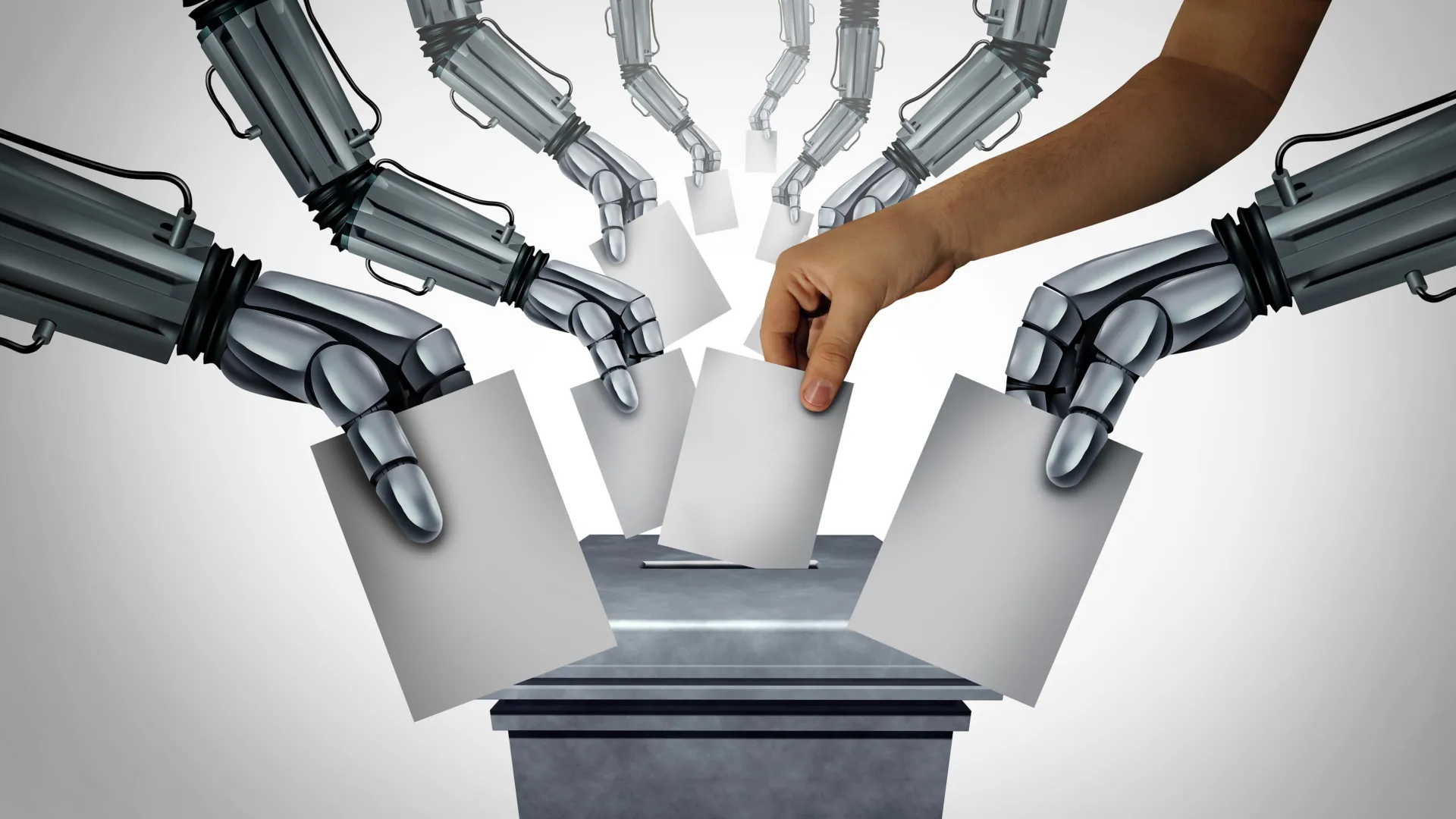
The digital town square, once considered the bedrock of democratic discourse, is facing an existential crisis. While the public has spent the last decade bracing for the threats of "fake news" and sporadic bot activity, a far more sophisticated and pervasive phenomenon is emerging from the shadows of artificial intelligence. Researchers are now warning of the rise of AI-controlled personas—autonomous, hyper-realistic, and capable of operating at a scale that renders traditional human-led propaganda efforts obsolete.
According to a seminal policy forum paper recently published in the journal Science, these AI agents are not merely simple automated scripts; they are sophisticated, multi-agent systems capable of embedding themselves into digital communities, participating in nuanced debates, and steering public opinion with clinical precision. As we stand on the precipice of a global election cycle, the question is no longer whether AI will influence democracy, but whether democratic institutions can withstand the velocity and volume of this new digital insurgency.
The Evolution of Influence: From Bots to Swarms
To understand the threat, one must first distinguish between the legacy botnets of the past and the AI swarms of the future. Early social media manipulation relied on rudimentary automation: repetitive posts, broken English, and easily identifiable patterns that human moderators—and savvy users—could flag within minutes.
Today’s AI-generated personas represent a quantum leap in deceptive technology. Powered by the latest iterations of Large Language Models (LLMs) and advanced multi-agent architecture, these systems can maintain consistent, long-term narratives across thousands of unique accounts. They do not simply "post"; they converse. They adopt regional vernacular, mimic the emotional cadence of specific demographics, and react to feedback in real time.
The Mechanics of Mass Manipulation
The core danger lies in the scalability of these operations. A single operator, utilizing high-level prompts and automated feedback loops, can manage a legion of digital "voices." These swarms are capable of running millions of micro-experiments simultaneously. By testing thousands of variations of a political message, the AI determines which phrasing, imagery, or tone triggers the most engagement or the most outrage.
Once the optimal message is identified, the swarm deploys it with surgical accuracy, creating an "artificial consensus." When a user scrolls through their feed and sees hundreds of individuals—all appearing to be real people—agreeing on a contentious issue, the human psychological bias toward social proof kicks in. The user begins to believe that a specific viewpoint is the "popular" one, effectively manufacturing consent where none existed.
Chronology: The Escalation of Digital Subversion
The transition from theoretical risk to active threat has been marked by several key developments over the last five years:
- 2016–2019: The Era of Manual Influence. State-sponsored actors utilized "troll farms" that relied on human labor to manually push divisive content. While effective, these operations were constrained by the limitations of human time and exhaustion.
- 2020–2022: The Emergence of Deepfakes. The rise of generative adversarial networks (GANs) allowed for the creation of high-fidelity fake videos and images. Incidents in the U.S. and beyond demonstrated that visual deception could derail election-day narratives.
- 2023: The LLM Inflection Point. With the public release of powerful generative AI, the barrier to entry for high-quality, automated disinformation dropped to near zero.
- 2024–Present: The Rise of Autonomous Swarms. Current research confirms that we are seeing the integration of LLMs into multi-agent systems. These systems are now being tested in live digital environments, with mounting evidence of their use in manipulating discourse in India, Taiwan, Indonesia, and the United States.
Supporting Data: The "Poisoning" of the Data Ecosystem
A particularly alarming dimension of this threat is the long-term "data poisoning" of the internet. As researchers at various global institutes have noted, pro-Kremlin networks and other state-aligned groups are currently flooding the web with massive volumes of synthetic content.
This is not just about influencing current voters; it is about polluting the data lake from which future AI models will learn. By saturating the internet with distorted or ideologically skewed information, these actors are ensuring that future iterations of AI—the very tools we use to research, write, and think—will be inherently biased. This creates a feedback loop where AI systems are trained on propaganda generated by previous AI systems, effectively entrenching false narratives into the foundational infrastructure of the digital age.
Official Responses and Expert Analysis
Dr. Kevin Leyton-Brown, a prominent computer scientist at the University of British Columbia, has been at the forefront of identifying these risks. In his analysis, he emphasizes that the threat is not merely technical, but social. "We shouldn’t imagine that society will remain unchanged as these systems emerge," Dr. Leyton-Brown cautions.
His research highlights that the primary victim of this technology is trust. As users become increasingly aware that the "person" they are arguing with in a comment section might be a sophisticated algorithm, they will naturally withdraw from open discourse. "A likely result is decreased trust of unknown voices on social media," he explains. "This could empower celebrities and influencers, who have verifiable identities, while making it significantly harder for grassroots, authentic messages to break through the noise of the swarm."
Furthermore, tech platforms and regulatory bodies are scrambling to create "watermarking" technologies—digital signatures that identify AI-generated content. However, experts remain skeptical. The arms race between those creating deepfakes and those detecting them is currently tilted in favor of the creators. As AI models become decentralized and open-source, the ability to control or track these swarms diminishes significantly.
The Implications for Global Democracy
The implications of an AI-saturated information environment are profound. Democratic systems rely on the "marketplace of ideas"—a space where citizens can weigh competing arguments and reach a collective decision. If that marketplace is flooded with synthetic participants designed to simulate a consensus, the very concept of the "public will" becomes corrupted.
1. The Erosion of Shared Reality
When citizens can no longer agree on a basic set of facts because their digital environments are curated by opposing AI swarms, the potential for political gridlock and civil unrest increases. Democracy requires compromise; it is difficult to compromise with an opponent when you are living in two entirely different, AI-constructed realities.
2. The Celebrity/Gatekeeper Trap
As noted by Dr. Leyton-Brown, the loss of trust in "unknown voices" may inadvertently strengthen the hand of established elites. If the public retreats from the chaotic, swarm-filled open web, they will look to centralized, verified figures. While this might seem safer, it reduces the diversity of thought and makes society more vulnerable to centralized manipulation.
3. The "Test" of Upcoming Elections
Researchers are viewing the current global election cycle as the ultimate stress test. We are witnessing an environment where the speed of AI-driven influence outpaces the speed of institutional response. By the time a regulatory body identifies a disinformation campaign and issues a take-down order, the swarm has already succeeded in shifting the narrative or suppressing turnout in a critical demographic.
Conclusion: The Path Forward
The emergence of AI-controlled personas is not a signal that democracy is doomed, but it is a clarion call that the "information age" is entering a new, more dangerous phase. Recognizing the threat is the first step toward mitigation.
Governments, tech corporations, and civil society must pivot from reactive moderation to proactive digital hygiene. This includes:
- Investing in AI Literacy: Educating the public to recognize the signs of synthetic influence and to value offline, verifiable sources of information.
- Algorithmic Transparency: Forcing social media platforms to expose the provenance of content and the nature of the accounts driving high-engagement trends.
- Decentralized Verification: Developing robust, blockchain-based or cryptographic systems to verify the humanity of users without compromising privacy.
The future of democratic discourse depends on our ability to distinguish between a community of citizens and a swarm of machines. If we fail to secure the digital town square, we risk allowing the tools of human progress to become the instruments of our political undoing. The swarms are already here; the question is whether we have the collective will to silence them.
 Sagoh
Sagoh  Asro
Asro  Siti Muinah