
 By Pevita Pearce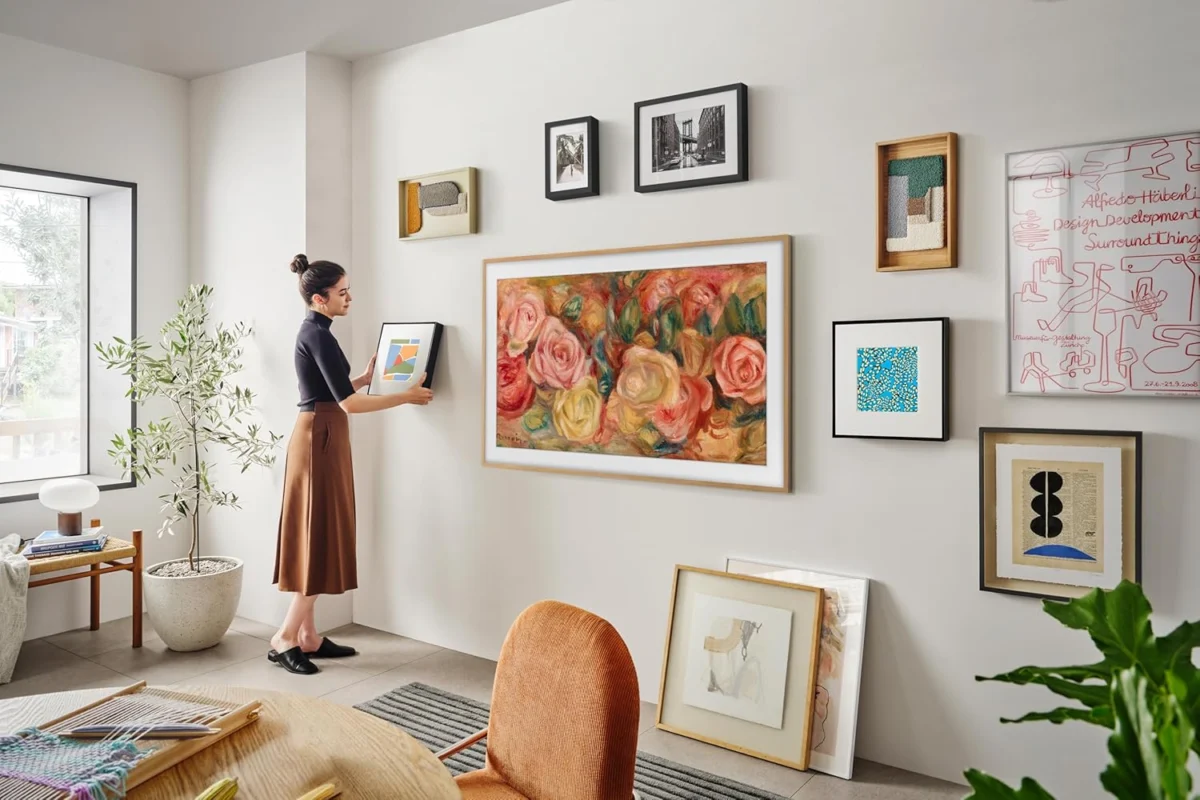
In the crowded landscape of modern consumer electronics, televisions are often viewed as utilitarian behemoths—black monoliths that dominate the living room aesthetic when powered on and serve as blank, reflective voids when turned off. Samsung has spent the better part of a decade challenging this paradigm with "The Frame," a television specifically engineered to disappear into your home decor. Now, with a significant discount on the 2025 model, the debate over whether this lifestyle-focused display is a legitimate home cinema contender or merely an expensive piece of furniture has returned to the forefront of tech discourse.
Currently, Amazon is offering the 55-inch 2025 Samsung Frame for $697.99—a reduction of approximately $200 from its standard retail price. While the discount makes the entry barrier more palatable, potential buyers must reconcile the television’s unique design philosophy with its technical limitations.
The Core Proposition: Artistry Meets Engineering
The primary value proposition of The Frame is its aesthetic versatility. Unlike standard 4K panels that rely on glossy glass coatings to enhance perceived contrast, The Frame utilizes a proprietary matte-finish display. This finish is critical to the TV’s "Art Mode," which allows the screen to mimic the texture and appearance of canvas or paper prints rather than a digital screen.
When the TV is not in use, it functions as a digital gallery, cycling through high-resolution art pieces. Coupled with customizable magnetic bezels that snap onto the frame to replicate the look of a physical picture frame, the device effectively camouflages itself as a piece of wall art. This design choice addresses a common "pain point" in interior design: the desire to have a large screen available for entertainment without it being the singular focal point of a room.
Technical Specifications: The 2025 Iteration
Under the hood, the 2025 model maintains a robust feature set intended to bridge the gap between casual viewing and gaming. The unit features:
- Display: 4K QLED panel with a specialized anti-reflective matte coating.
- Refresh Rate: 144Hz, with integrated Variable Refresh Rate (VRR) support, making it surprisingly capable for console and PC gaming.
- HDR Support: HDR10+ compatibility for enhanced dynamic range in compatible content.
- Connectivity: The "One Connect" system. All inputs—including four HDMI ports (one supporting 144Hz gaming, one with eARC for soundbar integration, and two at 60Hz), two USB-A ports, an Ethernet port, and a coaxial input—are housed in an external box connected to the display by a single, near-invisible cable.
Chronology of a Lifestyle Revolution
To understand why The Frame remains a relevant product, one must look at the evolution of the "Lifestyle TV" category.
2017: The Genesis
Samsung first launched The Frame, betting on the idea that high-end consumers were tired of the "black box" aesthetic. Early reviews praised the design but criticized the initial price-to-performance ratio, noting that the image quality did not match standard Samsung TVs at the same price point.
2020–2022: The Refinement Phase
As home office and living room design became more critical during the pandemic, Samsung refined the bezel options and the "Art Store" subscription service, which allows users to curate a rotating collection of world-class art. The introduction of better, slimmer mounting hardware allowed the TV to sit truly flush against the wall, a crucial design element for the "frame" illusion.
2025: The Modern Standard
The current 2025 iteration represents the culmination of this refinement. By integrating 144Hz panels and advanced VRR, Samsung has moved the product away from being a "design-only" piece and into the territory of a legitimate high-performance display for modern gamers, even if the display technology itself remains a QLED standard rather than the higher-end OLED or QD-OLED found in their flagship gaming monitors.
Supporting Data: Performance vs. Aesthetics
When assessing whether this television is right for you, it is vital to acknowledge the "performance gap." Independent testing consistently indicates that The Frame is not a reference-grade display.
Compared to similarly priced alternatives—such as mid-range OLEDs or higher-tier Mini-LED sets—The Frame often exhibits lower peak brightness levels. Furthermore, because of the matte finish designed to kill glare, the overall contrast ratio and black levels suffer. The matte texture, while excellent for avoiding reflections in bright rooms, can slightly diffuse light, resulting in a perceived loss of sharpness and color depth compared to the "pop" found on standard glossy OLED panels.
For the casual viewer who prioritizes interior design, these drawbacks are often negligible. However, for the cinephile who demands absolute black levels and color accuracy for dark-room HDR viewing, the technical data suggests that a dedicated home theater television would be a superior purchase at this price point.
Official Responses and Market Positioning
Samsung has rarely positioned The Frame as a direct competitor to their flagship "Neo QLED" or "OLED" lines. Instead, the company markets it as a solution for specific use cases. During various product briefings, Samsung representatives have emphasized that The Frame is designed for "the living room that isn’t a theater."
The company’s focus remains on the "One Connect" box as a key differentiator. By centralizing all cables and inputs into a single, remote unit, Samsung solves the problem of unsightly wire management—a massive selling point for the minimalist design demographic.
Implications for the Modern Consumer
What does this $697.99 deal tell us about the current market?
- The Democratization of Lifestyle Tech: A sub-$700 price tag for a 55-inch unit that was once a luxury item signals that "lifestyle tech" is reaching a wider audience. It is no longer just for high-end interior design projects.
- The Shift in Gaming Requirements: The inclusion of 144Hz support in a TV focused on art is a strategic move. Samsung is acknowledging that even people who want a "pretty" room also want to play Call of Duty or Cyberpunk 2077 at high frame rates. The Frame is now a multi-purpose machine.
- The Trade-Off Culture: The enduring success of The Frame proves that consumers are willing to sacrifice peak technical performance for environmental integration. The market has shifted from "bigger, brighter, and sharper" to "better integrated into my life."
Conclusion: Is it Worth the Investment?
The 2025 Samsung Frame at its current price is a compelling offer, provided the buyer has clear expectations. If your goal is to build a dark-room, high-fidelity home cinema where every nit of brightness and every shade of black is scrutinized, you would be better served by a dedicated gaming or theater display.
However, if you are looking to elevate a living space, hide the cables, and enjoy a TV that looks as good when it’s off as it does when it’s on, The Frame is arguably the best product in its class. It remains a masterclass in compromise—a television that has successfully rebranded itself as a piece of home decor without losing its identity as a modern, connected display. For many, that trade-off is not just worth the price; it is exactly what they have been waiting for.
 Raul Delapena Setiawan
  Siti Muinah
  Asro
Asro 