
 By rifanmuazin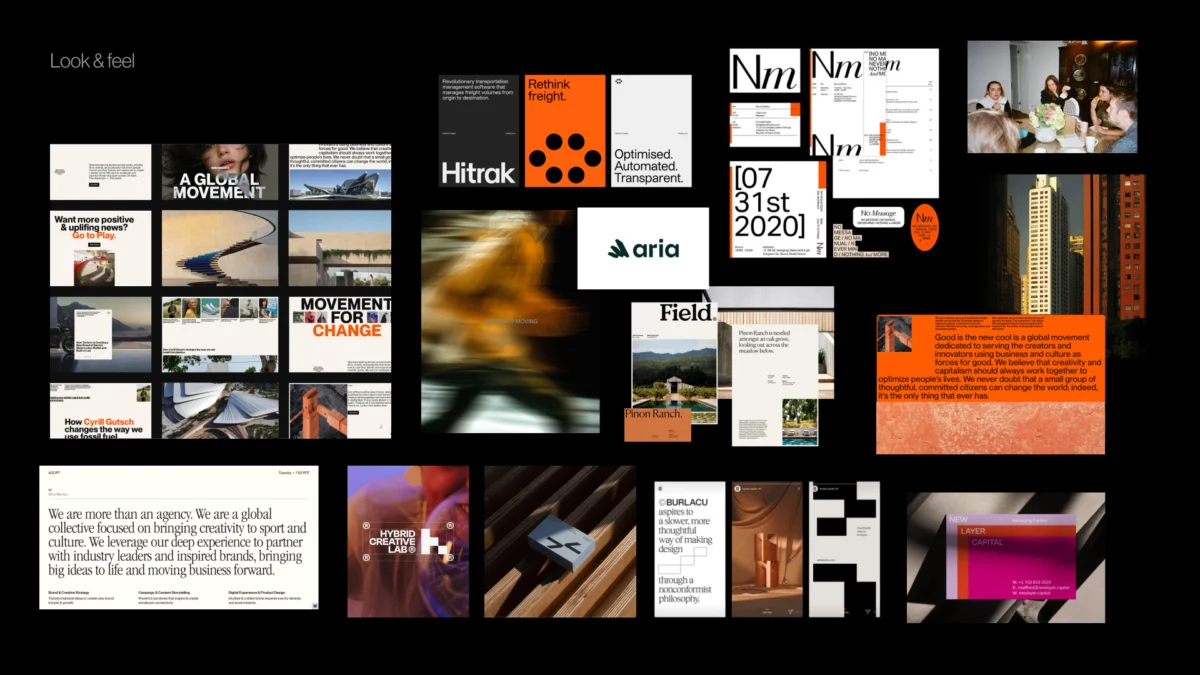
In the high-stakes world of corporate identity, a recurring tragedy plays out in design studios and boardrooms globally: the "Reveal Failure." A design team spends weeks crafting a logo and visual system based on a strategy document filled with adjectives like "modern," "trustworthy," and "disruptive." When the curtains are pulled back, the client is underwhelmed. The colors feel "off," the typography feels "too loud," and the "modern" look the designer created is not the "modern" the CEO imagined.
According to industry veterans, these failures are rarely the result of poor aesthetic skill. Instead, they occur in the "semantic gap"—the void between abstract strategy and visual execution. To bridge this gap, a new methodology is emerging among leading design practitioners: the Pre-Concept Phase.
This phase argues that the strongest visual concepts do not start in Figma or Adobe Creative Suite. They start with a rigorous interrogation of brand context, the unearthing of hidden stakeholder assumptions, and the construction of a shared visual foundation before a single original asset is ever created.
Main Facts: Defining the Pre-Concept Methodology
The pre-concept phase is a strategic buffer designed to eliminate the "guessing game" from brand identity design. Traditionally, designers move from a brief directly to concepts. The pre-concept model introduces a mid-step focused on Perception Management.
At its core, the pre-concept phase addresses the inherent ambiguity of language. In a branding context, words like "premium" or "friendly" are essentially meaningless until they are visually anchored. One stakeholder might associate "premium" with the minimalist, stark aesthetic of Apple, while another might envision the ornate, gold-leafed heritage of a luxury hotel in London.

By focusing on the "pre-concept," design teams aim to:
- Define Visual Boundaries: Establish what the brand is not as much as what it is.
- Neutralize Subjectivity: Shift the conversation from "I like this color" to "Does this color express our strategic goal?"
- Align Stakeholders Early: Surface internal disagreements during the research phase rather than during the final presentation.
Chronology: The Journey from Strategy to Visual Reality
The transition from a verbal strategy to a tangible brand identity follows a specific, chronological path that prioritizes intellectual alignment over artistic output.
1. The Discovery and Perception Audit
The process begins immediately after the project kickoff. Rather than collecting mere facts about the business, designers conduct a "Perception Audit." This involves questioning stakeholders not just on their goals, but on how they wish to be "felt" by their audience. As Marty Neumeier, author of The Brand Gap, famously stated: "A brand is a person’s gut feeling about a product, service, or company." The chronology starts by defining that desired "gut feeling."

2. The Contextual Research Phase
Once the desired perception is identified, the team researches the brand’s environment. This includes a deep dive into category expectations. For example, a health tech company may want to be "disruptive," but because they deal with government medical institutions, their version of disruption must still fit within the visual language of "credibility" and "safety."
3. The Visual Foundation Meeting
Before any logos are designed, a visual foundation meeting is held. This is where the "pre-concept" takes physical form through reference boards, design codes, and asset directions. Only after this meeting is concluded—and a shared direction is signed off—does the designer move into the actual conceptualization of the brand identity.
Supporting Data: Exercises that Extract Brand Truth
To make the pre-concept phase actionable, designers utilize specific psychological and comparative exercises. These tools provide the "data" necessary to build a design system.

Exercise 1: Competitor Perception Mapping
Stakeholders are presented with a landscape of competitors and asked to plot them on a two-axis map (e.g., "Traditional vs. Progressive" and "Corporate vs. Human").
- The Data Point: The value here is not in the final map, but in the disagreement. If the CEO places a competitor in the "Progressive" quadrant while the CMO places them in "Generic," the designer has identified a critical misalignment in how the leadership team defines innovation. Resolving this discrepancy is required before design can begin.
Exercise 2: The Visual Brand Driver (Metaphoric Association)
This exercise asks stakeholders to select images for unrelated categories—transportation, furniture, animals, or architecture—that represent the company.
- Case Study Insight: In a recent project for a parenting app, stakeholders chose images of "organic shapes" and "soft gradients" to represent "messy but magical" parenting. Conversely, they chose "data snapshots" and "infographics" to represent "research-backed support." These selections provided the designer with a "Design Code": a mixture of organic chaos and editorial precision.
Exercise 3: Defining the "Design Code"
The "Design Code" translates abstract ideas into visual principles.

- Momentum in Motion: Might be translated into lines, ripple effects, or motion blur.
- Springboard: Might be translated into elastic visual energy or "lift-off" imagery.
- Trustworthy: In a fintech context, this might mean heavy typography and a "secure" color palette of deep blues or greens, whereas in a lifestyle context, it might mean high-quality, unedited photography.
Official Responses and Expert Perspectives
Design leaders emphasize that this phase is about risk mitigation. Jake Knapp, creator of the Google Ventures "Brand Sprint," notes that the goal of such exercises is to "make the abstract idea of ‘our brand’ into something concrete."
From a studio perspective, the pre-concept phase serves as a professional contract of intent. By showing "Look and Feel" boards—collections of third-party references that represent different directions—designers can gauge a client’s reaction to a "vibe" before spending 40 hours illustrating a custom logo.
Expert designers argue that the "Reveal" (the "Big Ta-Da" moment) is a relic of 20th-century advertising that doesn’t work in the collaborative environment of modern product design. Instead, the consensus among agencies like Smashing Editorial and others is that the first concept should not be a surprise; it should feel like the inevitable next step in a journey the client has been part of since day one.

Implications: The Long-term Value of the Pre-Concept Phase
The shift toward a pre-concept-heavy workflow has profound implications for the design industry and the business world at large.
1. Reduced Financial Waste
The most significant implication is the reduction of "re-work." When a project fails at the concept stage, it often results in weeks of lost billable hours and delayed product launches. The pre-concept phase front-loads the difficult conversations, ensuring that when design begins, it is moving in a "safe" direction.
2. Enhanced Brand Consistency
For digital products, a brand identity is not a static logo but a living system of assets. By defining the "Design Code" and "Brand Assets" (typography, color, photography style) during the pre-concept phase, the resulting identity is more robust. It provides a clearer roadmap for UI/UX designers, marketing teams, and developers who will eventually build upon the foundation.

3. Shift in the Designer’s Role
The designer is no longer viewed merely as a "stylist" or "pixel-pusher" but as a strategic consultant. This elevates the design profession, moving it closer to business strategy. The designer becomes the translator who turns high-level business goals into a functional visual language.
4. Improved Stakeholder Buy-in
When stakeholders are involved in the "Visual Brand Driver" and "Competitor Mapping" exercises, they feel a sense of psychological ownership over the final result. They are no longer judging a designer’s work; they are evaluating how well the designer executed the shared vision they helped create.
Conclusion: The End of the "Guessing Game"
The strongest visual concepts don’t emerge from a vacuum; they are distilled from a rigorous process of questioning and alignment. By embracing the pre-concept phase, branding teams can bridge the gap between strategy and execution, ensuring that "modern" actually looks modern, "trustworthy" actually builds trust, and "disruptive" actually breaks the right rules.

In an era where brand attention is the most valuable currency, the "Pre-Concept" pivot is not just a design trend—it is a business necessity. The first concept should never be a guess; it should be the logical conclusion of a well-defined strategic journey.
 Nana Wu
  Nana
Nana 