
 By Nana Wu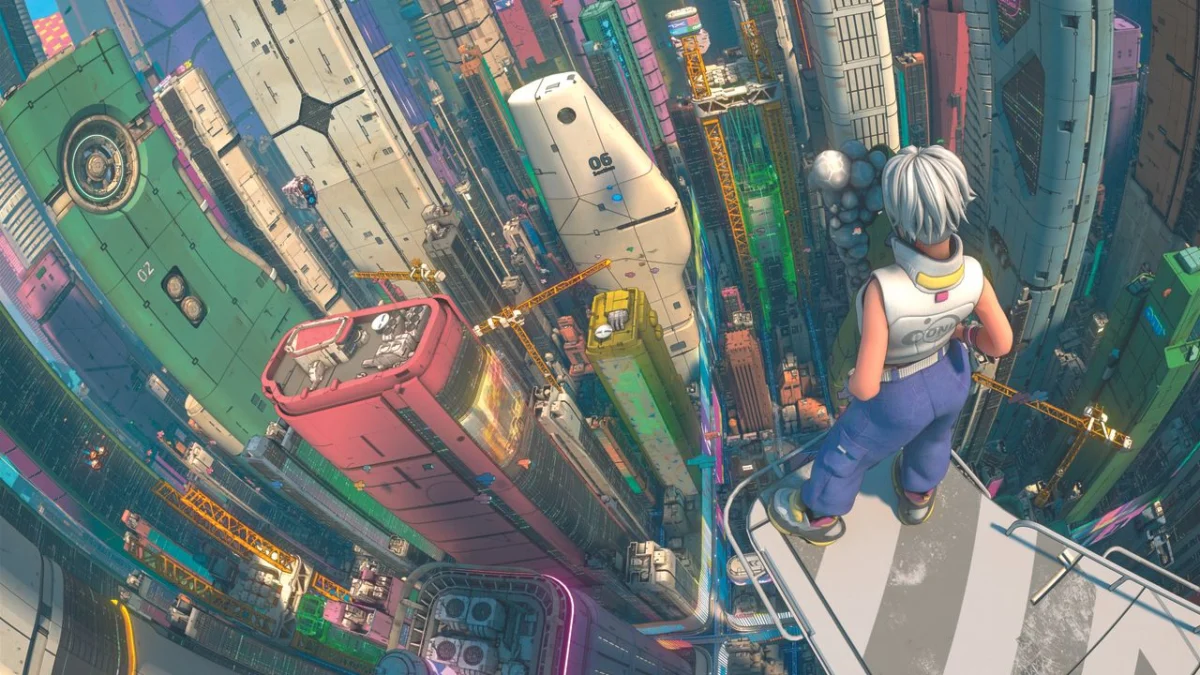
In the sprawling, ever-evolving landscape of digital art, certain visionaries emerge whose work transcends mere imagery, crafting entire worlds that captivate and inspire. Marcel Deneuve stands as one such luminary, a digital concept artist whose distinctive style fuses the profound influences of Japanese masters with cutting-edge 3D modeling and digital painting techniques. His oeuvre is a testament to architectural innovation, presenting breathtaking sci-fi landscapes populated by colossal structures that beckon viewers into speculative futures.
Deneuve’s artistic journey, marked by a fascinating transition from electronic music to visual art, is a narrative of self-taught dedication and an unwavering commitment to exploring the boundless possibilities of digital creation. Through his masterful command of tools like Blender, Photoshop, Procreate, and Substance 3D, he constructs intricate, atmospheric environments that are both grand in scale and rich in detail. This article delves into Deneuve’s unique artistic philosophy, chronicles his ascent in the digital art world, examines his groundbreaking works, and explores the broader implications of his contributions to the genre.
The Visionary Behind the Colossal: Who is Marcel Deneuve?
Marcel Deneuve is not just an artist; he is a world-builder, a digital architect whose imagination knows no bounds. His work is instantly recognizable for its audacious scale, intricate detailing, and atmospheric depth, all steeped in a distinctly futuristic and often dystopian aesthetic. He has carved a significant niche within the concept art community, particularly for his ability to render environments that feel both alien and strangely familiar, hinting at narratives far grander than a single frame can contain.
A Fusion of Japanese Mastery and Digital Innovation
At the core of Deneuve’s distinctive style lies a profound reverence for Japanese artistic giants. He cites Tsutomu Nihei, Yoshitaka Amano, and Takashi Murakami as primary inspirations, a trio whose diverse legacies provide a fertile ground for Deneuve’s own creative synthesis.
From Tsutomu Nihei, the acclaimed manga artist behind works like Blame! and Knights of Sidonia, Deneuve draws a deep appreciation for monumental architecture, industrial decay, and a sense of overwhelming scale that often dwarfs human presence. Nihei’s ability to create labyrinthine, seemingly endless structures, imbued with a foreboding atmosphere, clearly resonates in Deneuve’s own colossal constructs. The intricate, almost biomechanical detailing found in Nihei’s worlds often finds an echo in the complex geometries and textures that define Deneuve’s futuristic cities and installations. It’s a fascination with the sheer enormity of engineered spaces and the potential for both awe and terror they can inspire.
Yoshitaka Amano, renowned for his ethereal and elegant character designs and illustrations, particularly for the Final Fantasy series, contributes a different kind of influence. While Deneuve’s focus is less on character and more on environment, Amano’s masterful use of light, shadow, and color to evoke mood and a sense of the fantastical is palpable. Amano’s ability to imbue his art with a dreamlike quality, combining delicate lines with bold compositions, likely informs Deneuve’s approach to atmospheric rendering, ensuring his imposing structures still possess an artistic grace and emotional resonance. The dramatic interplay of light and shadow, and the sophisticated color palettes that give Deneuve’s scenes their often melancholic or majestic feel, can be traced back to Amano’s influence.
Takashi Murakami, a pivotal figure in contemporary art known for his "Superflat" theory and vibrant, often playful pop art, might seem an outlier among these inspirations. However, Murakami’s influence on Deneuve is likely more conceptual – perhaps in the audacious use of color in pieces like "Lollipop," or in the meticulous, almost obsessive attention to detail that can transform mundane elements into iconic motifs. Murakami’s ability to blend high art with popular culture, and his creation of expansive, interconnected artistic universes, could also inspire Deneuve’s ambition to build cohesive fictional worlds, such as his "Onimeon" project. This blend allows Deneuve to inject unexpected vibrancy or a playful defiance into his otherwise grand and serious sci-fi settings.
Together, these influences empower Deneuve to create digital concept art that is both technically sophisticated and rich in artistic heritage, setting his work apart in a crowded field.
Crafting Worlds: Deneuve’s Signature Themes
Deneuve’s art consistently explores three core themes: architectural innovation, sci-fi landscapes, and colossal structures. These are not merely backdrops but active characters in his visual narratives.
His architectural innovation goes beyond mere building design; it’s about imagining how future societies might construct their habitats, monuments, and infrastructure under extreme conditions or with advanced technologies. Deneuve’s structures often defy conventional physics, featuring gravity-defying cantilevers, intricate layered cities, and organic-mechanical hybrid forms. He speculates on the aesthetics and functionality of future dwellings, transportation hubs, and industrial complexes, presenting designs that are both visually stunning and conceptually thought-provoking. These aren’t just buildings; they’re statements about human ingenuity, resilience, or perhaps, hubris.
The sci-fi landscapes Deneuve conjures are vast and immersive, ranging from neon-drenched urban sprawls to desolate, alien terrains punctuated by the remnants of colossal civilizations. He masterfully uses atmospheric perspective, lighting, and environmental effects to evoke a sense of grandeur, isolation, or bustling energy. These landscapes are often imbued with a subtle narrative, suggesting histories of exploration, conflict, or long-forgotten empires, inviting viewers to ponder the stories hidden within the digital brushstrokes. They are ecosystems designed to house his monumental architecture, providing context and scale.
And then there are the colossal structures, the undeniable focal points of many of his pieces. These aren’t just large buildings; they are often impossibly immense, dominating the horizon and dwarfing anything around them. Whether they are ancient ruins, futuristic mega-cities, or enigmatic alien installations, they speak to a sense of the sublime – an overwhelming scale that humbles the observer. Deneuve uses these structures to explore themes of power, technology, decay, and the sheer audacity of construction, pushing the boundaries of what is conceivable in a digital space. These monoliths are often the anchors of his worlds, grounding the viewer in their immensity.
A Journey Forged in Pixels and Passion: Deneuve’s Chronology
Marcel Deneuve’s path to becoming a revered digital concept artist is a compelling story of artistic evolution, marked by a pivotal shift in creative focus and a dedication to self-improvement.
From Sonic Waves to Visual Realms: The Early Spark
Before his immersion in visual art, Deneuve "dabbled in electronic music." While the specifics of this period are not detailed, it suggests an early inclination towards creative expression and an understanding of composition, rhythm, and atmosphere – principles that are equally vital in visual art. The transition from sound to sight, though seemingly disparate, often stems from a shared desire to construct immersive experiences. The abstract nature of electronic music, with its emphasis on mood and texture, may have laid a foundation for Deneuve’s later ability to craft atmospheric visual environments.
It was after this period, around 2017, that "Japanese artists provided the inspiration for him to start his journey in visual art." This points to a conscious decision, driven by a powerful artistic revelation. The precise qualities of Japanese art that captivated him could range from the intricate storytelling in manga and anime to the profound aesthetic principles in traditional Japanese painting and architecture. This initial spark ignited a new passion, redirecting his creative energies towards the visual domain. The year 2017 marks the formal beginning of his self-taught visual art odyssey.
Self-Taught Mastery: The Foundations
In an era where formal art education is often considered a prerequisite, Deneuve embarked on a self-directed path, "learning from books and materials available on the web." This approach highlights the democratization of knowledge and tools in the digital age. His early days would have involved foundational drawing exercises, understanding perspective, composition, and color theory, all without the direct guidance of an instructor. This self-reliance likely fostered a unique problem-solving ability and a deep understanding of the fundamentals, as he had to actively seek out and internalize information.
The challenges of being self-taught are numerous: maintaining discipline, identifying credible resources, and overcoming plateaus without external critique. However, it also allows for a highly personalized curriculum, tailored to one’s specific interests. Deneuve’s early experiments likely involved traditional sketching and painting, gradually moving towards digital mediums as he acquired the necessary software and hardware. This foundational period was crucial in building his artistic vocabulary and technical dexterity, preparing him for more complex undertakings.
The Blender Breakthrough: Shifting Horizons
A true turning point in Deneuve’s artistic development arrived with his discovery and adoption of 3D modeling tools, "particularly Blender." Blender, an open-source 3D creation suite, offers a vast array of functionalities, from modeling and sculpting to animation and rendering. For an artist working with complex architectural concepts and colossal structures, 3D software is indispensable, providing the ability to build and manipulate forms in three-dimensional space with unprecedented precision and scale.
Initially, Deneuve "began with robots and vehicles." This is a common entry point for many 3D artists, as these subjects offer clear mechanical forms and opportunities for intricate detailing. However, his focus "gradually shifted to creating architectural concepts and atmospheric environmental design in the sci-fi genre." This evolution was a natural progression, aligning with his newfound passion for monumental structures and world-building. The ability to design entire environments, complete with lighting, atmosphere, and complex structural elements, unlocked new dimensions for his artistic expression. Blender became the engine of his imagination, allowing him to actualize the grand visions inspired by his Japanese mentors. This shift was not just a change in subject matter but a refinement of his artistic identity, solidifying his niche as a master of futuristic landscapes.
Evolving Techniques: A Master’s Toolkit
Deneuve’s proficiency extends beyond Blender, encompassing a suite of industry-standard tools: Photoshop, Procreate, and Substance 3D. This multi-software workflow is characteristic of professional concept artists, leveraging the strengths of each application.
- Blender: As his primary 3D modeling and rendering tool, Blender allows Deneuve to construct the foundational geometries of his colossal structures and environments. Its robust modeling capabilities enable him to create intricate details and complex architectural forms. The rendering engine provides the realism and atmospheric effects crucial for his sci-fi landscapes.
- Procreate: This iPad-based digital drawing app is often used for initial sketching and ideation. Deneuve’s mention of "sketch in Procreate" for "Red Howl" indicates its role in quickly capturing initial concepts, experimenting with composition, and laying down the groundwork before committing to 3D. Its intuitive interface and portability make it ideal for brainstorming.
- Substance 3D: This suite of tools (likely Substance Painter and/or Designer) is invaluable for creating custom textures and materials. Deneuve’s use of "custom textures in Substance" for "Red Howl" highlights its importance in adding realism, wear, and specific aesthetic qualities to his 3D models. It allows him to define how surfaces react to light, giving his structures a tangible, lived-in or futuristic feel.
- Photoshop: As the industry standard for image manipulation and digital painting, Photoshop is Deneuve’s go-to for "compositing." After rendering in Blender and texturing in Substance, Photoshop is where he brings all elements together, refining lighting, color grading, adding atmospheric effects, painting over details, and achieving the final polished look. It’s the final stage where he injects artistic finesse and narrative depth into his renders.
This integrated pipeline demonstrates a sophisticated understanding of digital art production, allowing Deneuve to maintain creative control from initial sketch to final masterpiece.
Unveiling Worlds: A Deep Dive into Deneuve’s Artworks
Marcel Deneuve’s portfolio is a vibrant tapestry of futuristic visions, each piece telling a unique story of architectural ambition and environmental design. Three examples offered provide a glimpse into his creative range and technical prowess.
"Lollipop": The Sweet Symphony of a Futuristic Candy City
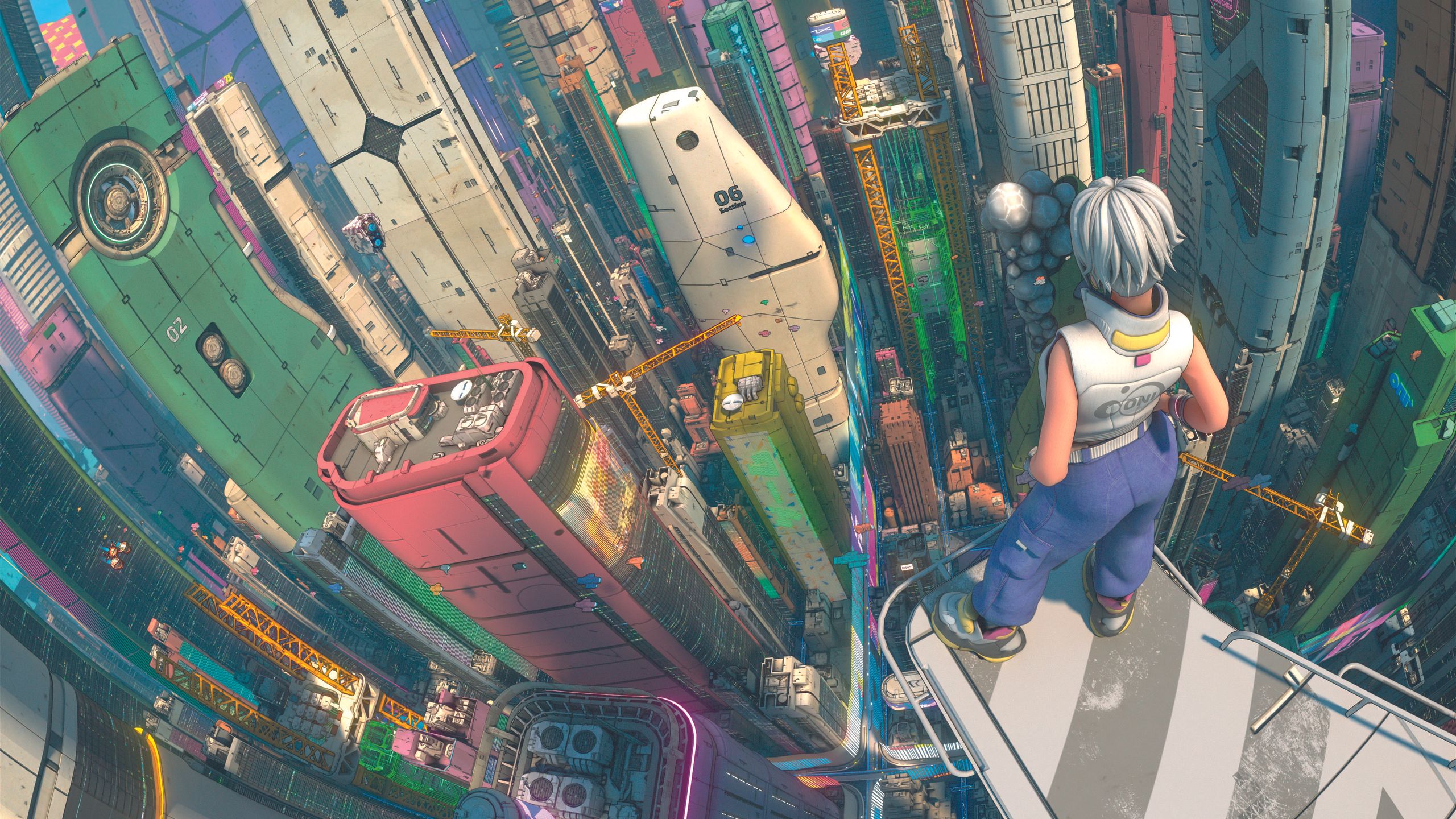
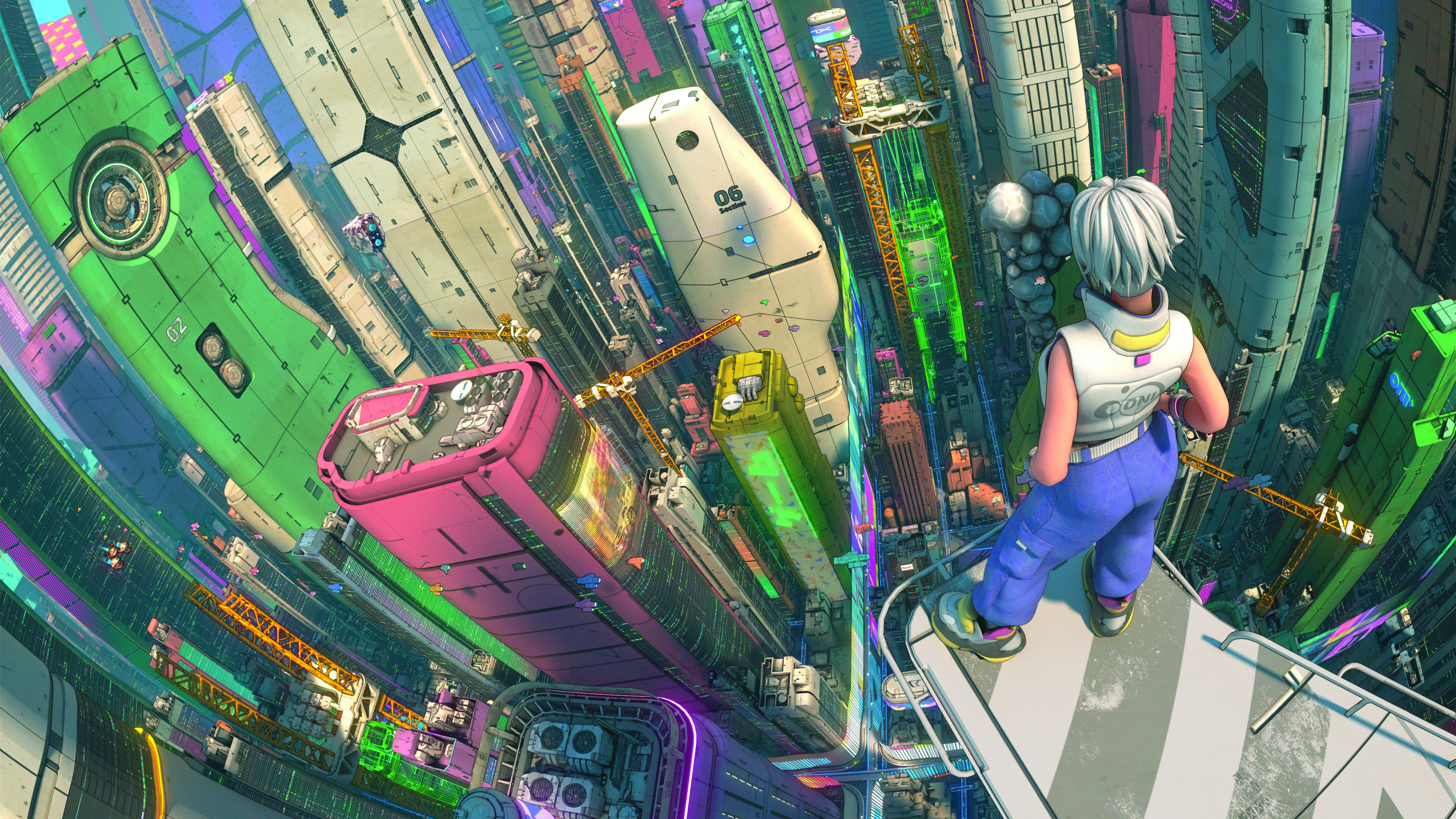
"With Lollipop, I wanted to go beyond my original style by pushing colours and forms to make a ‘futuristic candy city’," Deneuve explains. This artwork is a striking departure from the often gritty, monochromatic tones associated with traditional sci-fi, showcasing a playful yet still monumental aesthetic. It is also revealed to be "part of my project ‘Onimeon’ that I’m building right now," hinting at a larger, interconnected universe he is developing.
"Lollipop" challenges conventional expectations of sci-fi by infusing it with a vibrant, almost saccharine palette. The "pushing colours" implies an intentional use of bright, saturated hues—pinks, blues, yellows, and greens—that evoke the whimsical nature of candy. The "forms" are likely organic, rounded, and perhaps even bulbous, contrasting with the sharp, angular lines often seen in futuristic architecture. Imagine structures resembling twisted lollipops, oversized gumdrops, or spun sugar, yet retaining the imposing scale Deneuve is known for. This "futuristic candy city" might be a utopia of indulgence, a consumerist paradise, or a cleverly disguised dystopia where sweetness masks a deeper unease. The "Onimeon" project suggests that "Lollipop" is not an isolated experiment but a crucial component of a broader narrative, perhaps representing a specific district or epoch within his unfolding world. The piece demonstrates Deneuve’s versatility and willingness to experiment with aesthetics, proving that sci-fi can be both grand and delightfully imaginative.
"Red Howl": A Homage to Cybernetic Grandeur
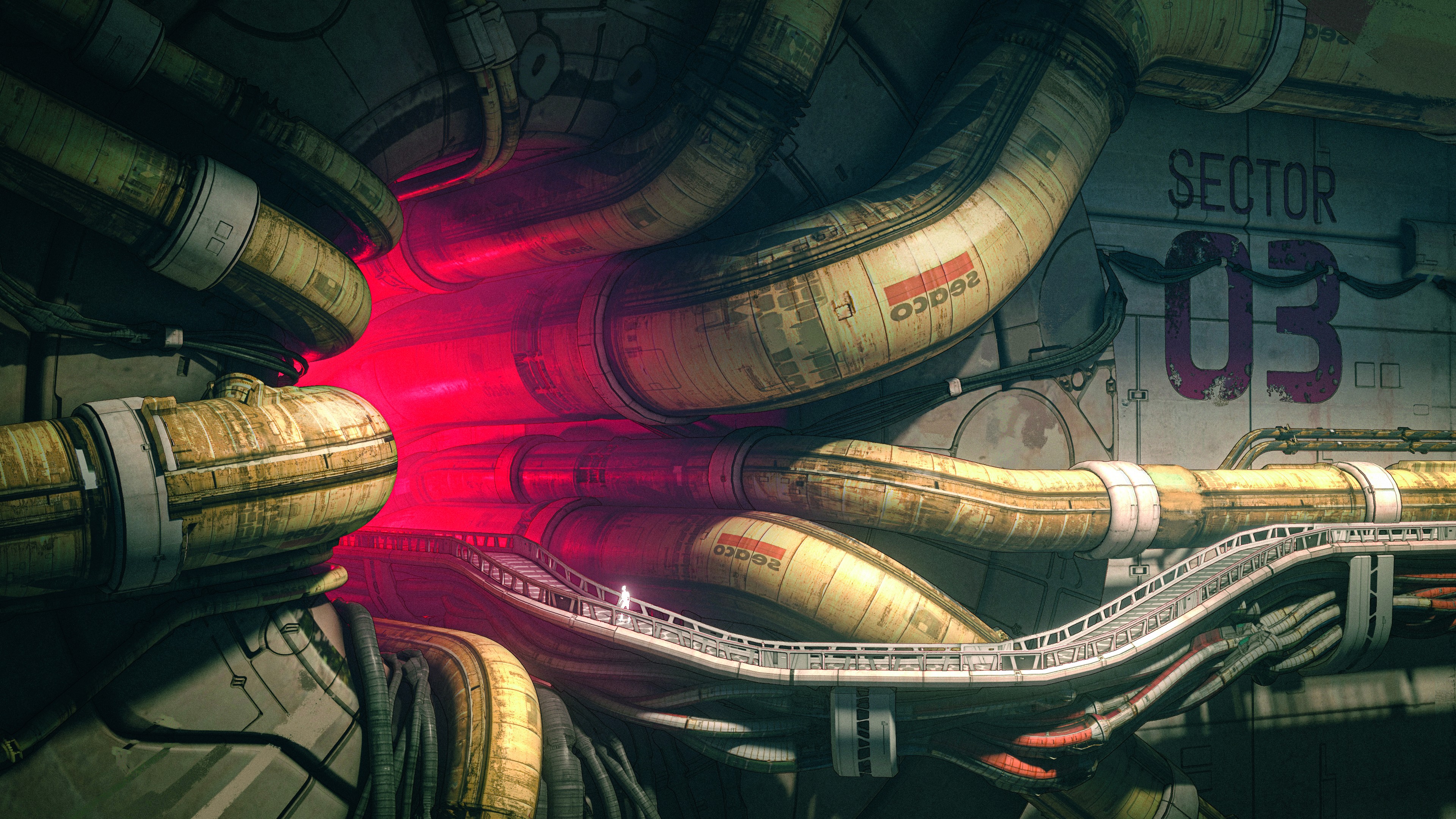
"Red Howl" is explicitly presented as "Tribute artwork to Tsutomu Nihei." This piece serves as a powerful testament to Deneuve’s ability to channel his inspirations while maintaining his unique artistic voice. The influence of Nihei’s dark, industrial, and monumental style is immediately apparent, likely featuring vast, oppressive structures, intricate mechanical details, and a pervasive sense of desolation or overwhelming power. The "Red Howl" in the title suggests a warning, a cry, or perhaps the ominous glow emanating from within the depths of this cybernetic landscape.
Deneuve outlines his "classic 3D pipeline process" for this work: "sketch in Procreate, custom textures in Substance, then compositing in Photoshop." This breakdown offers valuable insight into his workflow. The initial "sketch in Procreate" would involve quick ideation, establishing the composition, key architectural forms, and overall mood. This is where the core tribute elements to Nihei would first take shape. Next, the 3D models (likely created in Blender, though not explicitly stated for this step) would be brought to life with "custom textures in Substance." This step is crucial for achieving Nihei’s signature gritty, metallic, and often decayed aesthetic, applying procedural and hand-painted textures that convey age, material properties, and industrial function. Finally, "compositing in Photoshop" is where the rendered 3D elements are integrated, lighting is fine-tuned, atmospheric effects (like fog or smoke) are added, and the overall color grading is applied to enhance the somber, powerful mood characteristic of Nihei’s work. "Red Howl" is thus a masterclass in homage, demonstrating Deneuve’s technical skill in reinterpreting and celebrating the vision of one of his artistic heroes.
"Azzarax": The Sprawling Tapestry of Multi-Layered Metropolises
"Azzarax" is described by Deneuve as "One of my signature multi-layered cities." This piece exemplifies his mastery of complex urban planning within a digital environment. The statement, "Modelled and rendered in Blender, I had to create a huge library of buildings to populate the city, making sure that it doesn’t feel repetitive," underscores the immense technical and creative effort involved.
The concept of a "multi-layered city" suggests a vertical sprawl, where different strata of the metropolis exist at various elevations, possibly connected by complex transportation networks or representing distinct social or functional zones. Such a design implies a dense, highly developed urban environment, pushing the limits of architectural possibility. The challenge of creating a "huge library of buildings" without repetition is substantial. It requires not just modeling numerous unique structures but also developing a systematic approach to their placement, variation, and integration into the overall cityscape. Deneuve likely employs modular design principles, intelligent instancing, and subtle variations in texture, color, and wear to ensure each section of Azzarax feels distinct yet cohesive. The immense scale of such a city, rendered in Blender, would demand powerful hardware and optimized workflows. "Azzarax" represents the pinnacle of Deneuve’s architectural ambition, showcasing his ability to design, build, and populate a sprawling, believable future metropolis that feels endlessly explorable and rich with implied narratives. It is a testament to his dedication to detail and his profound understanding of how complex structures interact to form a living, breathing digital world.
The Resonance and Reach: Industry Perspectives and Official Responses
While the original article does not provide explicit "official responses" from critics or institutions, Deneuve’s rising profile and the platforms showcasing his work (like Creative Bloq and ImagineFX) serve as indicators of his recognized talent within the digital art community. His unique blend of influences and technical skill garners significant attention, positioning him as a notable figure in contemporary concept art.
Deneuve’s Voice: Artistry and Ambition
Deneuve’s own commentary on his works reveals an artist who is both reflective and ambitious. His desire to "go beyond my original style" with "Lollipop" shows a continuous drive for artistic growth and experimentation, refusing to be confined by a singular aesthetic. The ongoing "Onimeon" project signifies a long-term vision, indicating an artist committed to building extensive, coherent fictional universes rather than just isolated pieces. This dedication to world-building is a hallmark of truly influential concept artists, as it provides a rich tapestry for future works and potential media adaptations.
His precise detailing of his "classic 3D pipeline process" for "Red Howl" speaks to his technical transparency and mastery, offering valuable insights for aspiring artists. It underscores that behind the stunning visuals lies a meticulous, multi-stage workflow, demonstrating that digital art is a craft as much as it is an inspiration. Deneuve’s ambition, evident in the complexity of "Azzarax" and the creation of an extensive building library, points to an artist who embraces technical challenges as opportunities for creative expansion. He is not just executing ideas but actively pushing the boundaries of what can be achieved with digital tools.
Impact on the Digital Art Community
Artists like Marcel Deneuve play a crucial role in shaping the digital art landscape. By showcasing his innovative techniques and unique vision, he inspires countless aspiring artists to explore similar paths and push their own creative boundaries. His work serves as a benchmark for what is possible with accessible software like Blender, demonstrating that high-quality, professional-level art can be created without necessarily relying on proprietary, expensive tools.
Creative Bloq, by featuring Deneuve, actively participates in highlighting emerging and established talent, contributing to the discourse around digital art trends and best practices. Such platforms are vital for artists to gain exposure, connect with peers, and reach a wider audience of enthusiasts and potential collaborators. Deneuve’s presence in publications like ImagineFX further solidifies his standing as a respected professional, contributing to the genre’s continued evolution and popularization. He represents the vanguard of digital artists who are not just creating pretty pictures but architecting entire worlds that challenge our perceptions of future aesthetics and possibilities.
Implications for the Future of Digital Concept Art
Marcel Deneuve’s work is more than just captivating imagery; it holds significant implications for the broader field of digital concept art, illustrating key trends and future directions.
Blurring Lines: Art, Architecture, and Storytelling
Deneuve’s focus on "architectural innovation" within "sci-fi landscapes" blurs the traditional lines between art, architecture, and narrative design. His works aren’t just illustrations; they are conceptual blueprints for potential worlds, serving as inspiration for film, video games, and even real-world speculative architecture. In entertainment industries, concept art is crucial for pre-visualization, helping directors and game designers establish the look and feel of their universes. Deneuve’s ability to craft intricate, believable urban and natural environments makes his work highly valuable in these contexts.
Furthermore, his pieces inherently tell stories. A multi-layered city like "Azzarax" implies social stratification, technological advancement, and perhaps ecological challenges. A "futuristic candy city" suggests themes of consumerism, escapism, or deceptive utopias. This narrative depth elevates his work beyond mere visual spectacle, inviting viewers into a dialogue about the future he envisions. This interdisciplinary approach is increasingly vital in a world where immersive experiences are paramount, making artists like Deneuve key collaborators across various creative industries.
The Power of the Self-Taught Digital Artist
Deneuve’s journey, starting in 2017 and largely self-taught through "books and materials available on the web," underscores a significant shift in how artists develop their skills and careers. The accessibility of powerful digital tools (like Blender, which is free and open-source) combined with a wealth of online tutorials and communities has democratized the art world. Artists no longer require traditional institutional validation to achieve mastery and recognition. This trend empowers individuals from diverse backgrounds to pursue their artistic passions, leading to a richer, more varied creative landscape. Deneuve is a prime example of how dedication, curiosity, and the effective use of digital resources can lead to professional success and artistic excellence. His path serves as an inspiration for many who are charting their own course in the digital realm.
The Evolving Toolkit: Enhancing Creative Horizons
Deneuve’s adept use of a multi-software pipeline (Blender, Photoshop, Procreate, Substance 3D) exemplifies the evolving nature of digital art tools. Each software specializes in a particular aspect of the creative process, and artists are increasingly becoming adept at seamlessly integrating them. This allows for greater efficiency, flexibility, and the ability to achieve highly specialized results. As these tools continue to advance, incorporating more intuitive interfaces, AI-assisted features, and real-time rendering capabilities, the creative horizons for artists like Deneuve will only expand. The ability to iterate quickly, experiment with complex designs, and produce photorealistic renders will continue to accelerate, pushing the boundaries of what a single artist can achieve. Deneuve’s workflow is a blueprint for how future concept artists will operate, leveraging technology to actualize increasingly complex and imaginative visions.
In conclusion, Marcel Deneuve is a formidable talent in the digital concept art sphere, a true architect of tomorrow’s horizons. His work, deeply rooted in the evocative power of Japanese artistic traditions and propelled by a masterful command of contemporary digital tools, presents breathtaking visions of sci-fi landscapes and colossal structures. From the vibrant whimsy of "Lollipop" to the industrial grandeur of "Red Howl" and the intricate sprawl of "Azzarax," Deneuve consistently delivers art that is both technically brilliant and profoundly imaginative. His journey from electronic music to self-taught visual artistry, culminating in his specialization in 3D architectural concepts, serves as an inspiring testament to passion and perseverance in the digital age. As he continues to build worlds with his "Onimeon" project, Marcel Deneuve remains a pivotal figure, shaping the aesthetics of future realities and demonstrating the boundless potential of digital art.
For those inspired by Deneuve’s monumental visions, exploring his work on his official website offers a deeper dive into his crafted universes. Furthermore, the world of digital art is more accessible than ever, with resources like Creative Bloq’s guides to the best digital art software and drawing tablets available to help budding artists embark on their own creative journeys. Subscribe to Creative Bloq’s daily newsletter for the latest inspiration, or access content on the go via the Creative Bloq app for iOS and Android, and never miss an issue of ImagineFX for more insights into the world of digital creativity.
 Evan Lee Salim
  Nana
Nana  Ammar Sabilarrohman