
 By Reynand Wu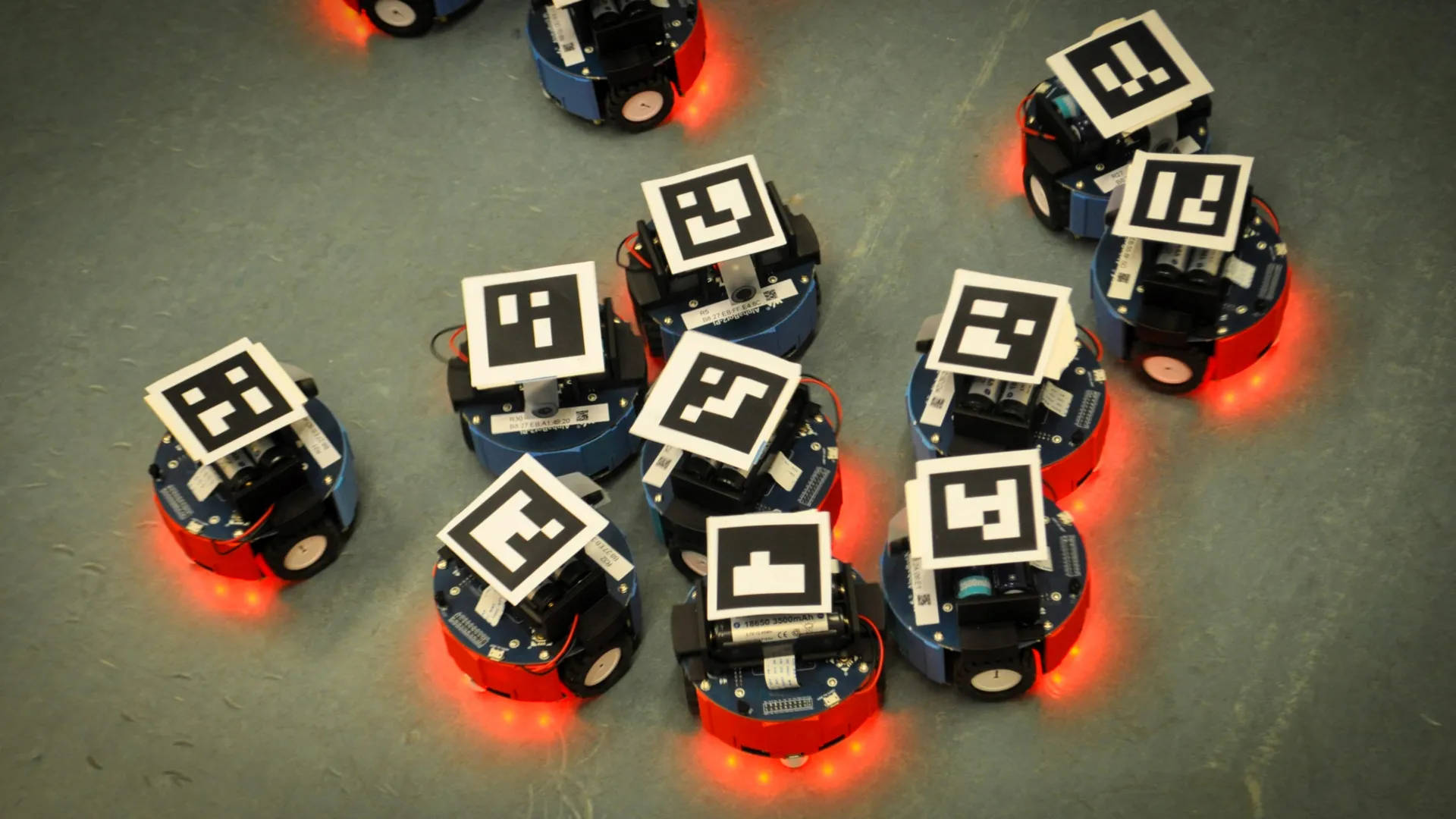
In the high-stakes world of autonomous robotics, bigger is often considered better. Whether the task is deploying a fleet of drones to survey a disaster zone, utilizing swarms of bots to contain an oil spill, or coordinating industrial robots in a bustling fulfillment center, the logic has traditionally been straightforward: more units equal faster results. However, researchers at Harvard University have identified a critical "bottleneck threshold" where this logic collapses. As robotic density increases, the very mechanisms designed to ensure productivity—precision and directness—eventually trigger gridlock.
A groundbreaking study, published in the Proceedings of the National Academy of Sciences, offers a counterintuitive solution to this classic problem: the strategic introduction of "noise," or randomness, into robotic movement. By embracing a degree of unpredictability, robotic swarms can navigate high-density environments more fluidly, effectively bypassing the congestion that would otherwise bring a perfectly ordered system to a standstill.
The Bottleneck Problem: When Precision Becomes a Liability
To understand the scope of the research, one must first visualize the challenge. In a confined space, autonomous agents tasked with completing a set of objectives—moving from point A to point B—typically rely on algorithms designed for the most efficient, straight-line path. When the number of robots is low, this approach is flawless. However, as the number of agents increases, the probability of collisions and path interference rises exponentially.
In these dense environments, robots following rigid, optimal paths inevitably find themselves trapped in "deadlocks." These are localized clusters where agents block one another’s progress, leading to a cascade of stagnation. For engineers, this has long been a frustration: the more intelligence and precision programmed into the robot, the more susceptible the system becomes to these emergent traffic jams.
Chronology of the Discovery: From Theory to Laboratory
The path to this discovery was a multi-disciplinary effort led by Lucy Liu, a Ph.D. student in applied mathematics at the Harvard John A. Paulson School of Engineering and Applied Sciences (SEAS). Under the guidance of Justin Werfel, a senior research fellow at SEAS, and L. Mahadevan, a professor of applied mathematics, organismic and evolutionary biology, and physics, the team embarked on a journey to reconcile the unpredictable nature of dense movement.
Phase 1: Mathematical Modeling
The research began with the premise that dense crowds are notoriously difficult to predict because of the infinite variables involved in individual interaction. Liu and her colleagues chose to strip away the complexity, treating each robot as a "basic unit" capable of adjustable variation in its trajectory. By applying statistical mechanics—a field usually reserved for the study of particles in gas—the researchers found that high levels of randomness actually made the collective behavior of the swarm easier to calculate. By focusing on averages rather than individual paths, they could predict the "goal attainment rate" of the entire system.
Phase 2: Computer Simulations
With the mathematical framework in place, the team built a series of computer simulations. Agents were programmed to navigate a 2D space, constantly receiving new destination coordinates. The team introduced a "noise" parameter:
- Zero Noise: Agents moved in perfectly straight lines, quickly leading to massive, rigid clusters.
- High Noise: Agents wandered erratically, eliminating congestion but suffering from a lack of direction, which drastically lowered the task completion rate.
- The Goldilocks Zone: The researchers discovered a specific middle ground where a controlled amount of wandering allowed agents to "nudge" past one another, maintaining a steady, albeit slightly imperfect, flow of traffic.
Phase 3: Empirical Validation
To bridge the gap between simulation and reality, the Harvard team collaborated with physicist Federico Toschi at the Eindhoven University of Technology in the Netherlands. The team deployed a fleet of small, wheeled robots within a controlled laboratory environment. Using overhead camera tracking and QR codes mounted on the robots, they observed the swarms in real-time. The physical experiments mirrored the simulation data with remarkable precision, confirming that the "Goldilocks Zone" of noise was a robust physical phenomenon, not just a digital artifact.
Supporting Data: Quantifying the "Sweet Spot"
The core finding of the research lies in the relationship between density and efficiency. The team’s equations allow operators to calculate the ideal level of randomness based on the number of robots in a given square footage.
The data suggests that there is a definitive trade-off:
- Collision Frequency vs. Throughput: In a rigid system, collision frequency is low until a threshold is met, at which point it spikes, causing throughput to drop to near zero.
- The Randomness Buffer: By adding noise, the frequency of "hard collisions" is reduced. While robots might bump into one another more often, these interactions are transient, preventing the formation of permanent, system-wide blockages.
- Predictability: Counterintuitively, the study shows that a system with moderate noise is more predictable than a system with zero noise. Because the movement becomes stochastic, it conforms to predictable probability distributions, allowing fleet managers to estimate task completion times with greater accuracy.
Official Responses: Insights from the Lab
The lead researchers view this study as a fundamental shift in how we perceive "intelligence" in swarm robotics.
"This might be counterintuitive, because how could randomness make things easier to work with?" asked Lucy Liu during a press briefing regarding the findings. "But in this case, when you have a lot of randomness, it becomes possible to take averages—average distances, average times, average behaviors. This makes it a lot easier to make predictions."
Professor L. Mahadevan emphasized the broader implications for the natural world. "Understanding how active matter, whether it is a swarm of ants, a herd of animals, or a group of robots, becomes functional and executes tasks in crowded environments using the principles of self-organization, is relevant to many questions in behavioral ecology," he noted. "Our study suggests strategies that might well be much broader than the instantiation we have focused on."
The consensus among the team is that sophisticated, centralized control is not always the answer. Instead, providing agents with simple, locally-applied rules for movement can produce emergent outcomes that are superior to those dictated by complex, top-down commands.
Implications: Beyond the Laboratory Floor
The potential applications for this research extend far beyond the immediate scope of robotics. If we can optimize the movement of machines using these mathematical principles, we can theoretically optimize almost any system characterized by high-density flow.
Urban Planning and Traffic Management
Traffic jams are, in essence, a failure of swarm management. The Harvard study suggests that city streets could benefit from "controlled variability." While human drivers are already somewhat unpredictable, smart infrastructure could introduce subtle nudges—such as dynamic speed limit displays or AI-managed routing that encourages minor deviations—to keep traffic from coalescing into gridlock.
Logistics and Warehouse Automation
The modern fulfillment center is the most immediate beneficiary of this study. As companies like Amazon and Ocado scale up their robotic warehouses, they face the exact "bottleneck" described by the Harvard team. Implementing these "noise-based" movement algorithms could allow companies to increase the density of robots on a warehouse floor without requiring expensive, high-bandwidth communication systems to coordinate every individual turn.
Crowd Dynamics and Safety
The research also provides a lens through which to view human crowd management. In stadiums, subway stations, or during emergency evacuations, the instinct to move in a straight line toward an exit is what leads to dangerous "crushing" behavior. Understanding the "Goldilocks Zone" could lead to better architectural designs that use structural nudges to induce the same beneficial "wandering" in human crowds, preventing the formation of lethal bottlenecks.
Conclusion: The Wisdom of the Wander
The Harvard study serves as a humbling reminder that in complex systems, absolute optimization often leads to absolute failure. By demonstrating that "noise" is not merely a nuisance to be eliminated, but a functional tool for self-organization, the team has opened a new door for robotics and beyond.
As we move toward a future populated by autonomous fleets, the goal may not be to create the most efficient, straight-moving machine, but to create a system that knows exactly how—and when—to wander. The findings published in the Proceedings of the National Academy of Sciences do more than just refine robotic movement; they challenge our fundamental understanding of efficiency, suggesting that the path to progress is rarely a straight line.
Key Takeaways
- The Congestion Threshold: Adding more robots to a limited area eventually leads to diminishing returns due to physical interference and gridlock.
- The Power of Noise: Introducing controlled randomness into robotic movement paths prevents the formation of stable, progress-halting traffic clusters.
- The Goldilocks Zone: There is a mathematical "sweet spot" of randomness that maximizes task completion rates by balancing directness with the ability to navigate around obstacles.
- Self-Organization: Complex, centralized coordination is not always necessary; simple, local movement rules can achieve highly efficient group behavior.
- Broader Impact: These findings have significant potential for application in urban traffic planning, warehouse logistics, and human crowd safety.
Funding for the research was provided by the National Science Foundation Graduate Research Fellowship Program (Grant No. DGE 2140743), the Simons Foundation, and the Henri Seydoux Fund.
 Sagoh
Sagoh  Asro
Asro  Siti Muinah