
 By Laily UPN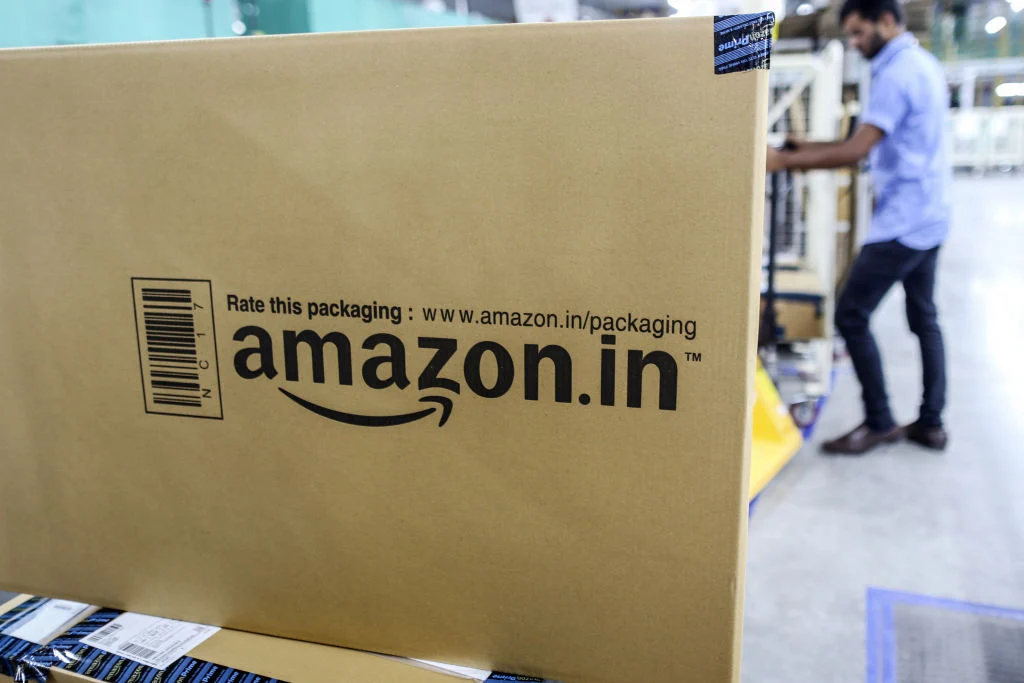
In a significant reinforcement of its commitment to the world’s fastest-growing major economy, Amazon announced on Thursday an additional $13 billion investment aimed at expanding its artificial intelligence and cloud computing infrastructure in India through 2030. This latest capital infusion, finalized following a high-level meeting between Amazon CEO Andy Jassy and Indian Prime Minister Narendra Modi in New Delhi, underscores the company’s aggressive strategy to solidify its foothold in the burgeoning Indian tech ecosystem.
The fresh funding is earmarked primarily for the expansion of Amazon Web Services (AWS) data center capacity in Mumbai and Hyderabad. By scaling its local infrastructure, Amazon aims to cater to the surging demand for AI-ready computing power, a move that places the e-commerce giant at the center of India’s digital transformation.
A Growing Portfolio: The Chronology of Commitment
This announcement marks the third major multi-billion-dollar commitment from Amazon in as many years, highlighting a consistent and deepening relationship between the tech titan and the Indian government. The trajectory of Amazon’s capital expenditure in the region reflects a rapid acceleration in its long-term strategic planning.
The Recent Timeline of Investments:
- June 2023: Following an initial meeting between Andy Jassy and Prime Minister Modi, Amazon pledged $15 billion through 2030, with $12.7 billion specifically designated for AWS infrastructure.
- December 2025: The company announced a further commitment exceeding $35 billion, which raised its total planned spending to $48 billion.
- June 2026: The most recent announcement adds another $13 billion to the tally, cementing India as one of Amazon’s most critical global markets for infrastructure investment.
While Amazon has not provided a granular breakdown of how the cumulative $48 billion will be distributed across its various verticals, industry analysts note that such long-term commitments typically encompass a mix of capital expenditures (CapEx) for data centers and operational expenditures (OpEx) for local talent and software development.
The AI Arms Race: India as the Global Infrastructure Hub
Amazon’s move comes amid a broader, hyper-competitive landscape where global technology behemoths are vying to establish India as a primary node for the computing infrastructure required to power generative AI. The country’s favorable policy environment and a massive pool of technical talent have turned it into the preferred destination for data-intensive projects.
Competitive Landscape
The race to capture the Indian market is intensifying:
- Microsoft: In December 2025, the software giant announced a $17.5 billion investment plan for India through 2029, focusing on cloud services and AI integration.
- Google: In October 2025, Google pledged $15 billion to develop an AI hub and associated data center infrastructure, emphasizing the creation of specialized AI models tailored for the Indian market.
- Global Institutional Capital: Beyond the Big Tech players, India has seen an influx of capital from major institutional players. Australia’s AirTrunk, the Canada Pension Plan Investment Board (CPP Investments), and domestic titans like Reliance Industries and the Adani Group have collectively committed tens of billions to build massive, AI-capable data center parks across the subcontinent.
Policy Incentives: Why India is Winning the Capital Flow
The Indian government, under Prime Minister Modi’s "Digital India" initiative, has been proactive in courting foreign investment. New Delhi has introduced aggressive policy incentives designed to transform the country into a global data hub.
One of the most notable policies is the implementation of significant tax exemptions for foreign cloud providers. Under these new frameworks, service providers are offered tax breaks on services sold to international clients, provided that the underlying workloads are processed within Indian data centers. This effectively lowers the barrier to entry for firms looking to move their global AI workloads to India, creating a virtuous cycle of infrastructure investment and service export.
Beyond the Cloud: Amazon’s Retail and Logistics Expansion
While the spotlight remains on AI and cloud computing, Amazon is simultaneously doubling down on its domestic retail and logistics presence. The company is currently engaged in a fierce battle for the "quick-commerce" market—a segment characterized by delivery times of under 30 minutes—which is currently dominated by local players.
Amazon has detailed plans to roll out more than 20 new fulfillment centers and over 100 last-mile delivery stations in the coming year. Furthermore, the company is rapidly expanding "Amazon Now," its quick-commerce service, targeting a presence in over 300 cities and towns across the country.
This expansion is a defensive and offensive maneuver against fierce competition. Amazon faces intense pressure from:
- Blinkit (owned by Eternal/Zomato)
- Swiggy’s Instamart
- Zepto
- Flipkart (owned by Walmart)
Walmart-backed Flipkart recently announced its own aggressive roadmap, pledging to open 1,500 micro-fulfillment centers by the end of 2026. This escalation in physical infrastructure demonstrates that for Amazon, the Indian market is a two-pronged play: winning the "backend" of the internet through cloud computing and winning the "front-end" of the economy through hyper-local logistics.
Implications for the Indian Economy and Tech Ecosystem
The influx of $48 billion into the Indian economy has profound implications.
Economic Multiplier Effect
For every dollar invested in data center infrastructure, there is a significant "multiplier effect." This includes the creation of high-skilled jobs for data center engineers, AI researchers, and cybersecurity experts, as well as the demand for sustainable energy, given that AI data centers are notoriously power-hungry. The Indian government is already working with these corporations to ensure that this infrastructure is powered by increasingly green energy sources, aligning with the country’s climate goals.
The "AI Sovereign" Goal
By hosting the servers and the intelligence within its borders, India is essentially building "AI Sovereignty." This reduces dependency on foreign infrastructure and ensures that critical data—both public and private—is stored in compliance with local regulations. Furthermore, it allows Indian startups to build, train, and deploy AI models at a fraction of the latency and cost, potentially sparking a new wave of "Made in India" AI innovation.
Risks and Challenges
Despite the optimism, significant challenges remain. The scaling of data centers requires massive, stable, and affordable power grids. While the government is providing incentives, the physical build-out of electricity infrastructure often lags behind digital investment. Furthermore, the rapid rise of quick commerce has raised concerns regarding labor practices and the sustainability of the gig-economy model, which the government is currently evaluating under new labor policy frameworks.
Conclusion
Amazon’s latest $13 billion investment is a clear signal that the company views India not just as a consumer market, but as a critical infrastructure backbone for its global operations. By aligning its investments with the strategic priorities of the Indian government—specifically in AI, cloud computing, and logistics—Amazon has positioned itself as an indispensable partner in India’s journey toward becoming a $5 trillion economy.
As the lines between e-commerce, cloud computing, and artificial intelligence continue to blur, the company’s massive financial commitment provides it with the necessary leverage to navigate a complex regulatory environment and fend off agile local competitors. For India, the presence of these massive global players is a validation of its technological prowess and a necessary catalyst for the next decade of digital growth. Whether these investments will translate into a transformative economic shift remains to be seen, but the sheer scale of the capital being deployed suggests that the foundation for a new digital era is being laid in real-time.
 Sagoh
Sagoh  Iffa Jayyana
  Lina Hope