
 By Suro Senen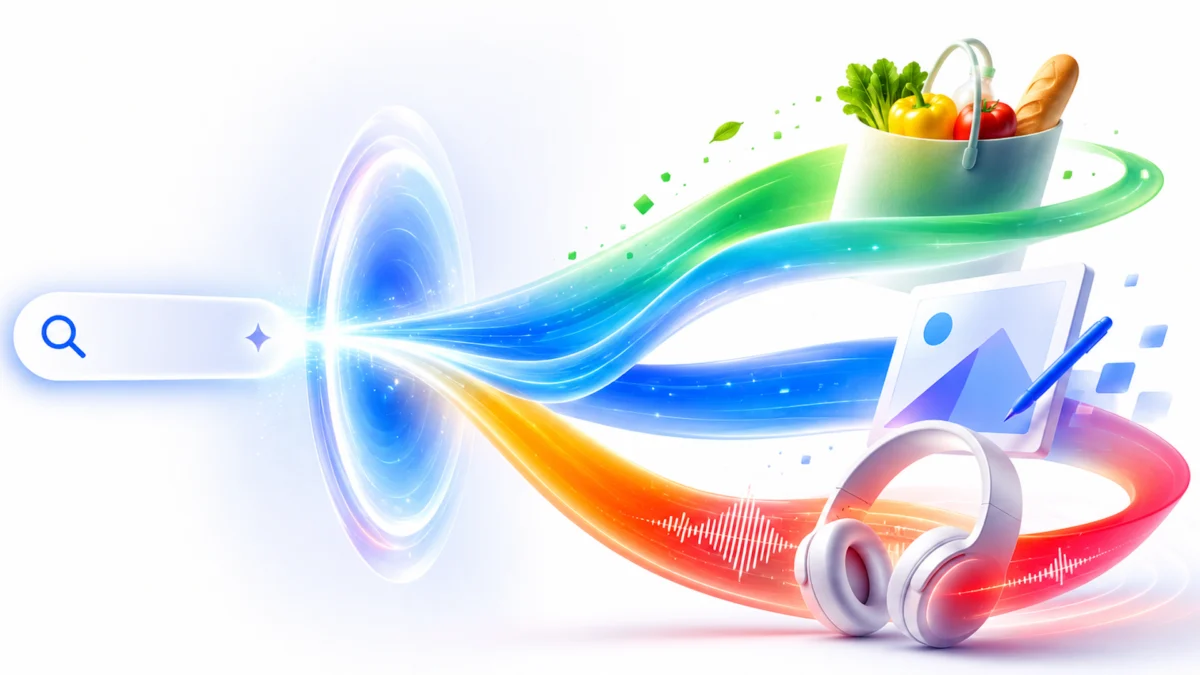
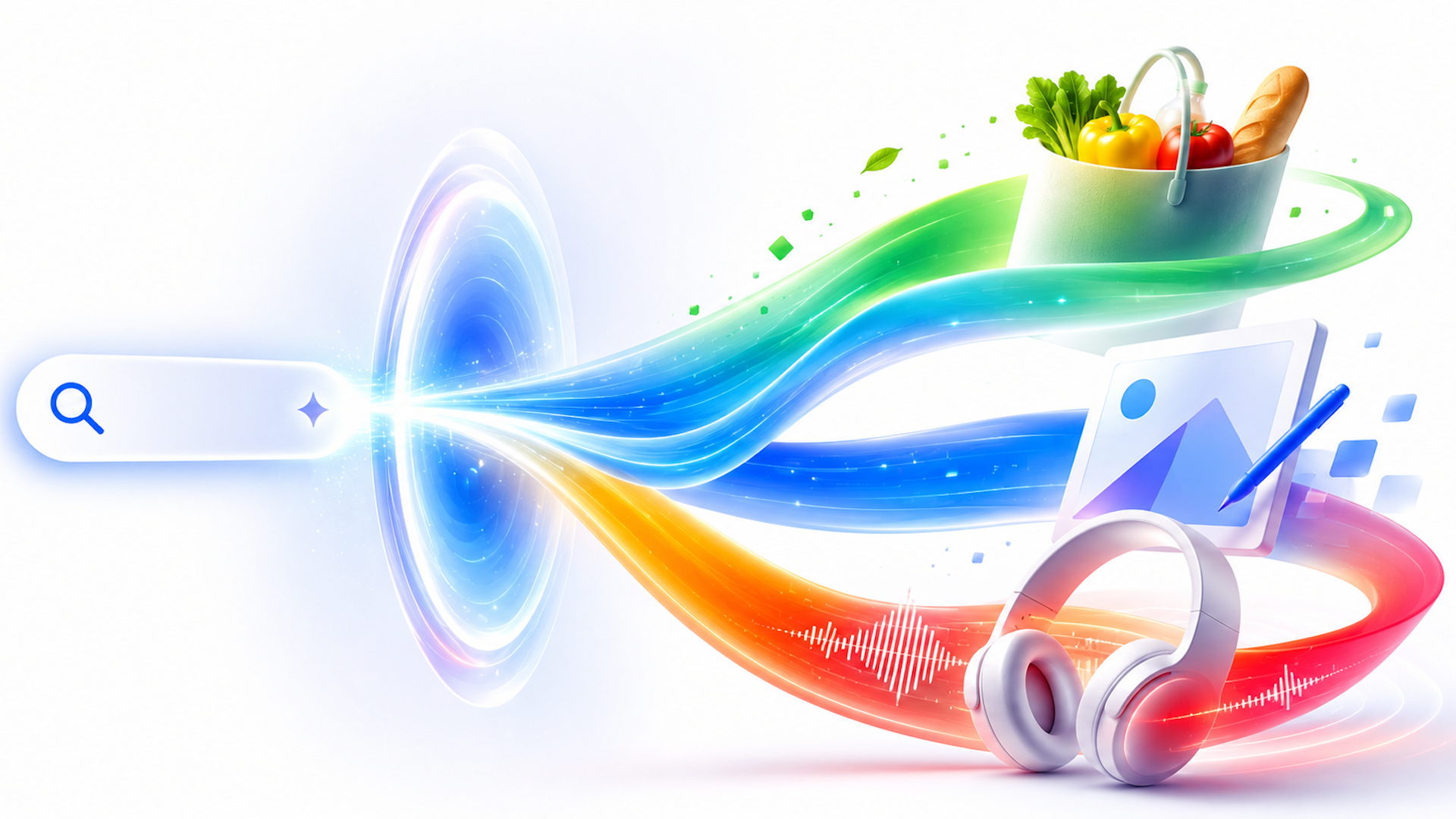
In a bid to transform its search engine from an informational portal into an execution-oriented platform, Google has begun rolling out connected app integrations within its conversational "AI Mode" in Search. The feature, currently launching for users in the United States, allows individuals to securely link third-party services—such as Instacart, Canva, and YouTube Music—directly to Google’s generative AI search interface.
By bridging the gap between planning and execution, Google aims to minimize the friction of navigating between separate applications. However, this strategic shift carries profound implications for digital marketers, SEO professionals, and the broader web ecosystem, as it fundamentally alters how consumers interact with brands online.
Main Facts: How Connected Apps in AI Mode Work
Google’s new integration allows users to authorize third-party applications to interact directly with generative AI responses in real time. Rather than merely receiving a list of links or text-based suggestions, users can now instruct Google’s AI to perform complex actions across external platforms.
[User Query in AI Mode]
       │
       ▼
[Google AI Generates Plan/Response]
       │
       ▼
[Connected App Integration Triggered]
 ┌─────┴──────────────────┬─────────────────────┐
 ▼                        ▼                     ▼
[Instacart]              [Canva]          [YouTube Music]
(Populates cart with    (Generates custom     (Creates playlist
 recipe ingredients)     design templates)     based on mood/theme)
According to Google, the integration is built on a secure connection framework, ensuring that users maintain control over which apps are linked and what data is shared. The initial rollout highlights key partnerships across three distinct verticals:
- E-Commerce and Grocery (Instacart): If a user asks Google’s AI Mode to plan a weekly meal prep or design a specific recipe, the AI can automatically compile the necessary ingredients and populate an Instacart shopping cart. The user can then review and complete the purchase without having to manually search for each item on the grocer’s app.
- Creative and Design (Canva): When users query the AI for design ideas—such as creating a flyer for a local community event or a business card for a new venture—the AI can generate initial concepts and provide a direct hand-off to Canva, loading customized templates that match the user’s prompt.
- Media and Entertainment (YouTube Music): For queries related to music discovery or mood-based curation (e.g., "create a high-energy playlist for a 5k run"), the AI can instantly generate a playlist and save it directly to the user’s connected YouTube Music account.
Google has confirmed that these three integrations represent the first phase of a broader ecosystem rollout, with plans to onboard additional partners in retail, travel, productivity, and lifestyle in the coming months.
Chronology: From Information Retrieval to Transactional Execution
The introduction of connected apps in AI Mode is the latest step in a multi-year evolution of Google’s core product. To understand the significance of this update, it is necessary to trace how Google has progressively shifted its relationship with external websites.
  2012           2023           Early 2024       Late 2024/Present
  ───             ───              ───                  ───
Knowledge      Search Gen.      AI Overviews       Connected Apps
 Graph          Experience       Launched in        in AI Mode
Introduced       (SGE)             Search            Released
1. The Era of Direct Answers (2012–2022)
For its first two decades, Google operated primarily as a directory, routing traffic to external web pages. This model began to shift with the introduction of the Knowledge Graph in 2012 and Featured Snippets shortly after. Google increasingly sought to answer queries directly on the search results page (SERP), giving rise to the phenomenon of "zero-click searches."
2. The Launch of Search Generative Experience (May 2023)
At its I/O conference in May 2023, Google introduced the Search Generative Experience (SGE). Powered by its generative AI models, SGE offered conversational, multi-perspective syntheses of complex topics. At this stage, the AI’s primary function was still synthesis and summarizing, relying on links to web sources to back up its assertions.
3. The Integration of Gemini and AI Overviews (May 2024)
SGE transitioned into "AI Overviews," rolling out to hundreds of millions of users globally. Google positioned AI as a tool to do the "heavy lifting" of searching. However, users still had to click through to external websites to purchase products, sign up for services, or use digital tools.
4. The Action Era: Connected Apps in AI Mode (Present)
With the latest rollout, Google moves beyond synthesis into execution. AI Mode is no longer just a conversational layer; it is an active intermediary. By integrating APIs from services like Instacart and Canva, Google is transitioning from a search engine into an "action engine," positioning itself as the primary operating system for online tasks.
Supporting Data: The Rise of Zero-Click Searches and the AI Shift
The integration of connected apps addresses a critical challenge for Google: maintaining user engagement in an era where younger demographics increasingly turn to vertical platforms like TikTok, Amazon, and ChatGPT to find information and take action.
Industry data highlights the urgency behind Google’s shift toward an execution-focused search experience:
- The Dominance of Zero-Click Searches: Research from search analytics firms, including Semrush, indicates that a substantial portion of Google desktop and mobile searches end without a user clicking through to an external website. By embedding transactional capabilities directly into AI Mode, Google is capitalizing on this behavior, turning zero-click searches into monetizable, high-convenience interactions.
- Declines in Organic Search Visibility: According to projections by Gartner, organic search engine traffic for brands is expected to drop by 25% by 2026, driven by the rapid adoption of GenAI search engines and conversational agents.
- The Rise of Retail Media Networks: Platforms like Instacart have built highly profitable advertising ecosystems by capturing users at the exact moment of purchase intent. By partnering with Instacart, Google retains a stake in this high-value transactional loop, preventing users from bypassing Search entirely to go straight to retail apps.
Official Responses and Strategic Positioning
In its official announcement, Google emphasized that the update is designed to simplify complex digital workflows.
"We’re constantly looking for ways to make Search more helpful, particularly when you’re looking to get things done," Google stated in its product blog. "By connecting your favorite apps directly to AI Mode, we’re reducing the steps between discovering an idea and making it happen. Whether you’re planning dinner or designing a flyer, the transition from inspiration to action is now seamless."
Google also addressed privacy concerns, which are top-of-mind for users linking personal accounts to an AI engine. The company clarified that integrations are entirely opt-in:
"Your data security is our priority. Users have full control over which apps they connect to Search, and they can manage or revoke these permissions at any time through their Google Account settings. Information is shared with partner apps only when a user explicitly requests an action to be taken."
Industry analysts view the move as a defensive play against standalone AI agents and specialized platforms.
"Google is realizing that search is no longer just about finding links; it’s about task completion," said Danny Goodwin, Editorial Director of Search Engine Land. "If a user has to leave Google to buy ingredients or edit a template, Google loses eyes and data. By keeping the user within the AI Mode ecosystem, Google secures its role as the ultimate digital gateway."
Implications: The Reshaping of SEO, Brand Strategy, and Consumer Behavior
The rollout of connected apps in AI Mode introduces several profound shifts that will force businesses to reevaluate their digital strategies.
| Stakeholder | Primary Challenge | Strategic Opportunity |
|---|---|---|
| SEO & Marketers | Loss of direct website referral traffic. | Optimizing content for API discovery and AI feed inclusion. |
| E-Commerce Brands | Disintermediation of the brand’s own website. | Prioritizing distribution through major aggregate platforms (e.g., Instacart). |
| Web Publishers | Decline in informational search queries (recipes, guides). | Focusing on original, high-authority expert content and direct-to-consumer channels. |
1. The Collapse of the Traditional Marketing Funnel
Historically, the consumer journey followed a linear path: awareness (via search), consideration (visiting multiple blogs/websites), and conversion (on a brand’s e-commerce site). Connected apps collapse this funnel into a single conversational turn.
For instance, a user planning a dinner party will no longer visit three different food blogs, compare ingredient lists, and then navigate to a supermarket site. The selection, curation, and cart-building happen simultaneously inside Google. Brands that rely on middle-funnel blog content to capture leads may find their organic touchpoints drastically reduced.
2. The Rise of "API Optimization" Over Traditional SEO
As Google relies on direct integrations with platforms like Instacart and Canva, the definition of Search Engine Optimization is changing. To remain visible, brands may need to optimize how their products and services are cataloged within these third-party partner apps.
For a consumer packaged goods (CPG) brand, ranking #1 on Google for "organic pasta" becomes less important than ensuring that their product is the default or recommended choice when Instacart’s API populates a user’s cart via AI Mode.
3. Increased Dependency on Major Platforms
This update favors large aggregators that have the technical infrastructure to support deep API integrations with Google. Small and medium-sized e-commerce sites may find themselves locked out of these direct-action loops, forcing them to sell through dominant intermediaries like Instacart to maintain visibility. This could lead to a consolidated web ecosystem where a handful of super-apps control the majority of consumer transactions.
4. Technical and Privacy Considerations for Brands
For enterprises looking to become Google integration partners, the technical bar will be high. Brands must ensure their APIs are highly responsive, secure, and capable of interpreting the structured data payloads sent by Google’s generative models. Additionally, companies must navigate the complexities of user consent, data privacy regulations (such as GDPR and CCPA), and cross-platform tracking in a post-cookie landscape.
Looking Ahead
Google’s rollout of connected apps in AI Mode marks a critical milestone in the evolution of the web. By transforming search results into actionable widgets, Google is redefining what it means to browse the internet. While this promises unprecedented convenience for users, it poses a stark challenge to the open web’s traffic model.
As Google continues to onboard more partners, businesses must adapt by diversifying their traffic sources, optimizing for AI-driven APIs, and building stronger, direct relationships with their audiences to survive in a zero-click, action-oriented digital economy.
 Jia Lissa
  Nana Muazin
  Layla Zulfa