
 By Sagoh
In the hyper-competitive landscape of modern e-commerce, the standard playbook for email marketing is reaching a point of diminishing returns. For years, the industry has been obsessed with a singular, narrow metric: conversion. How do we turn a lead into a sale? How do we optimize the checkout flow? How do we lower the cost of acquisition? While these are essential questions for any business to ask, they are fundamentally incomplete.
The brands that achieve lasting, generational success are not merely those with the most sophisticated automated funnels or the most aggressive promotional calendars. They are the brands that have successfully evolved their email strategy from a broadcast channel for sales into a two-way medium for community building. They are turning subscribers into brand advocates who recommend products without being asked, defend the brand against cheaper competitors, and engage with the business on a human level.
The Paradigm Shift: List vs. Community
To understand the difference between a list and a community, one must look at the psychological tether between the brand and the individual. A "list" is a digital repository—a collection of email addresses gathered through lead magnets, pop-ups, and transaction histories. It is a static asset.
A "community," conversely, is a group of people who share a sense of belonging and a collective investment in the brand’s mission. The gap between the two is not a matter of software or A/B testing; it is a matter of philosophy.
Most e-commerce programs are structured as a series of transactional milestones: the welcome email, the browse abandonment nudge, the cart recovery sequence, and the post-purchase upsell. While this infrastructure is necessary to maintain revenue, relying on it exclusively leaves the most durable aspect of email’s potential untouched. Brands that win today treat the inbox as a relationship channel first and a revenue channel second. They understand that by nurturing the relationship, they make the revenue not just possible, but inevitable and repeatable.
Anatomy of Connection: Strategies for Insider Access
The most effective way to foster a sense of community is to dissolve the "us vs. them" barrier that exists between a company and its customers. When subscribers feel like insiders, they move from being passive consumers to active participants.
The Power of Transparency
Authenticity has become a buzzword, but in the context of email marketing, it has a specific, actionable definition: sharing the process. Instead of simply announcing a product launch, brands should pull back the curtain. Why was this product made? What specific pain points were the design team struggling to solve? What were the failed prototypes that preceded this final version?
When a brand shares the "why" and the "how," they invite the subscriber into the journey. This creates a sense of shared investment. If a customer understands the struggle behind the creation of a physical product, they are far more likely to feel a sense of ownership over its success.
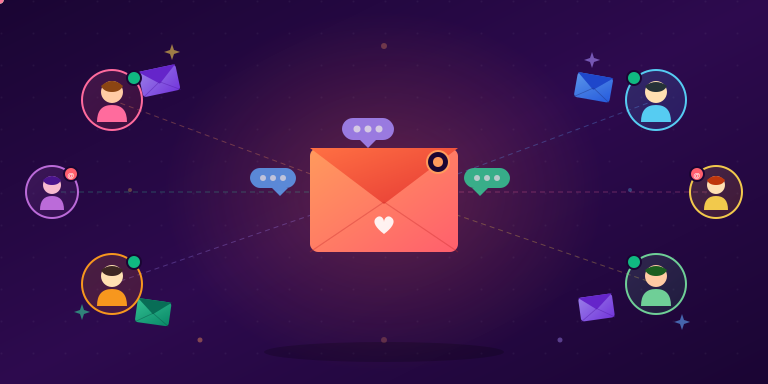
Founder-Led Communication
In an age of AI-generated copy and sterile corporate newsletters, the human voice is a competitive advantage. Some of the most successful e-commerce brands have pivoted toward founder-led emails—plain text, no elaborate graphic design, no glossy product carousels. These emails read like a direct message from a friend. They are personal, opinionated, and vulnerable. If you haven’t experimented with a "Founder’s Note" format, you are ignoring one of the most effective ways to build trust in a digital space.
The Architecture of Two-Way Dialogue
The traditional email model is a monologue: the brand speaks, and the customer consumes. A community, by definition, requires a dialogue.
The Art of the Reply
The most effective way to spark a conversation is to ask a direct, non-transactional question. This doesn’t mean deploying a cumbersome, multi-page survey that feels like a chore. It means ending an email with a genuine question: "What is the one thing you’re still trying to figure out regarding [niche topic]?" or "What should we build next?"
When a reader replies, the burden of effort shifts to the brand. If a founder or a team member replies to that email with a thoughtful, non-automated response, they forge a bond that is rarely broken. While this is difficult to scale to an audience of 100,000, for most growing brands, even a dozen genuine conversations per week can change the entire trajectory of brand loyalty.
Community Spotlights
For brands selling tools, lifestyle products, or hobbyist gear, social proof is the lifeblood of the community. Featuring real customers in your newsletters—not just as stock photos, but as individuals with stories—signals to your list that you are paying attention. It validates the user’s choice to support your brand and encourages others to share their own experiences.
Building a Recognizable Brand Voice
Identity is the glue that holds a community together. If your brand’s emails could be interchanged with a competitor’s by simply swapping the logo, you have failed to build a brand identity.
To build a recognizable voice, a brand must be willing to take a stance. What does your company believe about your industry? What are the common practices in your sector that you actively reject? What are the values that guide your decisions when no one is watching?
When a brand’s values are consistently woven into the fabric of their communication, they attract "true fans." These are the people who stay because they feel they know the brand. They trust the brand’s perspective as much as they trust its products.
Measuring Success Beyond the Click-Through Rate
Community-building is a long-term play, but that does not mean it cannot be measured. While traditional KPIs like conversion rates and revenue-per-email remain vital, they are "lagging" indicators. To measure community health, you must look at "leading" indicators:
- Reply Rate: This is the ultimate metric for engagement. If nobody is writing back, your brand is effectively shouting into the void. A healthy reply rate indicates that your audience feels the "door" is open.
- Forward Rate: When a subscriber forwards your email to a friend, they are providing a personal endorsement. It is the digital equivalent of a word-of-mouth referral, which is the highest form of social proof.
- Referral-Driven Growth: If you ask new subscribers how they found you and a significant portion cites "a friend," you have successfully turned your email list into a growth engine.
- Unsubscribe Patterns: It is important to distinguish between "noise" unsubscribes and "intent" unsubscribes. A spike in unsubscribes after a purely promotional email is a warning; a low, steady unsubscribe rate during content-heavy, personality-driven emails is a sign that your brand voice is resonating with your core audience.
The Implications of the Community-First Model
Moving toward a community-first email strategy requires a fundamental shift in resources. It demands that founders and marketers stop viewing the "unsubscribe" button as the enemy and start viewing "meaningful interaction" as the ultimate objective.
The implications are profound. A community-led brand is insulated from the volatility of ad platforms like Meta or Google. When algorithm changes suppress reach or ad costs skyrocket, the community-led brand remains stable because it has a direct line to its audience. It has built a moat of trust that competitors cannot bridge with a higher ad budget.
Conclusion: Starting Small, Scaling Intentionally
Building a community does not require a massive audience or a multi-person marketing department. It requires a commitment to consistency, a willingness to be human, and the courage to treat subscribers as participants rather than targets.
Infrastructure plays a role here. Tools like Omnisend allow brands to balance the "business" side of things—the automated flows that drive revenue—with the "community" side. By utilizing segmentation to ensure the right people get the right message, and by leveraging analytics to understand what keeps an audience engaged, brands can build a sustainable, long-term asset.
The most successful businesses of the next decade will not be those that have the loudest megaphone; they will be those that have the deepest relationships. The inbox is the most private, intimate, and distraction-free space on the internet. Treat it with the respect it deserves, and your subscribers will reward you with their loyalty, their advocacy, and their sustained business.
For those looking to transition to this model, utilizing tools that prioritize user data and segmentation is the first step toward building a brand that customers actually look forward to hearing from.
 Dwi Wanna
  rifanmuazin
  Asep Darmawan