
 By Siti Muinah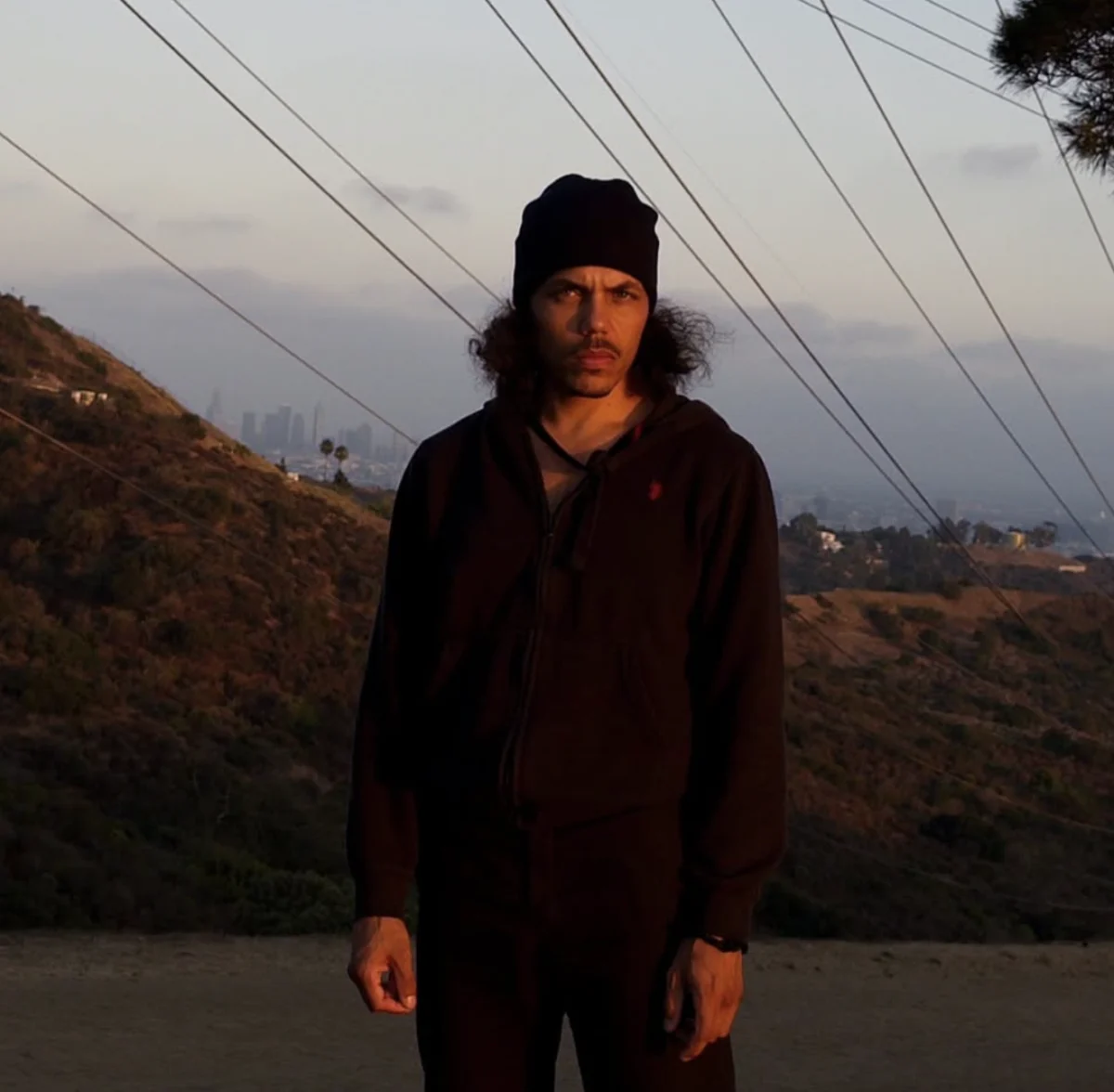
For years, the discourse surrounding generative artificial intelligence in music has been dominated by a binary: the polished, often sterile output of corporate tech firms versus the existential dread of human creators fearing for their livelihoods. Most AI-generated music, particularly that produced by platforms like Suno, is frequently dismissed as "slop"—a homogenous, algorithmic sludge that lacks the friction, intention, and soul that define great art.
Yet, against this backdrop of skepticism, the experimental artist 1010Benja has emerged as an unlikely provocateur. With his latest EP, Time Has Nothing To Do With What You Choose…, Benja has forced a confrontation between high-art sensibilities and the raw, uncanniness of machine learning. His track "Semiramis’ Dream" is not just another song; it is a case study in how a struggling artist can subvert, rather than surrender to, the tools of automation.
The Anatomy of an AI Collaboration
To understand the friction behind "Semiramis’ Dream," one must first move past the superficial assumption that Benja simply typed a prompt into a text box and waited for a masterpiece to emerge. The process, as described by the artist in an interview with the Hearing Things newsletter, is laborious, iterative, and deeply rooted in traditional production techniques.
The composition began with a beat crafted by collaborator Patrick Holder. Benja recorded his own vocals—the heartbeat of the track—and then began a "ping-pong" workflow with the AI. He fed the raw elements into Suno, curated the resulting fragments, brought them into Ableton for meticulous human editing, and then fed those refined layers back into the generator. This cycle was repeated hundreds of times.
This is not the automation of creativity; it is a digital form of collage, or perhaps more accurately, a feedback loop. By treating the AI not as a generator of finished goods, but as a textural synthesizer, Benja has managed to mask the "dead giveaways"—the metallic warbling and rhythmic ambiguity that usually identify AI-generated audio.
Chronology: From ‘Ten Total’ to the Machine Age
To contextualize this shift, one must look at Benja’s recent trajectory. In 2024, the artist garnered critical acclaim, including a "Best New Music" designation from Pitchfork for his project Ten Total. That record showcased his capacity for raw, emotive, and highly human-centric songwriting. It established him as a rising star in the alt-pop firmament.
However, the leap to Time Has Nothing To Do With What You Choose… represents a pivot. While the subsequent tracks on the EP have been criticized for failing to reach the heights of his previous work, "Semiramis’ Dream" stands as an infectious, genre-defying opener. It utilizes a frantic jungle beat and hyper-processed vocals that lean into the "uncanny valley" rather than trying to hide from it. In a modern pop landscape where hyper-pitch correction and artificial vocal artifacts are already standard, Benja’s integration of AI feels less like a cheat code and more like an aesthetic choice—a way to weaponize the artificiality of the medium to serve his specific, frenetic vision.
The Economic Reality of the Struggling Artist
One of the most compelling aspects of Benja’s defense of his process is the brutal economic reality he cites. In the age of streaming, where the barrier to entry is low but the barrier to profitability is nearly insurmountable, many artists are forced to reckon with the high costs of production.
"The only reason I’m using gen at all is because my visions are currently far beyond my means," Benja stated. When confronted with the "purity" argument—that he should hire real musicians for things like children’s choirs—his response is biting and visceral: "No, I hired a professional children’s choir. What are we talking about? I haven’t paid rent last month, and I won’t pay rent this month."
This brings the debate into a sharper, more uncomfortable focus. For many artists, the "AI debate" is an abstract, ethical luxury. For an artist who has experienced periods of homelessness, AI represents a set of tools that allows for a maximalist sonic palette that would otherwise require a budget he does not possess.
Official Responses and Ethical Baggage
Benja is not a technophile masquerading as a starving artist. He is refreshingly transparent—even nihilistic—about the ethical implications of the tools he employs. He acknowledges the environmental cost of massive GPU farms and the exploitative nature of large-language model training. Yet, he refuses to play the role of the moral gatekeeper.
"The good guy doesn’t win this one," he admits, characterizing the rise of generative AI as an inevitability that cannot be "put back in the bottle." By wearing his reliance on these tools on his sleeve—even allowing his music to be tagged as "AI-generated" on platforms like Deezer—he removes the element of deception. He is not trying to pass off a computer’s output as a human miracle; he is documenting a partnership between a man and a machine in a world where both are struggling for survival.
Implications for the Future of Music
The success of "Semiramis’ Dream" poses a significant question for the industry: Can AI ever be more than a "slop engine"?
Most generative music fails because it attempts to mimic the status quo—it seeks to create "average" music for "average" listeners. Benja succeeds because he uses the tool to achieve an aesthetic that is not average. He utilizes the AI to create layers of chaos that would be tedious to manually build in a DAW, then exerts total control over the structure and the emotional core of the song.
The Role of Intent
The primary differentiator between "slop" and art in the age of AI remains intent.
- AI Slop: Characterized by passive consumption, generic prompts, and a lack of editorial oversight. The goal is quantity and background utility.
- AI-Assisted Artistry: Characterized by active, iterative editing, the integration of original human performances, and a clear, subjective vision. The goal is the manifestation of an idea that would otherwise remain unrealized.
Critics have noted that sonically, there is little in "Semiramis’ Dream" that couldn’t be achieved with a massive budget, a full studio team, and infinite time. But for an artist living on the edge of poverty, time is not an infinite resource. The implication is that for independent artists, AI may become a necessary leveling agent, allowing them to compete in a saturated market where production value is often mistaken for creative value.
Conclusion: A Skeptical Respect
While the debate over the ethics of generative AI is far from resolved, 1010Benja’s experiment offers a middle path. He does not demand that we embrace AI as the future of humanity, nor does he hide his usage behind a curtain of manufactured perfection.
As an artist, his responsibility is to his vision. If that vision requires the assistance of a silicon brain to simulate a choir he cannot afford to hire, he has chosen to use it, provided he remains the final arbiter of the sound. This does not mean the listener must like it, nor does it mean the broader concerns about AI displacing human musicians should be ignored.
Ultimately, 1010Benja has proven that the tool is secondary to the hand that wields it. He has not "converted" the skeptics, but he has demonstrated that there is a difference between being replaced by a machine and collaborating with one. In the hands of a true provocateur, even the most controversial technology can be bent to the service of human expression. The "slop" might be inevitable, but as Benja shows, so is the ingenuity of the artist who refuses to be limited by their circumstances.
 Raul Delapena Setiawan
  Asro
Asro 