
 By Reynand Wu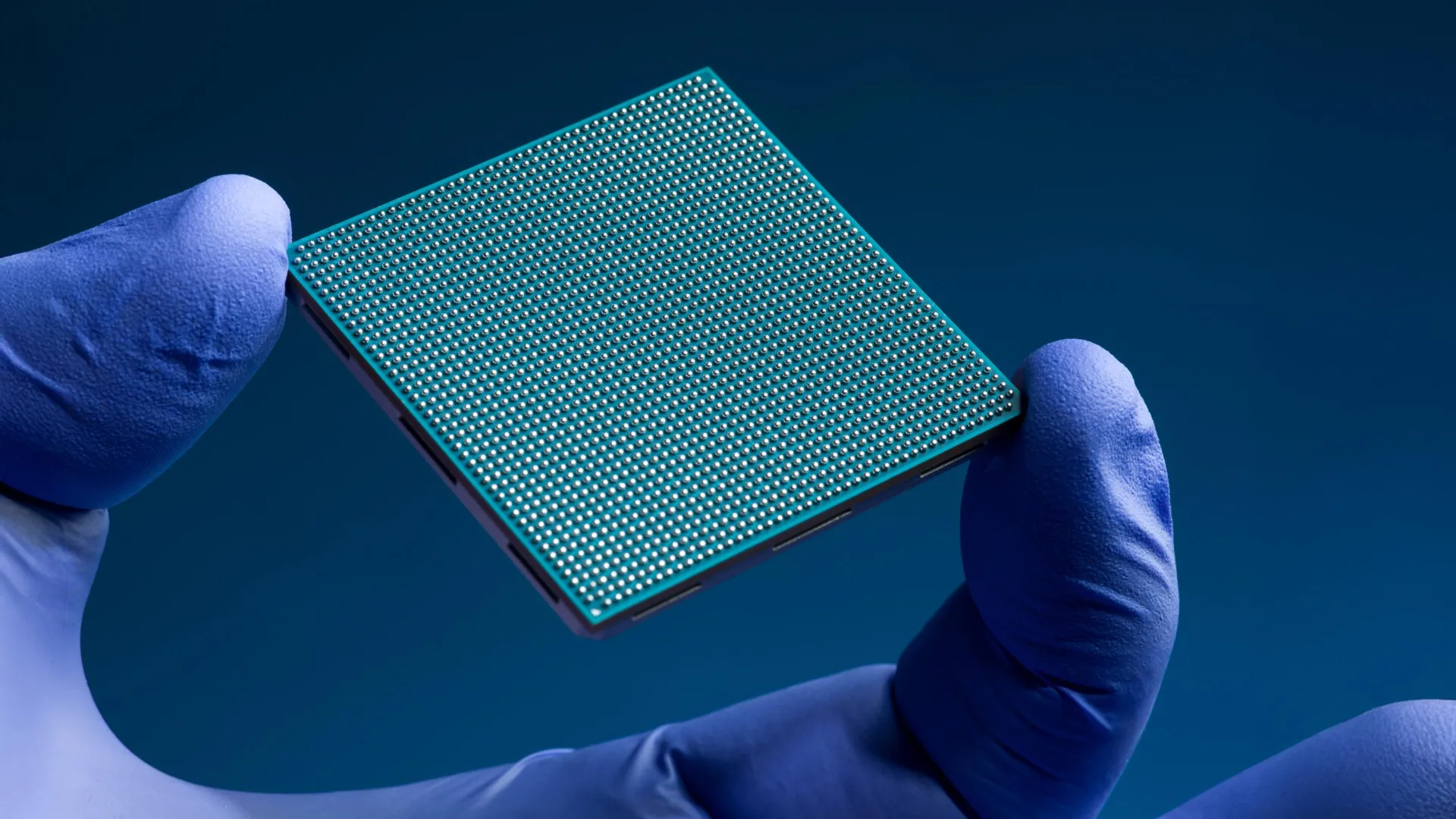
For decades, the human exploration of space has been constrained by a paradoxical limitation: while we possess the technology to traverse the solar system, the "brains" of our spacecraft are often relics of the late 20th century. Because the harsh environment of space—riddled with high-energy radiation and extreme temperature fluctuations—can destroy standard commercial electronics, NASA has long relied on older, ultra-durable processors. These chips are reliable, but they are painfully slow by modern standards.
That is now changing. Through the High Performance Spaceflight Computing (HPSC) project, NASA is ushering in a new era of interstellar intelligence. By partnering with the private sector, the agency is developing a radiation-hardened, multicore system-on-a-chip (SoC) that promises to be up to 100 times more powerful than current flight computers, with early testing indicating performance gains as high as 500 times current standards.
Main Facts: A Leap in Computational Architecture
The HPSC project is not merely an incremental upgrade; it represents a fundamental shift in how spacecraft process information. At the heart of this initiative is a new, radiation-hardened processor designed to withstand the unforgiving vacuum of space while delivering the computational throughput necessary for modern AI and real-time data analysis.
What is a System-on-a-Chip (SoC)?
The core of this innovation is its "system-on-a-chip" architecture. Unlike traditional computer setups that spread components across a motherboard, an SoC integrates central processing units (CPUs), computational offloads, advanced networking, memory, and input/output interfaces into a single, compact unit. This integration reduces weight, lowers power consumption, and minimizes the failure points—all critical factors for missions where every gram of payload and every watt of power is accounted for.
Breaking the "Safe Mode" Cycle
One of the primary hazards for spacecraft is the constant bombardment of charged particles from the Sun and cosmic rays. These particles can cause "bit flips" in memory, which often force spacecraft into "safe mode." In this state, the vehicle shuts down nonessential systems to protect itself, waiting for ground control to intervene. The new HPSC processor is designed to be fault-tolerant, allowing it to detect and rectify errors autonomously without needing to halt mission-critical operations.
Chronology: The Road to the "Hello Universe" Milestone
The journey toward this next-generation processor has been a methodical, multi-year endeavor involving rigorous collaboration between government engineers and private industry.
- 2022: NASA’s Jet Propulsion Laboratory (JPL) officially selects Microchip Technology Inc., based in Chandler, Arizona, as its commercial partner. The partnership is structured so that Microchip funds its own research and development, aligning commercial innovation with NASA’s specialized requirements.
- February 2024: After successful development, the first prototype chips arrive at JPL for intense qualification testing. The team marks this momentous occasion with a symbolic nod to computer history, sending a test email titled "Hello Universe."
- Spring/Summer 2024: A comprehensive, multi-month testing campaign begins. Engineers subject the chips to "the wringer"—a gauntlet of thermal cycling, vibration, shock, and, most importantly, high-intensity radiation exposure.
- Current Status: Early results have exceeded expectations. The processor is performing as intended, demonstrating computational speeds roughly 500 times greater than the radiation-hardened legacy chips currently in use.
Supporting Data: Testing the Limits of Hardware
The rigor of the testing phase at JPL cannot be overstated. To ensure these chips can survive a journey to Mars or a landing on a moon of Jupiter, NASA engineers are simulating conditions that would cause standard consumer electronics to fail in seconds.
The "Wringer" Protocol
The testing process is categorized into three primary pillars:
- Environmental Stress Testing: Using thermal vacuum chambers, the chips are subjected to rapid, extreme temperature swings, simulating the transition from the scorching sunlit side of a planet to the freezing shadows of its dark side.
- Radiation Exposure: Using high-energy particle accelerators, engineers bombard the silicon to ensure the fault-tolerance mechanisms effectively catch and correct data errors induced by ionizing radiation.
- Functional Mission Scenarios: This is the most complex phase. Engineers are running high-fidelity simulations of planetary landings. Landing a rover on a distant planet requires processing massive volumes of data from cameras, LIDAR, and radar in milliseconds. The HPSC processor is being tasked with these power-intensive calculations to prove it can handle the "edge" cases of autonomous navigation.
Official Responses: A Triumph of Collaboration
The success of the HPSC project is viewed by agency leadership as a landmark example of how public-private partnerships can solve intractable technical challenges.
Eugene Schwanbeck, program element manager in NASA’s Game Changing Development (GCD) program at Langley Research Center, emphasized the versatility of the new system. "Building on the legacy of previous space processors, this new multicore system is fault-tolerant, flexible, and extremely high-performing," Schwanbeck stated. "NASA’s commitment to advancing spaceflight computing is a triumph of technical achievement and collaboration."
Jim Butler, the High Performance Space Computing project manager at JPL, underscored the excitement within the engineering teams. Regarding the simulated landing tests, Butler noted, "To simulate real-world performance, we are using high-fidelity landing scenarios from real NASA missions that would typically require power-intensive hardware to process huge volumes of landing-sensor data. This is an exciting time for us to be working on hardware that will enable NASA’s next giant leaps."
Implications: The Future of Autonomous Space Exploration
The introduction of the HPSC processor will fundamentally alter the mission profile of future spacecraft. Currently, most deep-space exploration is "scripted"—spacecraft follow commands uploaded from Earth hours or days in advance. With the HPSC, this paradigm shifts toward true autonomy.
Artificial Intelligence in the Void
With the processing power provided by this chip, spacecraft will be able to run onboard artificial intelligence algorithms. This allows for:
- Real-time Obstacle Avoidance: A rover on Mars or a probe in an asteroid field could identify and dodge hazards in milliseconds, rather than waiting for instructions to travel across millions of miles of space.
- Data Triage: Instead of sending every byte of data back to Earth, the spacecraft can perform complex scientific analysis locally, transmitting only the most relevant findings.
- Autonomous Maintenance: The processor’s ability to manage complex internal systems means the spacecraft can perform its own health monitoring, identifying and bypassing degraded hardware components without human intervention.
Beyond NASA: Commercial and Terrestrial Benefits
The impact of this technology will extend far beyond NASA’s fleet. Microchip Technology Inc. intends to adapt the core architecture of these chips for commercial use in aviation, automotive manufacturing, and other industries where high-reliability, fault-tolerant computing is essential.
For the aviation industry, this could mean smarter, more reliable flight control systems. For the automotive sector, particularly as self-driving technology evolves, the ability to pack high-performance, radiation-tolerant computing into a small, energy-efficient package could be a game-changer for safety and performance.
A Legacy for Human Spaceflight
Perhaps the most ambitious goal for the HPSC is its integration into crewed missions. As NASA prepares to return to the Moon and eventually set foot on Mars, the safety of the crew will depend on high-performance computers that can monitor life-support systems, navigation, and environmental controls with near-perfect reliability.
Once certified, these chips will become the standard, serving as the digital heartbeat for everything from Earth-orbiting satellites and lunar habitats to deep-space probes destined for the outer reaches of our solar system. The "Hello Universe" message sent by the team at JPL was more than a technical check—it was a herald for a new generation of explorers, both human and machine, who will no longer be limited by the speed of their own hardware.
 Sagoh
Sagoh  Asro
Asro  Siti Muinah