
 By Laily UPN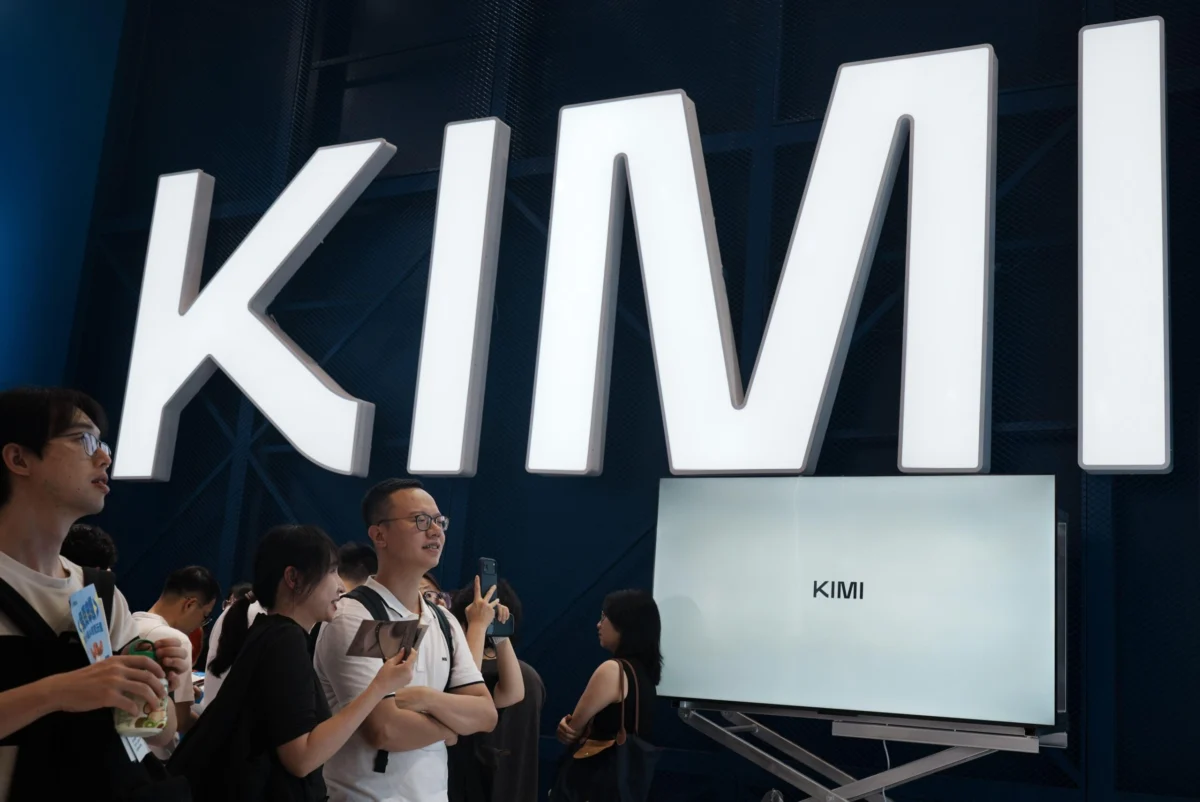
For years, the narrative surrounding artificial intelligence has been framed through the lens of American exceptionalism. Silicon Valley, buoyed by massive venture capital inflows and an unrivaled concentration of compute, was presumed to be the undisputed architect of the future. Yet, last week’s double-barreled announcement from Chinese AI giants Moonshot AI and Alibaba served as a sharp, structural reminder that the geopolitical landscape of technology is shifting beneath our feet.
When Moonshot AI unveiled its flagship "Kimi K3" model, followed swiftly by Alibaba’s preview of "Qwen3.8," the reaction was a blend of shock, market volatility, and a tired invocation of "Sputnik moments." However, as the dust settles, a more sober reality emerges: the era of US-centric AI dominance is being challenged not by a singular, anomalous event, but by a consistent, state-backed industrial strategy that is narrowing the performance gap with remarkable speed.
The Chronology of a "Surprise"
The timeline of China’s recent ascent is marked by a series of rapid-fire releases that have systematically dismantled the notion that American labs possess an insurmountable moat.
- The Precursor: Last year, the surprise arrival of DeepSeek caught Western observers off-guard, challenging the assumption that frontier AI required the exorbitant capital expenditure typical of US giants. It forced an immediate reassessment of cost-efficiency in large language models.
- The July 2026 Surge: Last week, Moonshot AI launched Kimi K3. The model, which claims to trail only OpenAI’s GPT-5.6 Sol and Anthropic’s Claude Fable 5, was so highly anticipated that the platform was forced to pause new subscriptions due to overwhelming demand.
- The Follow-up: Barely days later, Alibaba unveiled its Qwen3.8 model, positioning it as a direct competitor to the industry’s top-tier offerings.
- The Market Reaction: Global tech stocks experienced a noticeable wobble. Analysts at major financial institutions began questioning whether the massive infrastructure spend by US tech firms—focused on data centers and H100/B200 GPU clusters—remains justified if comparable performance can be achieved at a fraction of the cost in Beijing.
Supporting Data: The New Economics of AI
The most significant shift is not just in capability, but in the economic model of intelligence. Kimi K3 has been priced at roughly $15 per million output tokens. In stark contrast, industry leaders like OpenAI and Anthropic have priced their top-tier models at $30 and $50 per million tokens, respectively.
This pricing delta has created an immediate migration pattern. US-based startups, feeling the squeeze of high operational costs, are increasingly experimenting with Chinese models. While skeptics argue that token prices do not account for overall efficiency or latency, the sheer volume of "token consumption" on platforms like OpenRouter shows that Chinese models now account for six of the top 10 most-used AI tools globally.
Furthermore, the strategic divergence between the two nations is stark. US labs lean toward a closed, proprietary model—a "walled garden" approach—while Moonshot and Alibaba have signaled their intent to move toward open-weight releases. By allowing developers to download and modify the core values of these models, Chinese firms are building a grassroots ecosystem that could foster rapid innovation, effectively bypassing the gatekeeping mechanisms currently favored in Washington.
Official Responses and Strategic Misalignment
The response from policymakers has been, by and large, reactive. In Washington, the strategy has vacillated between heavy-handed export controls—which have often left international allies feeling alienated—and a laissez-faire assumption that free markets would naturally correct the trajectory in America’s favor.
Beijing, conversely, has moved with singular intent. The Chinese state is currently funnelling billions into a nationwide AI buildout, incentivizing innovation while simultaneously cracking down on firms attempting to distance themselves from domestic policy. This creates a challenging environment for Western firms, which must navigate shareholder pressure and quarterly earnings targets, while competing against an opponent that treats AI as a foundational pillar of national sovereignty.
Implications for Global Markets and Security
The implications of this shift are profound, touching on everything from stock market valuations to national security.
The Valuation Bubble
Anthropic and OpenAI are currently eyeing potential trillion-dollar IPOs. These valuations are predicated on the assumption that they will maintain a monopoly on "frontier" intelligence. If Chinese models can provide, say, 90% of the capability at 30% of the cost, the growth assumptions underpinning these astronomical valuations will face a necessary and painful correction. Any shift in investor sentiment toward "efficient AI" over "infinite-scale AI" could have ripple effects throughout the S&P 500, given the current concentration of wealth in Big Tech.
The Security Dilemma
Security remains the most contentious flashpoint. US firms have increasingly implemented "safety guardrails," preventing models from answering sensitive queries or assisting with complex cybersecurity tasks. While these safeguards are designed to prevent the proliferation of dangerous capabilities, they have created a functional void.
Recent reports suggest that Chinese models, operating without these same Western-imposed restrictions, are being used by developers to identify and patch vulnerabilities that US models refuse to touch. This creates a "security arms race": if a defender cannot use a US model to fix a bug, they may be forced to turn to a Chinese model, potentially exposing their networks to risks inherent in using foreign-developed infrastructure.
A New Normal in AI Competition
The frequent comparisons to the launch of Sputnik are perhaps the most exhausted trope in modern tech journalism. When DeepSeek arrived, the analogy held weight because it was a genuine anomaly. Today, calling a Chinese AI breakthrough a "Sputnik moment" is a misnomer. Sputnik was a surprise; the maturation of Chinese AI has been broadcasted, documented, and warned about by experts like Eric Schmidt and various White House policy papers for the better part of a decade.
We are no longer in a period of initial shock. We are in a period of stabilization. The Chinese AI sector has evolved from a follower to a legitimate, competitive peer.
Whether Kimi K3 or Qwen3.8 ultimately displaces the American leaders in an independent benchmark is, in the long run, secondary to the larger trend. The existence of these models proves that the barrier to entry for top-tier AI is lower than once thought, and the capacity to innovate is no longer a monopoly of Silicon Valley.
As we look toward the future, the primary challenge for the United States will not be "catching up" in terms of raw power, but in reimagining its economic and security strategy for a world where its technological hegemony is no longer guaranteed. If this is truly an AI arms race, the most dangerous assumption we can make is that we are the only ones capable of winning. The evidence from Shanghai and Beijing suggests that the field is not just crowded—it is effectively balanced. The market, the government, and the tech industry must now adapt to a reality where the "frontier" is no longer a fixed point in California, but a global, contested space.
 Raul Delapena Setiawan
  Siti Muinah
  Asro
Asro 