
 By Nila Kartika Wati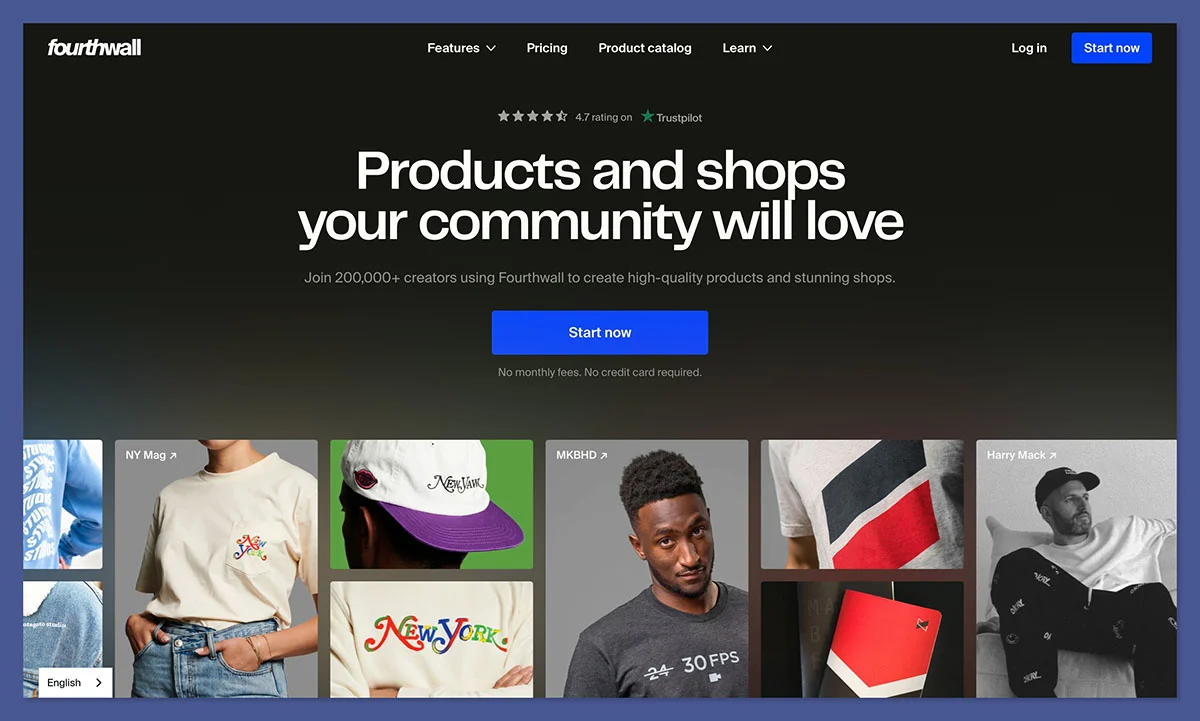
In the modern fashion landscape, the barrier to entry for launching a high-end streetwear label has effectively vanished. Gone are the days when a brand needed $50,000 in inventory, a warehouse lease, and a logistics team to reach a global audience. Today, the rise of the “creator-led brand” has shifted the focus from mass-market production to premium, limited-run drops.
However, there is a catch: the standard "Print-on-Demand" (POD) model of 2018 is failing the streetwear founders of 2026. Cheap, flimsy blanks and generic, unbranded packaging are no longer enough to satisfy a customer base that demands high GSM weights, woven labeling, and retail-ready unboxing experiences.
After 80+ hours of rigorous testing across 15 providers, I have identified the nine platforms that bridge the gap between "merch" and "brand." These providers prioritize the specific requirements of the streetwear aesthetic: 240+ GSM tees, 380+ GSM hoodies, and a sophisticated branding stack.
The Evolution of Streetwear Fulfillment
From Hobbyist Projects to Scalable Brands
To understand why these nine platforms are the current industry leaders, one must look at the chronology of POD evolution.
- 2015–2018 (The Era of Dropshipping): POD was synonymous with low-quality, thin-fabric tees sold via Facebook ads. The goal was volume over value.
- 2019–2022 (The Integration Boom): Platforms like Printful and Printify dominated by offering massive marketplace integrations. The focus was on "selling everywhere" rather than "selling quality."
- 2023–Present (The Boutique/Creator Era): The current shift is defined by "Brand Sovereignty." Founders are now building audiences on TikTok and YouTube first, using platforms that handle taxes, international compliance, and premium garment sourcing so they can focus entirely on creative direction.
Supporting Data: The Anatomy of a Streetwear Garment
Streetwear is defined by weight and cut. When evaluating a provider, our testing protocols focused on three critical metrics:
- Fabric Weight (GSM): A 150 GSM shirt feels like a giveaway; a 240 GSM shirt feels like a luxury product. Our ranking favors platforms that stock industry-standard heavyweights like AS Colour, Stanley/Stella, and proprietary custom-milled fabrics.
- Branding Infrastructure: Does the provider offer woven neck labels, custom hangtags, or embroidered patches? A shirt without a branded neck label is just a blank; a shirt with one is a retail item.
- Operational Reliability: As a brand scales, handling global VAT, US sales tax, and customer support becomes the primary "founder killer."
Quick Verdict Table: Streetwear-Readiness
| Rank | Platform | Best For | Starting Tee Price |
|---|---|---|---|
| 1 | Fourthwall | Creator-led brands & full ops | $13.25 |
| 2 | Apliiq | Woven labels & private labeling | $9.84 |
| 3 | Tapstitch | Heavyweight 250 GSM blanks | $10.95 |
| 4 | Printful | Multi-channel integration (22+) | $12.75 |
| 5 | Printify | Cost-optimization at scale | $6.31 |
| 6 | NovaTomato | All-over-print (AOP) | $26.50 |
| 7 | Contrado | Luxury/High-end UK streetwear | $38.00 |
| 8 | Gelato | International/Localized logistics | Varies |
| 9 | Shirtee | EU-market dominance | $8.00 |
Deep Dive: The Top 3 Platforms
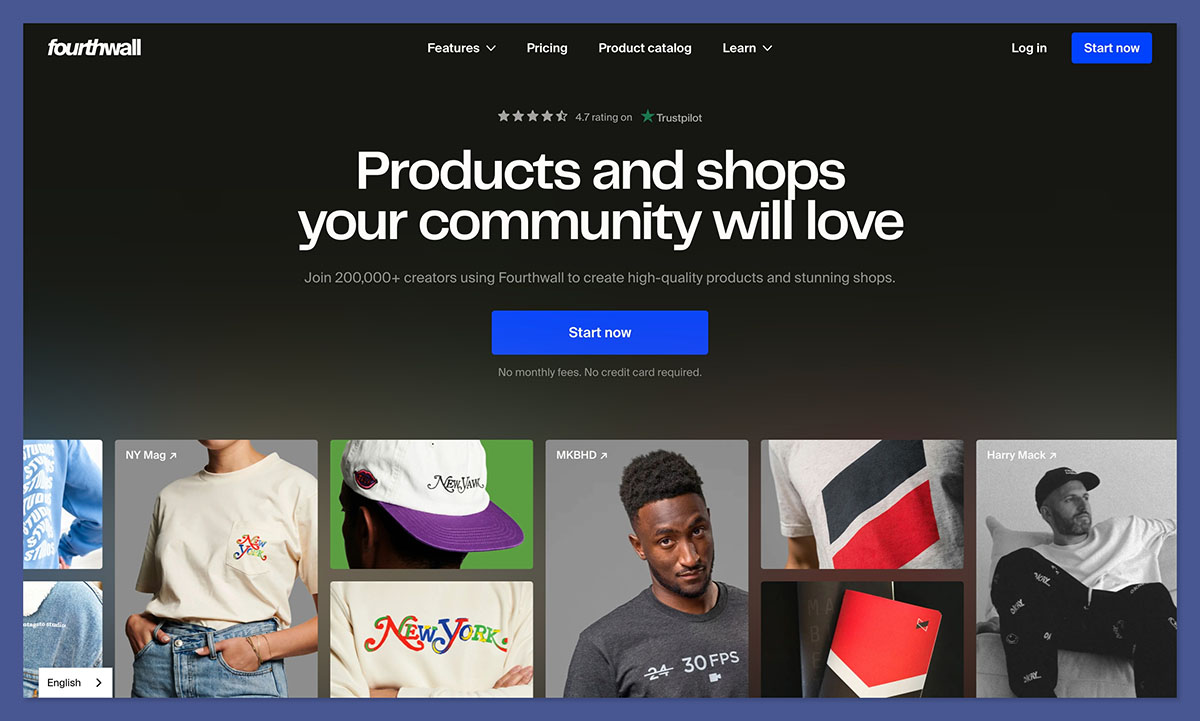
1. Fourthwall: The Gold Standard for Creator-Founders
Fourthwall has disrupted the market by acting as a true "Merchant of Record." Unlike its competitors, Fourthwall manages US sales tax nexus registration, international VAT, and even customer support inquiries.
Implications: If a customer complains that their hoodie hasn’t arrived, Fourthwall handles the ticket. This allows a creator to focus on content, not logistics. With native integrations for TikTok Shop and YouTube Merch Shelf, it is the only platform built for the modern social-first brand.
2. Apliiq: The Purist’s Choice
If your priority is "Private Label" status, Apliiq is unmatched. They are the only provider that offers true sewn-in woven labels. For a brand looking to sell a hoodie for $80+, the neck label is a non-negotiable psychological trigger for the consumer. Their LA and Philadelphia facilities ensure high-quality control for embroidery and screen printing.
3. Tapstitch: The Heavyweight Specialist
Tapstitch is the "insider" secret. By offering 250 GSM snow-washed cotton tees, they satisfy the modern demand for a boxy, oversized streetwear silhouette. While they lack traditional embroidery, their puff printing and acid-wash capabilities provide a unique aesthetic that competitors struggle to replicate at this price point.
Official Perspectives: The Trade-Offs
When we reached out to industry analysts, the consensus was clear: don’t try to find the "perfect" platform; find the one that fits your current operational capacity.
- The "Printify" Warning: Printify operates a massive network of 80+ providers. While this allows for the lowest prices, it introduces variance. As one analyst noted, "Quality isn’t guaranteed by Printify—it’s guaranteed by the specific printer you select within their network. Sample testing is not an option; it is a requirement."
- The "Contrado" Threshold: Contrado is the luxury leader, but their base costs exceed $100 for hoodies. This platform is not for the "test phase." It is for established brands that have validated their pricing power and are selling items at the $200+ price point.
- The "NovaTomato" Constraint: All-over-print (AOP) looks incredible but requires polyester-heavy fabrics. Do not attempt to use these platforms if your brand identity is built on 100% heavy cotton; the chemistry of the print simply won’t yield the desired result.
Implications for Future Growth
The streetwear market is currently undergoing a "premiumization" phase. Consumers are becoming increasingly savvy about GSM weight and garment construction.
Key Takeaways for Founders:
- Stop defaulting to Gildan: If your brand is charging $40+ for a tee, you must move to 220+ GSM blanks.
- Prioritize the "Unboxing": If your platform supports it, invest in custom neck labels and poly-mailers. These branding elements are worth their weight in gold for customer retention.
- Regionality matters: If your core audience is in the EU, look at Shirtee. If they are in the US and watching you on TikTok, use Fourthwall.
Frequently Asked Questions (FAQ)
What GSM should I aim for in a streetwear tee?
For a premium feel, target 220 to 300 GSM. The 240 GSM mark is the industry gold standard for that "boxy, high-quality" look. Anything under 200 GSM will likely feel like basic event merch.
Does Tapstitch really lack embroidery?
Yes. As of our latest audit, Tapstitch focuses on DTG, DTF, and puff-print techniques. If your brand relies on 3D puff embroidery or traditional stitched logos, you should pair with Apliiq or Printful.
Is Print-on-Demand still viable for a $75 hoodie?
Absolutely. By using a $20–$25 base blank and adding $10–$15 in premium printing and branding, you can maintain a 50%+ gross margin. The key is to keep the "brand" in the design and the "logistics" in the background.
Why do some platforms require 100+ units for labels?
Woven labels require a loom setup. Platforms like Apliiq offer this at scale because it is a manual, labor-intensive process. For smaller brands, they offer printed neck labels, which are a cost-effective alternative for the initial "soft launch" phase.
How do I handle global tax compliance?
Most platforms leave this to you, which is a massive liability. Fourthwall is currently the market leader in this regard, acting as the Merchant of Record, which shields the individual store owner from the complexities of international tax nexus and VAT remittance.
In conclusion, the platform you choose is a reflection of your brand’s maturity. For the beginner, cost and simplicity are paramount. For the scaling brand, the ability to automate tax, support, and premium branding is the only path to sustainable growth. Choose wisely, sample aggressively, and never compromise on the feel of the fabric.
 Dwi Wanna
  Lina Irawan
  Basiran