
 By Neng Nana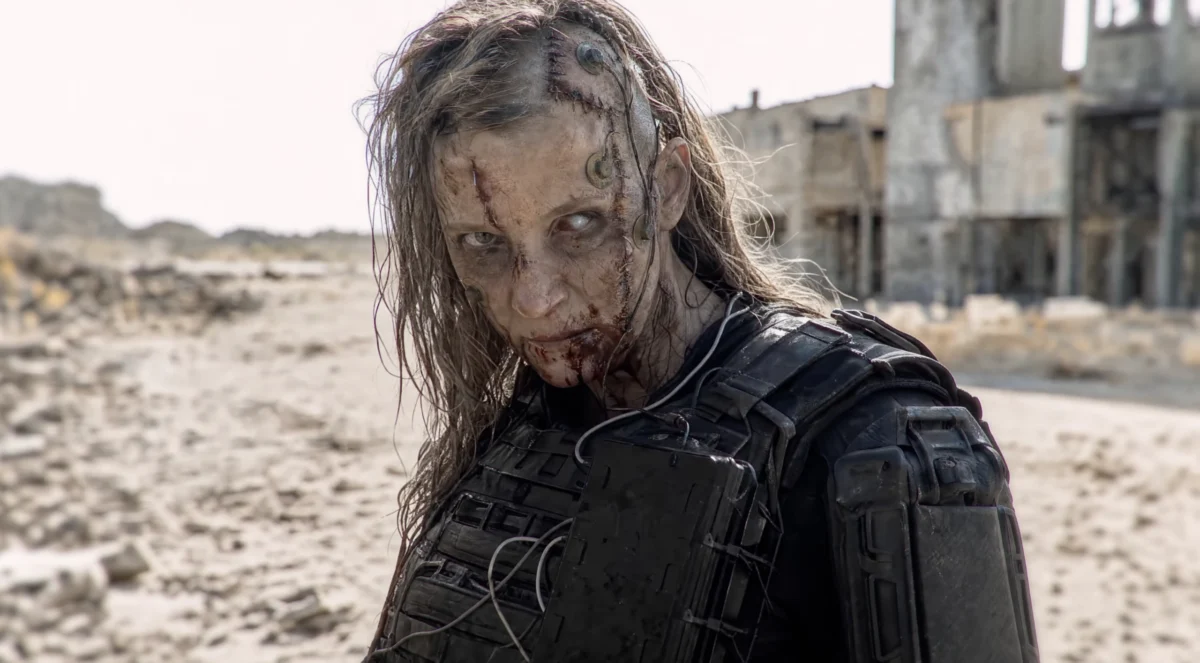
In the landscape of modern science fiction, few directors have left as indelible a mark as Neill Blomkamp. From the gritty, socio-political commentary of District 9 to the visceral, high-concept world-building of Elysium, Blomkamp established himself as a visionary capable of blending heavy-handed metaphor with groundbreaking visual effects. However, his latest venture, a 13-minute short film titled Nightborne, has sparked a polarizing debate that transcends mere film criticism, touching upon the existential anxieties surrounding the role of human artistry in an era of generative AI.
Released this past Monday, Nightborne serves as the flagship production for Barley Studios, Blomkamp’s new AI-centric startup. The film is a loosely adapted, dark reimagining of concepts found in Peter Watts’ 2014 novel Echopraxia. While it bears the polished veneer of a high-budget project, the film’s underlying architecture is entirely synthetic, having been generated using ByteDance’s Seedance 2.0 text-to-video platform.
The Anatomy of the Project: A Chronology of Construction
The genesis of Nightborne began as an experimental endeavor to stress-test the limits of current generative video technology. Blomkamp, long known for his affinity for cutting-edge VFX, sought to move beyond traditional rendering pipelines, opting instead for a workflow dominated by prompts and AI-driven synthesis.
The Production Process
- Conceptualization: Blomkamp identified the core themes of Peter Watts’ Echopraxia—specifically the dehumanization of bodies and the blurring lines between consciousness and machinery—as the ideal thematic sandbox for an AI experiment.
- The "Human" Layer: To mitigate the "uncanny valley" effect, the production involved a team of 32 human actors who provided their likenesses and voices. Additionally, professional concept artists were brought in to guide the visual tone, acting as the human scaffolding for the AI to flesh out.
- AI Synthesis: The entirety of the 13-minute runtime was processed through Seedance 2.0. This required an iterative process of prompt-engineering, where individual clips were generated, discarded, and refined.
- Post-Production: Editor Austyn Daines was tasked with the Herculean effort of stitching together these disparate, short-duration clips into a coherent narrative flow. The result is a film that relies on rapid-fire cutting to disguise the temporal limitations of the AI model.
Narrative Overview: Zombies of the State
Set against the volatile backdrop of a military conflict between the United States and Syria, Nightborne centers on an American pilot whose helicopter is downed behind enemy lines. While her body is ravaged by trauma, her neurological integrity remains intact. This makes her the perfect "vessel" for Project Nightborne—a covert government initiative that repurposes the brain-dead as remote-controlled, weaponized infantry.
The story, while dark and appropriately cynical, feels derivative. It portrays the pilot as one of many "uniformed ghouls" being churned out by a military-industrial complex that views human remains as mere raw material. It is a grim, dystopian vision that fits comfortably within Blomkamp’s oeuvre, yet it lacks the spark of human directorial intent.
Supporting Data: The Technical Ceiling
Despite the fanfare, Nightborne serves as a stark reminder of the current limitations of generative video. Analysts and critics have pointed to several "tells" that betray the AI-heavy production:
- Temporal Fragmentation: Seedance 2.0, like most current models, struggles with consistency over time. The film is composed of brief, disjointed clips, forcing the editing to carry the weight of the narrative rhythm rather than the cinematography itself.
- The Gibberish Problem: Background signage and text within the film are frequently rendered in incoherent, alien scripts—a classic hallmark of current AI models failing to process semantic structure in visual assets.
- Emotional Dissonance: Characters often deliver dialogue with unnatural cadences or mismatched facial micro-expressions. While the human actors provided the base, the AI’s reinterpretation of those performances often strips them of subtle, humanistic nuance, resulting in a performance that feels "hollow."
Official Responses and Public Backlash
Blomkamp’s defense of the project, articulated in a series of posts on X (formerly Twitter), frames Nightborne as a "test start." He maintains that this format is not just a novelty, but a precursor to a potential full-length feature film. He views the backlash not as a rejection of his vision, but as a reactionary fear of inevitable technological progress.
However, the audience reception has been resoundingly cold. Within hours of the trailer and subsequent short release, social media platforms were flooded with criticism. Many fans expressed a sense of betrayal, suggesting that a director of Blomkamp’s caliber was "wasting his time" on technology that threatens the very industry that made him famous. The sentiment echoes the negative reception faced by Darren Aronofsky’s recent AI-generated Revolutionary War series, which similarly saw audiences recoil at the aesthetic sterility of the output.
Implications: The Mirror of the Machine
Perhaps the most profound takeaway from Nightborne is the inadvertent irony of its narrative. The film tells a story about powerful, faceless entities treating human bodies as disposable commodities for efficient production. In its creation, Blomkamp has inadvertently mirrored the very villainy he seeks to depict.
The Ethics of "Automated" Artistry
If generative AI can be used to synthesize the likenesses of actors and the style of human artists to create content without their active, moment-to-moment participation, we are forced to ask: what is the value of the director? Blomkamp’s creative voice, usually so distinct, feels largely absent here. The film feels like it was "prompted" rather than "directed."
The Environmental and Economic Cost
Beyond the creative questions, there are massive implications regarding the resources required to train and run these models. The carbon footprint of massive AI compute cycles, contrasted with the job displacement of traditional VFX artists, animators, and cinematographers, suggests that the "efficiency" of AI filmmaking is a false economy. If we trade the soul of cinema for a faster, cheaper production pipeline, are we actually gaining anything, or are we just flooding the world with "slop"?
Conclusion: A Cautionary Tale
Nightborne is a technical achievement in that it works at all, but it is a creative failure because it suggests that the "future of filmmaking" involves removing the human element from the core of the creative process. While Neill Blomkamp might see a frontier of infinite possibility, most viewers see a sterile, soulless void.
The technology behind Seedance 2.0 is undeniably impressive, but Nightborne demonstrates that sophisticated algorithms are not a substitute for the lived, messy, and deeply emotional experience of human storytelling. As we look toward the future of the silver screen, the question remains: just because we can automate the creative process, does it mean we should? For now, the audience seems to have spoken with a resounding "no," leaving Blomkamp’s latest project as a haunting—if unintended—monument to the value of human imperfection.
 Raul Delapena Setiawan
  Siti Muinah
  Asro
Asro 