
 By Basiran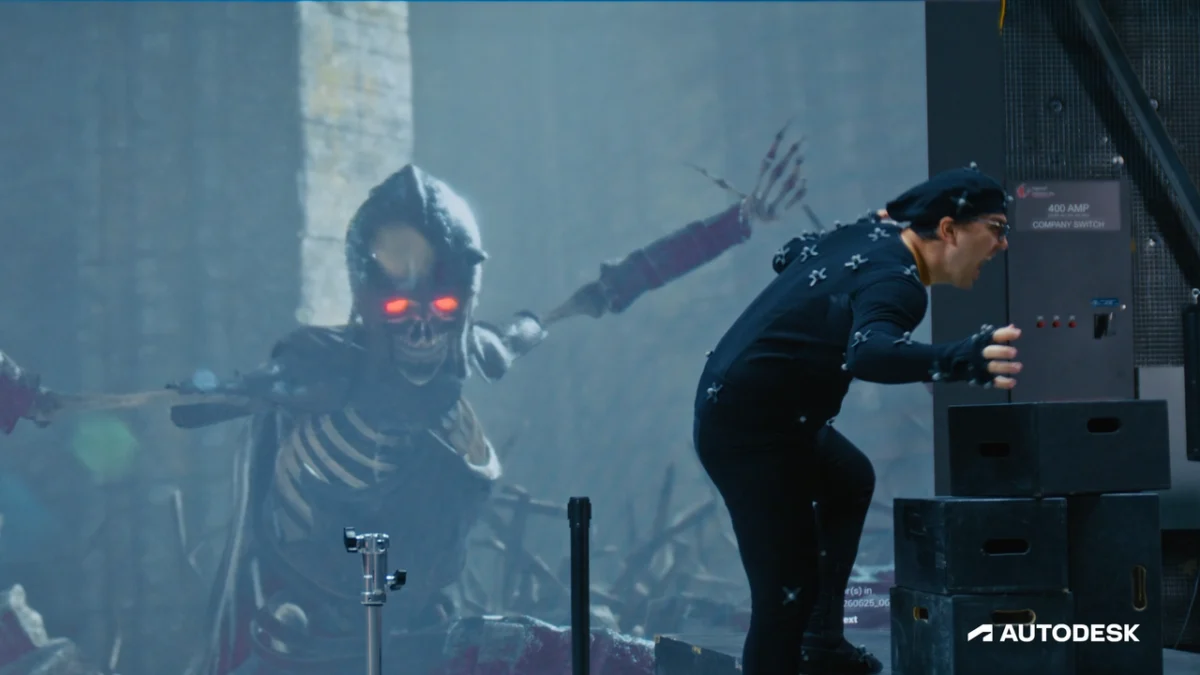
[City, State] – July X, 2026 – At the highly anticipated SIGGRAPH 2026 conference, a global stage for computer graphics and interactive techniques, Autodesk has made a series of pivotal announcements that collectively signal a profound shift in the landscape of 3D art and design. Far from being disparate updates, these innovations across Maya, 3ds Max, Flow Production Tracking, and Arnold converge on a singular, ambitious goal: to drastically reduce the creative latency between an artist’s initial idea and its tangible appearance on screen. In an industry still grappling with complex pipelines, lengthy render times, and fragmented feedback loops, Autodesk’s latest offerings champion an era where process gives way to pure creative flow.
The announcements include groundbreaking AI animation capabilities with the "Bring Your Own Data" feature for MotionMaker in Maya, the integration of revolutionary 3D Gaussian Splats into 3ds Max for editable real-world capture, enhanced review and collaboration tools within Flow Production Tracking, and real-time Arnold viewport rendering in Maya. While each addresses a specific bottleneck, their collective impact aims to transform the traditionally segmented 3D production pipeline into a fluid, interconnected creative ecosystem, empowering artists to experiment more, iterate faster, and dedicate their energies to the most impactful creative challenges.
The New Paradigm: Eliminating Creative Friction
For decades, the journey from conceptualization to final render in 3D production has been characterized by a series of hurdles. Artists frequently encounter significant delays, whether it’s fine-tuning character animation, waiting for complex scenes to render, or navigating intricate feedback processes with collaborators spanning different time zones. Even with remarkable advancements in 3D modeling, animation, and visual effects, the underlying workflows often involve manual, time-consuming tasks, such as painstakingly rebuilding real-world objects or environments that could otherwise be captured digitally.
Autodesk’s SIGGRAPH 2026 announcements are meticulously designed to target these moments of creative deceleration. By injecting intelligence, speed, and seamless connectivity into critical stages of the workflow, the company is actively fostering an environment where artists can transition from ideation to realization with unprecedented agility. The overarching message is clear: the future of 3D creativity lies not in simply more powerful tools, but in smarter, more intuitive systems that dissolve the barriers between imagination and execution.
A Legacy of Innovation: Autodesk’s Journey to 2026
Autodesk has long stood at the forefront of the design and entertainment industries, with software like Maya and 3ds Max becoming indispensable tools for animators, modelers, and VFX artists worldwide. Since its inception, the company has consistently pushed the boundaries of what’s possible in digital creation, evolving from foundational CAD software to comprehensive suites that power blockbuster films, award-winning games, and architectural marvels.
The journey to SIGGRAPH 2026 and these latest announcements is rooted in a continuous commitment to innovation, particularly in adapting to emerging technologies. The last decade has seen a rapid acceleration in the development of artificial intelligence and machine learning, alongside advancements in real-time rendering and cloud-based collaboration. Autodesk has keenly observed and actively participated in these trends, integrating AI-driven features and enhancing interoperability across its product ecosystem.
The Evolution of AI in 3D Production: The conversation around AI in creative fields has matured significantly. Early discussions often centered on the hypothetical replacement of human artists. However, companies like Autodesk have championed a different narrative: AI as an assistive technology, an intelligent co-pilot designed to automate repetitive tasks and provide creative starting points, thereby freeing artists to focus on higher-order creative challenges. This philosophy was evident in earlier iterations of MotionMaker and other AI initiatives, laying the groundwork for the sophisticated "Bring Your Own Data" approach unveiled this year.
The Rise of Real-World Capture: Simultaneously, the ability to accurately capture and integrate real-world data into digital environments has revolutionized workflows. Photogrammetry and lidar scanning have become commonplace, but the emergence of novel techniques like Neural Radiance Fields (NeRFs) and, more recently, 3D Gaussian Splats, promised even faster, more flexible, and higher-fidelity methods. Autodesk’s integration of Gaussian Splats into 3ds Max is a direct response to this evolution, acknowledging the growing demand for seamless blending of physical and digital realities.
These historical currents converge at SIGGRAPH 2026, showcasing Autodesk’s strategic vision to integrate these powerful technologies into a cohesive, artist-centric pipeline.
Deep Dive: Unpacking the Transformative Announcements
Autodesk’s latest suite of updates is designed to address specific friction points across the 3D production pipeline, each bringing significant advancements to its respective domain.
MotionMaker in Maya: Empowering Animators with Custom AI
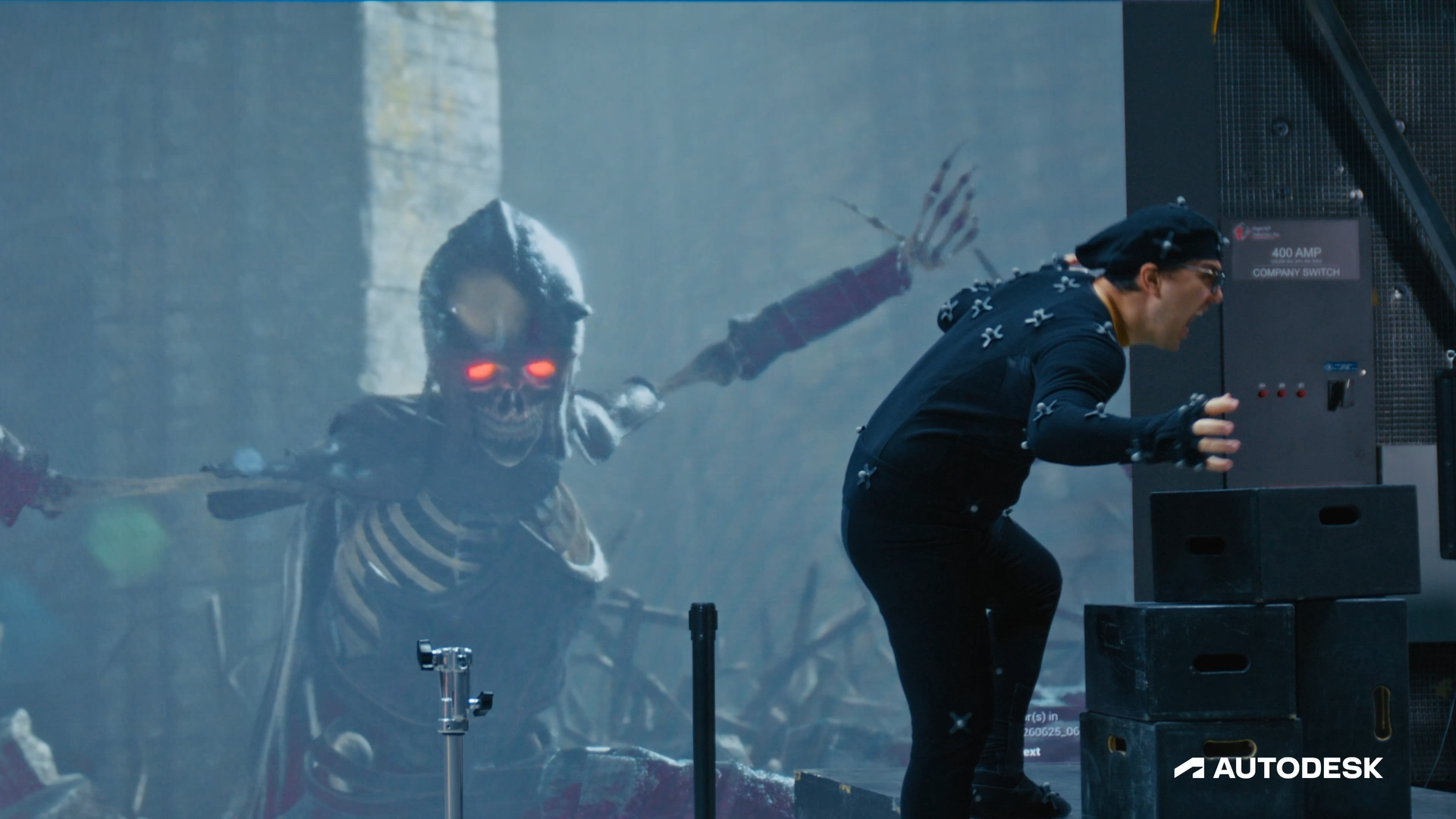
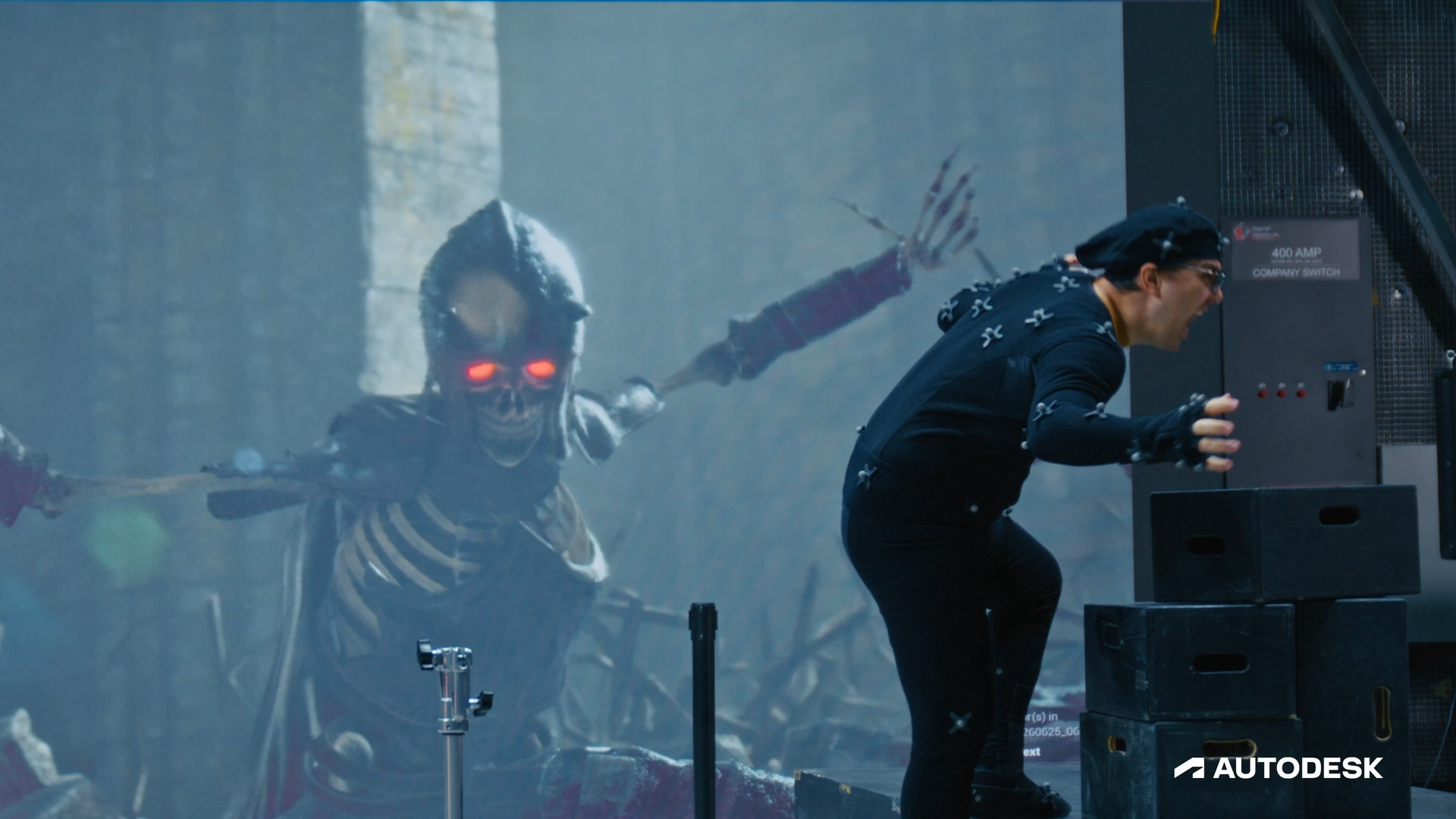
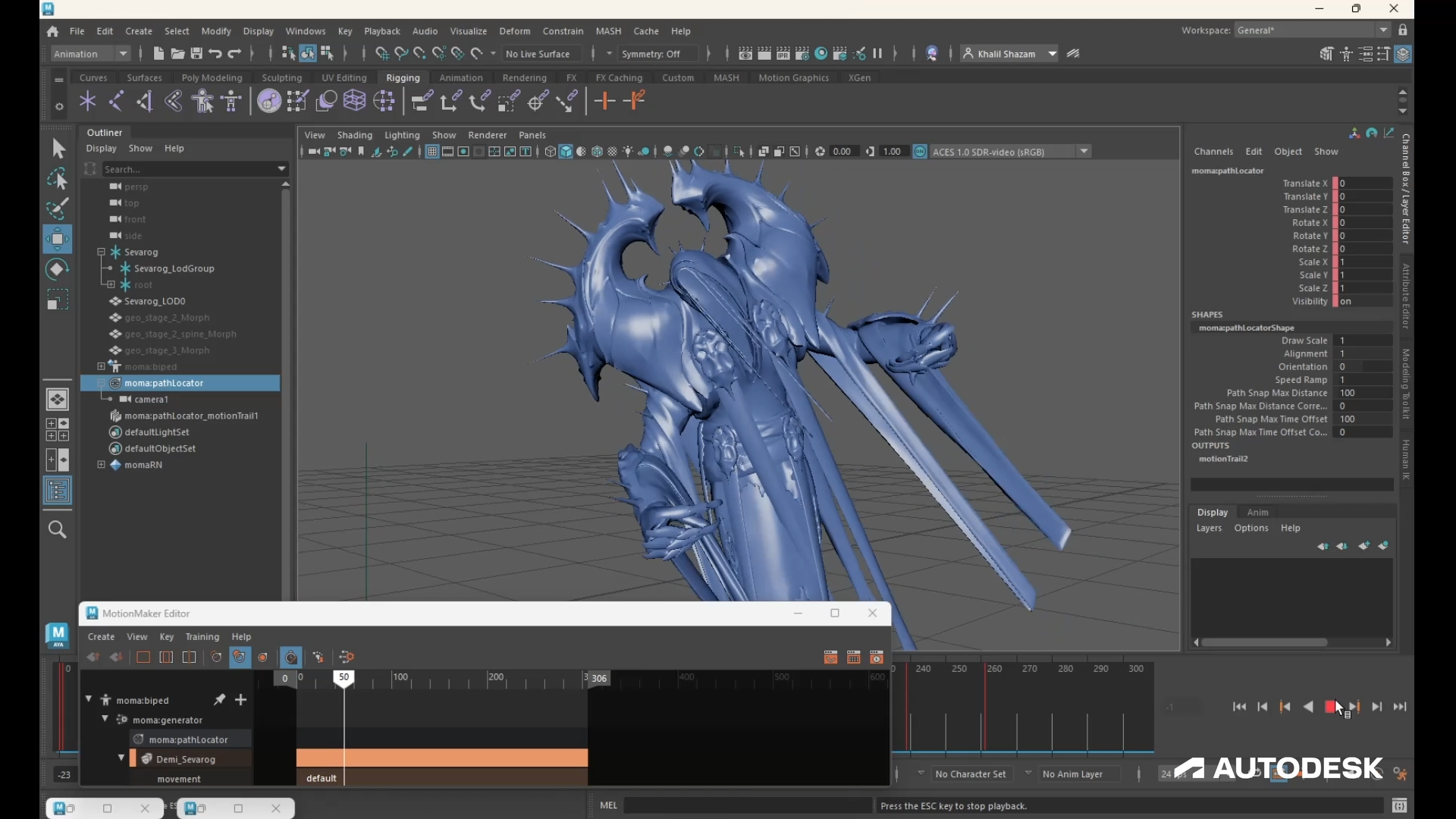
Perhaps the most significant talking point is the introduction of the "Bring Your Own Data" (BYOD) feature within MotionMaker in Maya. This innovative capability allows studios and individual artists to train custom generative motion models using their own proprietary animation datasets. Imagine a studio developing a unique animation style for a specific character; with BYOD, they can feed MotionMaker their existing rigs, motion capture data, and even meticulously hand-keyed animation. The AI then learns the nuances of that particular movement style, character physicality, and aesthetic preferences.
How BYOD Works: The process involves ingesting a studio’s unique animation library into MotionMaker. The AI analyzes this data to understand the underlying principles of movement, timing, and stylistic choices. Once trained, MotionMaker can then generate foundational animation sequences that inherently align with the studio’s established visual language. This goes beyond generic motion capture libraries, offering a bespoke AI assistant that understands and replicates specific creative directives.
Artist in Control: Crucially, Autodesk reiterates that this is not about autonomous AI replacing animators. MotionMaker generates a foundation, a sophisticated starting point. Artists retain complete control, refining the AI-generated output using Maya’s familiar and powerful tools: tweaking curves in the Graph Editor, adjusting timing in the Time Editor, and finessing details in the Dope Sheet. This hybrid approach ensures that the animator’s unique creative vision remains paramount, while the AI handles the laborious blocking and iterative groundwork.
Implications for Production: For animation studios, especially those with distinctive artistic styles, BYOD is a game-changer. It promises:
- Consistency: Maintaining a consistent animation style across large projects or between different animators.
- Efficiency: Drastically reducing the time spent on blocking out basic movements, allowing animators to jump directly to the creative challenges of conveying emotion, character, and story.
- Scalability: Enabling smaller teams to achieve higher volumes of quality animation without proportional increases in manual labor.
- Creative Focus: Shifting the animator’s role from repetitive grunt work to more nuanced performance direction and artistic refinement.
This builds upon the MotionMaker AI tools first unveiled at AU 2025, which aimed to streamline character creation and animation into a more cohesive process. The BYOD feature elevates this by allowing for deep customization and proprietary style integration, moving closer to the ideal of "just press animate" for foundational movements, while preserving artistic oversight.
3ds Max: Integrating and Editing Real-World Geometry with Gaussian Splats
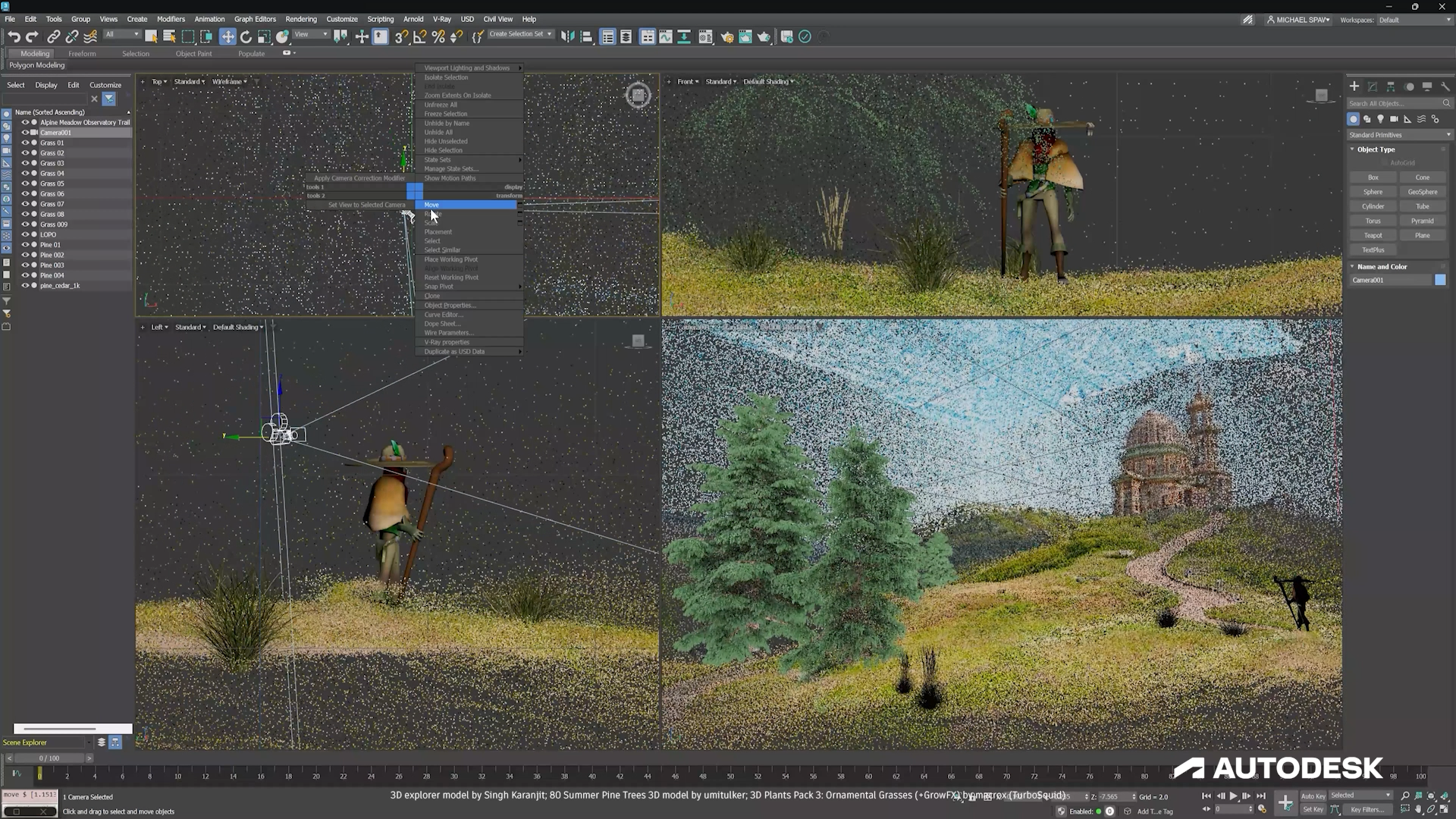
Autodesk’s commitment to 3ds Max remains strong, demonstrated by the integration of 3D Gaussian Splats. This technology represents one of the most exciting recent breakthroughs in real-world capture and AI-generated environments. Unlike traditional photogrammetry, which reconstructs geometry from images, Gaussian Splats directly render scenes as a collection of 3D Gaussians (ellipsoids with color and opacity), offering incredibly fast rendering and impressive visual fidelity.
The Power of Editable Splats: The true innovation here is not merely the ability to import Gaussian Splats, but to make them editable within 3ds Max. Historically, captured environments, while stunning, were often static backgrounds or challenging to modify without extensive re-modeling. Autodesk’s approach changes this fundamentally. Artists can now bring real-world objects or environments captured via Gaussian Splats into their 3ds Max workflow and manipulate them. This means:
- Hybrid Workflows: Seamlessly combining captured reality with traditional 3D modeling, animation, and scene-building techniques.
- Creative Adaptation: Adjusting elements of the splatted environment, re-lighting it, integrating digital assets, or even performing minor structural alterations, rather than being confined to the exact captured state.
- Speed and Fidelity: Leveraging the rapid capture and high visual quality of Gaussian Splats while retaining the creative flexibility of 3ds Max.
Real-World Applications: The implications are vast for various industries:
- Filmmaking and VFX: A director can capture a specific real-world location, bring it into 3ds Max, and then digitally extend, modify, or enhance it with CG elements, saving immense time on set building or detailed digital reconstruction.
- Architectural Visualization: Rapidly incorporating existing site conditions or real-world furniture into architectural renders.
- Game Development: Creating highly detailed environments from real-world scans that can then be optimized and adapted for game engines.
This integration also signals a broader industry shift: AI-generated or captured worlds are increasingly becoming starting points for projects, rather than final, immutable outputs. Tools like World Labs Marble, which generate complex environments, can now feed into 3ds Max, allowing artists to iterate and build upon these foundations, debunking the earlier "magic bullet" perception of AI as an endpoint.
Flow Production Tracking: Streamlining Collaboration with "Review"
While less visually flashy, the enhancements to Flow Production Tracking, particularly the new "Review" experience, address some of the most persistent and frustrating pain points in modern production: collaboration and feedback management. In complex post-production pipelines, teams often struggle with version control, fragmented communication across different tools, and the sheer volume of feedback.
Solving the Feedback Loop Nightmare: "Review" aims to centralize and simplify this critical process. Instead of artists, directors, and clients juggling multiple applications, email threads, and disparate notes, they can now engage in a unified environment. Key features likely include:
- Centralized Media Review: All relevant media assets (shots, animations, models) are accessible in one place.
- Version Comparison: Easily compare different iterations of a shot or asset side-by-side to track changes and progress.
- Integrated Feedback Tools: Intuitive annotation tools, timestamped comments, and approval mechanisms directly within the review interface.
- Global Collaboration: Designed to facilitate seamless interaction for teams distributed across different geographical locations and time zones.
Impact on Project Efficiency: This seemingly "small workflow improvement" can yield massive dividends in terms of project efficiency and creative momentum. The reduction in "version confusion" and the acceleration of feedback loops mean:
- Faster Iteration: Artists receive clear, consolidated feedback, allowing for quicker adjustments.
- Reduced Errors: Minimizing miscommunications and ensuring everyone is working on the correct version of an asset.
- Improved Communication: Fostering a more direct and transparent dialogue between all stakeholders.
- Cost Savings: Less time spent on administrative tasks and rework directly translates to lower production costs.
For both large-scale studio productions and smaller, agile teams, the ability to streamline the review process can be the difference between meeting deadlines and falling behind, making "Review" a foundational enhancement for productivity.
Maya: Real-time Arnold Viewport Rendering
The integration of real-time Arnold viewport rendering directly within Maya tackles another pervasive frustration for 3D artists: the delay between making a change and seeing its final rendered impact. Arnold, renowned for its high-quality, physically based rendering, has historically required a separate render process to preview final results.
Instant Visual Feedback: This new capability means artists can now see Arnold-quality results directly in their Maya viewport as they work. The implications for creative iteration are profound:
- Immediate Visual Validation: Adjust lighting, materials, textures, or camera angles and instantly understand how these changes will appear in the final render.
- Accelerated Look Development: Experiment with different looks and styles without waiting for lengthy render passes.
- Enhanced Creative Flow: Maintaining focus and immersion in the creative process, uninterrupted by technical delays.
- Optimized Resource Usage: Potentially reducing the need for numerous test renders, saving computational resources and time.
This feature significantly shortens the feedback loop between artistic intent and visual output. The faster an artist can see the consequences of their decisions, the more freely they can experiment, push creative boundaries, and ultimately achieve a more refined and intentional final product. It’s a critical step towards making the creative process feel more akin to sculpting or painting in real-time, rather than a delayed, multi-stage operation.
Official Responses: Autodesk’s Vision for the Future Artist
In light of these transformative announcements, industry analysts sought commentary from Autodesk leadership regarding the company’s long-term vision.
"Our core mission at Autodesk has always been to empower creators," stated [Hypothetical Name], CEO of Autodesk. "At SIGGRAPH 2026, we’re demonstrating our commitment to removing the invisible walls that still exist between an artist’s brilliant idea and its digital manifestation. We believe the true potential of 3D art and design is unlocked when the tools become extensions of the creative mind, rather than obstacles."
[Hypothetical Name], Head of Media & Entertainment Products at Autodesk, further elaborated on the strategic approach. "Each of these innovations – from customizable AI animation to editable Gaussian Splats and real-time rendering – serves a specific purpose in streamlining the pipeline. But when viewed holistically, they represent a coherent strategy: to augment human creativity, not replace it. We’re giving artists back precious time, freeing them from the mundane and allowing them to focus on the unique, imaginative aspects of their craft. The ‘Bring Your Own Data’ for MotionMaker, for instance, isn’t about generic AI; it’s about AI learning your studio’s unique style, becoming a truly personalized assistant."
Regarding the ethical considerations of AI, [Hypothetical Name], Chief Technology Officer, affirmed Autodesk’s stance: "We are acutely aware of the ongoing discussions surrounding AI, data ownership, and the evolution of creative roles. Our approach is one of transparency and empowerment. We ensure artists retain ownership and control over their data and creative output. Our AI tools are designed to be explicitly directed and refined by human artists, ensuring that the final artistic signature remains unequivocally human. We see AI as a powerful accelerant for human ingenuity, not a substitute for it."
These statements underscore Autodesk’s narrative: a future where technology serves as an intelligent partner, enabling artists to achieve their creative visions with unprecedented efficiency and freedom.
Implications: The Future of 3D Art and Design
The collective impact of Autodesk’s SIGGRAPH 2026 announcements extends far beyond individual software features. They signify a fundamental paradigm shift in the entire 3D industry, pointing towards a future characterized by seamless integration, intelligent assistance, and an intensified focus on artistic intent over technical process.
The Evolving Role of the Artist: Autodesk’s vision suggests an evolution, rather than an erosion, of the artist’s role. With AI handling much of the repetitive, time-consuming "grunt work" – like blocking out basic animation or rebuilding complex environments – artists will be freed to concentrate on higher-level creative direction, nuanced performance, stylistic refinement, and innovative problem-solving. This could lead to a re-emphasis on conceptualization, storytelling, and the unique human touch that defines compelling art. The demand for artists who can effectively direct and curate AI tools, integrating them into a cohesive workflow, will likely grow.
Democratization of Advanced Production: By making sophisticated tools more efficient and intuitive, these advancements could democratize access to high-end 3D production. Smaller studios, independent creators, and even hobbyists might be able to achieve results previously only attainable by large, well-resourced facilities. The ability to rapidly generate animation foundations or integrate real-world scans without extensive manual labor lowers the barrier to entry for complex projects.
Integrated and Interoperable Pipelines: The emphasis on closing the gap between ideation and realization highlights a move towards truly integrated pipelines. The individual tools no longer exist in isolation; they are designed to communicate, share data, and contribute to a continuous creative flow. This means less friction when moving between modeling, animation, rendering, and review stages, fostering a more fluid and less fragmented production experience.
Challenges and Ethical Considerations: While the benefits are clear, the industry must continue to grapple with the broader implications of AI. Questions around the ethical sourcing of training data, intellectual property rights for AI-generated elements, and the long-term impact on job markets remain critical. Autodesk’s current stance on artist control and data ownership is a positive step, but ongoing dialogue and industry standards will be essential as these technologies mature.
In conclusion, Autodesk’s SIGGRAPH 2026 announcements paint a compelling picture of the future of 3D. It’s a future where creative professionals are empowered by intelligent tools to translate their ideas into digital reality with unprecedented speed and fluidity. The focus is firmly on the artist, removing technical barriers and liberating them to pursue the innovative and imaginative aspects of their craft, ensuring that the magic of creation remains firmly in human hands. The next generation of 3D tools promises not just efficiency, but a renaissance of pure, unadulterated creativity.
 Evan Lee Salim
  Nana
Nana  Ammar Sabilarrohman