
 By Suro Senen
London, UK – Netflix’s live-action adaptation of Avatar: The Last Airbender (ATLA) has once again soared to critical and popular acclaim with its second season, lauded for its ambitious scope, compelling storytelling, and, perhaps most notably, its breathtaking visual effects. Central to the series’ immersive world-building is the depiction of elemental bending, a feat of digital artistry that has consistently captivated audiences. Leading this charge in visual innovation is Outpost VFX, the studio behind the intricate and often invisible magic that brings earth, fire, water, and airbending to life.
While the sheer scale of the visual effects across both seasons is impressive, it is the nuanced and physically grounded portrayal of each nation’s unique powers that truly sets the series apart. Earthbending feels genuinely weighty, conveying immense force and chaotic energy. Firebending is rendered with such realism that it casts interactive light onto actors’ skin, making the flames feel palpably present. Yet, the most remarkable achievement lies in the titular power of airbending – a force that, by its very nature, is invisible, presenting a unique and formidable challenge to visual effects artists.
Outpost VFX has recently offered a rare glimpse behind the digital curtain, releasing a breakdown video that showcases the sophisticated techniques employed to realize these striking effects. This exposé not only celebrates their technical prowess but also illuminates the creative ingenuity required to translate the beloved animated series’ iconic powers into a photorealistic live-action environment.
The Art of Elemental Manipulation: A Deep Dive into ATLA’s VFX Success
The world of Avatar: The Last Airbender is meticulously constructed around four elemental nations: the Water Tribes, the Earth Kingdom, the Fire Nation, and the Air Nomads. Within each, individuals known as "benders" possess the extraordinary ability to manipulate one of these four classical elements. The narrative centers on Aang, a twelve-year-old Air Nomad and the last of his kind, who is revealed to be the Avatar – the sole individual capable of mastering all four elements and maintaining balance in a war-torn world. The credibility of this fantastical premise hinges entirely on the believability of these elemental powers, and Outpost VFX has risen to the occasion with unparalleled artistry.
The Intangible Made Tangible: Airbending’s Breakthrough
The challenge of visualizing airbending was perhaps the most daunting. How does one depict an invisible force in a way that feels powerful, dynamic, and visually compelling without resorting to generic "magic wind" effects? Outpost VFX found its groundbreaking inspiration in an unexpected source: the heat distortion generated by F-22 Raptor jet engines. This real-world phenomenon provided a tangible reference for how invisible forces can subtly yet definitively interact with and displace their surroundings.
By meticulously displacing surrounding environmental particles and manipulating light refraction, airbending in ATLA was imbued with a tangible weight and velocity. This approach avoids a cartoonish depiction, instead offering a sophisticated visual language that communicates the force and direction of air manipulation through its impact on the visible world. The result is a subtle yet undeniably potent effect that conveys the immense power of the Airbenders while remaining true to the element’s inherent invisibility.
Laurent Joel Gillet, VFX Supervisor at Outpost, elaborated on this intricate process: "The airbending look was a challenge as we don’t see air movement in the real world, only elements flying through it. We needed to find ways of making that motion visible." He credited the clear vision from the director and client-side production team, which "made it a lot easier for us to translate those ideas into effects on screen." This collaboration was crucial in transforming a conceptual challenge into a visual triumph that has resonated deeply with fans and critics alike.

Grounded Power: The Visceral Reality of Earthbending
In stark contrast to the ethereal nature of airbending, earthbending demands a visual representation that communicates raw power and immense physical mass. Outpost VFX’s portrayal of earthbending feels genuinely heavy and chaotic, underscoring the destructive potential and defensive fortitude of the Earth Kingdom warriors. To achieve this, the team undertook extensive research and experimentation with various ground and soil types.
"We started originally with a very sandy look with buried hard rocks, but we ended up going towards a more amalgamated dry sand look which crumbles as it breaks," Gillet revealed. This meticulous attention to geological detail ensured that when earthbenders summoned walls, hurled boulders, or shattered the ground, the effects were grounded in a believable physical reality. The rocks themselves were designed to resemble "compacted dry soil which partially crumbles as they were thrown around," adding layers of authenticity and visual texture to every seismic movement. This focus on realistic material properties elevates earthbending from a mere special effect to a visceral, impactful display of power.
Igniting the Screen: The Dynamic Presence of Firebending
Firebending, the aggressive and volatile art of the Fire Nation, presented its own set of unique visual challenges. Unlike the static representations of fire often seen in media, ATLA’s firebending needed to be dynamic, responsive, and intimately connected to the bender’s movements and emotions. Outpost VFX achieved this by integrating fire effects that cast interactive light onto the actors’ skin and surrounding environments.
This technique is critical because it makes the flames feel physically present within the scene, rather than merely superimposed. The subtle interplay of light and shadow created by the flickering fire on an actor’s face or costume dramatically enhances immersion, allowing audiences to feel the heat and intensity of the bending. Crafting these effects required sophisticated lighting models and real-time rendering techniques to ensure the flames behaved realistically, reacting to air currents, contact, and the inherent energy of the bender. The result is firebending that is not just a visual spectacle but a sensory experience, underscoring the dangerous beauty and destructive force of this element.
Flow and Form: The Fluidity of Waterbending
While not as extensively detailed in the provided breakdown, waterbending presented its own complex set of fluid dynamics challenges. Water, by its nature, is ever-changing, transparent, and highly interactive with its environment. Outpost VFX’s work on waterbending involved meticulous fluid simulations to capture the natural flow, splash, and ripple effects as benders manipulated vast quantities of water.
The goal was to create water that felt substantial, whether forming a defensive shield, a powerful whip, or healing mist. This involved simulating transparency, reflections, refractions, and the physical interaction of water with characters and other elements. Ensuring that the water behaved realistically, maintaining its volume and consistency while being shaped and propelled, required advanced computational fluid dynamics (CFD) and sophisticated rendering pipelines. The fluidity and grace of waterbending, combined with its immense power, are thus realized through a blend of scientific accuracy and artistic interpretation.
A Chronology of VFX Innovation Across Seasons
Outpost VFX’s involvement with Avatar: The Last Airbender is not new; their expertise has been integral since the very first season. The studio laid much of the groundwork for the elemental bending effects that have become a hallmark of the series. This continuity allowed for refinement and expansion of techniques in Season 2, building upon a solid foundation.

One notable sequence from Season 1 that showcased Outpost’s early contributions was the epic Aang and King Bumi battle in episode four. This confrontation was a complex interplay of earth, air, and waterbending, demanding a highly intricate approach to visual effects. Caitlin Gilbert, a producer at Outpost, highlighted the extensive challenges posed by this particular sequence, describing it as presenting a "slew of creative challenges." The scene required "multi-layered sims in which each layer interacts or collides with the others," demonstrating the studio’s early commitment to dynamic and interactive elemental effects.
The success of these early efforts provided the blueprint for the expanded and even more ambitious sequences seen in Season 2. The iterative process of refining the visual language for each element, from the initial concepts for airbending inspired by jet engines to the detailed textures of earthbending, speaks to a continuous drive for excellence and realism across the entire production. Each season has seen Outpost VFX push the boundaries further, ensuring that the visual spectacle evolves alongside the narrative.
Supporting Data and Technical Nuances
The realization of ATLA’s bending effects is a testament to the sophisticated interplay of technology, artistry, and scientific principles. Beyond the broad inspirations, the actual execution involves a rigorous technical pipeline. Pre-visualization (pre-vis) played a crucial role, allowing the creative teams to block out complex action sequences and elemental interactions long before principal photography. This helped to define the choreography of bending and the scale of its impact.
Once filmed, the live-action footage entered the post-production phase, where Outpost VFX artists utilized a suite of industry-standard software for 3D modeling, animation, particle simulations, fluid dynamics, and compositing. For effects like earthbending, geological data and real-world physics engines were employed to ensure that debris, dust, and rock movements were believable, adhering to principles of mass, friction, and gravity. Similarly, fire and water effects relied on complex computational simulations to mimic the unpredictable yet consistent behavior of these elements.
The interactive lighting for firebending, for example, often involved creating digital light sources that mimicked the fire’s properties and then meticulously integrating them into the live-action plates, ensuring they accurately illuminated actors and props. For airbending, the subtle displacement effects were achieved through advanced volumetric rendering and particle manipulation, creating faint distortions and wisps that hint at immense force without overtly showing it. The final step, compositing, involved seamlessly blending these digital elements with the live-action footage, adjusting color, light, and shadow to create a cohesive and photorealistic final image. This multi-faceted approach, combining physics-based simulations with artistic interpretation, is what truly sells the magic of bending.
Official Responses and Collaborative Vision
The success of the bending effects is not just a triumph of technical skill but also a testament to effective collaboration between the creative visionaries and the technical executors. The direct input from the production team was invaluable in guiding Outpost VFX’s work.
Caitlin Gilbert’s comments on the Aang and King Bumi battle underscore the initial challenges and the innovative solutions that set the precedent: "The complex sequence involving earth, air and waterbending presented a ‘slew of creative challenges,’ requiring multi-layered sims in which each layer interacts or collides with the others." This highlights the complexity involved in creating dynamic interactions between different elemental forces, a core aspect of ATLA’s combat.
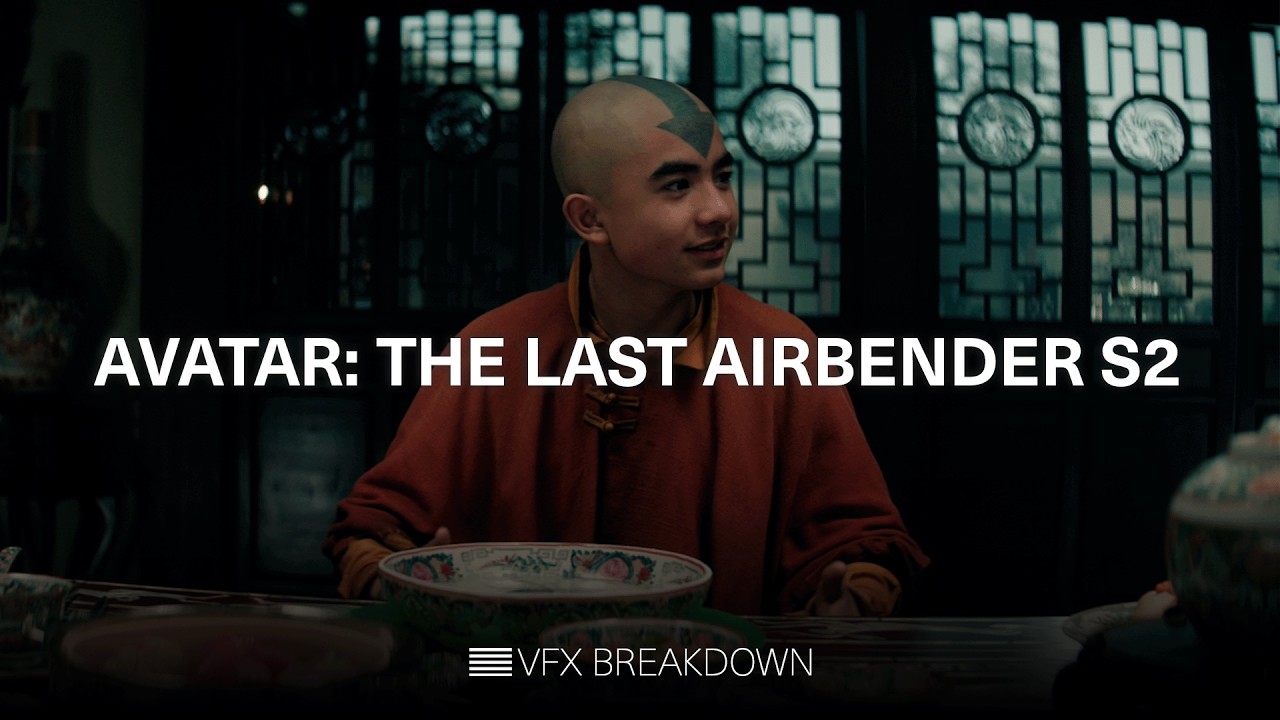
Laurent Joel Gillet further emphasized the importance of a clear creative brief, particularly for the elusive airbending: "The director and client-side production team had a very clear idea of where they wanted to go with it which made it a lot easier for us to translate those ideas into effects on screen." This symbiotic relationship, where creative vision is precisely articulated and then expertly executed, is the bedrock of achieving such high-quality visual effects. It allows VFX studios to move beyond mere technical proficiency and truly embody the creative intent of the showrunners.
Implications for Live-Action Adaptations and the VFX Industry
The groundbreaking visual effects in Netflix’s Avatar: The Last Airbender carry significant implications for the future of live-action adaptations and the broader visual effects industry. By setting a new benchmark for elemental manipulation, Outpost VFX has not only elevated the series but also raised audience expectations for future fantasy and animated conversions.
The meticulous attention to detail, particularly in making the invisible visible for airbending and grounding the chaotic nature of earthbending in realistic physics, demonstrates a profound understanding of how to translate stylized animated powers into a photorealistic context. This level of fidelity is crucial for fan acceptance, especially for a property with such a passionate and discerning fanbase as ATLA. The success of these effects contributes directly to the show’s immersion and credibility, making a fantastical world feel tangible and real.
For the VFX industry, ATLA serves as a powerful case study in innovative problem-solving and the critical role of scientific realism in fantasy. It showcases how studios can leverage real-world phenomena and advanced simulation techniques to create effects that are both visually spectacular and conceptually sound. This achievement positions Outpost VFX as a leading force in specialized elemental effects, likely influencing techniques and approaches in other high-budget fantasy productions.
The series underscores a broader trend: compelling visual effects are no longer just an enhancement but an integral component of modern storytelling, particularly in genre fiction. The ability to create believable, interactive, and character-driven elemental powers is paramount to the success of such adaptations, ensuring that the magic on screen feels authentic and impactful. As technology continues to advance, the standards set by productions like ATLA will undoubtedly inspire further innovation, pushing the boundaries of what is possible in digital artistry.
In conclusion, Outpost VFX’s extraordinary work on Avatar: The Last Airbender is a masterclass in visual effects, transforming abstract elemental powers into visceral, believable forces. From the subtle displacement of airbending inspired by jet engines to the tangible weight of earthbending and the interactive glow of firebending, the studio has crafted a visual language that deeply enriches the series. This achievement not only solidifies ATLA’s place as a visual spectacle but also serves as a significant milestone for the VFX industry, redefining what is possible in bringing beloved animated worlds to live-action glory. The magic of bending, it turns out, is a finely tuned blend of creative vision, technical ingenuity, and a deep understanding of the elements themselves.
 Evan Lee Salim
  Nana
Nana  Ammar Sabilarrohman