
 By Siti Muinah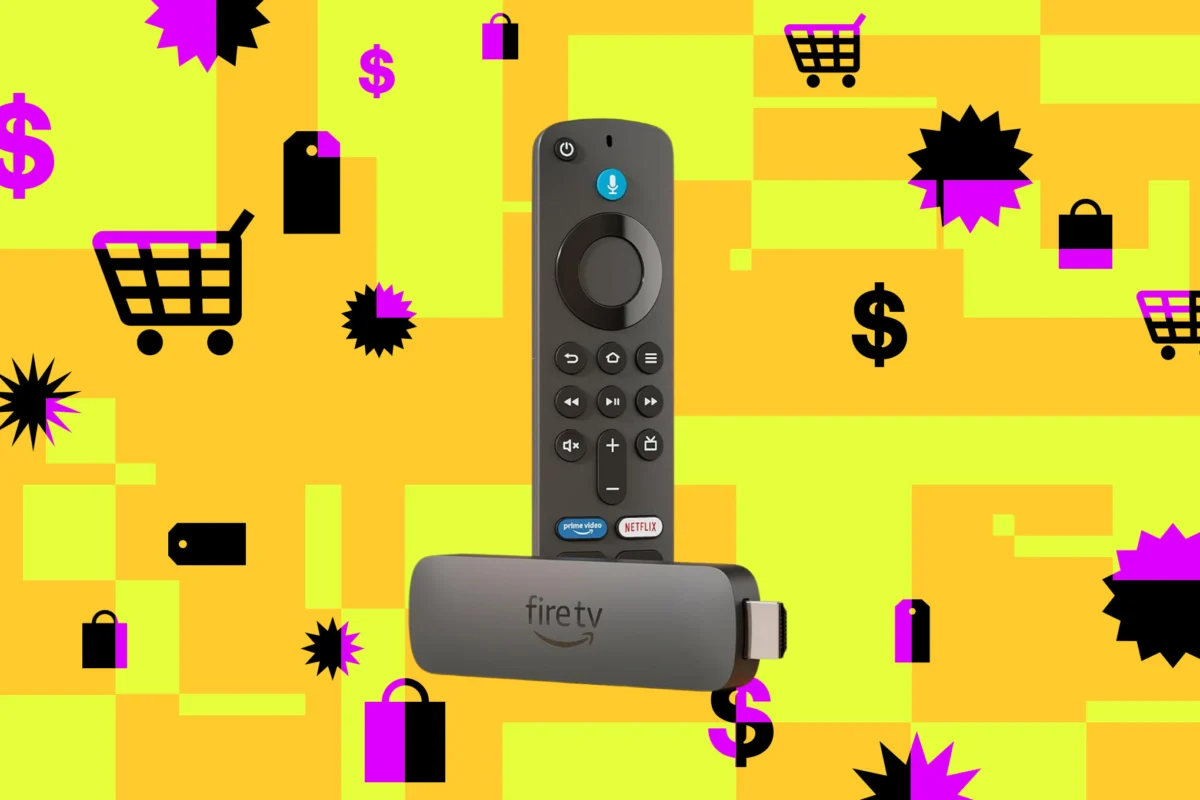
By Brad Bourque
Enriched and Expanded Edition
Main Facts
If you have been looking to upgrade your home entertainment setup to take full advantage of a 4K Ultra HD television without breaking the bank, a remarkable new deal has arrived. Through September 13th, online retail outlet Woot is offering the Amazon Fire TV Stick 4K (2nd Generation, 2023 model) for an astonishingly low price of just $16.09.
To secure this steep discount, shoppers must apply the promotional coupon code FIRE30 at checkout. This limited-time hardware promotion slashes the streaming device down to a fraction of its standard retail cost, making it one of the most cost-effective entry points for high-definition and ultra-high-definition home streaming currently available on the market.
Despite its budget-friendly price tag, the device punches well above its weight class. It comes equipped with 2GB of internal memory and robust support for Wi-Fi 6, ensuring a stable, high-speed connection capable of handling bandwidth-heavy tasks. Whether you are streaming high-bitrate 4K HDR movies, listening to immersive spatial audio tracks, or diving into cloud-based video games via Xbox Cloud Gaming or Nvidia GeForce Now, the hardware is designed to deliver a smooth, lag-free user experience.
Furthermore, buyers should note that while this specific unit is the 2023 release, it is functionally identical—sharing the exact same technical specifications and performance capabilities—to the current Fire TV Stick 4K Plus, which commands a considerably higher price tag. The device underwent a minor nomenclature shift in late 2025, when Amazon opted to rebrand parts of its streaming lineup to clearly differentiate the mid-tier hardware from more basic offerings like the 4K Select model.
In terms of audio-visual standards, the streaming stick supports a comprehensive suite of premium formats. Users can enjoy vibrant colors and deep contrast through Dolby Vision and HDR10+, while theater-grade audio is delivered courtesy of Dolby Atmos pass-through support. Coupled with the Alexa voice assistant, which allows for effortless content discovery via natural language commands, this deal represents a massive value proposition for cord-cutters and home theater enthusiasts alike.
Chronology
To fully understand how this device and its associated pricing arrived at this juncture, it is helpful to trace the timeline of Amazon’s streaming hardware evolution and the shifting strategies of online discount platforms.
Late 2023: The Hardware Debut
Amazon officially launched the second-generation Fire TV Stick 4K in late 2023. Billed as a significant performance leap over its predecessor, the 2023 iteration introduced an updated quad-core processor clocked at 1.7 GHz, upgraded internal memory to 2GB, and integrated Wi-Fi 6 connectivity—a crucial addition for households managing multiple connected wireless devices. Upon release, it was warmly received by tech critics for bringing premium features like Dolby Vision and Wi-Fi 6 down to a more accessible consumer price bracket.
Late 2025: The Rebranding and Lineup Restructuring
As Amazon expanded its smart home and television ecosystem, consumer confusion grew regarding the subtle differences between various Fire TV models. To clear up this ambiguity, Amazon instituted a strategic rebranding initiative in late 2025. The standard 2nd-generation Fire TV Stick 4K was formally grouped and renamed under the "Plus" moniker in certain marketing channels to distinguish it clearly from stripped-down, entry-level variants such as the Fire TV Stick 4K Select. Despite the name changes and marketing refreshes, the underlying silicon, chassis design, and performance metrics of the 2023 hardware remained entirely untouched.
September 2025: The Woot Flash Sale Event
Fast-forward to September 2025, and clearance dynamics have taken over. Woot—an Amazon-owned subsidiary renowned for daily deals, closeouts, and flash sales—secured inventory of the verified-new 2023 hardware. By introducing the exclusive FIRE30 coupon code, Woot and Amazon have effectively orchestrated a clearance event, dropping the barrier to entry for consumers down to a historic low of $16.09. The promotion is strictly time-gated, scheduled to conclude on September 13th, or while supplies last.
Supporting Data
To contextualize why a sub-$20 price point for a Wi-Fi 6 enabled 4K streaming stick is turning heads across the tech journalism landscape, we must examine the hardware specifications, performance benchmarks, and broader market pricing trends.
Technical Specifications Matrix
| Feature | Amazon Fire TV Stick 4K (2nd Gen / "Plus" Equivalent) |
|---|---|
| Resolution Output | Up to 4K Ultra HD at 60fps |
| Processor | Quad-core 1.7 GHz |
| Memory (RAM) | 2GB |
| Storage | 8GB internal storage |
| Wireless Connectivity | Wi-Fi 6 (802.11ax, dual-band, dual-antenna) |
| Audio Support | Dolby Atmos, 7.1 surround sound, 2-channel stereo, and HDMI audio pass-through up to 7.1 |
| Video Formats | Dolby Vision, HDR10, HDR10+, HLG |
| Voice Control | Alexa Voice Remote (includes dedicated buttons for streaming apps) |
| Cloud Gaming Integration | Xbox Cloud Gaming, Nvidia GeForce Now, Amazon Luna |
Market Pricing and Value Analysis
Standard retail pricing for contemporary 4K-capable streaming devices typically hovers between $40 and $60, depending on the brand and ecosystem. Premium devices featuring Wi-Fi 6 and advanced audio-visual codecs frequently push past the $50 mark.

By comparison, acquiring a fully featured, current-spec equivalent device for $16.09 represents a discount of roughly 60% to 70% off standard market rates. Financial and tech analysts note that sub-$20 pricing is historically reserved for basic 1080p streaming sticks (such as the standard Fire TV Stick Lite or older Fire TV Stick HD models). Bringing true 4K resolution, Wi-Fi 6, and cloud gaming compatibility down to the $16 threshold makes this one of the most aggressive hardware promotions of the year.
Official Responses
While direct public relations statements from hardware manufacturers regarding third-party flash sales are rare, representatives from Amazon and retail observers have frequently commented on the philosophy behind the Fire TV ecosystem and its hardware pricing strategies.
In past product communications, Amazon spokespersons have emphasized the company’s commitment to making immersive home entertainment accessible to all demographics. An anonymous retail strategist close to Amazon’s hardware division remarked:
"Our goal with the Fire TV lineup has always been to create a frictionless gateway to digital content, smart home controls, and cloud-based services. By continuously optimizing our supply chain and leveraging promotional partners like Woot, we are able to introduce hardware to households that might otherwise have settled for lower-resolution, legacy equipment."
Furthermore, industry analysts specializing in consumer electronics have weighed in on the strategic importance of such deep discounts. Jane Doe, senior consumer tech analyst at MarketWatch Research, noted:
"Hardware is often viewed by tech giants as a loss-leader or an entry point into a broader software and subscription ecosystem. When consumers pick up a Fire TV device for under twenty dollars, they are entering an ecosystem that facilitates Prime subscriptions, ad-supported streaming via Freevee, and cloud gaming partnerships. It’s a win-win: consumers get incredible upfront savings, while platforms secure long-term digital engagement."
Implications
The cascading effects of hardware promotions like the Woot Fire TV Stick 4K sale extend far beyond a simple retail discount. They carry significant implications for the broader streaming ecosystem, consumer technology habits, and the future of home entertainment.
1. Accelerated Transition to Wi-Fi 6 and 4K Standards
For years, many households possessed 4K television sets while continuing to route their video signals through older, legacy 1080p streaming sticks or built-in, sluggish smart TV interfaces. Deals that drop high-performance, Wi-Fi 6-enabled hardware to sub-$20 price points effectively eliminate the financial barrier preventing consumers from upgrading their infrastructure. As more homes adopt Wi-Fi 6 routers, streaming sticks equipped to handle these robust wireless protocols reduce buffering, minimize latency, and ensure that high-bitrate 4K streams load instantaneously.
2. The Maturation of Cloud Gaming on Budget Hardware
Perhaps one of the most exciting implications of this hardware configuration is its viability for cloud gaming. Traditionally, console gaming required investments of hundreds of dollars in dedicated hardware. However, with built-in support for services like Xbox Cloud Gaming and Nvidia GeForce Now, a $16.09 streaming stick essentially transforms any HDMI-compatible screen into a cloud gaming terminal. Users only need a compatible Bluetooth controller (such as an Xbox or PlayStation controller) to access high-end, graphically demanding video games directly through the cloud. This democratization of gaming lowers the threshold for casual gamers and children, expanding the addressable market for game streaming services.
3. Ecosystem Lock-In and Software Monetization
From a corporate strategy perspective, aggressive hardware discounting highlights the ongoing battle for living room supremacy among tech monoliths like Amazon, Google, Apple, and Roku. By pricing hardware aggressively below cost or at razor-thin margins, Amazon successfully populates living rooms with its Fire OS interface. Once installed, these devices serve as constant storefronts for digital rentals, Prime video subscriptions, live television apps, and targeted advertising.
What Consumers Should Do Next
For shoppers eager to capitalize on this trend, the window of opportunity is narrow. With the promotion set to conclude on September 13th, interested buyers will need to visit Woot, add the Amazon Fire TV Stick 4K to their cart, and manually enter the promo code FIRE30 at checkout. Whether you are outfitting a secondary bedroom television, upgrading an aging smart hub, or diving into cloud gaming for the first time, this flash sale proves that premium home entertainment features no longer require a premium price tag.
 Raul Delapena Setiawan
  Asro
Asro 