
 By Lina Irawan
Somewhere in your current email database, there is a customer who genuinely loves your product. They have purchased from you multiple times, they have taken the time to leave a glowing review, and they would be more than happy to recommend your brand to their social circle. In fact, their friends likely share the same pain points and interests as your ideal buyer.
Yet, most founders never ask them to.
For many entrepreneurs, a referral program exists solely as a forgotten link in a website footer—a "gym membership" strategy that is paid for but never utilized. This represents a massive missed opportunity. In a digital landscape saturated with expensive ad auctions and unpredictable algorithms, the most effective marketing channel remains entirely free: the authentic recommendation of a trusted friend.
The Mathematics of Trust: Why Referrals Outperform Paid Media
When a friend tells a colleague, "You would love this," the heavy lifting of the sales process is already complete. No ad platform can purchase that level of credibility, and no targeting algorithm can replicate the nuance of a personal endorsement.
Referred customers are statistically superior across every key performance indicator (KPI). They convert at significantly higher rates, they require almost zero acquisition cost, and they demonstrate higher long-term retention. Unlike cold traffic, referred leads arrive with a built-in trust factor. Because people are naturally protective of their reputations, they do not refer friends to products they suspect will be a bad fit. Your customers are effectively performing high-level market segmentation on your behalf, utilizing a depth of personal knowledge that no tracking pixel could ever capture.
The "Moment of Delight": Mastering the Timing
The most common mistake founders make is not a flaw in their copy or a lack of reward incentives—it is poor timing.
A request for a referral buried in a generic Tuesday newsletter is "wallpaper"—it is easily ignored and lacks context. However, an invitation sent immediately after a moment of customer success hits differently. These "moments of delight"—such as a second or third purchase, the submission of a five-star review, or a positive interaction with customer support—are the windows where brand sentiment is at its peak.
By leveraging marketing automation, you can ensure that these requests land during these high-sentiment windows automatically. When a customer receives a prompt to refer a friend shortly after confirming their satisfaction, it feels like a natural invitation to help others, rather than an extractive marketing tactic.
The Architecture of Incentive: Why Double-Sided Wins
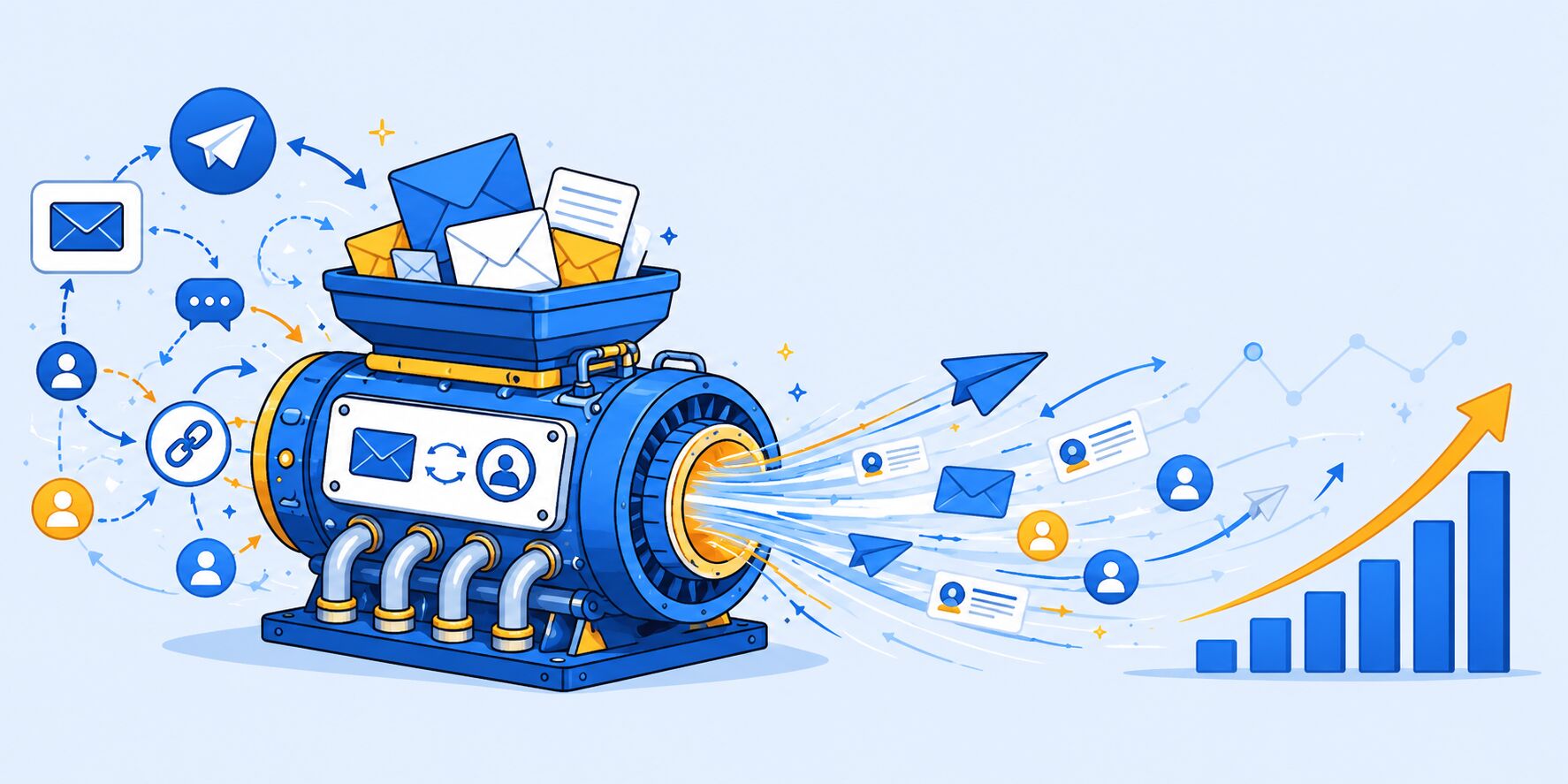
Incentive structures are the fuel of any referral engine. When designing your program, be wary of one-sided rewards.
If you only reward the referrer, the process can feel transactional—like the customer is "monetizing" their social circle. If you only reward the new customer, the original advocate has no tangible incentive to take action. The industry gold standard is the "double-sided" reward (e.g., "Give $10, Get $10").
This model aligns the incentives of all parties. The referrer is empowered to offer a "gift" to their friend, making the act of sharing feel like a favor rather than a sales pitch. The new customer receives an immediate benefit that reduces the friction of their first purchase. When everyone wins, the flywheel begins to spin.
Eliminating Friction: The Death of Complex Flows
Friction is the primary killer of referral conversion. If a user has to navigate through a multi-step form, remember a referral code, or figure out how to share the link, you have already lost them.
A high-performing referral engine must be frictionless:
- Unique Tracking: Every customer should have a unique, pre-populated link that handles attribution automatically.
- Pre-Written Copy: Provide a short, human-sounding template that can be sent via WhatsApp, SMS, or email with a single tap.
- Omnichannel Accessibility: Place your referral calls-to-action where your customers’ thumbs already live.
If the entire process takes more than fifteen seconds from the moment they open the email, the barrier to entry is too high. While your top 2% of "superfans" might push through a clunky interface, the remaining "quietly satisfied" majority will not. Since the latter group represents the bulk of your potential growth, simplicity is your greatest asset.
Strategic Segmentation: Don’t Ask the Wrong People
One of the most counterintuitive aspects of referral marketing is knowing who not to ask. Blasting your entire email list with a generic referral request is ineffective; it treats your most loyal advocates the same as a customer who bought once eight months ago and hasn’t opened an email since.
Asking an disengaged customer for a referral is not only futile—it can actually train your list to ignore your future communications. Instead, focus on building segments of high-engagement users: repeat buyers, reviewers, and those who have interacted with your content.
This is where platforms like Omnisend become indispensable. By utilizing advanced segmentation, you can isolate your most loyal customers and trigger specific, personalized referral workflows. Integrating this with loyalty tools like Smile or Yotpo allows you to automate the entire backend—tracking points, managing tiers, and delivering rewards—without manual intervention.
The Long-Term Implications of Referral Infrastructure
The reality for every business is that word-of-mouth marketing is happening right now, whether you have a formal program or not. People are naturally inclined to discuss products they enjoy. The question for the modern founder is not whether word-of-mouth works, but whether you have built the "plumbing" to capture, amplify, and reward those conversations.
By viewing your referral program as an infrastructure for existing customer generosity, you move away from desperate sales tactics and toward a sustainable, compounding growth strategy.
For those looking to build this foundation, leveraging professional automation tools is the first step toward efficiency. Foundr readers can access a significant advantage by using code FOUNDR50 to receive 50% off their first three months with Omnisend. Furthermore, for brands looking to migrate from legacy systems, the platform offers a white-glove migration service that moves your lists, templates, and flows within five days, free of charge.
Final Reflections
Building a referral engine is less about "hacking" growth and more about acknowledging the inherent value of your community. It is about creating a system where your happiest customers are empowered to become your most effective sales force.
When you stop treating referrals as an afterthought and start treating them as a core component of your customer experience, you aren’t just increasing your acquisition numbers. You are formalizing the trust that already exists, making it easier for your customers to invite their friends into the fold. In a digital world, that is the most powerful growth lever you can pull.
 Dwi Wanna
  rifanmuazin
  Asep Darmawan